


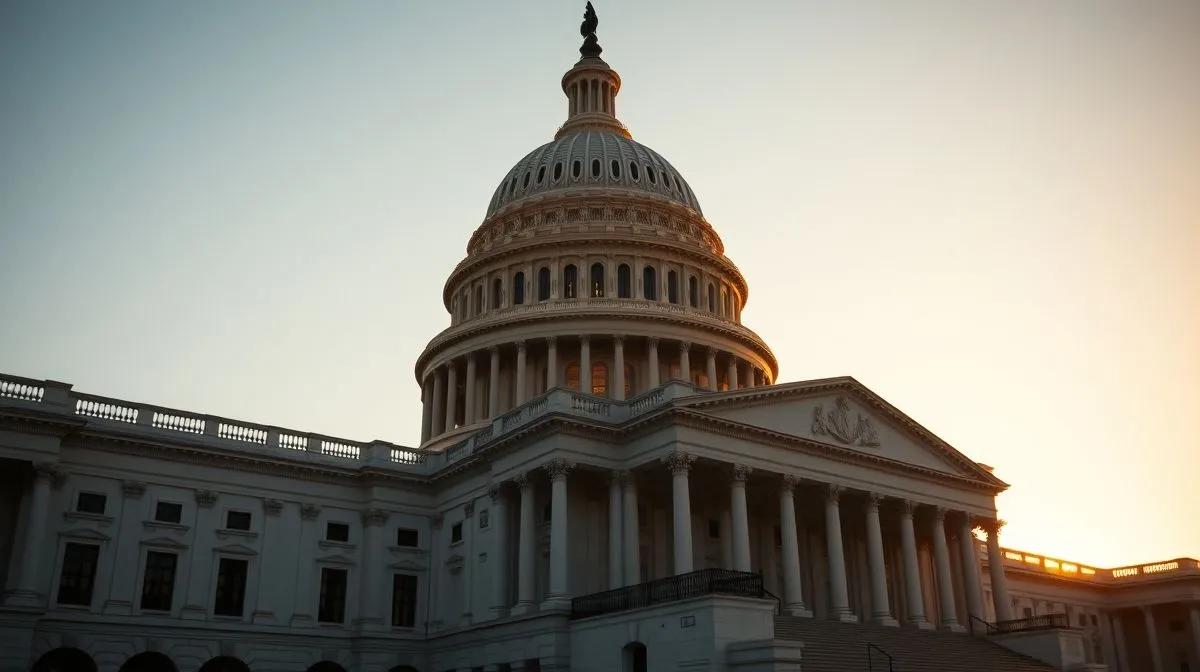
Unveiling the Constitutional Procedures for Federal Lawmaking
Have you ever paused to consider the intricate dance of democracy that transforms an idea into a law governing millions? From the initial spark of a concept to its final enactment, the journey of federal legislation is a meticulously choreographed ballet involving numerous actors and stages.
Despite its profound impact on everyday life, the process by which a bill becomes a federal statute is far from simple, often shrouded in a complexity that can seem impenetrable to the average citizen. This opacity can lead to misconceptions about how our government truly functions and the vital role of each branch.
This comprehensive guide will demystify the constitutional procedures for federal lawmaking, breaking down each critical stage, highlighting the pivotal roles of various actors, and revealing the profound implications for American society. By the end of this reading, you will possess a deeper understanding of the legislative engine that powers the United States.
The Constitutional Foundation: Article I and the Legislative Branch
At the heart of federal lawmaking lies Article I of the United States Constitution. This foundational document establishes the legislative branch, vesting all federal legislative powers in a bicameral Congress, composed of the Senate and the House of Representatives. Understanding this constitutional bedrock is crucial to comprehending the entire process.
The Bicameral Structure: House and Senate
The decision by the Founding Fathers to create a two-chamber legislature was a deliberate compromise, balancing the interests of both large and small states. This bicameral system ensures that bills must pass through two distinct filters, each with its own unique characteristics and procedures, fostering robust debate and preventing hasty legislation.
- House of Representatives: Designed to be closer to the people, with representation based on population and members serving two-year terms. It has the exclusive power to initiate revenue bills.
- Senate: Intended to be a more deliberative body, with equal representation for each state (two senators per state) and six-year terms. It holds unique powers like advising on and consenting to treaties and presidential appointments.
Enumerated and Implied Powers
Article I, Section 8, precisely outlines the powers granted to Congress, known as enumerated powers. These include the power to lay and collect taxes, regulate commerce, declare war, and establish a uniform rule of naturalization. These specific grants of authority form the basis for much of federal legislation.
Beyond these explicit powers, the Constitution also grants Congress implied powers through the "Necessary and Proper" Clause (also known as the Elastic Clause). This clause allows Congress "to make all Laws which shall be necessary and proper for carrying into Execution the foregoing Powers, and all other Powers vested by this Constitution in the Government of the United States, or in any Department or Officer thereof." This flexibility has allowed the legislative branch to adapt to evolving societal needs.
For a detailed look at the powers of Congress, refer to the United States Constitution at the National Archives.
Initiating Legislation: From Idea to Introduction
Every federal law begins as an idea, often born from public need, political platforms, or specific events. Transforming this idea into a formal legislative proposal is the critical first step in the constitutional procedures for federal lawmaking.
Who Can Propose?
While only a member of Congress can formally introduce a bill, the ideas themselves can originate from various sources. These include individual citizens, advocacy groups, executive branch agencies, state legislatures, or even the President himself. Lobbyists play a significant role in advocating for specific legislative proposals, bringing attention to issues that may warrant federal action.
Drafting the Bill
Once an idea gains traction with a representative or senator, it must be translated into precise legal language. This complex task is often performed by legislative counsel, non-partisan attorneys who specialize in drafting legislation. The drafting process ensures the bill adheres to constitutional requirements, avoids ambiguity, and effectively achieves its intended purpose.
- Clarity: Language must be unambiguous to prevent misinterpretation.
- Scope: Clearly define the problem the bill addresses and the solutions it proposes.
- Constitutionality: Ensure the bill falls within Congress's enumerated or implied powers.
- Impact: Consider the potential economic, social, and administrative effects.
Formal Introduction
In the House of Representatives, a bill is introduced by placing it in a special box called the "hopper" on the clerk's desk. In the Senate, a senator introduces a bill by presenting it to the presiding officer or by placing it on the desk. Once introduced, the bill is assigned a number (e.g., H.R. 1 or S. 1), printed, and then referred to the appropriate committee for initial review.
The Committee System: Where the Real Work Begins
The committee system is the backbone of the legislative process, where the vast majority of work on a bill takes place. Given the thousands of bills introduced each session, committees act as specialized filters, allowing Congress to manage its workload and develop expertise on specific policy areas.
Types of Committees
Congress utilizes various types of committees, each with distinct functions:
- Standing Committees: Permanent committees that deal with broad areas of public policy (e.g., Agriculture, Judiciary, Appropriations). Most bills are referred to standing committees.
- Select or Special Committees: Created for specific, often temporary, purposes, such as conducting investigations or considering a particular issue.
- Joint Committees: Composed of members from both the House and Senate, typically for investigative or advisory purposes, without the power to report legislation.
- Conference Committees: Temporary joint committees formed to reconcile differences between House and Senate versions of a bill.
Committee Hearings and Markups
Once a bill is referred to a committee, it undergoes thorough scrutiny. The first step often involves committee hearings, where members gather information from experts, government officials, and interested parties. These hearings provide valuable insights, highlight potential impacts, and allow for public input.
Following hearings, the committee may hold a markup session. During markup, committee members review the bill line by line, debating its provisions, offering amendments, and making changes. This is where the bill is shaped, refined, and often significantly altered based on the information gathered and political considerations. A bill can be substantially rewritten or even entirely replaced during this phase.
Reporting Out
If a committee decides a bill is worthy of consideration by the full chamber, it will vote to "report out" the bill. If the vote is favorable, the committee prepares a report that describes the purpose and scope of the bill, explains its provisions, and outlines any amendments made. This report accompanies the bill to the floor of the House or Senate, providing context for the full body.
Floor Action: Debate, Amendment, and Vote
Once a bill is reported out of committee, it moves to the floor of the respective chamber for full debate, further amendment, and a final vote. The procedures for floor action differ significantly between the House and the Senate, reflecting their distinct constitutional roles and traditions.
House Procedures: Rules Committee and Debate Limits
Given its large size (435 members), the House of Representatives operates under stricter rules to manage debate. The powerful House Rules Committee plays a crucial role, determining the terms and conditions under which a bill will be debated and voted on. This includes setting limits on debate time and specifying which amendments, if any, can be offered.
Debate in the House is typically limited, often to just a few minutes per member, and amendments must usually be germane (directly relevant) to the bill. Once debate concludes, the House proceeds to a vote, which can be by voice, division, or recorded roll call.
Senate Procedures: Unlimited Debate and the Filibuster
The Senate, with its smaller size (100 members), prides itself on its tradition of unlimited debate. Senators generally have the right to speak for as long as they wish, a practice that can lead to a filibuster. A filibuster is a tactic used by a minority of senators to delay or block a vote on a bill by continuously speaking.
To overcome a filibuster, a vote of cloture is required, which needs the support of three-fifths (60) of the senators. If cloture is invoked, debate time is limited, allowing the bill to eventually come to a vote. The Senate also operates more on unanimous consent agreements, which can expedite or limit debate by mutual agreement of all senators.
Voting on the Bill
After debate and any amendments, the full House or Senate votes on the bill. For a bill to pass, it typically requires a simple majority vote (more than half of those voting, assuming a quorum is present). If it passes, it is then sent to the other chamber for consideration.
The Bicameral Hurdle: Passing Both Chambers
A fundamental aspect of the constitutional procedures for federal lawmaking is that a bill must pass both the House of Representatives and the Senate in precisely the same form before it can be sent to the President. This requirement is a powerful check and balance, ensuring broad consensus and thorough review.
The Second Chamber's Process
Once a bill passes one chamber, it is engrossed (prepared in its final form) and sent to the other chamber. There, it generally follows a similar path: referral to committee, committee review (hearings, markup), and then floor action (debate, amendment, vote). The second chamber can pass the bill as is, amend it, or reject it entirely.
Resolving Differences: The Conference Committee
It is common for the House and Senate to pass different versions of the same bill. When this occurs, a conference committee is usually formed. This temporary committee consists of members from both chambers, appointed to negotiate and resolve the differences between the two versions. The goal is to produce a single, compromise version of the bill.
Once the conference committee reaches an agreement, it issues a conference report, which must then be approved by a majority vote in both the House and the Senate, without further amendment. If either chamber fails to approve the conference report, the bill dies.
Presidential Action: The Final Step in Federal Lawmaking
Once a bill has successfully navigated both chambers of Congress and passed in identical form, it is presented to the President of the United States. This is the final and often most dramatic stage of the legislative process, where the bill either becomes law or faces significant obstacles.
Signing into Law
If the President approves of the bill, he signs it into law. At this point, the bill officially becomes an Act of Congress and takes effect according to its provisions. Presidents often hold signing ceremonies, especially for significant legislation, to publicize the new law and acknowledge its importance.
The Veto Power
Alternatively, the President may disapprove of a bill and exercise his veto power. If he vetoes a bill, he returns it to the originating chamber of Congress, along with a message explaining his objections. This action prevents the bill from becoming law unless Congress takes further action.
Congressional Override
Congress has the power to override a presidential veto, but it requires a substantial level of support. To override a veto, both the House and the Senate must vote by a two-thirds majority in favor of the bill. If successfully overridden, the bill becomes law without the President's signature. This is a powerful demonstration of legislative checks on executive power, though it is relatively rare due to the high threshold required.
The Pocket Veto
A unique form of presidential veto is the pocket veto. If Congress adjourns within 10 days (excluding Sundays) of presenting a bill to the President, and the President does not sign it, the bill dies. This is because the President is unable to return the bill to Congress with his objections if Congress is not in session. Unlike a regular veto, a pocket veto cannot be overridden by Congress.
For more on the journey of a bill, explore resources like The Legislative Process on Congress.gov.
Checks, Balances, and the Evolution of Law
The constitutional procedures for federal lawmaking are not a static, linear path. They are deeply intertwined with the broader system of checks and balances that defines American governance. Other branches of government, particularly the judiciary, play crucial roles in shaping and interpreting federal law over time.
Judicial Review
After a bill becomes law, its constitutionality can still be challenged in the courts. The principle of judicial review, established in Marbury v. Madison (1803), allows the Supreme Court and lower federal courts to determine whether a law is consistent with the U.S. Constitution. If a law is found to be unconstitutional, it is struck down, effectively nullifying its legal force.
This power ensures that all legislation, even after passing through the rigorous congressional and presidential review, remains subject to the ultimate authority of the Constitution. Learn more about landmark Supreme Court cases and judicial review at Oyez.org.
Executive Branch Implementation and Oversight
Once a law is enacted, the executive branch, through its various departments and agencies, is responsible for its implementation and enforcement. This often involves creating regulations and policies that provide the specific details for how a broad law will be applied. Congress, in turn, exercises oversight over these agencies to ensure that laws are being implemented as intended and that executive power is not overreached.
Frequently Asked Questions (FAQ)
What is the primary purpose of the committee system in federal lawmaking? The committee system allows Congress to divide its vast workload, develop specialized expertise on various policy areas, and conduct thorough review, hearings, and amendments on proposed legislation before it reaches the full chamber.
Can a bill become law without the President's signature? Yes, a bill can become law without the President's signature if Congress overrides a presidential veto with a two-thirds majority vote in both the House and the Senate, or if the President does not sign the bill within 10 days (excluding Sundays) while Congress is in session.
What is a filibuster, and how can it be overcome? A filibuster is a tactic in the Senate where a senator or group of senators delays or blocks a vote on a bill by speaking indefinitely. It can be overcome by invoking "cloture," which requires a three-fifths (60-vote) majority to limit debate and bring the bill to a vote.
How does judicial review impact federal laws? Judicial review allows federal courts, particularly the Supreme Court, to examine federal laws and declare them unconstitutional if they violate the U.S. Constitution. If a law is deemed unconstitutional, it is nullified and cannot be enforced.
What happens if the House and Senate pass different versions of the same bill? If the House and Senate pass different versions of a bill, a conference committee is typically formed. This temporary committee, composed of members from both chambers, negotiates to reconcile the differences and produce a single, identical version of the bill, which must then be approved by both chambers.
Recommended Reading
- Can the Government Take Your Land? Understanding Eminent Domain Rights
- Tax Audit Triggers in 2024: What You MUST Know to Stay Safe!
- Green Card Denial After Approval? What You Need to Know!
- DWI First Offense Expungement Eligibility: Your Complete Guide
- Decoding Recent US Immigration Policy Changes: A Comprehensive Guide
Conclusion
The constitutional procedures for federal lawmaking are a testament to the foresight and deliberative intent of the U.S. Constitution's framers. From its humble beginnings as an idea to its potential enactment as law, each stage is designed to ensure careful consideration, broad representation, and a system of checks and balances that prevents the concentration of power.
Understanding this complex yet vital process is not merely an academic exercise; it empowers citizens to engage more meaningfully with their government, to advocate for change, and to hold their elected representatives accountable. The journey of a bill becoming a law is a dynamic and ever-evolving reflection of American democracy, and its continued health relies on an informed and engaged populace.





Comments
Leave a comment below. Your email will not be published. Required fields marked with *