


Unlocking the Mystery: How is Maritime Salvage Compensation Determined?
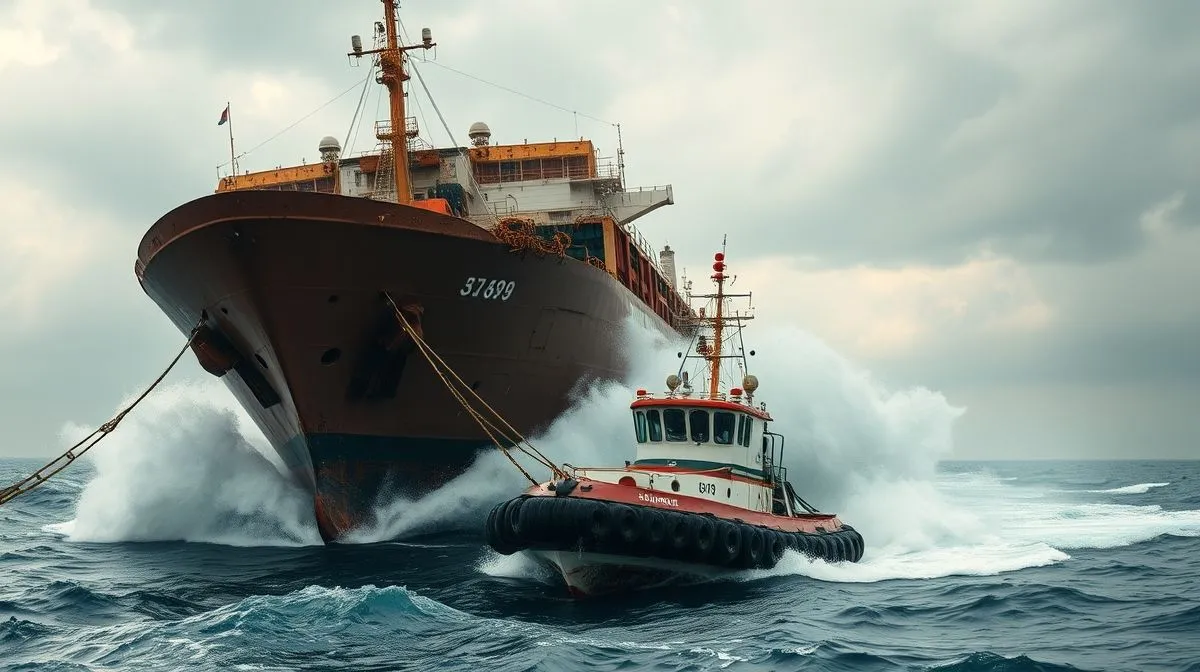
Imagine a vast, unforgiving ocean, a storm raging, and a colossal cargo ship adrift, its engines dead. Lives are at stake, and millions of dollars in cargo hang in the balance. Suddenly, a specialized salvage tug appears on the horizon, a beacon of hope in the tempest. But what happens after the rescue? Who pays for this heroic act, and how is maritime salvage compensation determined?
The process of calculating a fair reward for those who risk life and limb to save vessels and cargo from peril is far from simple. It involves a complex interplay of ancient maritime traditions, modern international laws, and highly specialized expertise. This isn't just about a bill for services; it's about incentivizing brave actions while ensuring fairness to all parties.
This comprehensive guide will demystify the intricate world of maritime salvage. We will delve into the fundamental principles, explore the key factors that influence compensation awards, examine the role of international conventions and arbitration, and provide practical insights into this critical aspect of maritime law. By the end, you'll understand the nuanced calculations that ensure justice on the high seas.
The Ancient Roots and Modern Laws of Salvage
Maritime salvage is one of the oldest concepts in maritime law, with its origins tracing back to ancient Rhodian laws. The principle has always been clear: those who save property at sea from danger should be rewarded. This tradition has evolved significantly, culminating in a sophisticated legal framework designed to encourage assistance while preventing exploitation.
What is Maritime Salvage?
At its core, maritime salvage is the act of saving a vessel or its cargo from peril at sea. Crucially, it is almost always a voluntary act. This means there is no pre-existing contract for the service. The salvor, the party performing the rescue, undertakes the operation without prior agreement on remuneration, trusting that a fair award will be made later. This voluntariness distinguishes salvage from towage or other contracted services.
Historical Context and Evolution
From the early codes of the Mediterranean to the medieval maritime courts of Europe, the concept of salvage has been a cornerstone of maritime commerce. Early laws recognized the immense dangers of sea travel and the vital need for mariners to assist one another. Over centuries, these customs hardened into legal principles, driven by the practical necessity of encouraging timely and effective rescues.
Key International Conventions
Modern maritime salvage is largely governed by international conventions. The most significant is the International Convention on Salvage 1989, adopted by the International Maritime Organization (IMO). This convention aims to unify the rules relating to salvage operations, providing a framework for determining awards and promoting environmental protection. It replaced the Brussels Convention of 1910, reflecting a greater emphasis on environmental concerns.
The Core Principles Guiding Compensation
Two fundamental principles underpin the determination of maritime salvage compensation, ensuring a balance between incentivizing salvors and protecting property owners.
"No Cure, No Pay"
The cornerstone of maritime salvage law is the principle of "No Cure, No Pay." This means that if the salvage operation is unsuccessful, the salvor receives no remuneration, regardless of the effort or expense incurred. This principle places the entire financial risk of the operation on the salvor, strongly incentivizing success and discouraging speculative or incompetent attempts.
The Goal: Encouraging Assistance, Not Exploitation
The primary purpose of salvage awards is not merely to compensate for services rendered, but to incentivize prompt and effective assistance to vessels and property in distress. The awards are structured to be generous enough to make salvors willing to risk their lives, vessels, and equipment, yet not so excessive as to be punitive or exploitative for the property owner. It's a delicate balance designed to foster a spirit of helpfulness on the high seas.
Factors Influencing Salvage Awards: A Deep Dive
When it comes to calculating the actual compensation, a range of factors are meticulously considered. These elements help arbitrators or courts arrive at a fair and equitable award. The 1989 Salvage Convention outlines these criteria, providing a standardized approach to answering how is maritime salvage compensation determined in practice.
The Value of the Salved Property
One of the most significant factors is the value of the property salved. This includes the value of the vessel, its cargo, and any freight at risk. Generally, the higher the value of the property saved, the higher the potential award. This reflects the increased benefit conferred upon the owners by the salvor's actions.
The Skill and Efforts of the Salvors
The expertise, efficiency, and professionalism of the salvors play a crucial role. This includes:
- The skill and efforts displayed in preventing or minimizing damage to the environment.
- The promptness of the service rendered.
- The skill and efforts displayed in salving the vessel and other property.
A well-executed, swift, and highly skilled operation will command a higher award than one that is prolonged, less efficient, or marred by errors.
The Measure of Success
The degree of success achieved by the salvor is paramount. If the entire vessel and cargo are saved from imminent destruction, the award will be significantly higher than if only a portion is salvaged, or if the property was only in minor peril. Partial success still warrants an award, but it will be proportionally reduced.
The Danger to the Salved Property
The severity and immediacy of the danger faced by the vessel and cargo are critical. Was the ship on the verge of sinking, exploding, or breaking apart? Was it in a remote location with little chance of other assistance? The greater the peril from which the property was rescued, the higher the award will likely be. This acknowledges the increased risk and difficulty of the salvage operation.
The Danger to the Salvors and Their Equipment
Salvage operations are inherently dangerous. The risks faced by the salvors themselves – to their lives, their health, and their own vessels and equipment – are heavily weighted. Operating in stormy seas, navigating hazardous environments, or dealing with volatile cargo all increase the danger, and thus the award. This factor directly compensates for the bravery and self-sacrifice involved.
The Value of the Salvor's Equipment Used
Salvage operations require highly specialized and expensive equipment, from powerful tugs and sophisticated diving gear to advanced navigation and communication systems. The value of the property employed by the salvor, and the extent to which it was put at risk, is a key consideration. A salvor deploying a multi-million dollar vessel and specialized apparatus will receive a higher award than one using a small, less valuable craft.
The Time and Expenses Incurred
The duration of the salvage operation, the fuel consumed, the wages of the crew, and any damage sustained by the salvor's equipment during the rescue all contribute to the expenses. While "No Cure, No Pay" means no payment for failure, successful operations factor in these costs to ensure the salvor is adequately reimbursed and profitable.
Environmental Considerations
A significant development in modern salvage law, particularly under the 1989 Convention, is the emphasis on environmental protection. If a salvor prevents or minimizes pollution damage – for example, by containing an oil spill from a damaged tanker – they can be awarded special compensation. This award, potentially exceeding the value of the salved property, encourages salvors to prioritize environmental safety, even if the primary salvage effort fails or yields little traditional reward. This aligns with international efforts to protect marine environments, as reflected by agreements like the OPRC Convention.
The Role of the Lloyd's Open Form (LOF) and Arbitration
While courts can determine salvage awards, the vast majority of significant maritime salvage cases are settled through arbitration, often under the auspices of the Lloyd's Open Form.
What is LOF?
The Lloyd's Open Form (LOF) is a standard, widely recognized salvage agreement developed by Lloyd's of London. Its primary advantage is its simplicity and speed. When a vessel is in distress, there's no time for lengthy negotiations. The LOF allows salvors to immediately commence operations on a "No Cure, No Pay" basis, with the understanding that remuneration will be determined by an independent arbitrator in London after the fact. This enables swift action, which is often crucial in preventing greater loss.
The Arbitration Process
Under an LOF agreement, the salvage award is determined by a highly experienced maritime arbitrator, typically a barrister or Queen's Counsel, appointed by Lloyd's. The parties submit their evidence and arguments, and the arbitrator makes a binding decision based on the factors outlined in the 1989 Salvage Convention. This process is generally quicker and more specialized than traditional court litigation. Appeals are possible, but only on specific grounds.
Other Forms of Salvage Agreements
While LOF is prevalent for major incidents, other forms of salvage agreements exist. These might include:
- Daily Rate Contracts: Where the salvor is paid a fixed daily rate, regardless of success. This is more common for less urgent, lower-risk operations.
- Fixed Price Contracts: A pre-agreed lump sum for the entire operation.
- Towage Contracts: Where a vessel is simply being towed, and there's no element of peril, it's typically a towage contract, not salvage.
The choice of agreement depends heavily on the specific circumstances and the perceived level of danger.
Challenging a Salvage Award: Grounds for Appeal
While salvage awards are generally binding, there are limited grounds upon which they can be challenged or appealed. These are typically aimed at correcting clear injustices or errors rather than simply disagreeing with the amount.
Misconduct of Salvors
If it can be proven that the salvors engaged in gross misconduct, such as theft of cargo, negligence that caused further damage, or using excessive force, the award can be reduced or even forfeited entirely. The law requires salvors to act with due care and skill.
Fraud or Misrepresentation
Awards can be challenged if there is evidence of fraud or material misrepresentation by either party during the submission of evidence or the operation itself. This undermines the integrity of the arbitration process.
Gross Exaggeration of Claim
While salvors are expected to present their case robustly, a claim that is found to be a gross exaggeration of the services rendered, or of the peril faced, can lead to a reduction in the award. This principle ensures that claims remain within the bounds of reason and fairness.
Practical Examples and Case Studies (Illustrative)
Understanding the factors is one thing; seeing them in action provides true clarity on how is maritime salvage compensation determined.
A Major Container Ship Incident
Consider a scenario where a massive container ship, valued at hundreds of millions, suffers a blackout in a busy shipping lane, drifting towards a reef. A specialized salvage company immediately deploys several powerful tugs, a team of engineers, and pollution control equipment. The operation is complex, lasting several days in challenging weather. They successfully tow the vessel to safety, preventing a potential environmental disaster and the loss of the ship and its valuable cargo.
- Value of Salved Property: Extremely high (ship + cargo).
- Danger to Property: Immediate and severe (drifting towards reef, potential grounding).
- Skill and Efforts: High (complex maneuvers, engineering expertise).
- Danger to Salvors: Significant (operating near a massive, unpowered vessel in a busy area).
- Environmental Protection: Major (prevention of potential oil spill).
Given these factors, the salvage award would likely be substantial, potentially millions of dollars, reflecting the enormous benefit conferred and risks undertaken.
A Smaller Pleasure Craft Rescue
In contrast, imagine a small yacht, valued at $200,000, loses power near a coastline on a calm day. A passing commercial vessel, not a dedicated salvor, decides to tow it to the nearest port, a journey of a few hours. There was no immediate danger of sinking or collision, but the yacht was adrift.
- Value of Salved Property: Relatively low.
- Danger to Property: Moderate (adrift, but not in immediate peril).
- Skill and Efforts: Moderate (simple tow).
- Danger to Salvors: Minimal.
- Environmental Protection: Not applicable.
The award here would be far more modest, perhaps a few thousand dollars, reflecting the lower value at risk and less complex operation. The purpose remains the same: to provide a fair incentive for assistance, scaled to the circumstances.
The Impact of Environmental Protection
A notable evolution in salvage awards is the recognition of environmental protection. In a scenario where a salvor successfully prevents a major oil tanker from breaking up and spilling its cargo, even if the physical salvage of the hull is only partially successful, the award can be significantly enhanced. This "special compensation" ensures that environmental efforts are financially viable and encouraged, reflecting the global imperative to protect marine ecosystems. Lloyd's of London, through its LOF, has been instrumental in incorporating these modern considerations into salvage practice.
Frequently Asked Questions (FAQ)
Who pays for maritime salvage? The owner of the salved property (vessel, cargo, freight) is typically responsible for paying the salvage award. This cost is often covered by their marine insurance.
Is maritime salvage always voluntary? The core principle of salvage is that it must be voluntary, meaning there was no pre-existing contract to provide the service. If a contract exists (e.g., for towage), it's generally not considered pure salvage.
What if the salvage operation fails? Under the "No Cure, No Pay" principle, if the salvage operation is unsuccessful, the salvor generally receives no remuneration. However, special compensation for environmental protection efforts might still be due under certain circumstances.
How long does it take to determine compensation? The timeline can vary. For cases handled under Lloyd's Open Form (LOF), arbitration is designed to be relatively swift, often concluded within months. More complex cases or those that go through court litigation can take longer, sometimes years.
Can I refuse salvage assistance? Generally, a master of a vessel in distress can refuse salvage assistance. However, if refusal leads to greater loss or environmental damage, it could have legal consequences for the owners. Moreover, once assistance is accepted, the salvor is entitled to an award upon success.
Recommended Reading
- Unlock True Worth: How to Value Intellectual Property for Licensing Success
- Unlock Wealth: How to Qualify for Capital Gains Tax Exemptions
- Tax Audit Triggers in 2024: What You MUST Know to Stay Safe!
- Unlock Your Child's Future: How to Request an Independent Educational Evaluation?
- DRM Circumvention & Cyber Law: Unmasking the Hidden Legal Pitfalls
Conclusion
The determination of maritime salvage compensation is a multifaceted process that balances the need to reward heroic actions with the imperative of fairness to property owners. From the ancient "No Cure, No Pay" principle to the sophisticated factors outlined in the 1989 Salvage Convention, every element – the value of the property, the danger faced, the skill of the salvors, and the impact on the environment – plays a crucial role. Understanding how is maritime salvage compensation determined reveals a system designed to ensure that the seas remain as safe as possible, incentivizing those brave enough to answer the call of distress. It's a testament to the enduring principles of maritime law, adapting over centuries to meet the complex demands of global shipping and environmental responsibility.

Comments
Leave a comment below. Your email will not be published. Required fields marked with *