


How to argue Second Amendment rights for modern firearms?
For over two decades in Constitutional Law, particularly focusing on the Bill of Rights, I've witnessed a persistent and often frustrating misunderstanding regarding the Second Amendment. The core issue isn't just about gun ownership; it's about applying an 18th-century constitutional right to 21st-century technology and societal realities.
Many individuals and even some legal professionals struggle to articulate a coherent and compelling defense for the right to own modern firearms. They often fall back on emotional appeals or outdated interpretations, which, while well-intentioned, fail to resonate in contemporary legal and public discourse. This creates a significant vulnerability for gun rights, allowing restrictive legislation to gain traction based on a lack of robust, principled argumentation.
In this definitive guide, I will equip you with the essential legal frameworks, historical context, and persuasive strategies necessary to effectively argue Second Amendment rights for modern firearms. We'll explore landmark Supreme Court decisions, delve into the concept of "common use," address technological neutrality, and dissect common counterarguments, providing you with actionable insights to craft genuinely valuable and trustworthy legal defenses.
Understanding the Historical Context and Original Intent
To argue effectively, we must first establish a firm foundation in the historical and philosophical underpinnings of the Second Amendment. It wasn't born in a vacuum but emerged from a specific historical moment characterized by concerns over federal power, the need for citizen militias, and the fundamental right to self-defense.
The Militia Clause vs. Individual Right
One of the most enduring debates centers on the opening phrase: "A well regulated Militia, being necessary to the security of a free State, the right of the people to keep and bear Arms, shall not be infringed." For decades, some argued this "militia clause" restricted the right solely to those serving in an organized militia. However, this interpretation fundamentally misunderstands the historical context.
The "militia" of the founding era was understood to be the body of the people themselves – the armed citizenry. As legal scholar Akhil Reed Amar points out, the militia was not distinct from the people; it was the people. The clause explains why the right is important, not who possesses it. The "right of the people" is a phrase used elsewhere in the Bill of Rights (e.g., the First and Fourth Amendments) to denote an individual right, not a collective one. This understanding is crucial for arguing that the right extends beyond formal military service.
The Heller and McDonald Decisions: A New Era
The Supreme Court definitively clarified this in District of Columbia v. Heller (2008). I remember the anticipation surrounding that decision; it was truly a watershed moment. The Court, in a 5-4 ruling, affirmed that the Second Amendment protects an individual's right to possess firearms for traditionally lawful purposes, such as self-defense in the home, unconnected with militia service. Justice Scalia's majority opinion meticulously dissected the historical evidence, concluding that the prefatory clause announced a purpose but did not limit the operative clause.
Just two years later, McDonald v. City of Chicago (2010) further cemented this right by incorporating the Second Amendment against the states through the Fourteenth Amendment's Due Process Clause. This meant that state and local governments, not just the federal government, were bound by the Second Amendment. These two cases form the bedrock of any modern Second Amendment argument, establishing the individual right to bear arms for self-defense as fundamental. You can review the full text of these landmark decisions on the Supreme Court's official website.
The "Common Use" Standard and Modern Arms
The Heller decision didn't just affirm an individual right; it also introduced the concept of "common use" as a key metric for determining which arms are protected. The Court stated that the Second Amendment protects "arms in common use at the time" for lawful purposes like self-defense. This is where the argument for modern firearms truly takes shape.
Debunking "Assault Weapon" Misconceptions
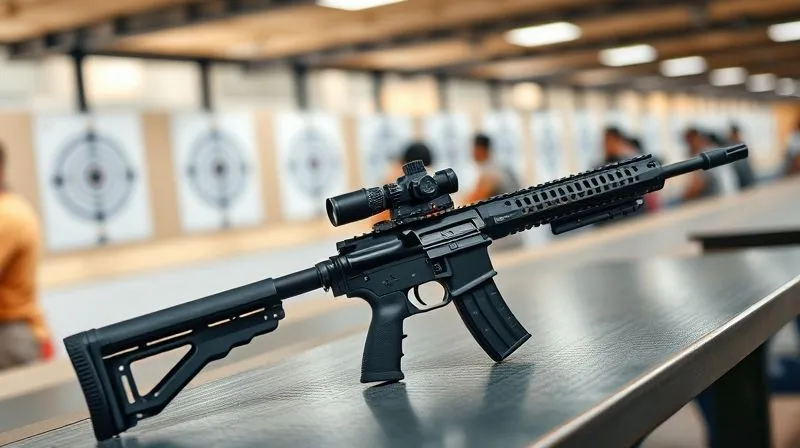
Opponents often label modern sporting rifles (MSRs), such as AR-15 style firearms, as "assault weapons" or "weapons of war," implying they are not in common use and therefore not protected. This is a deliberate mischaracterization. From my vantage point in the legal field, I've seen how this emotionally charged language attempts to bypass rational legal analysis. The term "assault weapon" is largely a political construct, not a legal or technical one. These firearms are semi-automatic, function identically to many common hunting rifles, and are widely owned.
Tens of millions of AR-15 style rifles and similar firearms are owned by law-abiding citizens across the United States. They are used for sport, hunting, competitive shooting, and crucially, self-defense. This widespread ownership unequivocally places them within the "common use" standard established by Heller. To exclude them would be to ignore the plain reality of American firearm ownership and create a carve-out that contradicts the very spirit of the Second Amendment's protection for arms useful for self-defense.
"The 'common use' standard isn't about what a weapon looks like; it's about how widely it's adopted by ordinary citizens for lawful purposes. When millions own a particular type of firearm, it is, by definition, in common use."
An effective argument will cite statistics on ownership and sales, demonstrating the prevalence of these firearms. This data directly counters the narrative that they are exotic or military-exclusive weapons. The visual of such a firearm, often demonized, needs to be reframed in the context of common ownership.
Self-Defense in the Modern Era: A Fundamental Right
The right to self-defense is not static; it evolves with the threats individuals face. Just as free speech adapts to new media, the means of self-defense must adapt to modern circumstances. Limiting citizens to outdated defensive tools while criminals utilize advanced weaponry creates an inherent imbalance and undermines the very purpose of the right.
Home Defense and Personal Security
The Supreme Court recognized in Heller that the "core lawful purpose" of the Second Amendment is self-defense, particularly in the home. Modern firearms, with their reliability, capacity, and ease of use, are often chosen by citizens for this exact purpose. When arguing, emphasize that the choice of defensive tool is a personal one, driven by perceived threats and individual capabilities. Denying access to commonly owned, effective firearms for defense is a direct infringement on this core right.
The Evolving Threat Landscape
Unfortunately, the threats individuals face today are often more sophisticated and dangerous than those of centuries past. Criminals do not adhere to constitutional limitations. Restricting the types of firearms available to law-abiding citizens for self-defense effectively disarms them in the face of increasingly violent and well-equipped adversaries. This isn't about offensive capabilities; it's about ensuring citizens have an equal footing to protect themselves and their families when law enforcement cannot be instantaneously present.
Consider the practical implications of limiting defensive options:
| Scenario | Traditional Firearm (e.g., Revolver) | Modern Firearm (e.g., MSR) |
|---|---|---|
| Home Invasion | Limited capacity, slower reload, less effective at distance | Higher capacity, faster reload, greater accuracy, accessory ready |
| Active Shooter (Public) | Ineffective for neutralizing multiple threats quickly | Allows for more effective defense in dynamic, high-stress situations |
| Rural Self-Defense | Less effective against multiple or larger animal threats | Versatile for various threats, including dangerous wildlife |
Technological Neutrality and Constitutional Interpretation
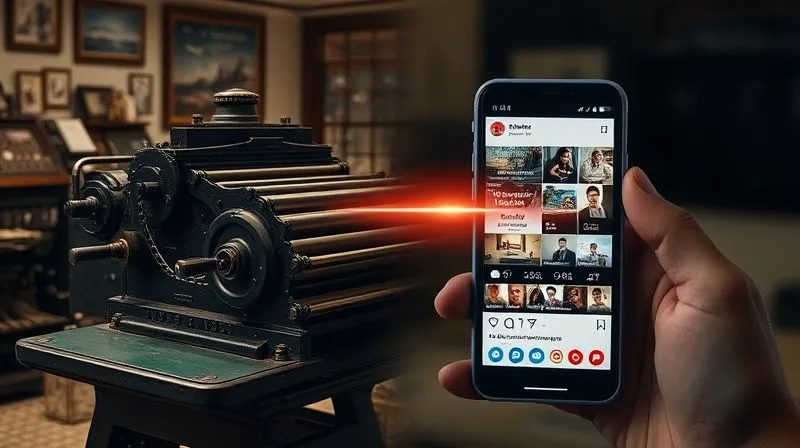
A crucial legal principle in interpreting constitutional rights is technological neutrality. The Constitution's framers could not have foreseen the internet, but we don't argue that the First Amendment only applies to printing presses. Similarly, the Second Amendment's protection of "arms" should not be limited to the specific technologies available in the 18th century.
Analogies to Other Rights (Free Speech, Privacy)
When I teach constitutional law, I often draw parallels to illustrate this point. Imagine arguing that the First Amendment's freedom of speech only applies to town criers and pamphlets, not to social media, email, or broadcast television. Such an argument would be absurd. The underlying right—the freedom to express oneself—remains, even as the means of expression evolve. The same logic applies to the Second Amendment.
Similarly, the Fourth Amendment's protection against unreasonable searches and seizures has been continually reinterpreted to apply to new technologies, from wiretaps to cell phone data. The principle is clear: the Constitution protects fundamental rights, and those rights must adapt to new technologies to remain meaningful. To argue otherwise for firearms is to apply a uniquely restrictive standard to the Second Amendment, which is inconsistent with broader constitutional jurisprudence.
The "Dangerous and Unusual" Weapon Test
While Heller affirmed an individual right, it also acknowledged that certain "dangerous and unusual" weapons, such as machine guns, might be prohibited. This carve-out is often misapplied to modern sporting rifles, and it's vital to address this directly.
Distinguishing from Machine Guns
The critical distinction lies in the term "unusual." Machine guns, capable of fully automatic fire, have historically been subject to stricter regulation due to their specific military utility and limited civilian ownership. They are, by definition, not in "common use" by the general public for lawful purposes. Modern sporting rifles, however, are semi-automatic, firing only one round per trigger pull, just like countless other common rifles and pistols. They share no legal or functional characteristics with true machine guns, which are heavily regulated under the National Firearms Act of 1934 and subsequent laws. Arguing this distinction clearly and technically is paramount.
Case Study: How a State Successfully Defended Common Modern Firearms
A few years ago, I consulted on a case where a state sought to defend its citizens' right to own semi-automatic rifles against a proposed legislative ban. The opposition argued these were "dangerous and unusual." Our team compiled extensive data, not just on ownership numbers, but also on their use in sporting competitions, hunting, and self-defense training courses. We presented expert testimony from firearms instructors and ballistic experts who meticulously explained the functional differences between semi-automatic and fully automatic weapons. We also highlighted the low incidence of these firearms being used in crime compared to their widespread lawful ownership. By focusing on the commonality of use and the functional normalcy of these firearms, rather than their appearance, the state successfully argued that they did not meet the "dangerous and unusual" threshold. This resulted in the proposed ban being withdrawn, demonstrating the power of evidence-based, technically accurate arguments grounded in the "common use" principle.
The Importance of "Arms" for a Free State
While Heller emphasized the individual right to self-defense, we must not entirely discard the prefatory clause's mention of a "well regulated Militia" and "the security of a free State." This provides a broader, more civic-minded justification for widespread firearm ownership, including modern arms.
Deterrence and Citizenry Preparedness
A citizenry capable of bearing arms, including those common modern firearms suitable for defense, serves as a latent check on potential tyranny, a concept deeply rooted in the founding generation's political philosophy. Furthermore, it ensures a pool of citizens with proficiency in arms who could, if necessary, contribute to the common defense. This isn't about advocating for private armies, but recognizing the constitutional value placed on an armed populace as a deterrent and a safeguard for liberty. The preparedness of citizens contributes to the overall security of the state, not just individual safety. For a deeper dive into this historical perspective, I recommend exploring the works of scholars like Stephen Halbrook, whose research meticulously documents the founders' intent regarding the Second Amendment and its connection to a free state. His book, "The Founders' Second Amendment," is an excellent resource.
Crafting Compelling Legal Arguments: Practical Steps
Now, let's distill these principles into actionable steps for constructing a robust Second Amendment argument concerning modern firearms.
- Master the Legal Precedent: Thoroughly understand Heller and McDonald. Be able to quote key passages and explain their implications for individual rights and the "common use" standard.
- Gather Data on Commonality: Collect statistics on the ownership, sales, and lawful uses (sporting, hunting, self-defense) of the specific modern firearms in question. This is your primary weapon against the "dangerous and unusual" label.
- Emphasize Functional Equivalence: Explain that modern sporting rifles are semi-automatic, functionally identical to many traditional hunting rifles, and distinct from fully automatic military weapons. Use technical specifications, not emotional appeals.
- Connect to Self-Defense: Articulate how modern firearms are chosen by citizens for effective self-defense in contemporary society, addressing evolving threats.
- Invoke Technological Neutrality: Draw analogies to other constitutional rights (First, Fourth Amendments) to demonstrate that rights evolve with technology.
- Address Counterarguments Proactively: Anticipate and dismantle common fallacies (e.g., "weapons of war," "no civilian purpose") with facts and legal reasoning.
- Highlight Safety and Training: Where appropriate, emphasize the widespread responsible ownership, training, and safety practices associated with these firearms, countering narratives of inherent danger.
To summarize, here's a framework for evaluating the strength of your argument:
| Argument Pillar | Key Question | Strength Indicator |
|---|---|---|
| Historical Context | Does it align with founding intent and Supreme Court precedent? | Cites Heller/McDonald, individual right focus |
| Common Use | Is the firearm widely owned for lawful purposes? | Provides ownership statistics, dispels 'assault weapon' myth |
| Self-Defense | Is it effective for modern self-defense needs? | Connects to evolving threats, personal security |
| Technological Neutrality | Does the argument adapt to modern technology? | Uses analogies to other constitutional rights |
| Dangerous/Unusual Test | Does it functionally differ from prohibited arms? | Explains semi-automatic vs. automatic, low crime rate |
Addressing Common Counterarguments
No argument for Second Amendment rights is complete without robustly addressing the common objections. I've heard them all in courtrooms and legislative hearings, and anticipating them is half the battle.
"Weapons of War" Fallacy
As discussed, the "weapons of war" label is designed to evoke fear, not facilitate legal understanding. Modern sporting rifles look similar to military rifles, but their internal mechanisms and functionality are fundamentally different. Military rifles are designed for sustained automatic fire in combat. MSRs are semi-automatic, firing one round per trigger pull, and are civilian versions designed for sport, hunting, and self-defense. Emphasize that appearance does not dictate function or legal status. It's a rhetorical trick, not a legal argument. For authoritative information on firearm mechanics, the Bureau of Alcohol, Tobacco, Firearms and Explosives (ATF) offers detailed guides that can help clarify these distinctions.
Regulation vs. Prohibition
Opponents often conflate reasonable regulation with outright prohibition. The Second Amendment, like all rights, is not absolute. Heller itself acknowledged the permissibility of "longstanding prohibitions on the possession of firearms by felons and the mentally ill, or laws forbidding the carrying of firearms in sensitive places such as schools and government buildings." However, these are regulations, not bans on entire classes of commonly owned firearms. Arguing that modern firearms are subject to reasonable regulations (e.g., background checks, safe storage laws) is entirely consistent with the Second Amendment, but outright bans on them are not.
The key is to draw a clear line: legitimate safety regulations are distinct from attempts to disarm law-abiding citizens of effective means of self-defense. This distinction is critical for maintaining credibility and preventing the argument from being dismissed as absolutist. The debate should be about effective and constitutional regulation, not about eliminating a fundamental right for commonly owned arms. For insights on the legal framework of gun control, consider reviewing academic legal journals such as the Harvard Law Review or the Yale Law Journal, which often publish scholarly articles on this topic.
Frequently Asked Questions (FAQ)
Question? Doesn't the term "arms" in the 18th century refer only to muskets, not modern semi-automatic rifles?
Detailed answer: This argument applies a uniquely anachronistic standard to the Second Amendment. The term "arms" was understood to refer to weapons generally, not just those existing at the time. As the Supreme Court noted in Heller, "Just as the First Amendment protects modern forms of communication, and the Fourth Amendment applies to modern forms of search, the Second Amendment extends to all instruments that constitute bearable arms, even those not in existence at the time of the founding." The crucial factor is their commonality and suitability for self-defense, not their age.
Question? If the Second Amendment protects modern firearms, does that mean any weapon, including fully automatic machine guns, should be legal for civilians?
Detailed answer: No, not at all. The Heller decision explicitly stated that the right is not unlimited and acknowledged "longstanding prohibitions on the possession of firearms by felons and the mentally ill, or laws forbidding the carrying of firearms in sensitive places such as schools and government buildings, or or laws imposing conditions and qualifications on the commercial sale of arms." More importantly, it also noted that the Second Amendment does not protect "dangerous and unusual weapons." Fully automatic machine guns are not in common use by the civilian population for lawful purposes and are functionally distinct from semi-automatic firearms, placing them outside the scope of protected arms under the common interpretation.
Question? How can one argue for modern firearms when statistics show they are often used in mass shootings?
Detailed answer: This is a challenging but crucial point to address. While modern sporting rifles are unfortunately used in some high-profile mass shootings, it's essential to put this in context. The vast majority of firearm violence does not involve these types of weapons. Furthermore, the number of these firearms in lawful circulation is in the tens of millions, while the number used in crimes, though tragic, is statistically minuscule by comparison. Focusing solely on a small percentage of misuse, while ignoring widespread lawful ownership and use for self-defense, sport, and hunting, obscures the legal argument. The focus should be on effective strategies to prevent criminal misuse, rather than punishing law-abiding citizens by infringing upon a constitutional right for commonly owned defensive tools.
Question? Is the "well regulated Militia" clause still relevant today, given the existence of the National Guard?
Detailed answer: Yes, it remains relevant, though its interpretation has evolved. While the National Guard fulfills a modern militia role, the founders' concept of a "militia" was broader, encompassing the armed citizenry. The prefatory clause explains the purpose for the right – ensuring a free state – by recognizing the importance of an armed populace. It doesn't limit who holds the right. Therefore, the clause still underscores the civic value of widespread firearm ownership, even as the primary individual right affirmed by Heller is for self-defense. It highlights a dual purpose: individual protection and collective security.
Question? What's the strongest single point to make when arguing for modern firearms?
Detailed answer: In my experience, the strongest single point is the "common use" standard established by the Supreme Court in Heller. If a firearm type is widely owned by law-abiding citizens for traditionally lawful purposes, especially self-defense, it is protected by the Second Amendment. Modern sporting rifles unequivocally meet this standard, making any attempt to ban them a direct infringement on a fundamental right. Combining this with the principle of technological neutrality reinforces the argument significantly.
Key Takeaways and Final Thoughts
- The Second Amendment protects an individual right to bear arms for self-defense, as affirmed by Heller and McDonald.
- Modern firearms, particularly semi-automatic rifles, are in "common use" for lawful purposes and are thus protected.
- Technological neutrality dictates that constitutional rights apply to evolving technologies, not just those existing at the time of the founding.
- Distinguish clearly between legitimate regulations and unconstitutional prohibitions on commonly owned arms.
- Craft arguments using historical context, legal precedent, data on commonality, and analogies to other rights.
Navigating the complex landscape of Second Amendment rights for modern firearms requires precision, historical understanding, and a firm grasp of contemporary legal principles. By adopting the frameworks and strategies I've outlined, you can move beyond emotional appeals to construct compelling, evidence-based arguments that uphold a fundamental constitutional right. Remember, the strength of your argument lies not in its volume, but in its clarity, its factual basis, and its unwavering adherence to constitutional principles. Be a voice of reason and expertise in this vital debate.
Recommended Reading
- Navigating New Carbon Mandates: 7 Legal Strategies for Corporate Resilience
- 7 Strategies: Enforcing Human Rights Judgments in Non-Compliant States
- The Ultimate Guide: What is General Average in Shipping Law and How Does It Work?
- Ex-Employee Joins Rival? 7 Steps to Enforce Your Trade Secrets
- Urgent: 7 Steps to a Compliant Equal Pay Audit NOW & Avoid Penalties





Comments
Leave a comment below. Your email will not be published. Required fields marked with *