



How to Avoid US Export Control Violations for Dual-Use Goods?
For over 15 years in the trenches of international trade law, I've witnessed firsthand the profound impact—both positive and devastating—that export controls can have on businesses. One area that consistently trips up even seasoned exporters is the labyrinthine world of dual-use goods. I've seen promising ventures face crippling fines, lose export privileges, and suffer irreparable reputational damage, all stemming from what often began as an honest misunderstanding of complex regulations.
The problem isn't just the sheer volume of rules; it's the inherent ambiguity surrounding items that have both commercial and potential military applications. Companies often assume their product is purely commercial, only to find themselves entangled in the stringent web of US export controls, facing the grave risk of violating the Export Administration Regulations (EAR) or even the International Traffic in Arms Regulations (ITAR). The stakes are incredibly high, ranging from significant financial penalties to criminal charges and long-term business disbarment.
But here's the good news: navigating this complex landscape is entirely possible with the right knowledge and a proactive approach. In this definitive guide, I will share the distilled wisdom from years of practical experience, breaking down the critical steps you need to take. You'll gain actionable frameworks, real-world insights, and expert strategies to not only understand but effectively implement a robust compliance program that safeguards your operations and ensures you avoid costly US export control violations for your dual-use goods.
1. Demystifying Dual-Use Goods: What Are They, Really?
Before we dive into compliance, it’s crucial to have a crystal-clear understanding of what constitutes "dual-use" goods. In simple terms, these are items—including commodities, software, and technology—that are primarily intended for civilian use but could also have military applications or contribute to the proliferation of weapons of mass destruction. The challenge lies in that this definition isn't always intuitive; a seemingly innocuous component in a commercial product could be classified as dual-use.
I've seen companies make the mistake of focusing solely on the end product, overlooking the dual-use potential of its constituent parts or underlying technology. For instance, high-performance computing components, advanced sensors, specialized chemicals, and certain types of software, while essential for modern commercial innovation, can also be critical for military systems. The intent of your customer might be entirely commercial, but the potential application of the item dictates its dual-use status under US law.
Understanding this fundamental concept is your first line of defense. It forces you to look beyond the immediate transaction and consider the broader implications of your product's capabilities. This proactive mindset is what separates compliant exporters from those who unwittingly expose themselves to risk.
2. Grasping the US Export Control Framework: EAR vs. ITAR
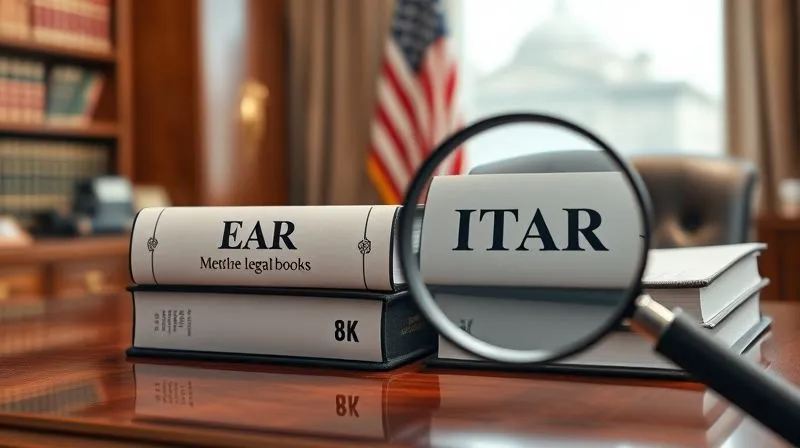
The US export control system is primarily governed by two distinct sets of regulations: the Export Administration Regulations (EAR), administered by the Bureau of Industry and Security (BIS) within the Department of Commerce, and the International Traffic in Arms Regulations (ITAR), managed by the Directorate of Defense Trade Controls (DDTC) within the Department of State. While both aim to protect national security and foreign policy interests, their scope and enforcement mechanisms differ significantly.
The EAR is broader, covering most commercial and dual-use items, software, and technology. If an item is not specifically enumerated on the US Munitions List (USML) under ITAR, it generally falls under EAR jurisdiction. ITAR, on the other hand, is much more stringent, regulating "defense articles" and "defense services" as defined on the USML. These are items specifically designed, developed, configured, adapted, or modified for a military application. The penalties for ITAR violations are notoriously severe.
My advice is always to err on the side of caution. If there's any doubt about whether an item is ITAR-controlled, it's imperative to seek guidance. A misclassification can have catastrophic consequences. The jurisdictional determination—deciding whether an item is subject to EAR or ITAR—is the absolute bedrock of your compliance strategy. Get this wrong, and everything else you do is built on sand.
3. Mastering ECCN and USML Classification: The Crucial First Step
Once you've determined whether your item falls under EAR or ITAR, the next critical step is precise classification. For EAR-controlled items, this means assigning an Export Control Classification Number (ECCN). An ECCN is a five-character alphanumeric designation (e.g., 3A001) that categorizes items based on their type, function, and technical parameters. It dictates the reasons for control (e.g., national security, missile technology, anti-terrorism) and, consequently, the licensing requirements for export to specific destinations or end-users.
For ITAR-controlled items, you'll need to determine their category on the USML. The USML is divided into 21 categories (e.g., Category I – Firearms, Close Assault Weapons and Combat Shotguns; Category XI – Military Electronics). This classification is often more straightforward if the item is clearly designed for military use, but can become complex with items that have both military and civilian applications, especially when dealing with commercial derivatives.
Actionable Steps for Accurate Classification:
- Understand Your Product Deeply: Go beyond marketing brochures. Dive into technical specifications, blueprints, software code, and chemical compositions. Know exactly what your product does and how it does it.
- Consult the Commerce Control List (CCL): For EAR items, meticulously review the CCL, found in Supplement No. 1 to Part 774 of the EAR. Use the ECCN categories (0-9) and product groups (A-E) as your guide. Pay close attention to the "Reasons for Control" and "License Requirements" sections for each ECCN.
- Utilize the USML: For potential ITAR items, go directly to 22 CFR §121.1 and review the 21 categories. Compare your item's characteristics against the detailed descriptions.
- Leverage Official Resources: Don't guess. If unsure, request a formal Commodity Jurisdiction (CJ) determination from DDTC for ITAR/EAR jurisdiction or a Classification Request (CCATS) from BIS for ECCN assignment. These official determinations provide legal certainty.
- Document Everything: Maintain detailed records of your classification process, including technical justifications, research, and any official determinations received. This is your audit trail.
4. Navigating Export Licensing Requirements: When & How to Apply
Once your dual-use item is correctly classified, the next step is determining if an export license is required for your specific transaction. This isn't a simple yes or no; it depends on a complex interplay of the ECCN/USML category, the destination country, the end-user, and the end-use of the item. Even if an item is controlled, there might be license exceptions or exemptions that allow export without a specific license, but these must be carefully verified and adhered to.
For EAR items, the Commerce Country Chart (Supplement No. 1 to Part 738 of the EAR) is your primary tool. You cross-reference the "Reasons for Control" listed in your ECCN with the columns on the chart corresponding to the destination country. If an 'X' appears, a license is likely required, unless an exception applies. For ITAR items, specific exemptions exist (e.g., for certain government agencies or international organizations), but generally, ITAR requires a license for nearly all exports and re-exports of defense articles and services.
Case Study: How GlobalTech Navigated a Complex Licensing Scenario
GlobalTech, a manufacturer of advanced industrial sensors (ECCN 3A001, controlled for National Security and Anti-Terrorism reasons), received an order from a research institute in a country often considered sensitive. Initially, their sales team assumed it was a straightforward commercial export. However, their compliance officer, leveraging the framework I've outlined, performed a thorough due diligence check. They identified that while the end-user was a research institute, the specific technology requested had potential applications in missile guidance systems, raising red flags for a "prohibited end-use."
Rather than proceeding, GlobalTech's compliance team initiated a license application through BIS's SNAP-R system, providing extensive documentation on the legitimate commercial end-use and end-user. They meticulously demonstrated that the institute was not involved in prohibited activities and that the sensors would be used solely for environmental monitoring. After a careful review, BIS granted the license, allowing GlobalTech to complete the sale legally. This proactive approach not only avoided a potential violation but also built trust with the regulatory authorities, ensuring GlobalTech maintained its export privileges and reputation.
5. Due Diligence & Denied Party Screening: Your First Line of Defense
Beyond classifying your goods and understanding licensing, scrutinizing who you're doing business with is paramount. This is where robust due diligence and denied party screening become indispensable. "Know Your Customer" (KYC) isn't just a banking term; it's a critical export control principle. You are responsible for ensuring that your exports do not end up in the hands of prohibited individuals, entities, or countries.
The US government maintains various restricted party lists, including the Denied Persons List, Entity List, Unverified List (all BIS), the Specially Designated Nationals (SDN) List (OFAC), and the Debarred List (DDTC). Exporting to anyone on these lists, directly or indirectly, without specific authorization, is a severe violation. Moreover, you must be vigilant about red flags indicating potential diversion or prohibited end-uses, such as unusual payment terms, vague descriptions of end-use, or reluctance to provide information.
Key Due Diligence Practices:
- Automated Screening Tools: Invest in reliable software solutions that continuously screen your customers, suppliers, and other relevant parties against all applicable government lists. Manual screening is prone to error and impractical for high-volume operations.
- Regular Rescreening: Restricted party lists are dynamic and updated frequently. Your screening process shouldn't be a one-time event; rescreen all parties at various stages of the transaction (order, shipment, payment) and periodically for ongoing relationships.
- End-User & End-Use Certificates: For higher-risk transactions, obtain written assurances from your foreign customers regarding the ultimate end-user and the intended end-use of your product. Verify this information to the best of your ability.
- Red Flag Awareness Training: Train your sales, logistics, and compliance teams to identify and escalate potential red flags. A sales rep hearing a customer say, "We'll figure out the final application later," should immediately trigger an internal review.
Expert Insight: "In my experience, almost every major export violation case I've seen could have been prevented by more thorough due diligence. It's not about being suspicious of everyone, but about being diligently curious and systematic in your verification. An ounce of prevention here is worth a ton of cure."
6. Developing a Robust Export Compliance Program (ECP)
A reactive, ad-hoc approach to export controls is a recipe for disaster. The most effective way to avoid violations is to implement a comprehensive, written Export Compliance Program (ECP). An ECP isn't just a document; it's a living system embedded within your company's operations, ensuring that compliance is a continuous process, not a sporadic task. BIS strongly recommends ECPs, and their existence can be a mitigating factor if a violation does occur.
An effective ECP encompasses policies, procedures, training, and internal controls designed to prevent, detect, and correct non-compliance. It signals to regulators that your company takes its obligations seriously and is committed to operating within the bounds of the law. This commitment starts from the top, requiring active support and resources from senior management.
Core Components of an Effective ECP:
- Management Commitment: A clear statement from senior leadership outlining the company's commitment to compliance and designating responsible personnel.
- Risk Assessment: Identify your specific export control risks based on your products, destinations, customers, and business model.
- Classification Procedures: Detailed processes for accurately classifying all items, software, and technology.
- Licensing & Authorization Procedures: Guidelines for determining license requirements, applying for licenses/exceptions, and managing conditions.
- Denied Party Screening & Due Diligence: Established procedures for vetting all parties to a transaction.
- Recordkeeping: Policies for maintaining all export-related documentation for the required period (typically 5 years).
- Training & Awareness: A robust training program for all relevant employees, tailored to their roles.
- Internal Audits & Reviews: Regular self-assessments to ensure the ECP is effective and identify areas for improvement.
- Violation & Enforcement Procedures: A clear process for reporting and addressing potential violations, including voluntary self-disclosures.
According to a survey by Deloitte, companies with well-structured compliance programs are significantly less likely to face enforcement actions and, if they do, often receive more favorable treatment from regulators. This isn't just about avoiding penalties; it's about building a sustainable and trustworthy global business.
| ECP Component | Key Action | Frequency |
|---|---|---|
| Management Commitment | Issue policy statement, appoint lead | Annual review |
| Risk Assessment | Identify product, country, end-user risks | Bi-annual or as needed |
| Classification Procedures | Document ECCN/USML process | Ongoing, per product |
| Denied Party Screening | Automated screening, red flag training | Per transaction, continuous |
| Training & Awareness | Role-based training | Annual mandatory, new hires |
| Internal Audits | Review processes, identify gaps | Annual, independent |
7. Managing Technology Transfers and Deemed Exports
Many companies focus heavily on the physical shipment of goods, overlooking a critical aspect of export controls: the transfer of technology and software. This includes "deemed exports," which occur when controlled technology or source code is released to a foreign national within the US. For example, if your R&D team in the US shares technical data about a controlled dual-use component with a foreign national employee (even if they're a green card holder, their country of origin matters), that's considered an export to their home country and may require a license.
Similarly, providing foreign nationals with access to controlled technology through internal networks, cloud services, or even verbal discussions can trigger deemed export obligations. This is particularly relevant for companies engaged in cutting-edge research, software development, or manufacturing involving advanced materials.
Preventing Deemed Export Violations:
- Identify Controlled Technology: Pinpoint which of your technologies or software are subject to EAR or ITAR controls.
- Employee Screening: Screen all foreign national employees against restricted party lists and determine if their access to controlled technology requires a license based on their nationality.
- Technology Control Plans (TCPs): Implement TCPs to restrict access to controlled technology within your facilities. This can involve physical segregation, password protection, and need-to-know access policies.
- Training: Educate employees, especially those in R&D, IT, and HR, about the risks and requirements of deemed exports.
This area is a frequent source of inadvertent violations. I've often seen companies fail to realize that their own employees, simply by performing their job functions, can trigger export control liabilities. A robust ECP must explicitly address these internal technology transfer risks.
8. Recordkeeping and Post-Shipment Obligations
Diligent recordkeeping is not merely a bureaucratic chore; it's a fundamental pillar of export compliance. Should BIS or DDTC ever audit your company or investigate a potential violation, your records will be your primary defense. In my experience, incomplete or disorganized records are often as damaging as an actual violation itself, as they can lead to assumptions of non-compliance or hinder your ability to prove due diligence.
Under both EAR and ITAR, you are generally required to retain all export-related documentation for five years from the date of export or the date of the last action. This includes, but is not limited to: classification determinations, license applications and approvals, denied party screening results, end-user statements, shipping documents (AES filings, air waybills, bills of lading), invoices, purchase orders, and internal compliance review documents.
Best Practices for Recordkeeping:
- Centralized System: Implement a centralized, secure system (digital is often best) for storing all export compliance records.
- Accessibility: Ensure records are easily retrievable and organized logically, ideally by transaction.
- Consistency: Establish clear procedures for what records must be kept, by whom, and for how long.
- Regular Audits: Periodically audit your recordkeeping practices to ensure compliance and identify any gaps.
Remember, the burden of proof is on the exporter. If you can't produce the records to demonstrate compliance, regulators will assume you weren't compliant. Maintaining meticulous records is your insurance policy in the complex world of international trade.
9. Responding to Potential Violations: A Proactive Approach
Even with the most robust ECP, mistakes can happen. What distinguishes a responsible exporter is not the absence of errors, but how they respond when potential violations are discovered. A proactive and transparent approach can significantly mitigate the penalties associated with non-compliance.
The first step upon discovering a potential violation is to stop the activity immediately and conduct an internal investigation. This investigation should be thorough, objective, and documented, aiming to understand the scope of the violation, its root cause, and the parties involved. Once the facts are established, you must then decide whether to submit a Voluntary Self-Disclosure (VSD) to the relevant regulatory agency (BIS, DDTC, or OFAC).
The Power of Voluntary Self-Disclosure (VSD):
- Mitigation of Penalties: Both BIS and DDTC offer significant mitigation of penalties for VSDs. While a VSD doesn't guarantee immunity, it generally results in less severe sanctions compared to violations discovered through other means (e.g., third-party tips, government audits).
- Demonstrates Good Faith: A VSD demonstrates your company's commitment to compliance and good corporate citizenship.
- Control the Narrative: By disclosing voluntarily, you control the information flow and can present your findings and corrective actions in a structured manner.
As marketing guru Seth Godin often says, "The cost of being wrong is less than the cost of doing nothing." This rings especially true in export compliance. Ignoring a potential violation or hoping it won't be discovered is a far riskier strategy than proactively addressing it. Engaging experienced legal counsel specializing in export controls is highly advisable during this sensitive process to ensure proper reporting and strategy. BIS provides detailed guidance on enforcement actions and VSDs, emphasizing the importance of cooperation and remediation.
Frequently Asked Questions (FAQ)
Q: What's the biggest misconception companies have about dual-use goods? The most pervasive misconception is that if an item has a clear commercial application, it can't be dual-use or subject to strict controls. Many believe that if they're not selling directly to a military entity, they're in the clear. However, dual-use status is determined by the item's inherent capabilities and potential applications, not solely by the exporter's intent or the immediate end-user. A high-performance sensor used in a commercial drone can still be dual-use if it could also be integrated into military systems.
Q: How often should we update our Export Compliance Program (ECP)? Your ECP should be a living document, not something created once and forgotten. I recommend a formal, comprehensive review and update at least annually. However, significant changes in your business (new products, markets, acquisitions), regulatory updates (which happen frequently), or identified compliance gaps should trigger immediate updates. Regular internal audits are key to keeping it current and effective.
Q: Can small businesses really comply with these complex rules, or are they exempt? Absolutely, small businesses are not exempt from US export control laws. The regulations apply equally, regardless of company size. While the resources available to small businesses may be more limited, the principles of compliance remain the same. In fact, due to fewer internal controls and less dedicated staff, small businesses can be disproportionately vulnerable to violations. My advice for smaller entities is to leverage external expertise (consultants, legal counsel) and focus on building a lean, but effective, ECP that prioritizes their highest risks. Resources like Export.gov offer valuable guidance for businesses of all sizes.
Q: What are the typical penalties for US export control violations? The penalties are severe and can be both civil and criminal. Civil penalties can reach hundreds of thousands of dollars per violation, or even twice the value of the transaction. Criminal penalties can involve multi-million dollar fines for corporations and significant prison sentences (up to 20 years) for individuals. Additionally, companies can lose their export privileges, be placed on denied party lists, and suffer immense reputational damage. The specific penalties depend on the nature, severity, and frequency of the violation, as well as the company's cooperation and previous compliance history.
Q: How do re-exports and transfers (in-country) fit into this framework? US export controls extend beyond the initial export from the US. A "re-export" occurs when a US-origin item is shipped from one foreign country to another. A "transfer (in-country)" refers to a change of ownership or control of a US-origin item within a single foreign country. Both re-exports and transfers are subject to US regulations, meaning that even if your foreign customer sells or moves the US-origin dual-use item, they (and potentially you, if you were aware or involved) must comply with US export control laws, including licensing requirements. This is why end-use and end-user controls are so vital. Always know the ultimate destination and use of your controlled goods.
Key Takeaways and Final Thoughts
Navigating the intricate landscape of US export controls for dual-use goods can seem daunting, but it is an essential aspect of responsible international trade. As I've emphasized throughout my career, compliance isn't just about avoiding penalties; it's about safeguarding your business's future, protecting national security, and upholding your reputation as a trustworthy global partner. The consequences of non-compliance are simply too high to ignore.
- Know Your Product: Understand its true capabilities and potential dual-use nature.
- Know the Rules: Master ECCN/USML classification and licensing requirements under EAR and ITAR.
- Know Your Customer: Implement rigorous due diligence and denied party screening.
- Build a Strong ECP: Establish a comprehensive, living Export Compliance Program from the top down.
- Manage Technology: Don't overlook deemed exports and internal technology transfers.
- Document Everything: Maintain meticulous records for all export transactions.
- Act Proactively: Address potential violations promptly and consider Voluntary Self-Disclosure.
The journey to full compliance is ongoing, requiring continuous vigilance, education, and adaptation to evolving regulations. By embracing these principles and investing in a robust compliance framework, you're not just avoiding violations; you're building a resilient, ethical, and sustainable foundation for your international business ventures. Stay informed, stay diligent, and remember that expert guidance is always available to help you navigate these complex waters. The DDTC website is another critical resource for ITAR-specific information, while OFAC's official site provides details on sanctions programs. Your commitment to compliance is your greatest asset in the global marketplace.
Recommended Reading
- 7 Proven Strategies: Overcoming Juror Skepticism in Mild Traumatic Brain Injury Cases
- Avoid Penalties: How to Report Foreign Assets to the IRS Correctly
- Can Schools Legally Search Student Phones Without Consent? 5 Key Scenarios
- What to Do When Conservation Easement Terms Are Violated? 7 Steps for Landowners
- Contested Divorce Trial: How to Prepare and Win Your Case




Comments
Leave a comment below. Your email will not be published. Required fields marked with *