



How to Block Unconstitutional Legislation Before Final Vote?
For over two decades in the field of constitutional law, I’ve witnessed the intricate and often opaque dance of the legislative process. It's a system designed with checks and balances, yet time and again, bills with glaring constitutional flaws manage to advance, sometimes perilously close to becoming law. I've seen the frustration, the sense of powerlessness, and the eventual damage when citizens feel their fundamental rights are being eroded by poorly conceived or intentionally overreaching legislation.
The problem is profound: once an unconstitutional bill becomes law, the path to redress is significantly more arduous and expensive, often requiring years of litigation. The chilling effect on individual liberties or the economic disruption caused by such laws can be immediate and devastating. Many believe that the only recourse is through the courts after a law is enacted, but I'm here to tell you that this is a reactive, rather than proactive, approach. There's a critical window for intervention, and it's *before* the final vote.
In this definitive guide, I will share the strategies, insights, and actionable frameworks I've cultivated through years of advising on constitutional matters and engaging with legislative bodies. You'll learn not just *what* to do, but *how* to effectively mobilize, communicate, and influence the legislative process to safeguard constitutional principles and block unconstitutional legislation before it inflicts harm. This isn't just about legal theory; it's about practical, impactful civic engagement.
Understanding the Legislative Process: A Prerequisite for Intervention
Before you can effectively block unconstitutional legislation, you must first understand the terrain. The legislative process, whether at the federal or state level, is a multi-stage journey, each offering unique points of intervention. As a constitutional law specialist, I've always emphasized that knowledge of this process isn't just for lobbyists or legal professionals; it's essential for every engaged citizen.
The Bill's Journey: From Idea to Law
A bill typically begins as an idea, often drafted by legislators, interest groups, or even executive agencies. It's then introduced in one chamber (e.g., House of Representatives or Senate), assigned to a committee, debated, potentially amended, and voted upon. If it passes, it moves to the other chamber, where the process largely repeats. If both chambers pass differing versions, a conference committee might reconcile them. Finally, the reconciled bill is sent to the President or Governor for signature or veto. Each of these stages represents a potential chokepoint for unconstitutional legislation.
- Introduction: The bill is formally presented.
- Committee Review: Bills are assigned to specialized committees for detailed examination, hearings, and mark-up (amendments). This is often where the most significant changes or outright rejections occur.
- Floor Debate and Vote: The full chamber debates the bill, potentially offering more amendments, and then votes.
- Inter-Chamber Review: The bill moves to the other legislative body for a similar process.
- Conference Committee (if needed): Reconciles differences between House and Senate versions.
- Executive Review: President or Governor signs or vetoes the bill.
Expert Insight: My experience has taught me that the most effective interventions occur early in this process – ideally during committee review or even before a bill is formally introduced. The further a bill progresses, the more political momentum it gains, making it exponentially harder to stop.
Understanding these stages allows you to pinpoint the most strategic moments for engagement. For instance, a bill that has just passed committee review in one chamber still faces significant hurdles, offering multiple avenues for advocacy. For a detailed look at the federal legislative process, I often refer individuals to official government resources like Congress.gov's explanation of the legislative process.

Early Identification: Spotting Constitutional Red Flags
The ability to identify potential constitutional infirmities early is paramount. This isn't about being a constitutional scholar, but rather developing a keen eye for common legislative pitfalls that often lead to constitutional challenges. I've spent years training legal teams and advocates to look for these red flags, and the principles are accessible to everyone.
Common Areas of Constitutional Vulnerability
Unconstitutional legislation often infringes upon established constitutional principles or rights. While the specifics can be complex, many issues fall into predictable categories:
- Due Process Violations: Does the bill deprive individuals of life, liberty, or property without fair procedures or a legitimate governmental purpose?
- First Amendment Infringements: Does it restrict freedom of speech, religion, assembly, or the press without meeting strict scrutiny standards?
- Equal Protection Concerns: Does it treat different groups of people differently without a compelling or rational basis, depending on the classification?
- Federalism Overreach: Does the federal government (or a state government, within its own constitutional framework) attempt to legislate in an area traditionally reserved for states, or vice-versa?
- Separation of Powers Issues: Does the bill improperly delegate authority, infringe upon the powers of another branch, or allow one branch to usurp the functions of another?
- Ex Post Facto Laws or Bills of Attainder: Does it retroactively criminalize an act or punish a specific individual or group without a trial?
Expert Insight: Don't assume legislators or their staff are always experts in constitutional law. Political expediency or a lack of thorough legal review can lead to flawed bills. Your informed scrutiny can be the first line of defense.
For instance, a bill that proposes to ban certain types of protest signage without a clear, narrowly tailored justification would immediately raise First Amendment concerns. Similarly, a state bill that attempts to regulate interstate commerce in a way that burdens other states could face challenges under the Commerce Clause. Learning to recognize these patterns is key. Many legal organizations, such as the American Bar Association, offer resources and analyses that can help citizens understand these complex issues.
Strategy 1: The Power of Informed Public Advocacy and Grassroots Movements
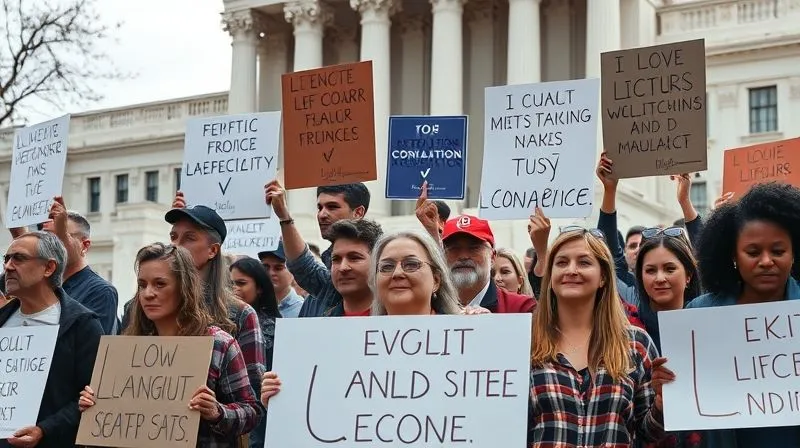
One of the most potent, yet often underestimated, tools for blocking unconstitutional legislation is organized public advocacy. As a mentor, I always tell my students that lawmakers, regardless of their political leanings, are ultimately accountable to their constituents. A well-informed, unified, and vocal public can exert immense pressure.
Mobilizing Your Community
Effective grassroots movements are not spontaneous; they are carefully organized and sustained. Here's how to build one:
- Thorough Research: Understand the bill's exact language, its potential constitutional flaws, and its likely impact. Be able to articulate these points clearly and concisely.
- Organize Locally: Identify key individuals and groups in your community who share your concerns. Start small, perhaps with a neighborhood meeting or an online forum.
- Educate and Inform: Develop clear, accessible materials (fact sheets, social media graphics, short presentations) that explain the bill's problems in plain language. Host public forums, webinars, or town halls.
- Build a Coalition: Reach out to other organizations – local businesses, civil liberties groups, faith-based communities, environmental advocates – who might be impacted by the bill, even if their primary concerns differ from yours. A broad coalition sends a powerful message.
- Coordinate Actions: Organize collective actions such as letter-writing campaigns, phone-banking days, or peaceful demonstrations at district offices or the state capitol. The cumulative effect of hundreds or thousands of voices is far greater than isolated individual efforts.
Case Study: The 'Freedom to Innovate' Coalition
In a mid-sized state, a proposed bill aimed to regulate specific emerging technologies, ostensibly for public safety. However, its broad language included provisions that could be interpreted as granting unprecedented search and seizure powers to state agencies without proper judicial oversight, raising significant Fourth Amendment concerns. A local tech entrepreneur, realizing the bill's implications, initiated the 'Freedom to Innovate' Coalition. They partnered with the state's ACLU chapter, a local university's law clinic, and several small business associations. By meticulously documenting the bill's constitutional flaws and its potential to stifle economic growth, they launched an extensive public education campaign. Their coordinated efforts, including targeted emails, social media blasts, and a well-attended public forum where legal experts spoke, led to thousands of constituent calls and letters to legislators. This public outcry, fueled by clear constitutional arguments, pressured key committee members to table the bill indefinitely for 'further review and amendment,' effectively blocking it before a floor vote.
Strategy 2: Engaging with Legislative Staff and Committees
While public pressure is vital, direct engagement with legislative staff and committee members is often the most impactful way to inject constitutional arguments into the legislative discourse. These individuals are the gatekeepers and the architects of legislation. They are often more receptive to detailed, reasoned arguments than to broad protests alone.
Direct Communication Channels
Your goal here is to provide concrete, compelling reasons why the bill is unconstitutional and why it should not proceed. Here are the most effective channels:
- Emails and Letters: These should be concise, professional, and clearly state your constitutional concerns, citing specific sections of the bill and the relevant constitutional provisions. Include your contact information.
- Phone Calls: A brief, polite phone call to a legislative aide can be surprisingly effective. State your name, where you live, and your specific constitutional objection to the bill.
- In-Person Meetings: If possible, schedule a meeting with your representative or senator, or their legislative director. Come prepared with a concise summary of your concerns, proposed amendments (if applicable), and any supporting legal analysis. Be respectful, but firm in your constitutional arguments.
- Committee Hearings: If the bill is under review by a committee, monitor for public hearing announcements. Submitting written testimony or, if selected, providing oral testimony, is a powerful way to put your constitutional objections on the official record.
Crafting a Persuasive Argument
When communicating, focus on clarity and evidence. Avoid emotional appeals alone. Instead:
- Cite Specific Constitutional Provisions: Don't just say 'it's unconstitutional.' Specify *which* amendment or clause is violated.
- Explain the 'How': Detail *how* the bill's language or intent infringes upon that provision.
- Offer Alternatives: If possible, suggest specific amendments that could remedy the constitutional defect without undermining the bill's legitimate policy goals. This demonstrates a constructive approach.
- Provide Legal Precedent: Briefly reference any relevant Supreme Court or state supreme court rulings that support your interpretation.
Expert Insight: Legislative staff are often overwhelmed. Your ability to present a clear, well-researched, and actionable argument – especially one that offers solutions – will make your input stand out and significantly increase its influence.
The effectiveness of different communication methods can vary based on the legislative stage and the specific lawmaker. Here's a general guide based on my observations:
| Method | Impact Level | Best Use | Pro | Con |
|---|---|---|---|---|
| Email/Letter | Moderate | Initial contact, detailed arguments | Allows for thorough explanation | Can be easily overlooked |
| Phone Call | Moderate to High | Quick, direct message, follow-up | Immediate human contact, harder to ignore | Limited detail, can be rushed |
| In-Person Meeting | High | Complex issues, building relationships | Personal connection, direct dialogue | Requires scheduling, preparation |
| Committee Testimony | Very High | Formal record, expert input | Public record, directly informs decision-makers | Requires expertise, often competitive slots |
Strategy 3: Leveraging Expert Opinions and Legal Scholarly Input
When constitutional questions are at stake, the opinions of legal scholars, law professors, and non-partisan legal organizations carry significant weight. Their objective analysis and deep understanding of constitutional jurisprudence can provide the necessary intellectual firepower to challenge unconstitutional legislation.
The Role of Constitutional Scholars and Legal Organizations
Engaging legal experts isn't just for courtrooms. Their input can be critical in legislative battles:
- Expert Testimony: During committee hearings, constitutional law professors or attorneys from civil liberties organizations can provide expert testimony, dissecting the bill's flaws and explaining its constitutional implications in detail. This adds an authoritative, non-partisan voice.
- Legal Memos and Briefs: These experts can draft legal memoranda or 'friend of the court' (amicus) briefs, even at the legislative stage, outlining the constitutional defects of a bill. These documents can be submitted to committees, individual legislators, and even the executive's legal counsel.
- Public Statements and Op-Eds: Scholars can write op-eds or sign public letters that articulate constitutional concerns, influencing public opinion and providing media outlets with credible sources.
As I've often seen, a well-reasoned legal opinion from a respected academic institution can sway undecided legislators who are genuinely concerned about the legal integrity of the laws they pass. It provides them with a justification to oppose a bill that might otherwise have political momentum.
Strategy 4: Strategic Use of Media and Public Relations
In a world saturated with information, effectively communicating your constitutional concerns through media channels is crucial. Public opinion, when properly informed and mobilized, can be a powerful force against unconstitutional legislation. This isn't about sensationalism; it's about strategic communication.
Shaping Public Opinion
Leveraging media and PR can amplify your message and pressure lawmakers:
- Op-Eds and Letters to the Editor: Write compelling pieces for local and national newspapers, explaining the constitutional issues at stake in clear, accessible language. Focus on how the bill affects ordinary citizens.
- Press Releases and Conferences: If you have a significant development, such as a coalition forming or a new legal analysis, issue a professional press release. Consider a press conference with key stakeholders and legal experts.
- Social Media Campaigns: Utilize platforms like Twitter, Facebook, and Instagram to disseminate information, share expert opinions, and organize digital advocacy. Use clear hashtags and compelling visuals.
- Engage with Journalists: Cultivate relationships with local journalists who cover legislative affairs or legal issues. Provide them with accurate information, compelling stories, and access to experts.
- Targeted Advertising: In some cases, a well-placed digital ad campaign or even traditional print/radio ads can raise awareness among specific demographics or in key legislative districts.
Expert Insight: A compelling narrative that connects abstract constitutional principles to real-world impacts on individuals or communities is far more effective than dry legal arguments alone. Tell the story of *who* will be harmed and *how* their rights will be violated.
The goal is to create a groundswell of public awareness and concern that legislators cannot ignore. When media outlets consistently report on the constitutional flaws of a bill, it creates an environment where passing it becomes a political liability. I've seen seemingly unstoppable bills grind to a halt when public scrutiny, fueled by strategic media engagement, exposes their fundamental flaws.
Strategy 5: Coalition Building Across Diverse Groups
One of the most effective tactics I've observed in my career is the formation of broad, diverse coalitions. An unconstitutional bill rarely impacts just one segment of society. By identifying common ground, even among groups with otherwise divergent interests, you can amplify your collective voice and leverage different strengths.
Strength in Numbers: Forming Alliances
Consider these steps for effective coalition building:
- Identify Shared Interests: Look beyond the obvious. While a bill might primarily affect free speech, it could also have economic implications for businesses, privacy concerns for tech companies, or due process issues for certain communities.
- Reach Out to Diverse Stakeholders: This could include civil liberties organizations, business associations, labor unions, religious groups, environmental advocates, academic institutions, and even other political factions.
- Define Common Objectives: While each group may have its own specific concerns, identify the overarching goal that unites them – in this case, blocking the unconstitutional legislation.
- Distribute Responsibilities: Leverage the unique strengths of each coalition member. Some might excel at legal analysis, others at grassroots organizing, media outreach, or direct lobbying.
- Maintain Open Communication: Regular meetings and clear communication channels are vital to keeping the coalition unified and effective.
Expert Insight: A coalition that spans the political spectrum and includes seemingly disparate groups sends an undeniable message to lawmakers: this isn't a partisan issue; it's a fundamental constitutional one that concerns a broad base of constituents.
For example, a bill that attempts to restrict online speech might draw opposition from civil liberties groups concerned about the First Amendment, tech companies worried about innovation and liability, and small businesses that rely on online platforms for marketing. Uniting these voices under a common constitutional banner creates a formidable force.
Strategy 6: Pre-Emptive Legal Analysis and Drafting Alternatives
Don't just be an opponent; be a proposer. In my experience, legislators are often more open to amending or even replacing a flawed bill if presented with a viable, constitutionally sound alternative. This proactive approach demonstrates not just opposition, but a commitment to good governance.
Offering Constructive Solutions
This strategy involves a more in-depth engagement:
- Conduct Independent Legal Analysis: Engage constitutional law experts (or utilize volunteer legal professionals) to conduct a thorough analysis of the bill, pinpointing its unconstitutional elements with precision.
- Draft Specific Amendments: Based on this analysis, draft specific, legally sound amendments that would remove the constitutional defects while preserving any legitimate policy goals of the bill.
- Develop Alternative Legislation: If the bill is fundamentally flawed, consider drafting an entirely new, constitutionally compliant piece of legislation that addresses the same policy issue but does so in a lawful manner.
- Present to Key Stakeholders: Share your analysis, proposed amendments, or alternative legislation with legislative staff, committee members, and coalition partners. Frame it as helping lawmakers achieve their goals without legal challenge.
Expert Insight: Legislators are often seeking practical solutions. By offering them a path to avoid constitutional challenges and potential lawsuits, you provide them with a politically palatable way to address concerns and demonstrate leadership.
This approach requires significant effort and expertise, but its impact can be profound. It shifts the conversation from mere opposition to constructive problem-solving, making it harder for lawmakers to dismiss your concerns as purely obstructionist. It shows that you are not just against something, but you are *for* something better and constitutionally sound.
Strategy 7: Understanding and Utilizing Gubernatorial Veto Power (State Level)
While the focus of this article is on blocking legislation *before* a final vote, it's crucial to understand that even after a bill passes both chambers, there's often one last, powerful check: the executive veto. At the state level, the Governor's veto power can be a critical final safeguard against unconstitutional legislation.
The Governor's Role as a Check
The Governor, like the President, has the power to veto bills passed by the legislature. While this is a post-vote action, your pre-vote advocacy can lay the groundwork for a successful veto:
- Educate the Executive Branch: Begin engaging with the Governor's legal counsel and policy advisors early in the process. Provide them with the same comprehensive legal analysis and constitutional arguments you've shared with legislators.
- Highlight Potential Litigation: Emphasize the likelihood of costly and time-consuming lawsuits if the unconstitutional bill becomes law. Governors are often sensitive to the financial and political implications of defending flawed legislation in court.
- Mobilize Public Pressure: If the bill passes the legislature, direct your grassroots advocacy towards the Governor's office. A flood of constituent calls, emails, and letters urging a veto can be highly influential.
- Provide Veto Justification: Offer the Governor's office a clear, constitutionally sound rationale for a veto, which they can use in their public statement.
While a legislative override of a gubernatorial veto is possible, it often requires a supermajority vote, which can be difficult to achieve, especially if there are strong constitutional objections. Therefore, influencing the Governor can be a powerful final line of defense. Information on specific state legislative processes and gubernatorial powers can usually be found on official state government websites, such as a state's legislative information system or the Governor's office page.
Frequently Asked Questions (FAQ)
Can ordinary citizens truly make a difference in blocking unconstitutional legislation? Absolutely. While the legislative process can seem daunting, history is replete with examples of ordinary citizens and grassroots movements successfully influencing legislative outcomes. Your voice, especially when combined with others and armed with clear, constitutional arguments, carries significant weight with elected officials who are ultimately accountable to their constituents. My experience shows that informed, persistent advocacy is often the most powerful tool.
What if the unconstitutional aspect of a bill is subtle or highly technical? How can I effectively argue it? For subtle or highly technical constitutional issues, it's crucial to seek out and leverage expert opinions. Partner with legal aid organizations, civil liberties groups, or constitutional law professors. They can provide the detailed analysis and persuasive arguments needed. Your role can then shift to disseminating their expert findings to legislators, media, and the public in an accessible way. Don't feel you need to be the expert yourself; know how to find and utilize them.
Is there a specific point in the legislative process where intervention is most effective? While intervention is possible at any stage, my decades of experience suggest that the earlier, the better. The committee review stage is arguably the most effective. Bills are less entrenched, and committee members are often more open to detailed analysis and amendments. Once a bill gains momentum and passes one chamber, it becomes significantly harder to stop, though not impossible.
What if a bill passes despite our best efforts to block it on constitutional grounds? If an unconstitutional bill becomes law, the fight shifts to the judicial branch. You would then explore options for legal challenge through the courts. This often involves identifying individuals or groups directly harmed by the law who have standing to sue. While this is a reactive measure, the groundwork laid during the legislative advocacy phase (e.g., documented constitutional arguments, expert opinions) can be invaluable in building a strong legal case.
How can I stay informed about potential unconstitutional legislation in my state or at the federal level? Staying informed is key. I recommend regularly checking official legislative websites (e.g., Congress.gov for federal, or your state legislature's website). Many states offer email alerts for specific bill tracking. Additionally, subscribe to newsletters from civil liberties organizations, non-partisan legal watchdog groups, and reputable news sources that focus on legislative and constitutional issues.
Key Takeaways and Final Thoughts
- Early Intervention is Paramount: The earlier you engage in the legislative process, the higher your chances of success in blocking unconstitutional legislation.
- Knowledge is Power: Understand the bill's content and the legislative process itself. This empowers you to identify constitutional flaws and target your advocacy effectively.
- Advocacy is Multi-faceted: Combine grassroots mobilization, direct communication with lawmakers, expert legal analysis, and strategic media engagement for maximum impact.
- Build Coalitions: Unite diverse groups with shared concerns to amplify your voice and demonstrate broad-based opposition.
- Be Constructive: Don't just oppose; propose solutions. Offer clear amendments or alternative legislation that address policy goals while upholding constitutional principles.
- Persistence Pays Off: Blocking unconstitutional legislation is rarely a quick victory. It requires sustained effort, resilience, and unwavering commitment to constitutional principles.
As a veteran in constitutional law, I've seen firsthand that the health of our constitutional republic depends not just on the wisdom of our founders, but on the vigilance and active participation of its citizens. The power to protect our fundamental laws and rights rests in our hands. By employing these strategies, you are not just an observer; you become a critical guardian of our constitutional framework. Your informed action can, and does, make a profound difference. Never underestimate the collective power of a committed citizenry to uphold the supreme law of the land.
Recommended Reading
- Mastering Your I-601 Waiver: 7 Steps for Extreme Hardship Claims
- 7 Proven Ways: How to Safeguard Senior Assets from Long-Term Care Costs
- Unraveling the Mystery: How Does Customary International Law Form?
- 5 Strategies: Proving Standard of Care Breach with Incomplete Medical Records
- Director Duties During Corporate Insolvency: Your 7-Step Legal Compass





Comments
Leave a comment below. Your email will not be published. Required fields marked with *