



How to convert an LLC to C-Corp without triggering tax penalties?
For over 15 years in corporate law, I've had a front-row seat to the intricate dance of business evolution. I've witnessed countless promising ventures hit unexpected roadblocks, not because of a flawed product or market, but due to avoidable missteps in their legal and tax structuring. One of the most common, and potentially costly, transitions I've guided clients through is the metamorphosis from a flexible LLC to a more structured C-Corporation.
The allure of the C-Corp – access to venture capital, employee stock options, public offering potential – is undeniable for many growing businesses. However, the path to this corporate structure is often fraught with hidden tax penalties that can cripple a company before it even realizes its C-Corp dreams. The dread of an unexpected IRS bill or a complex restructuring nightmare is a very real pain point for many entrepreneurs contemplating this move.
This article isn't just a guide; it's a strategic roadmap forged from years of experience, designed to equip you with the knowledge and actionable frameworks to navigate your LLC to C-Corp conversion seamlessly and, most importantly, tax-efficiently. We'll delve into the nuances, illuminate the pitfalls, and provide you with expert insights to ensure your business transition is a catalyst for growth, not a source of financial regret.
Understanding the 'Why': When an LLC to C-Corp Conversion Makes Sense
Before we dive into the 'how,' it's crucial to understand the 'why.' A decision to convert your LLC to a C-Corp isn't made lightly; it's typically driven by significant strategic objectives that an LLC structure simply cannot accommodate as effectively. As an industry specialist, I've observed several key drivers:
- Access to Venture Capital and External Equity Funding: This is often the primary motivator. VCs and institutional investors almost exclusively prefer to invest in C-Corps because of their familiar, standardized corporate governance structure, ease of issuing different classes of stock, and straightforward equity ownership.
- Employee Stock Options (ESOPs) and Equity Compensation: C-Corps are the preferred entity for offering stock options to employees, which is a powerful tool for attracting and retaining top talent in competitive markets, especially tech startups. LLCs can offer profit interests, but stock options are generally more appealing and easier to administer.
- Future Public Offering (IPO): If your long-term vision includes going public, converting to a C-Corp is a prerequisite. The entire public market infrastructure is built around the C-Corp model.
- Lower Corporate Tax Rates on Retained Earnings: While C-Corps face 'double taxation' on distributed profits, their corporate tax rate on retained earnings (profits not distributed to shareholders) can sometimes be lower than individual income tax rates, making them attractive for businesses planning significant reinvestment.
- Clearer Corporate Governance and Scalability: C-Corps offer a more rigid, yet universally understood, governance structure with a clear separation of ownership and management (shareholders, board of directors, officers). This can streamline decision-making as the company scales.
"The decision to convert is less about avoiding taxes today and more about enabling strategic growth tomorrow. It's an investment in your company's future potential, but one that demands meticulous tax planning."
The Perils of Unplanned Conversion: Common Tax Traps to Avoid
This is where many businesses stumble. Without careful planning, converting an LLC to a C-Corp can inadvertently trigger significant tax liabilities. I've seen promising companies lose substantial capital due to these missteps. The IRS doesn't differentiate between accidental and intentional oversight; the tax bill arrives regardless.
The most common tax traps include:
- Deemed Liquidation: In certain conversion scenarios, the IRS may view the LLC as having 'liquidated' its assets, triggering gain recognition at the member level. This means members might owe taxes on the appreciated value of the LLC's assets, even if no cash changes hands.
- Gain Recognition on Appreciated Assets: If the LLC's assets (e.g., real estate, intellectual property, equipment) have significantly appreciated in value since their acquisition, a poorly executed conversion can result in the recognition of this gain, leading to a substantial tax liability for the LLC members.
- State-Level Taxes and Fees: Beyond federal taxes, states have their own rules. Some states impose conversion fees, franchise taxes, or even additional income taxes during the conversion process. Ignoring these can lead to unexpected costs and compliance issues.
- 'Boot' Issues: If, in addition to stock, the transferring members receive 'boot' (cash, other property, or even the assumption of certain liabilities) during a tax-free exchange, that boot can trigger immediate taxable gain.
- Loss of Prior Tax Attributes: An LLC electing C-Corp status might lose certain tax attributes it previously enjoyed, or the C-Corp might not be able to utilize prior LLC losses, impacting future tax planning.

It’s imperative to approach this process with a clear understanding of these potential pitfalls. Proactive tax planning and expert guidance are not luxuries; they are necessities.
Strategic Pathways: Two Primary Methods for LLC to C-Corp Conversion
When it comes to the actual mechanics of transforming your LLC into a C-Corp, there are generally two principal methods, each with its own legal and tax implications. Understanding these is fundamental to choosing the right, tax-efficient path for your business.
Method 1: Statutory Conversion (State-Specific)
Many states now offer a streamlined process for converting one entity type to another through a 'statutory conversion' or 'statutory merger.' This method is often the simplest from a legal standpoint because it allows the LLC to legally transform into a C-Corp under state law without necessarily creating a new legal entity. The converted entity retains its original EIN, and often, its contracts and assets automatically transfer.
- Advantages: Legal simplicity, continuity of existence (often retaining EIN, contracts, and licenses), reduced administrative burden.
- Disadvantages: Not all states offer statutory conversion, and the specific rules vary significantly by jurisdiction. Tax treatment still needs careful consideration; while legally seamless, the IRS may still view it as a 'deemed' transaction for tax purposes.
From a federal tax perspective, a statutory conversion of an LLC (taxed as a partnership) into a C-Corp is generally treated as a transfer of assets by the partnership to the corporation in exchange for stock, followed by the liquidation of the partnership. This is where Section 351, which we'll discuss next, becomes critical to ensure tax-free treatment.
Method 2: Non-Statutory Conversion (Asset or Equity Transfer)
This method involves a more active transfer of assets or equity. It typically takes one of two forms:
- Contribution of LLC Interests to a New C-Corp: The LLC members contribute their ownership interests (membership units) in the LLC to a newly formed C-Corp in exchange for stock in the C-Corp. The LLC then becomes a wholly-owned subsidiary of the C-Corp. The C-Corp can then either liquidate the LLC (merging its assets into the C-Corp) or keep it as a subsidiary.
- Contribution of LLC Assets to a New C-Corp: The LLC itself transfers all of its assets and liabilities to a newly formed C-Corp in exchange for C-Corp stock. The LLC then distributes this C-Corp stock to its members in exchange for their LLC interests, and the LLC dissolves.
Both non-statutory methods are often structured to qualify as a tax-free exchange under Internal Revenue Code Section 351, which is the cornerstone of avoiding tax penalties. This is a complex area, and the precise steps are critical.
| Conversion Method | Legal Simplicity | Tax Treatment (Federal) | Continuity (EIN, Contracts) | Key Consideration |
|---|---|---|---|---|
| Statutory Conversion | High (state-dependent) | Deemed Section 351 transaction | Generally maintained | State availability & specific rules |
| Non-Statutory (Asset Transfer) | Moderate to High | Section 351 (if structured correctly) | May require re-assignment | Strict adherence to Section 351 rules |
| Non-Statutory (Equity Transfer) | Moderate to High | Section 351 (if structured correctly) | LLC becomes subsidiary, then liquidated | Control requirement post-transfer |
Mastering Section 351: The Cornerstone of Tax-Free Conversion
If there's one section of the tax code you need to understand deeply for a tax-free LLC to C-Corp conversion, it's Internal Revenue Code Section 351. In my experience, misunderstanding or misapplying this section is the leading cause of unintended tax liabilities during conversions.
Section 351 allows for the transfer of property to a corporation by one or more persons solely in exchange for stock in such corporation, if, immediately after the exchange, such person or persons are in control of the corporation. If these conditions are met, no gain or loss is recognized on the transfer.
Key Requirements for Section 351 Protection:
- Transfer of 'Property': This includes cash, tangible assets (equipment, inventory), intangible assets (intellectual property, goodwill), and even certain liabilities. The key is that it must be 'property' in the IRS's eyes. Services rendered, for example, do not qualify as property for Section 351 purposes.
- 'Solely in Exchange for Stock': The transferors must receive only stock of the C-Corp in return for their property. If they receive 'boot' – anything other than stock, such as cash, promissory notes, or other property – gain may be recognized to the extent of the boot received. This is a critical point; even the assumption of certain liabilities can be considered boot if it exceeds the basis of the transferred property.
- 'Control Immediately After the Exchange': This is often the trickiest part. The transferors (the former LLC members) must collectively own at least 80% of the total combined voting power of all classes of stock entitled to vote and at least 80% of the total number of shares of all other classes of stock of the corporation immediately after the exchange. This 'control' must be maintained, and any pre-arranged disposition of stock that breaks this 80% threshold can invalidate the Section 351 protection.
Case Study: How 'InnovateTech LLC' Achieved a Tax-Free Conversion
InnovateTech LLC, a rapidly growing software startup with three co-founders, secured a term sheet from a venture capital firm. A key condition was converting to a C-Corp. The LLC had developed valuable software with a low basis but significant fair market value.
Working with their legal and tax advisors, the co-founders executed a non-statutory conversion. They formed 'InnovateTech Inc.' (a C-Corp) and, simultaneously, each co-founder contributed their entire LLC membership interest to InnovateTech Inc. in exchange for common stock in the new C-Corp. Immediately after the exchange, the three co-founders collectively owned 100% of the voting and non-voting stock of InnovateTech Inc., satisfying the 'control' requirement of Section 351.
The LLC then became a wholly-owned subsidiary of InnovateTech Inc. A few weeks later, after all necessary state filings, the LLC was formally merged into InnovateTech Inc. This careful sequencing ensured that the transfer of the appreciated software assets from the LLC to the C-Corp was covered by Section 351, allowing the co-founders to defer recognition of gain on the appreciated software until they eventually sold their C-Corp stock. This strategic execution saved them millions in immediate tax liabilities.

Navigating the Tax Landscape: Key IRS Forms and Filings
Once you've decided on the conversion method and ensured Section 351 compliance, the next crucial step is formalizing the change with the IRS and relevant state authorities. This involves specific forms and timely filings.
Essential Federal Filings:
- Form 8832, Entity Classification Election: While a statutory conversion or a direct transfer might automatically trigger C-Corp classification, it's often prudent to file Form 8832 to formally elect to be taxed as an association (a C-Corp). This removes any ambiguity, especially if your LLC was previously taxed as a partnership or a disregarded entity. This form has specific deadlines, generally effective 75 days before the filing date or up to 12 months after.
- Final Form 1065 (U.S. Return of Partnership Income): If your LLC was taxed as a partnership, you'll need to file a final Form 1065 for the period prior to the conversion date. This return will report all income, deductions, and credits up to the point of conversion.
- Initial Form 1120 (U.S. Corporation Income Tax Return): The newly formed or converted C-Corp will begin filing Form 1120 for its tax periods. The first return will cover the period from the conversion date through the end of its fiscal year.
- Informational Statement for Section 351 Transaction: Although not a separate form, the transferring parties (the former LLC members) and the new C-Corp must include a statement with their tax returns for the year of the exchange. This statement details the property transferred, the stock received, and relevant fair market values and adjusted bases. This is critical for IRS transparency and compliance.
State-Level Filings:
Don't overlook state requirements. Each state has its own corporate filing procedures, which may include:
- Filing Articles of Conversion or Articles of Incorporation with the Secretary of State.
- Obtaining new state tax IDs or updating existing ones.
- Amending or filing new corporate bylaws and resolutions.
- Complying with state-specific business license and permit updates.
Failure to properly file these documents can result in penalties, loss of limited liability protection, or even render the conversion invalid. The U.S. Small Business Administration (SBA) provides general guidance on business structures, but state-specific legal counsel is essential here.
Valuation and Basis: Critical Considerations for Future Tax Planning
Beyond the immediate conversion, understanding the valuation of assets and the basis of stock received is paramount for future tax planning. This step is often underestimated but has long-term implications for your C-Corp and its shareholders.
Fair Market Value (FMV) of Assets:
When assets are transferred from the LLC to the C-Corp in a Section 351 transaction, the C-Corp generally takes a 'carryover basis' in those assets. This means the C-Corp's basis in the assets is the same as the LLC's basis immediately before the transfer. However, the fair market value of these assets at the time of conversion is crucial for several reasons:
- Allocation of Purchase Price (if applicable): If the conversion involves any taxable components or future sales, FMV is key for allocating the purchase price.
- Depreciation and Amortization: While the basis carries over, understanding the FMV helps in assessing the economic value of assets and future depreciation calculations.
- Future Sale of Assets: The C-Corp's gain or loss on the future sale of these assets will be determined by comparing the sale price to its carryover basis.
Shareholder Basis in C-Corp Stock:
The LLC members who receive C-Corp stock in exchange for their LLC interests will have a 'substituted basis' in that stock. Their basis in the C-Corp stock will generally be the same as their adjusted basis in their LLC interests immediately before the conversion. This basis is crucial for:
- Future Sale of Stock: When shareholders eventually sell their C-Corp stock, their taxable gain or loss will be calculated based on the difference between the sale price and their substituted basis.
- Dividend Distributions: While not directly related to basis, understanding the underlying asset values and corporate earnings is key to managing future dividend distributions and avoiding 'return of capital' issues.

"Accurate valuation isn't just a compliance step; it's a foundational element of your C-Corp's financial future. Don't skimp on professional valuation services for significant assets, as it will pay dividends – literally and figuratively – down the line."
Post-Conversion Compliance: What Changes for Your C-Corp
The conversion doesn't end with the filings; it begins a new era of compliance and operational adjustments. A C-Corp operates under a different set of rules and expectations than an LLC, and understanding these changes is vital for seamless post-conversion operation.
Key Operational and Governance Changes:
- Corporate Formalities: C-Corps require strict adherence to corporate formalities, including regular board of directors' meetings, shareholder meetings, maintaining detailed minutes, and adopting corporate bylaws. These are not merely suggestions; they are crucial for maintaining the corporate veil and protecting limited liability.
- Double Taxation Implications: This is the most infamous characteristic of a C-Corp. Profits are taxed at the corporate level, and then again when distributed to shareholders as dividends. Strategic tax planning, such as reasonable salaries, bonuses, and qualified benefit plans, becomes essential to mitigate this.
- Accounting Methods: Most C-Corps are required to use the accrual method of accounting, whereas many LLCs (especially smaller ones) can use the cash method. This shift impacts how and when income and expenses are recognized.
- Payroll and Benefits: As an owner of a C-Corp, you are typically considered an employee and must be paid a 'reasonable salary' subject to payroll taxes. This opens up opportunities for more robust employee benefit plans, such as 401(k)s, health insurance, and other fringe benefits, which can be tax-deductible to the corporation.
- Capital Structure: C-Corps have greater flexibility in issuing different classes of stock (common, preferred) and other securities, which is vital for attracting different types of investors.
From my vantage point, the biggest mistake post-conversion is treating the C-Corp like the old LLC. The increased formalities are there for a reason and must be respected. Neglecting them can lead to significant legal and tax headaches. For more on corporate governance, I often recommend resources like those found on Harvard Business Review's Corporate Governance section.
Alternative Paths & Advanced Strategies: When C-Corp Isn't the Only Answer
While this article focuses on the LLC to C-Corp conversion, it's vital to acknowledge that it's not the only path, nor is it always the right one. As an experienced specialist, I always emphasize that the best entity structure aligns with your current and future business goals, risk tolerance, and tax situation.
Consider these alternatives or advanced strategies:
- Remaining an LLC: If you don't require external equity funding from VCs, prefer pass-through taxation, and value operational flexibility, staying an LLC might be the optimal choice. The growth of sophisticated LLC operating agreements means many corporate-like features can be built into an LLC without the C-Corp's tax complexities.
- Electing S-Corporation Status: An LLC can elect to be taxed as an S-Corp by filing Form 2553. An S-Corp offers liability protection and pass-through taxation, avoiding the double taxation of a C-Corp. This can be a strong option for profitable businesses looking to reduce self-employment taxes, but it comes with restrictions on ownership (e.g., limits on number and type of shareholders).
- Series LLCs: In certain states, a Series LLC allows for segregation of assets and liabilities into separate 'series' or cells within a single LLC, offering some of the asset protection benefits of multiple entities without the administrative burden. This is niche but powerful for specific business models.
- Reverse Mergers/Acquisitions: In some advanced scenarios, particularly if you're looking to go public quickly, a reverse merger into an existing public shell corporation might be considered, though these are highly complex and carry significant risks.
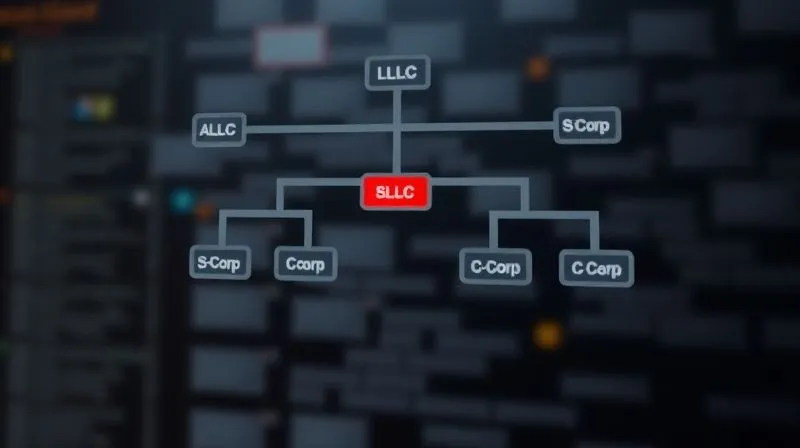
The core message here is to avoid a one-size-fits-all approach. Your business is unique, and its legal structure should reflect that. Always consult with legal and tax professionals to analyze your specific circumstances and determine the most advantageous path forward.
Frequently Asked Questions (FAQ)
Q: Can I convert an LLC to C-Corp if I have significant liabilities? Yes, but it adds a layer of complexity. The assumption of liabilities by the new C-Corp can, in certain circumstances (e.g., if liabilities exceed the basis of transferred assets), trigger gain recognition under Section 351, even if no other 'boot' is received. Careful planning and professional analysis of your balance sheet are essential to avoid this trap.
Q: What happens to my EIN during the conversion? If you are forming a completely new C-Corp and transferring assets or equity to it, the new C-Corp will generally need a new Employer Identification Number (EIN). However, in a statutory conversion where the entity's legal existence is considered continuous by the state, the entity may retain its original EIN, though the IRS will still view it as a change in entity classification. It's best to confirm with your tax advisor and the IRS.
Q: Is it possible to convert back to an LLC from a C-Corp? Yes, but it is typically a highly taxable event. Converting a C-Corp to an LLC (or even an S-Corp) usually involves a deemed liquidation of the C-Corp, which triggers corporate-level tax on appreciated assets and then shareholder-level tax on the distribution of those assets. This 'double taxation' makes converting out of a C-Corp very costly, underscoring the importance of getting the initial conversion right.
Q: How long does the entire conversion process typically take? The timeline varies significantly based on the complexity of your business, the state of incorporation, and the responsiveness of your legal and tax advisors. A straightforward conversion might take 4-8 weeks, while more complex scenarios involving multiple jurisdictions, significant assets, or intricate ownership structures could take several months. Gathering all necessary documentation and coordinating with professionals are often the longest parts.
Q: What are the biggest hidden costs of an LLC to C-Corp conversion? Beyond direct legal and accounting fees, hidden costs can include unexpected tax liabilities if the conversion isn't structured correctly, increased ongoing compliance costs (e.g., annual audit requirements for larger C-Corps, more complex tax filings), and the potential for double taxation on distributed profits. Additionally, the time and effort of management diverted to the conversion process can be a significant, unquantified cost.
Key Takeaways and Final Thoughts
Converting an LLC to a C-Corp is a pivotal moment for any growing business, unlocking new avenues for capital and expansion. However, as an industry veteran, I can't stress enough that this transition is a minefield of potential tax penalties if not navigated with precision and expert guidance. The goal is not merely to change your legal wrapper but to do so in a manner that preserves your capital and sets a robust foundation for future growth.
- Strategic 'Why' is Paramount: Ensure your conversion is driven by clear business objectives like VC funding or IPO potential.
- Section 351 is Your Shield: Master the requirements of IRC Section 351 to ensure your asset transfer is tax-free.
- Don't Skimp on Due Diligence: Meticulous planning, accurate asset valuation, and understanding state-specific requirements are non-negotiable.
- Compliance is Ongoing: A C-Corp demands strict adherence to corporate formalities and a different approach to tax planning.
- Professional Guidance is an Investment: The costs of avoiding expert legal and tax advice far outweigh the upfront investment.
Your journey from LLC to C-Corp is more than just paperwork; it's a strategic evolution. Approach it with the same diligence and foresight you apply to your core business operations, and you'll emerge stronger, more structured, and poised for sustained success. Don't let avoidable tax penalties derail your vision; empower your growth with intelligent, informed decisions.
Recommended Reading
- What to Do When Conservation Easement Terms Are Violated? 7 Steps for Landowners
- Prove Unfitness? 7 Steps to Win Your Custody Case
- H-1B Reforms: 7 Strategies to Future-Proof Your Business Strategy
- 5 Global Tax Hacks: Structure International Profits, Minimize Burden
- 7 Proven Strategies: Accelerating Offshore Wind Permits Despite EIA Delays





Comments
Leave a comment below. Your email will not be published. Required fields marked with *