


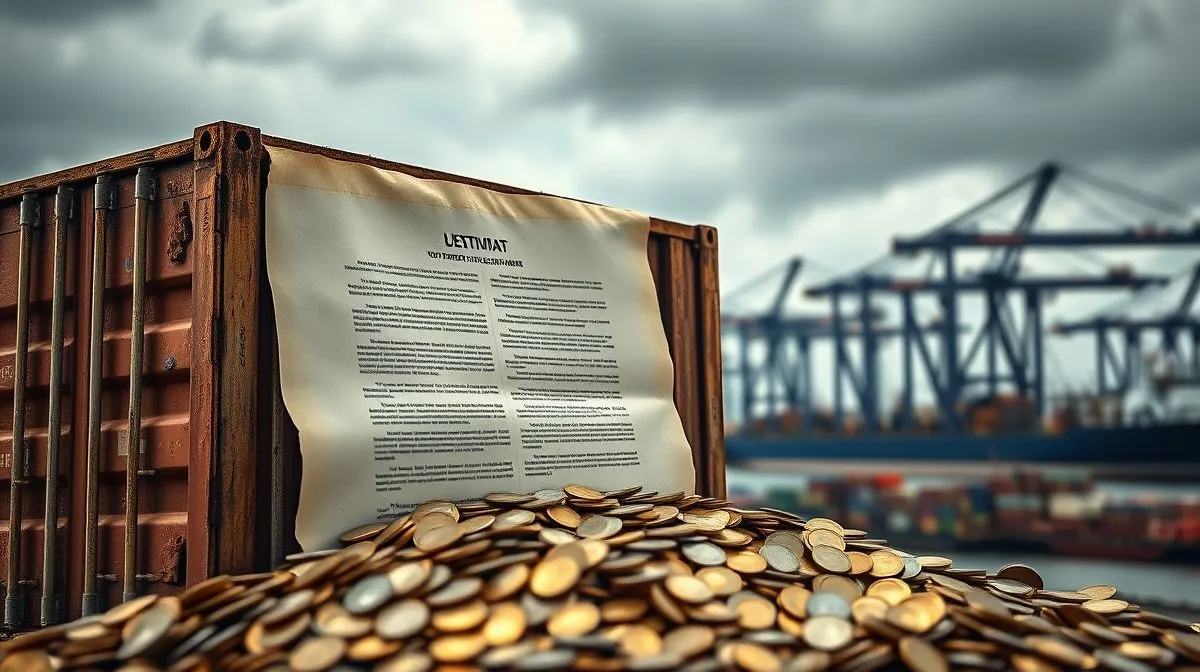
How to Dispute Unexpected Port Demurrage Charges Legally?
For over two decades in the intricate world of maritime law and logistics, I've witnessed firsthand the profound financial and operational distress caused by unexpected port demurrage charges. It's a scenario that plays out far too often: a vessel or container is delayed, sometimes by mere hours, and suddenly, you're hit with a bill that feels disproportionate, opaque, and utterly unjust. Many companies, overwhelmed by the complexity, simply pay up, absorbing losses that could critically impact their bottom line.
The pain point is palpable. These charges, often escalating daily, can quickly erode profit margins, strain cash flow, and damage relationships within the supply chain. They represent a significant hidden cost in international trade, catching even seasoned players off guard. The rules seem to shift, the calculations feel arbitrary, and the power dynamic often favors the port or carrier.
But it doesn't have to be this way. This isn't just a guide; it's a strategic framework built from years of navigating complex maritime disputes. I'll equip you with the actionable insights, legal frameworks, and practical steps necessary to not only understand but effectively dispute unexpected port demurrage charges legally, safeguarding your financial interests and ensuring fair play in the global shipping arena. We'll explore the 'how' with a seasoned expert's lens, moving beyond surface-level advice to truly empower you.
Understanding the Anatomy of Demurrage: What Are You Really Facing?
Before you can effectively dispute a charge, you must understand its genesis. Demurrage, in its simplest form, is a penalty charge levied by a shipping line or port authority when a shipper or consignee fails to load or unload cargo within the agreed-upon 'free time' at a port terminal. It’s distinct from 'detention,' which refers to charges for holding equipment (like containers) outside the port terminal beyond the free time.
Common causes for demurrage range from port congestion, customs delays, documentation errors, and insufficient planning, to unexpected weather events or even carrier-induced operational inefficiencies. The legal basis for these charges is typically enshrined in the Bill of Lading, the Charter Party agreement, or the port's published tariff regulations. These documents define the free time, the daily demurrage rates, and the conditions under which such charges apply. In my experience, a significant percentage of disputes arise from a misunderstanding or misinterpretation of these foundational documents.
Expert Insight: "Never assume the charge is correct simply because it's been levied. The complexity of global logistics means errors are common, and the onus often falls on you to identify and challenge them."
The Critical First Step: Meticulous Documentation & Communication
The foundation of any successful demurrage dispute lies in unassailable documentation and crystal-clear communication. Think of your paperwork as your primary weapon. Every email, every timestamped photo, every operational log, every communication record becomes a vital piece of evidence in your legal arsenal.
- Bill of Lading & Charter Party: These are your foundational contracts. Scrutinize free time clauses, demurrage rates, and any specific conditions related to notification or exceptions.
- Port & Carrier Tariff Schedules: These often contain the precise rules and rates. Ensure you have the version applicable at the time of the incident.
- Communication Logs: Keep detailed records of all correspondence with the carrier, port, customs, and any third parties. Dates, times, names, and content are crucial.
- Operational Records: This includes vessel arrival/departure times, truck arrival/departure times, gate-in/gate-out times, customs clearance timestamps, and proof of equipment availability.
- Weather Reports: If adverse weather contributed to delays, official meteorological reports are indispensable.
- Photographic Evidence: Photos of port conditions, container damage, or anything relevant to the delay can be powerful.
Communication Protocol: Immediately notify all relevant parties (carrier, port, consignee/shipper) in writing of any potential delays and your intent to dispute any resulting demurrage charges. Do not wait for the invoice to arrive. This proactive stance is vital for establishing your position.
Case Study: The Case of the Missing Arrival Notice
Acme Logistics, a mid-sized freight forwarder, received a demurrage invoice for a container that sat at port for 10 extra days. The carrier claimed the consignee was slow to pick up. However, Acme Logistics had meticulously documented every communication. Their records showed that the carrier had failed to send a timely 'arrival notice' to the consignee's designated email address, instead sending it to an outdated generic inbox. By presenting email logs and internal communication showing the consignee was ready to pick up but never received the proper notification, Acme was able to prove the delay was due to the carrier's administrative oversight, not the consignee's inaction. The demurrage charges were entirely waived, saving Acme $4,500.
Identifying Grounds for Dispute: When Are Charges Unjustified?
Not all demurrage charges are valid. As a veteran in this field, I've seen a multitude of scenarios where the charges are demonstrably unjust. Understanding these common grounds is key to building a strong case on how to dispute unexpected port demurrage charges legally.
- Carrier or Port Errors: This is a frequent culprit. It could be miscalculation of free time, incorrect gate-in/gate-out times, operational delays within the terminal (e.g., equipment breakdown, lack of available berths, staffing issues), or failure to position the container for pickup.
- Force Majeure Events: Acts of God or unforeseen circumstances beyond reasonable control, such as severe weather (hurricanes, typhoons), natural disasters (earthquakes), war, strikes, or government-mandated lockdowns. The key is proving the event directly caused the delay and that reasonable steps were taken to mitigate it.
- Ambiguous or Contradictory Contract Terms: Sometimes, the Bill of Lading or Charter Party may contain clauses that are unclear, contradictory, or deviate from standard industry practice. This ambiguity can be a strong basis for dispute.
- Unreasonable Free Time: While subjective, if the allocated free time is demonstrably insufficient for the nature of the cargo or the specific port's known operational realities, it can be challenged, especially if it deviates significantly from industry norms.
- Failure to Mitigate: If the carrier or port failed to take reasonable steps to mitigate the delay or provide alternative solutions, their claim for demurrage might be weakened.
- Absence of Proper Notification: As seen in our case study, a lack of timely and correct notification of arrival or readiness for pickup can invalidate charges.
According to a study published in the Harvard Business Review on supply chain resilience, inefficiencies and lack of transparency are major drivers of unexpected costs like demurrage. Your ability to pinpoint these inefficiencies on the part of the charging party is crucial.
Navigating the Dispute Resolution Process: A Step-by-Step Legal Framework
Once you've gathered your evidence and identified your grounds for dispute, it's time to engage with the charging party. This process requires a blend of assertive communication, legal knowledge, and strategic negotiation.
- Formal Written Notification: Send a formal letter or email to the carrier or port authority, clearly stating your intent to dispute the charges. Reference the invoice number, container number, and vessel details. State your specific grounds for dispute and attach all supporting documentation. Be factual, concise, and avoid emotional language.
- Request for Detailed Breakdown: Often, demurrage invoices are vague. Demand a detailed breakdown of how the charges were calculated, including precise timestamps for arrival, free time expiry, and actual pickup/loading times.
- Negotiation and Counter-Proposal: Be prepared to negotiate. Sometimes, even if you have a strong case, a partial settlement might be a pragmatic solution to avoid protracted legal battles. Present a clear counter-proposal based on your evidence.
- Escalation within the Organization: If your initial contact is unresponsive or unhelpful, escalate your dispute to higher management within the carrier or port authority. Maintain a professional demeanor throughout.
- Mediation or Arbitration: Many maritime contracts include clauses for alternative dispute resolution (ADR), such as mediation or arbitration. These are often less costly and time-consuming than litigation. Arbitration, in particular, results in a legally binding decision.
- Legal Action: As a last resort, if all other avenues fail, you may need to consider legal action. This typically involves filing a claim in a competent court or through a specialized maritime tribunal. This is where a seasoned maritime lawyer becomes indispensable.
Key Takeaway: "The strength of your evidence directly correlates with the success of your dispute. A well-documented, logically presented argument is far more persuasive than a mere complaint."
Leveraging Technology and Data for Your Defense
In today's digital age, technology provides powerful tools to bolster your demurrage dispute. I've personally seen how data analytics can turn a weak claim into an irrefutable argument.
- Container Tracking & GPS Data: Modern container tracking systems provide real-time location data, proving when a container arrived, when it was cleared, and when it left the port. This can directly contradict port records.
- Port Community Systems (PCS): Many ports use PCS platforms that record vessel movements, gate movements, and cargo status. Accessing and cross-referencing this data can reveal discrepancies.
- Weather Analytics: Specialized weather data providers can furnish historical weather patterns with granular detail, crucial for Force Majeure claims.
- Automated Communication Logs: Using CRM systems or specialized logistics software that automatically logs emails, calls, and document exchanges can provide an unalterable audit trail.
- AI & Machine Learning: While still evolving, some advanced platforms are beginning to offer predictive analytics for port congestion, allowing for proactive avoidance of demurrage, and even analysis of dispute patterns.
As a leading maritime lawyer, I often advise clients to invest in these technologies. The upfront cost is minimal compared to the potential savings from successfully disputing even a few significant demurrage charges. Data doesn't lie, and in a dispute, objective data is your most potent ally.
When to Engage Legal Counsel: The Role of a Maritime Lawyer
While this guide empowers you with significant knowledge, there comes a point where engaging specialist legal counsel is not just advisable, but essential. As a maritime law expert, I can tell you that threshold is often crossed when:
- The Charges Are Substantial: If the demurrage charges represent a significant financial hit, the cost of legal advice pales in comparison to the potential savings.
- The Dispute is Complex: Involving multiple parties, intricate contractual clauses, or cross-jurisdictional issues.
- Lack of Cooperation: If the carrier or port is unresponsive, uncooperative, or outright dismissive of your legitimate claims.
- Threat of Litigation: If the charging party threatens legal action or collection agencies.
- Need for Expert Interpretation: Maritime law is a highly specialized field. A maritime lawyer understands the nuances of Bills of Lading, Charter Parties, international conventions (like the Hague-Visby Rules), and specific port regulations. We can identify obscure clauses, interpret legal precedents, and craft arguments that resonate in a legal context.
Engaging legal counsel early can often prevent escalation. A well-crafted legal letter from an experienced firm often signals your seriousness and can prompt a more reasonable response from the other party. We can also assist in gathering expert witness testimony, navigating arbitration, or representing you in court, ensuring you know how to dispute unexpected port demurrage charges legally and effectively.
For further reading on international shipping regulations, consult resources from the International Chamber of Shipping (ICS), a leading global trade association for shipowners and operators.
Proactive Measures: Minimizing Future Demurrage Risks
The best dispute is the one you never have to fight. While this article focuses on how to dispute unexpected port demurrage charges legally, it's equally crucial to implement proactive strategies to minimize your exposure in the first place.
- Negotiate Favorable Terms: Always negotiate free time and demurrage rates in your contracts (Bill of Lading, Charter Party). Aim for longer free time, especially for complex cargo or congested ports. Consider 'reciprocal' clauses where the carrier also pays you if their delays cause you losses.
- Supply Chain Optimization: Enhance visibility and communication across your entire supply chain. Implement robust planning, real-time tracking, and contingency plans for potential delays.
- Due Diligence on Ports & Carriers: Research ports for historical congestion issues, and carriers for their operational reliability and demurrage policies. Partner with reputable service providers.
- Automated Alerts: Set up automated alerts for vessel arrivals, customs clearance statuses, and free time expiry to ensure timely actions.
- Regular Training: Ensure your logistics and operations teams are well-versed in demurrage clauses, documentation requirements, and dispute procedures.
As BIMCO, one of the world's largest private shipping organizations, emphasizes, clear contractual language and proactive risk management are cornerstones of efficient maritime operations.
Frequently Asked Questions (FAQ)
Question: What's the fundamental difference between demurrage and detention charges? Demurrage is a charge levied by the port or shipping line for the extended use of terminal space when cargo remains at the port beyond the allotted free time. Detention, on the other hand, is a charge for the extended use of the shipping line's equipment (like a container) outside the port terminal, typically when the container is held at a consignee's warehouse or a customs inspection site beyond the free time provided for its return. Both aim to incentivize prompt cargo movement but apply at different stages of the logistics chain.
Question: Can I dispute charges if I've already signed the Bill of Lading? Yes, signing the Bill of Lading acknowledges receipt of cargo under the stated terms, but it doesn't automatically waive your right to dispute charges if they are levied incorrectly, unfairly, or due to circumstances beyond your control (e.g., Force Majeure, carrier error). Your dispute will hinge on proving that the conditions for charging demurrage were not met or that the delay was attributable to the charging party or an excusable event. Always sign 'under protest' if you anticipate a dispute.
Question: How does Force Majeure specifically apply to demurrage disputes? Force Majeure clauses in contracts exempt parties from fulfilling obligations (and thus incurring penalties like demurrage) due to unforeseen events beyond their reasonable control. For a Force Majeure claim to be successful in a demurrage dispute, you must typically prove three things: 1) the event was unforeseeable and external, 2) it directly caused the delay, and 3) you took all reasonable steps to mitigate its impact. Examples include severe weather, strikes, or government-mandated port closures.
Question: Is there a time limit to dispute a demurrage charge? Yes, most contracts, Bills of Lading, or port tariffs specify a period within which demurrage charges must be disputed, often ranging from 30 to 90 days from the invoice date. Failing to dispute within this timeframe can lead to forfeiture of your rights. Always check the specific terms of your contract and the applicable tariff. Prompt action is always advised.
Question: What if the port or carrier refuses to negotiate or acknowledge my dispute? If your direct appeals and documentation are ignored, your next steps depend on the specific terms of your contract. Many maritime contracts stipulate alternative dispute resolution (ADR) methods like mediation or arbitration. If ADR is not an option or fails, then pursuing legal action through the appropriate maritime court or tribunal might be necessary. This is precisely when a specialized maritime lawyer becomes critical to represent your interests.
Recommended Reading
- Unmasking the Culprits: Who is Legally Responsible for Contaminated Land Cleanup?
- Navigating Legal Protocols: Essential Guide to Campus Active Shooter Drills
- Unlock Justice: Your Ultimate Guide to Filing an Environmental Lawsuit
- 8 Pro Steps: How to Survive an IRS Income Tax Audit for Your Business?
- The Ultimate Guide: How to Legally Protect an Invention Without a Patent?
Key Takeaways and Final Thoughts
- Documentation is King: Meticulous record-keeping is the bedrock of any successful demurrage dispute.
- Understand Your Contracts: The Bill of Lading and Charter Party are your primary legal documents. Know their terms inside out.
- Identify Your Grounds: Not all charges are valid. Recognize common scenarios where demurrage is unjustifiable.
- Follow a Structured Process: From formal notification to negotiation and, if necessary, legal action, a systematic approach is vital.
- Leverage Technology: Data and tracking systems can provide irrefutable evidence for your case.
- Know When to Seek Expert Help: A seasoned maritime lawyer can navigate the complexities and advocate effectively on your behalf.
- Proactive Prevention: Negotiate favorable terms and optimize your supply chain to minimize future demurrage risks.
Navigating the choppy waters of unexpected port demurrage charges can be daunting, but with the right knowledge, preparation, and expert guidance, you are not powerless. I've seen countless instances where businesses, armed with the strategies outlined here, have successfully challenged unjust charges, saving significant capital and reclaiming control over their logistics operations. Be diligent, be persistent, and remember that advocating for fair play is not just about saving money; it's about fostering a more transparent and equitable global trade environment. Your proactive steps today can prevent significant financial burdens tomorrow.



Comments
Leave a comment below. Your email will not be published. Required fields marked with *