



How to Enforce ICJ Human Rights Judgments Against Defiant States?
For over two decades in the intricate world of international law, I've witnessed firsthand the profound frustration and moral outrage that arises when states, despite being bound by international norms and judicial rulings, defiantly disregard judgments from the International Court of Justice (ICJ) concerning human rights. It's a predicament that challenges the very foundations of global justice, leaving victims without redress and the international legal system seemingly toothless.
The problem is stark: the ICJ, the principal judicial organ of the United Nations, delivers meticulously reasoned judgments, often affirming fundamental human rights, yet lacks its own enforcement arm. When a state decides to ignore these rulings, particularly in cases involving egregious violations, it creates a crisis of credibility for international law, undermining efforts to protect vulnerable populations and ensure accountability.
This article isn't just an academic exercise; it's a deep dive into the practical, albeit challenging, pathways available to compel compliance. I'll share expert insights, explore actionable strategies, illuminate the mechanisms within and beyond the UN system, and provide a framework for understanding how to enforce ICJ human rights judgments against defiant states, drawing upon real-world analogies and a fictional case study to bring these complex issues to life.
Understanding the ICJ's Role and Its Enforcement Dilemma
The International Court of Justice, often referred to as the 'World Court,' stands at the apex of international judicial bodies. Its primary role is to settle legal disputes between states and to give advisory opinions on legal questions referred to it by authorized United Nations organs and specialized agencies. When a state submits to the ICJ's jurisdiction, it implicitly agrees to abide by the Court's decisions. However, this agreement doesn't automatically translate into enthusiastic compliance, especially when judgments touch upon sensitive issues of national sovereignty or perceived national interest.
The ICJ's judgments are legally binding on the parties to the case, as stipulated in Article 94(1) of the United Nations Charter. This is a crucial point often misunderstood: the judgments are not merely recommendations. The dilemma, however, lies in the absence of a direct, inherent enforcement mechanism within the Court itself. Unlike domestic legal systems with their police forces and bailiffs, the ICJ relies on the political will of states and the institutional framework of the UN to ensure its rulings are respected.
"The true test of international law lies not in its articulation, but in its application. Without effective enforcement, even the most eloquent judgments risk becoming mere declarations, leaving justice unserved and the rule of law diminished." - A core principle I've upheld throughout my career.
This reliance on political will introduces a significant vulnerability. States, particularly powerful ones, can leverage their influence within the UN system, or simply absorb international opprobrium, rather than comply. This is precisely where the strategies we're about to discuss become indispensable – they are the tools for translating legal obligation into tangible action.
The UN Charter: Article 94 and Its Underutilized Potential
Article 94, paragraph 2, of the UN Charter offers the primary, albeit often challenging, route for enforcing ICJ judgments. It states: "If any party to a case fails to perform the obligations incumbent upon it under a judgment rendered by the Court, the other party may have recourse to the Security Council, which may, if it deems necessary, make recommendations or decide upon measures to be taken to give effect to the judgment." This provision grants the UN Security Council the power to act, but it's far from a straightforward process.
In my experience, invoking Article 94(2) is a highly politicized endeavor. The permanent members of the Security Council (P5) – China, France, Russia, the United Kingdom, and the United States – each hold veto power, meaning a single negative vote can block any resolution. This has historically been a significant hurdle, especially when the defiant state is an ally of a P5 member, or when the judgment conflicts with a P5 member's strategic interests.
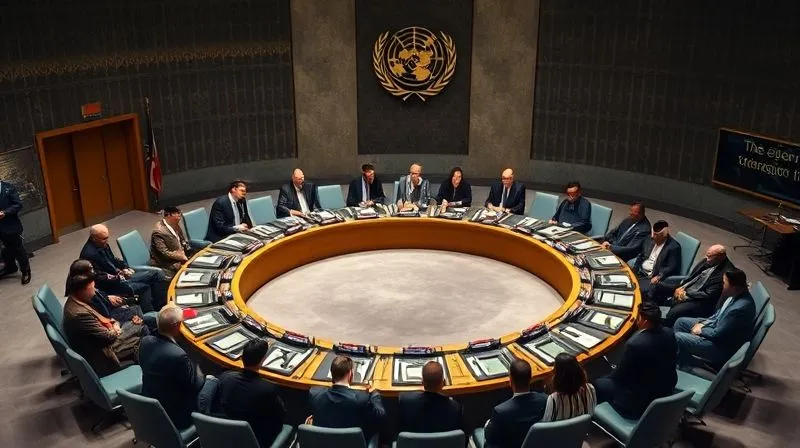
Despite these challenges, recourse to the Security Council remains a vital, albeit high-stakes, avenue. The process typically involves:
- Formal Notification: The state in whose favor the judgment was rendered formally notifies the Security Council of the other party's non-compliance.
- Council Deliberation: The Security Council then considers the matter. This stage involves intense diplomatic lobbying, negotiation, and often, public debate.
- Resolution Drafting: If there's sufficient political will, a resolution is drafted, which could range from mild condemnation to imposing sanctions or even authorizing military action (though the latter is extremely rare for ICJ enforcement).
- Voting: The resolution requires nine affirmative votes and no veto from a P5 member to pass.
- Implementation: If passed, the resolution's measures are then implemented by UN member states.
I've seen instances where the mere threat of Security Council involvement has spurred states into action, highlighting the psychological pressure this mechanism can exert, even if a formal resolution isn't ultimately adopted. It's a testament to the fact that international law, while lacking a direct enforcement arm, is backed by political instruments that, when wielded effectively, can be quite potent.
Leveraging Diplomatic Pressure and State Alliances
Beyond the formal mechanisms of the UN Security Council, one of the most consistently effective strategies I've observed in compelling compliance with ICJ human rights judgments is sustained diplomatic pressure, often orchestrated through bilateral and multilateral state alliances. This approach leverages the web of international relations, economic interdependence, and reputational concerns to isolate and pressure defiant states.
States are not islands; they rely on international cooperation for trade, security, and diplomatic recognition. When a state defies an ICJ judgment, especially one concerning human rights, it risks tarnishing its international standing, alienating allies, and potentially inviting retaliatory measures. This is where a concerted diplomatic campaign can be highly effective.
Case Study: The 'Coalition of Conscience' Against State X
Let's consider a fictional but illustrative scenario. State X was found by the ICJ to have systematically violated the human rights of an indigenous minority, including forced displacement and cultural destruction. Despite the judgment, State X refused to cease these practices or offer reparations, citing 'internal sovereignty.' A neighboring state, State Y, which brought the case, initiated a diplomatic offensive.
State Y didn't immediately run to the Security Council, knowing a veto was likely. Instead, it formed a 'Coalition of Conscience' with several like-minded states, primarily from regional blocs and human rights-focused nations. This coalition began a coordinated campaign:
- Public Condemnation: Joint statements at the UN General Assembly, Human Rights Council, and regional forums, explicitly naming State X's non-compliance.
- Bilateral Pressure: Coalition members individually engaged State X through their ambassadors, expressing 'grave concern' and linking future cooperation (e.g., trade deals, aid packages, visa agreements) to compliance.
- Multilateral Diplomacy: They successfully lobbied for resolutions in regional organizations (e.g., African Union, EU, OAS) that condemned State X's actions and called for adherence to the ICJ judgment.
- Technical Assistance Withdrawal: Some states quietly withdrew technical assistance or suspended joint projects with State X, framing it as a re-evaluation of partnerships due to State X's commitment to international law.
The cumulative effect of this sustained, multi-pronged diplomatic pressure was significant. State X, facing increasing isolation, economic uncertainty, and damage to its international reputation, eventually entered into negotiations with State Y, leading to a phased implementation of the ICJ judgment, including a partial cessation of violations and discussions on reparations. This demonstrates that patient, coordinated diplomacy can be a powerful, non-coercive enforcement tool.
Targeted Sanctions: A Double-Edged Sword for Compliance
When diplomatic persuasion alone proves insufficient, targeted sanctions emerge as a more coercive, yet still non-military, option. Sanctions, whether imposed by the UN Security Council (under Chapter VII of the Charter) or by individual states/blocs (unilateral sanctions), aim to compel compliance by imposing economic or political costs on the defiant state or its leadership. In the context of human rights judgments, these are often designed to pressure the regime responsible for non-compliance without unduly harming the general population.
I've seen sanctions evolve considerably over the years. Gone are the days of broad, often counterproductive, comprehensive embargoes that disproportionately affected civilians. Modern sanctions are increasingly 'smart' or 'targeted,' focusing on:
- Asset Freezes: Targeting the financial assets of key individuals (e.g., government officials, military leaders) responsible for violations or non-compliance.
- Travel Bans: Preventing these individuals from traveling internationally.
- Arms Embargoes: Restricting the supply of weapons or dual-use technologies to the defiant state.
- Sectoral Sanctions: Targeting specific economic sectors that fund the regime's illicit activities or human rights abuses.
| Sanction Type | Target | Mechanism | Potential Impact |
|---|---|---|---|
| Asset Freeze | Individuals/Entities | Seizure of financial assets | Limits financial power of perpetrators |
| Travel Ban | Individuals | Denial of entry/visas | Restricts movement, social isolation |
| Arms Embargo | State | Prohibition of weapons sales | Weakens military capacity, reduces human rights abuses |
| Sectoral Sanctions | Key Industries | Restrictions on trade/investment | Economic pressure on regime, potential for civilian impact |
While targeted sanctions can be effective in creating leverage, they are a double-edged sword. Their success hinges on meticulous design, clear objectives, and the ability to minimize unintended humanitarian consequences. Misdirected sanctions can backfire, consolidating support for the defiant regime by fostering a 'siege mentality' or exacerbating the suffering of the very people the human rights judgment aims to protect. As a Council on Foreign Relations analysis often highlights, the effectiveness of sanctions is a complex and debated topic, requiring careful calibration and consistent monitoring.
Therefore, when considering sanctions, the international community must weigh the potential for compliance against the risk of unintended harm, ensuring that measures are proportionate, reversible, and always aimed at upholding human rights rather than inadvertently undermining them.
The Power of Public Opinion and Non-Governmental Organizations (NGOs)
In the age of instant information and global connectivity, the power of public opinion, amplified by the tireless work of Non-Governmental Organizations (NGOs) and an independent media, has become an increasingly significant, albeit informal, enforcement mechanism for ICJ human rights judgments. While lacking direct coercive power, NGOs and media play a crucial role in 'naming and shaming' defiant states, mobilizing advocacy, and keeping international attention focused on non-compliance.
From my vantage point, NGOs like Amnesty International, Human Rights Watch, and the International Federation for Human Rights (FIDH) are indispensable. They act as watchdogs, meticulously documenting human rights violations, publicizing ICJ judgments, and monitoring states' adherence (or lack thereof). Their reports provide credible, often granular, evidence that can be used by states, international bodies, and the public to pressure defiant regimes.
"In the court of public opinion, silence is complicity. NGOs and a free press are the essential voices that ensure the world hears the cries for justice and demands accountability from those who would defy it." - A sentiment I share deeply.
The strategies employed by these organizations are diverse:
- Public Campaigns: Launching online petitions, social media campaigns, and public demonstrations to raise awareness and generate public outrage.
- Lobbying: Engaging directly with governments, parliaments, and international organizations to advocate for stronger diplomatic action or sanctions.
- Legal Advocacy: Providing legal expertise, supporting victims, and sometimes even initiating parallel legal proceedings in domestic courts under universal jurisdiction principles.
- Media Engagement: Working with journalists to ensure widespread, accurate reporting on non-compliance and its human cost.
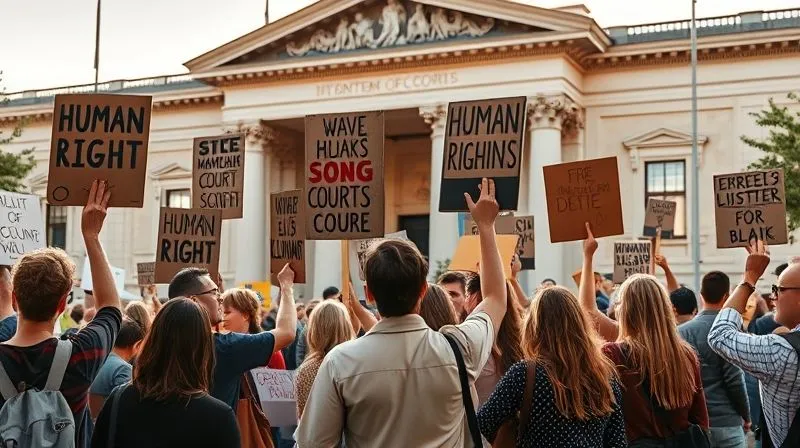
The impact of this 'soft power' should not be underestimated. No state, however authoritarian, is entirely immune to international condemnation and reputational damage. Persistent pressure from civil society can influence foreign policy decisions in democratic nations, affect investment flows, and even contribute to internal dissent within the defiant state. Human Rights Watch's extensive work, for instance, consistently demonstrates how sustained advocacy can shift political landscapes and bring about change, even in the most challenging environments.
Exploring Domestic Legal Avenues and Universal Jurisdiction
While the ICJ operates at the international level, the principle of universal jurisdiction offers a fascinating, albeit complex, avenue for enforcing human rights judgments through domestic legal systems. Universal jurisdiction allows national courts to prosecute individuals for certain grave international crimes – such as war crimes, crimes against humanity, torture, and genocide – regardless of where the crime was committed, or the nationality of the perpetrator or victim. This principle serves as a crucial backstop when international mechanisms are stalled or blocked.
I've seen states increasingly integrate international human rights law into their domestic statutes, creating opportunities for victims or advocate groups to seek justice in national courts. While not directly enforcing an ICJ judgment against a state, these domestic proceedings can target individuals responsible for the violations that underpinned the ICJ's ruling, thereby creating pressure for compliance. Imagine a high-ranking official from a defiant state, implicated in the human rights violations condemned by the ICJ, traveling to a country that exercises universal jurisdiction. That individual could potentially face arrest and prosecution.
However, the application of universal jurisdiction is fraught with legal and political challenges:
- Political Will: States must have the political will to initiate such prosecutions, which can strain diplomatic relations.
- Jurisdictional Hurdles: Legal frameworks vary widely, and courts often require the presence of the accused on their territory.
- Evidentiary Challenges: Gathering sufficient evidence for a domestic prosecution of crimes committed abroad can be extremely difficult.
Despite these hurdles, the concept remains a powerful deterrent. The fear of individual accountability, even years after the fact, can influence the behavior of officials in defiant states. Moreover, domestic courts can sometimes order asset freezes or seize property belonging to officials implicated in human rights abuses, providing a form of de facto enforcement for reparations. This multi-layered approach, where international judgments inform and empower domestic legal actions, represents a critical facet of the broader strategy to ensure accountability for human rights violations.
Reparations and Accountability: Beyond Mere Compliance
When we discuss enforcing ICJ human rights judgments, it's crucial to look beyond mere cessation of violations. True justice often demands reparations for victims and robust accountability for perpetrators. The ICJ itself can order reparations, requiring a state to make restitution, compensation, or satisfaction for the injury caused. However, securing these reparations from a defiant state presents its own set of challenges, often requiring creative and persistent strategies.
In my experience, focusing on reparations can sometimes open new avenues for negotiation and pressure. While a state might resist acknowledging guilt or altering its policies, the prospect of economic or political pressure specifically tied to reparations can be a powerful incentive. This is where a victim-centric approach becomes paramount, ensuring that the human cost of non-compliance remains at the forefront of international discourse.
- Establishing Trust Funds: International bodies or allied states can establish trust funds for victims, financed through seized assets of defiant state officials or through voluntary contributions, creating an alternative pathway for reparations.
- Targeted Financial Pressure: Beyond broad sanctions, specific financial measures can be implemented to ensure that a defiant state's assets held abroad are identified and potentially frozen, to be used for reparations.
- Symbolic Reparations: In cases where financial compensation is difficult, symbolic gestures like public apologies, memorialization, or guarantees of non-repetition, while not fully compensatory, can contribute to accountability and reconciliation.
Ultimately, the goal is not just to punish, but to heal and prevent recurrence. By coupling enforcement efforts with a clear demand for reparations and individual accountability, the international community reinforces the message that human rights violations have tangible consequences, both for the state and for those who perpetrate abuses. This comprehensive approach strengthens the legitimacy of the ICJ's judgments and fosters a more robust international legal order where justice, not just compliance, is the ultimate aim.
Strengthening the International Legal Framework: Future Directions
While the existing tools for enforcing ICJ human rights judgments against defiant states are limited, my perspective is that the international community must continuously explore avenues for strengthening the legal framework itself. The current system, heavily reliant on political will, often falters when faced with powerful or strategically important states. This necessitates a proactive approach to reform and innovation.

One promising area lies in enhancing the role of the UN General Assembly. Although its resolutions are not legally binding in the same way as Security Council decisions, a unanimous or near-unanimous General Assembly resolution condemning non-compliance can carry immense moral and political weight. This 'Uniting for Peace' mechanism, though rarely used for ICJ enforcement, could be revitalized to exert collective pressure when the Security Council is deadlocked by a veto. Additionally, regional human rights courts and mechanisms (e.g., the European Court of Human Rights, the Inter-American Court of Human Rights, the African Court on Human and Peoples' Rights) can complement the ICJ's work, offering more accessible and sometimes more robust enforcement options within their respective jurisdictions.
Furthermore, there's a growing discussion about the potential for new treaty frameworks that could create more automatic or quasi-automatic enforcement triggers for ICJ judgments in specific human rights contexts. While ambitious, such treaties could establish an independent body or a clearer pathway for action when a state fails to comply. As scholars at institutions like the Brookings Institute often suggest, incremental reforms and creative interpretations of existing mandates can pave the way for a more effective international legal order.
The journey towards a fully effective international enforcement system for human rights judgments is ongoing. It requires persistence, diplomatic ingenuity, and an unwavering commitment to the principles of justice and accountability. By exploring these future directions, we can hope to build a more resilient framework where defiance is met not with impunity, but with a unified and principled international response.
Frequently Asked Questions (FAQ)
Q: What if a permanent member of the UN Security Council vetoes a resolution to enforce an ICJ judgment? A veto from any of the P5 members (China, France, Russia, UK, US) will block a Security Council resolution, effectively preventing direct enforcement through that channel. In such cases, the international community typically reverts to other strategies: diplomatic pressure, targeted sanctions by individual states or blocs, public shaming through NGOs and media, and potentially recourse to the UN General Assembly under the 'Uniting for Peace' resolution, which allows the GA to recommend collective measures if the SC fails to act.
Q: How long does it typically take for an ICJ judgment to be enforced against a defiant state? There is no typical timeline, as enforcement is highly dependent on the specific circumstances, the nature of the judgment, the defiant state's political will, and the international community's resolve. Some judgments might see partial compliance within months due to immediate diplomatic pressure, while others, particularly those involving sensitive sovereignty issues or powerful states, can languish for years, or even decades, with minimal compliance. It's a marathon, not a sprint, often requiring sustained, multi-faceted pressure.
Q: Are all ICJ judgments legally binding on all states? No, ICJ judgments are legally binding only on the parties to the specific case in which the judgment was rendered, and only in respect of that particular dispute. This is stipulated in Article 59 of the ICJ Statute. However, ICJ judgments contribute significantly to the development and interpretation of international law, and their legal reasoning can influence other states and future cases, even if they are not directly bound by a specific ruling.
Q: What role do regional human rights courts play in enforcing ICJ judgments? Regional human rights courts (e.g., European Court of Human Rights, Inter-American Court of Human Rights) do not directly enforce ICJ judgments. However, they operate within their own regional legal frameworks and can address similar human rights violations committed by states within their jurisdiction. Their judgments are binding on member states of their respective regional systems. They can complement the ICJ's work by providing additional avenues for justice and accountability, particularly when ICJ enforcement is difficult. In some cases, a regional court might even reference ICJ jurisprudence in its own rulings.
Q: Can individuals or NGOs directly bring cases to the ICJ or enforce its judgments? No, only states can be parties in cases before the ICJ. Individuals, NGOs, or other non-state actors cannot directly bring a case to the Court or directly enforce its judgments. However, these entities play a crucial indirect role. NGOs, for example, often document human rights abuses, provide evidence, and advocate for states to initiate ICJ proceedings or to take action to enforce existing judgments. They are vital in influencing public opinion and lobbying governments to act.
Key Takeaways and Final Thoughts
- ICJ Judgments are Binding, Enforcement is Complex: While legally binding, the ICJ lacks its own enforcement arm, relying on political will and UN mechanisms.
- Article 94 is Key, But Veto-Prone: Recourse to the UN Security Council under Article 94(2) is the primary formal enforcement route, but it's often hindered by the veto power of permanent members.
- Diplomacy is Potent: Coordinated diplomatic pressure and state alliances can effectively isolate defiant states and compel compliance through non-coercive means.
- Targeted Sanctions Offer Leverage: Smart, carefully designed sanctions can impose costs on defiant regimes, but must avoid undue harm to civilian populations.
- NGOs and Public Opinion are Crucial: Civil society organizations and media play a vital role in 'naming and shaming,' mobilizing advocacy, and keeping human rights issues in the global spotlight.
- Domestic Avenues and Universal Jurisdiction Matter: National courts, leveraging universal jurisdiction, can prosecute individuals responsible for international crimes, adding another layer of accountability.
- Reparations and Accountability are Paramount: Beyond mere compliance, focusing on victim-centric reparations and individual accountability strengthens the legitimacy and impact of human rights judgments.

The challenge of enforcing ICJ human rights judgments against defiant states is a true test of the international legal order. It highlights the inherent tension between state sovereignty and the universal imperative to protect human dignity. As an industry specialist, I've learned that there are no easy answers, no magic bullet. Instead, it requires a multifaceted, persistent, and adaptable approach – a blend of formal legal mechanisms, astute diplomacy, strategic economic pressure, and the unwavering voice of civil society. Our collective commitment to these strategies determines whether the ICJ's pronouncements remain noble declarations or evolve into truly effective instruments of global justice. The struggle for human rights is ceaseless, and our resolve to ensure accountability must be equally unyielding.
Recommended Reading
- Athlete Endorsements: How Moral Clauses Trigger Contract Termination
- Unmasking Hidden Assets: 7 Proven Steps in High-Net-Worth Divorces
- Deportation Appeal Denied? Your Urgent Next Steps Revealed
- Due Diligence Surprises? 5 Ways to Bulletproof Your M&A Deals
- Avoid Forced Sales: 7 Smart Ways to Fund Federal Estate Tax



Comments
Leave a comment below. Your email will not be published. Required fields marked with *