


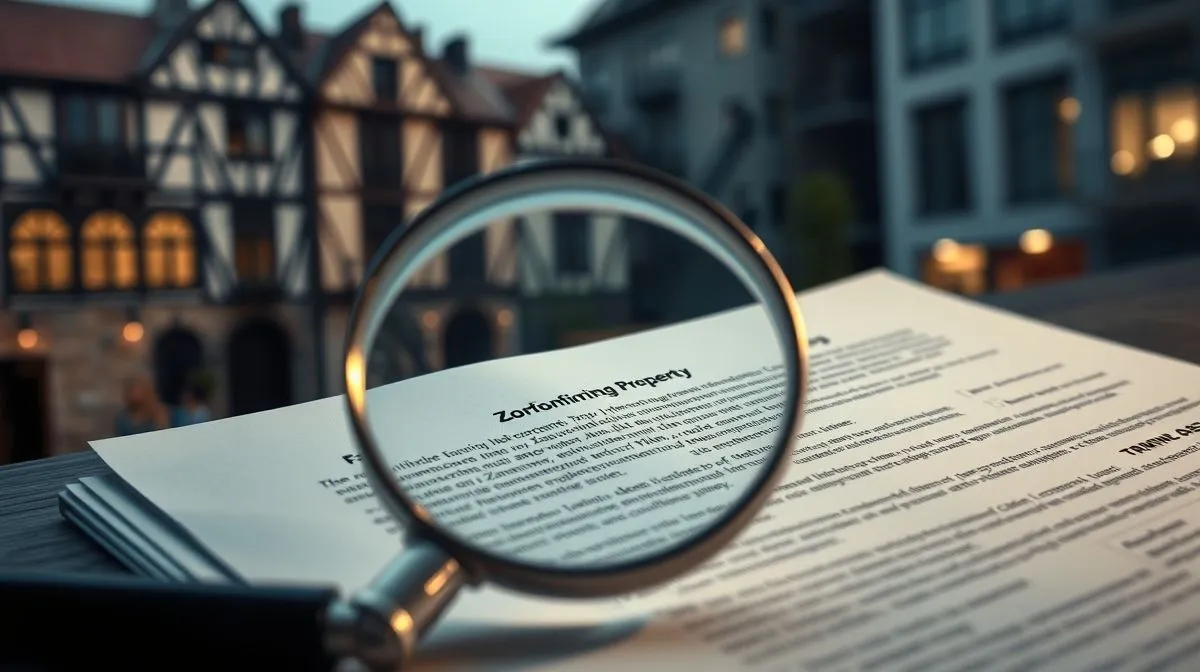
How to Get a Zoning Variance for a Non-Conforming Property Use?
For over two decades in real estate law, I’ve witnessed countless property owners grapple with the seemingly intractable challenge of non-conforming property uses. It’s a common scenario: you acquire a charming older building, perhaps a former general store, only to discover its current use as a residential dwelling clashes with modern zoning ordinances. Or perhaps your family business has operated out of the same location for generations, and a recent zoning change suddenly renders your established operations 'non-conforming'.
This isn't just a minor bureaucratic hurdle; it can be a significant roadblock, potentially devaluing your property, limiting its saleability, and even exposing you to legal penalties. The frustration is palpable, and I've seen good people feel trapped by regulations they didn't create, for uses that predate their involvement. The immediate thought is often, 'Do I have to shut down? Do I have to move?' The answer, thankfully, is often 'No, not necessarily.'
In this comprehensive guide, I’ll demystify the process of how to get a zoning variance for a non-conforming property use. Drawing from my extensive experience, I'll walk you through the essential legal frameworks, critical strategic considerations, and actionable steps you need to take. My goal is to equip you with the knowledge to navigate this complex terrain with confidence, turning a potential liability into a legitimate, legally compliant asset.
Understanding the Landscape: What Exactly is a Non-Conforming Use?
Before we dive into how to get a zoning variance, it’s crucial to understand what a non-conforming use truly entails. In simple terms, it refers to a land use or structure that was legal when established but, due to a subsequent change in zoning ordinances, no longer complies with the current zoning regulations for that area. It's often referred to as a 'grandfathered' use. For instance, a small manufacturing plant might have been perfectly legal in an area that later gets rezoned for purely residential purposes.
The key here is that the use was lawful at its inception. If a property was used illegally before the zoning change, it doesn't qualify as a non-conforming use and typically doesn't enjoy the same protections or pathways to legalization. These uses are generally allowed to continue under certain conditions, but they often come with limitations on expansion, alteration, or reconstruction after damage. This is where the desire for a zoning variance often arises—when the limitations of a non-conforming status become too restrictive for a property owner's plans.
I've observed that many property owners confuse non-conforming uses with other zoning issues. A non-conforming use is distinct from a zoning violation (an illegal use from the start) or a conditional use permit (a use that is generally allowed but requires specific conditions to operate). Understanding this distinction is your first step towards identifying the correct legal remedy.
The Crucial First Step: Is a Variance Even Your Best Option?
Before investing time and resources into how to get a zoning variance, it’s imperative to determine if it’s truly the most appropriate and achievable solution for your specific situation. In my practice, I often advise clients to explore all avenues. Sometimes, a variance isn't the only, or even the best, path forward.
- A Simple Amendment: Could the local zoning ordinance be amended to permit your use? This is usually a legislative process, requiring community support and political will, but it can be a long-term solution for broader issues.
- Conditional Use Permit (Special Exception): Is your proposed use one that the zoning ordinance allows under specific conditions? These permits are for uses that are generally compatible but require careful review to ensure they don't negatively impact the surrounding area.
- Pre-Existing Non-Conforming Rights: Are you simply trying to continue an existing non-conforming use? If so, you might not need a variance at all, but rather documentation or confirmation of your existing rights. Be aware that these rights can be lost if the use is abandoned or if the property is substantially altered.
- Re-Zoning: Is your property located in an area that simply isn't zoned for your intended use, and a variance would be too broad a change? You might consider applying for a re-zoning of the property itself. This is a more significant undertaking, often requiring a demonstrable public benefit.
My advice is always to start with a thorough review of the local zoning code and, if possible, a preliminary discussion with a planning department official. They can often provide initial guidance on the most likely path to success. Don't rush into a variance application if a simpler, more direct route exists. As a study from the American Planning Association notes, a significant percentage of initial zoning inquiries are resolved without the need for complex variance proceedings if property owners are well-informed about their options. (Planning.org is an excellent resource for general planning information.)
Pillar One: Demonstrating Undue Hardship – The Core of Your Case
When you seek to understand how to get a zoning variance, you quickly learn that the concept of 'undue hardship' is the bedrock of almost every successful application. This isn't just about inconvenience or a desire for greater profit; it's a legal standard that requires a compelling demonstration that strict application of the zoning ordinance would create an exceptional and unique burden on your property, not shared by other properties in the same zoning district.
To prove undue hardship, you generally need to show that:
- The hardship is unique to your property: It cannot be a hardship that affects the entire neighborhood or zoning district. For example, if your property has unusual topography (like a steep slope) or an irregular shape that makes it impossible to build a conforming structure, that's a unique hardship. If the entire street is too narrow for standard setbacks, that's a general hardship, not unique.
- The hardship is not self-created: This is critical. You cannot intentionally create a condition that makes your property non-conforming and then seek a variance. For instance, if you build an addition too close to the property line without a permit, you've created your own hardship.
- The hardship prevents any reasonable use of the property: This doesn't mean it prevents the *most profitable* use, but rather that without the variance, the property cannot be used for any purpose permitted by the zoning ordinance. This is a high bar and requires robust evidence, often including financial analyses or engineering reports demonstrating the impracticality of conforming uses.
Expert Insight: "The most common pitfall I see is property owners presenting a case based on financial inconvenience rather than true, unique physical hardship. The zoning board isn't there to maximize your profits; they're there to uphold the integrity of the zoning plan while providing relief for truly exceptional circumstances."
Documenting this hardship will involve surveys, architectural plans, soil analyses, and sometimes even appraisals demonstrating the inability to achieve a reasonable return under existing zoning. This evidence needs to be precise and professionally prepared.
Pillar Two: Preserving the Spirit of the Zoning Ordinance
Even if you can prove undue hardship, a zoning board will rarely grant a variance if it fundamentally alters the character of the neighborhood or undermines the core intent of the zoning ordinance. This principle requires that the variance, if granted, will not substantially impair the purpose and intent of the zoning plan. For example, a variance to allow a noisy industrial operation in a quiet residential zone would almost certainly be denied, regardless of hardship, because it would severely compromise the residential character the zoning aims to protect.
Consider the following:
- Consistency with Neighborhood Character: Will your proposed variance allow a use that is completely out of place with the surrounding properties? If the area is characterized by single-family homes, a variance for a multi-story commercial building would likely be denied.
- Impact on Public Services: Will the proposed use place an undue strain on public infrastructure like roads, water, sewer, or emergency services?
- Precedent Setting: Will granting this variance set a precedent that could lead to a cascade of similar requests, eventually eroding the zoning plan? Zoning boards are very wary of this.
Your application should not just justify your need but also explain how your proposed use, even with the variance, will remain in harmony with the neighborhood and the broader zoning goals. This might involve proposing specific conditions, such as limited operating hours, landscaping buffers, or specific building materials, to mitigate potential negative impacts.
Pillar Three: The 'No Detriment to Public Welfare' Principle
The final pillar, and one that often overlaps with the previous two, is ensuring that the granting of the variance will not be detrimental to the public health, safety, and general welfare. This is a broad category that covers a multitude of potential concerns from the community and the zoning board.
Points often considered under this principle include:
- Traffic Impacts: Will the variance generate excessive traffic, creating congestion or safety hazards?
- Noise and Odor: Will the proposed use create unacceptable levels of noise, vibration, or unpleasant odors for neighbors?
- Environmental Concerns: Are there any environmental impacts, such as increased stormwater runoff, pollution, or harm to natural habitats?
- Light and Glare: Will the proposed lighting or reflective surfaces negatively impact adjacent properties?
- Property Values: While not always a decisive factor, significant negative impact on neighboring property values can be a consideration.
As Seth Godin, the renowned marketing guru, often emphasizes the importance of understanding your audience and their needs. In the context of a variance, your 'audience' is the zoning board and the community. You must anticipate their concerns and proactively address them in your application and presentation. A well-crafted argument will not only present your case but also demonstrate how you've considered and mitigated any potential negative externalities for the public good.
Navigating the Application Process: A Step-by-Step Blueprint
Knowing how to get a zoning variance also means understanding the procedural steps. This isn't a quick process; it requires meticulous preparation and patience.
-
Step 1: Research and Due Diligence
Your journey begins with in-depth research. Obtain a copy of your local zoning ordinance and specifically look for sections on variances, non-conforming uses, and application procedures. Identify the specific type of variance you need (area variance vs. use variance). Area variances, which relate to setbacks, height, or lot size, are generally easier to obtain than use variances, which seek to change the fundamental type of activity allowed on a property.
Schedule a pre-application meeting with the planning department staff. This informal meeting is invaluable. They can clarify requirements, offer insights into the board's typical concerns, and even suggest alternative approaches. I've seen clients save months of work by having these initial conversations.
-
Step 2: Preparing Your Comprehensive Application Package
This is where your case is built on paper. Your application must be complete, accurate, and compelling. A typical package includes:
- Application Form: Duly filled out.
- Fee: Non-refundable application fee.
- Narrative Statement: A detailed letter explaining your request, demonstrating undue hardship, outlining how the variance aligns with the zoning's intent, and confirming no detriment to public welfare. This is your chance to tell your story persuasively.
- Site Plan: Professionally prepared, showing existing conditions and proposed changes, all relevant dimensions, setbacks, and neighboring properties.
- Architectural Drawings: If new construction or significant alteration is involved.
- Photos: Current photos of the property and surrounding area.
- Expert Reports: Traffic studies, environmental impact assessments, engineering reports, financial analyses, or appraisals, as needed to support your hardship claims.
- Letters of Support: From neighbors or community groups, if possible.
Every piece of documentation should reinforce your argument that your situation meets the legal criteria for a variance.
-
Step 3: The Public Hearing – Your Moment to Persuade
Once your application is deemed complete, it will be scheduled for a public hearing before the Zoning Board of Appeals (ZBA) or similar body. This is your opportunity to present your case verbally. You'll typically have time for an opening statement, followed by questions from the board and public comment.
My advice for public hearings is always: Be prepared, be professional, and be concise.
- Practice your presentation.
- Focus on the legal criteria (hardship, intent, welfare).
- Bring visual aids.
- Be respectful and calm, even if faced with opposition.
- Address concerns directly and offer solutions.
Neighbors often voice concerns, and the board has a duty to listen. Be ready to respond to questions about noise, traffic, property values, and character impacts. This is where your pre-emptive mitigation strategies come into play.
-
Step 4: The Decision and What Comes Next
After the hearing, the board will deliberate and make a decision, which may be immediate or at a later meeting. If the variance is granted, it will often come with specific conditions that you must adhere to (e.g., specific landscaping, limited hours of operation, maintenance of a particular aesthetic). Ensure you understand and comply with these conditions, as failure to do so can lead to revocation.
If denied, you typically have the right to appeal the decision to a higher court. This is a more involved and costly process, and it often hinges on whether the board's decision was 'arbitrary and capricious' or lacked substantial evidence. An appeal is not a re-hearing of the facts but a review of the legal process. According to a study published in the Yale Law Journal, judicial review of zoning decisions often focuses on procedural fairness and adherence to statutory criteria, rather than a re-evaluation of the merits of the application itself. (Yale Law Journal is a high-authority source for legal scholarship.)
Common Pitfalls and How to Avoid Them
Even with a clear understanding of how to get a zoning variance, many applicants stumble. Here are some common pitfalls I've observed and how to sidestep them:
- Underestimating Opposition: Don't assume your neighbors will be supportive or indifferent. Proactively engage with them, address their concerns, and seek their support before the public hearing.
- Poor Documentation: Incomplete or poorly presented applications are often rejected or delayed. Professional surveys, detailed plans, and clear narratives are non-negotiable.
- Lack of Specificity on Hardship: General claims of hardship won't suffice. You need concrete, unique, and legally relevant evidence.
- Emotional Appeals: While empathy is good, zoning boards operate on legal criteria. Stick to the facts and legal arguments, not just personal stories of difficulty.
- Ignoring Conditions: If a variance is granted with conditions, treat them as legally binding requirements. Failure to comply can lead to serious legal repercussions.
Case Study: The Small Business Owner's Zoning Triumph
I recall working with a client, Sarah, who owned a small, beloved bakery in a historic district. Her property had a narrow lot, and a new zoning update required a significantly larger rear setback for commercial properties than her existing structure allowed. This rendered her back door, crucial for deliveries and trash removal, non-conforming and prevented her from expanding a small storage area.
Sarah's hardship wasn't self-created; the lot's dimensions were fixed, and the zoning change created the problem. We demonstrated that requiring the new setback would mean demolishing a portion of her existing, structurally sound building, making her operations economically unviable. We presented detailed architectural plans showing how the minimal expansion would not impact light or air for neighbors, and how her delivery schedule was designed to minimize traffic disruption. We also gathered letters of support from loyal customers and neighboring businesses.
The zoning board, after a thorough public hearing where we clearly articulated the unique hardship and minimal public detriment, granted the area variance. Sarah was able to expand her storage and maintain her delivery access, preserving a vital local business. This success hinged on meticulous preparation, a clear demonstration of the criteria for how to get a zoning variance, and community engagement.
The Role of Legal Counsel: When to Call in the Experts
While this guide provides a robust framework for how to get a zoning variance, I cannot stress enough the value of experienced legal counsel. Real estate law, particularly zoning and land use, is incredibly nuanced and jurisdiction-specific. What works in one city might be entirely different in another, due to varying state laws or local ordinances.
A seasoned land use attorney can:
- Assess Your Case: Determine if a variance is the right path and evaluate your likelihood of success.
- Navigate Local Ordinances: Interpret complex zoning codes and identify specific requirements.
- Prepare Your Application: Ensure all documentation is complete, accurate, and strategically presented.
- Represent You: Advocate on your behalf before the zoning board, respond to questions, and counter opposition effectively.
- Handle Appeals: If necessary, guide you through the judicial appeal process.
Expert Insight: "Think of it this way: you wouldn't perform surgery on yourself. While you can learn a lot about the human body, a professional surgeon brings years of specialized training and hands-on experience. The same applies to complex legal proceedings like securing a zoning variance. An investment in expert legal counsel is often an investment in your property's future and your peace of mind."
A good attorney can not only increase your chances of success but also save you significant time, money, and stress by preventing costly mistakes and delays. For complex cases, or if your property represents a significant investment, retaining legal counsel is not just advisable; it's often essential. Many reputable law firms, like those listed on the American Bar Association's website (ABA.org), offer specializations in real estate and land use law.
Frequently Asked Questions (FAQ)
Question: How long does it typically take to get a zoning variance approved? The timeline can vary significantly depending on the municipality, the complexity of your case, and the board's meeting schedule. From initial application submission to a final decision, it can range from a few months to over a year. Public notification requirements, hearing schedules, and potential appeals all contribute to the duration. Patience is key.
Question: Can I expand my non-conforming use without a variance? Generally, no. Most zoning ordinances strictly limit the expansion of non-conforming uses. Minor internal alterations that don't increase the non-conformity might be allowed, but any significant expansion of the structure or the scope of the use typically requires a variance or a re-zoning. Consult your local ordinance or planning department for specific rules.
Question: What's the difference between an area variance and a use variance? An area variance allows for deviations from dimensional requirements like setbacks, lot size, height, or lot coverage. For example, building a porch closer to the property line than usually allowed. A use variance permits a property to be used for a purpose not generally allowed in that zoning district, which is a much higher bar to clear and requires a stronger demonstration of undue hardship, often proving no reasonable return under permitted uses.
Question: What happens if my variance application is denied? If your application is denied, you typically have the right to appeal the decision to a higher court, usually a state-level court. This appeal will not re-hear the facts of your case but will review whether the zoning board followed proper procedures and whether their decision was supported by substantial evidence and was not arbitrary or capricious. Alternatively, you might be able to re-file your application with significant modifications based on the reasons for the initial denial, but this should be done with careful consideration and likely legal advice.
Question: Do I need neighbor consent to get a zoning variance? While not strictly required by law in most jurisdictions, neighbor support can significantly strengthen your case. Most variance processes involve public notice and an opportunity for neighbors to comment at the public hearing. Proactively engaging with your neighbors, addressing their concerns, and ideally securing their letters of support can drastically improve your chances of approval and demonstrate that your proposed use will not be detrimental to the community.
Recommended Reading
- Can I Legally Rehabilitate Injured Wild Animals? Your Essential Guide
- Federal Pollution Control Act Penalties: What You Need to Know
- Protect Your Innovation: How to Secure IP in Multiple Countries
- Unmasking the Legal Pitfalls of AI Use in Educational Settings: A Crucial Guide
- Mastering Cross-Border Digital Evidence Requests: Your Ultimate Guide!
Key Takeaways and Final Thoughts
Navigating the complexities of real estate law, especially when dealing with how to get a zoning variance for a non-conforming property use, can feel daunting. However, armed with the right knowledge and a strategic approach, it’s a challenge that can be overcome. Here are the most critical takeaways I want you to remember:
- Understand Your Use: First, confirm your property truly has a non-conforming use and that a variance is the appropriate remedy.
- Master the Three Pillars: Your success hinges on demonstrating unique, non-self-created hardship, preserving the zoning's intent, and ensuring no detriment to public welfare.
- Prepare Meticulously: A complete, well-documented application is your strongest advocate. Leave no stone unturned in your research and presentation.
- Engage and Advocate: Be ready to present your case persuasively to the zoning board and address community concerns respectfully.
- Consider Expert Counsel: For critical cases, a seasoned land use attorney is an invaluable asset, significantly increasing your probability of a positive outcome.
The journey to obtaining a zoning variance is a marathon, not a sprint. It demands diligence, a deep understanding of local ordinances, and often, the ability to clearly articulate your property's unique circumstances. But by following these expert-backed steps, you’re not just applying for a permit; you’re building a compelling case for your property’s future. Trust the process, prepare thoroughly, and remember that with perseverance, you can transform a non-conforming challenge into a legally compliant opportunity.




Comments
Leave a comment below. Your email will not be published. Required fields marked with *