



How to handle unexpected adverse evidence during immigration interviews?
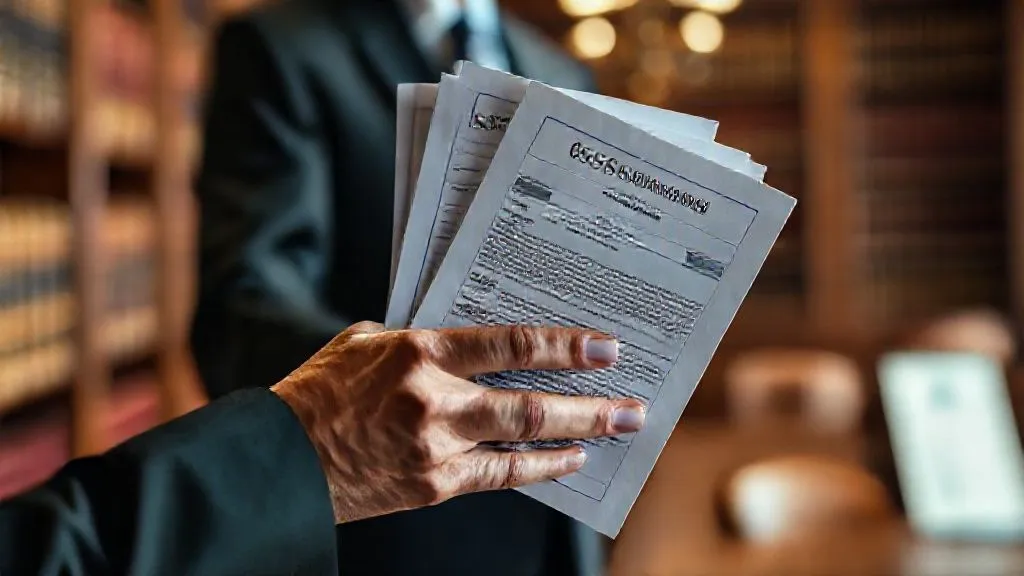
The sudden revelation of adverse evidence during an immigration interview can feel like a punch to the gut, instantly escalating stress levels and potentially derailing an otherwise smooth process. In my experience, the first instinct is often panic, followed by a desire to deny or minimize. However, your immediate, composed reaction is paramount. Your ability to maintain composure and respond strategically can profoundly influence the outcome. Remember, the immigration officer's role is to ensure eligibility and identify any grounds of inadmissibility. Unexpected evidence is simply another piece of the puzzle they are trying to fit.Your immediate response is critical, and a structured approach is best. Here’s how I advise clients to handle that initial shockwave:
- Do Not Panic or Guess: Resist the urge to blurt out the first thing that comes to mind. Take a breath. A moment of silence is always better than a rushed, inaccurate, or defensive answer.
- Request Clarification: Politely ask the officer to clearly state what the evidence is, where it came from, and how it relates to your case. For instance, "Officer, could you please clarify what specific document or information you are referring to, and how it pertains to my application?" This buys you time and ensures you understand the exact nature of the concern.
- Request Time to Review: If the evidence is a document you haven't seen, ask for a moment to review it thoroughly. "May I please have a moment to examine this document before I respond?" This is your right and a crucial step.
- Consult with Counsel (If Present): If you are accompanied by an attorney, discreetly turn to them for consultation. Your attorney can review the evidence, advise on the best response, and object if the evidence is improperly introduced or irrelevant.
Once you have a moment to process the information, whether a document, a record, or a statement from a third party, begin a rapid internal assessment. This is where your preparation, even for the unexpected, becomes invaluable.
- Identify the Nature of the Evidence: Is it a factual error? A misunderstanding? An old, minor infraction you genuinely forgot? Or is it a significant, potentially damaging piece of information you were aware of but hoped wouldn't surface?
- Assess its Relevance and Accuracy: Does this evidence actually pertain to a ground of inadmissibility or an eligibility requirement for your specific petition? Is it factually correct? A common mistake I see is individuals immediately owning up to something that is either entirely false or irrelevant.
- Formulate a Truthful and Contextualized Response: Your response must always be truthful, but it also needs to be strategic.
The cornerstone of any effective response is truthfulness. Attempting to deceive an immigration officer is a grave error with severe consequences, potentially leading to findings of misrepresentation or even a permanent bar.
- If it's a Misunderstanding or Error: Clearly and calmly explain why the information is incorrect or misinterpreted. Provide any immediate counter-evidence if you have it (e.g., a dismissal order for an old arrest record).
- If it's a Minor Issue with Context: Provide the full context. For example, if an old traffic ticket appears that you were unaware of, explain that you have always maintained a clean driving record and were not notified, perhaps offering to pay it immediately.
- If it's a Genuine Adverse Fact: Acknowledge it, but then immediately provide mitigating circumstances or evidence of rehabilitation. For instance, if a past criminal charge surfaces, explain the circumstances, demonstrate that you have paid your debt to society, and provide evidence of positive changes in your life since then. This could include letters of recommendation, proof of community service, or educational achievements.
Consider a scenario where an applicant for naturalization is presented with a credit report showing a past bankruptcy from ten years ago, which they genuinely believed was resolved and was not disclosed on their N-400 application. Instead of panicking, a good response would be to acknowledge the bankruptcy, explain the circumstances (e.g., a severe medical emergency), and provide documentation showing it was discharged and that they have maintained financial stability since then.
This isn't about hiding or fabricating; it's about providing the full, honest narrative. The officer is looking for the complete picture, not just isolated negative facts. Your ability to explain, provide context, and demonstrate good moral character *despite* past issues is often what sways their decision.
If you are represented by counsel, your attorney is your primary advocate in this situation. They can request to review the evidence, advise you on how to answer, and even interject or object if the line of questioning becomes inappropriate or if the evidence is being used improperly. They can also request a recess to discuss the matter privately.
A common mistake I see is when clients, despite having counsel present, try to answer complex questions about adverse evidence without consulting their attorney, often leading to unintended admissions or misstatements. Lean on your counsel's expertise.
The interview isn't always the end of the process. If you need to gather additional documents to rebut the adverse evidence, politely request the opportunity to do so. The officer may issue a Request for Evidence (RFE) or a Notice of Intent to Deny (NOID), giving you a specific timeframe to submit further documentation.
- Review Notes with Counsel: Immediately after the interview, debrief with your attorney (if applicable) to document what evidence was presented and what your responses were.
- Gather All Requested Evidence Promptly: If you promised to provide additional documents, do so meticulously and well within any given deadline.
- Prepare a Detailed Written Statement: Sometimes, a written statement or legal brief from your attorney accompanying the new evidence can provide a comprehensive explanation, citing relevant law and policy, which can be more effective than a verbal explanation in the interview setting.
The truth, properly presented and contextualized, is always your strongest defense. Unexpected adverse evidence is a test of your character and your preparedness, not necessarily an automatic denial.
Ultimately, navigating unexpected adverse evidence requires a blend of composure, honesty, strategic thinking, and, ideally, the guidance of experienced legal counsel. It transforms a potential roadblock into an opportunity to demonstrate your credibility and eligibility.
What if the adverse evidence presented is completely false or irrelevant?
Encountering adverse evidence during an immigration interview is stressful, but discovering that evidence is entirely false or wholly irrelevant to your case can be profoundly disorienting. In my two decades of practice, I've seen clients momentarily lose their composure, believing their case is unfairly jeopardized. It’s critical to first distinguish between evidence that is genuinely false – factually incorrect – and evidence that is irrelevant – factually true, but bears no legal nexus to your eligibility or the specific immigration benefit sought. Your approach will differ significantly based on this distinction. When confronted with demonstrably false information, your immediate goal is to calmly and systematically refute it. This isn't about arguing, but about presenting a clear, factual counter-narrative supported by existing evidence. A common scenario I encounter involves mistaken identity or inaccurate data entry. For instance, an officer might present a criminal record belonging to someone with a similar name or date of birth, perhaps even from a different state. Your response must be precise and grounded. Do not simply deny; provide the correct information and, crucially, the documentation to back it up.- Request the specific document: Politely ask to see the adverse evidence presented to verify its details, such as the full name, date of birth, or case number.
- Point out discrepancies: Clearly articulate any differences in names, dates of birth, social security numbers, addresses, or other identifying information.
- Present counter-evidence: Offer official documents like your passport, birth certificate, driver's license, or a recent FBI background check that definitively prove the presented information is incorrect for *you*.
- Acknowledge the fact: If the information is true, state it simply and without defensiveness: "Yes, that incident occurred."
- State its irrelevance: Immediately follow with: "However, under [specific legal statute or regulation], this does not pertain to the [eligibility requirement, e.g., good moral character, bona fide marriage] for this application because [explain why, e.g., it's a civil infraction, it occurred outside the statutory period, it's unrelated to the core issue of the petition]."
- Re-focus on criteria: Bring the discussion back to the actual legal requirements of the application, demonstrating how you meet each one.
In my experience, silence, followed by a precise, factual, and legally grounded response, is far more powerful than an emotional denial. Let the facts and the law speak for themselves.Always ensure that your attorney, if present, is actively involved. They can interject to clarify, object to irrelevant lines of questioning, or help you articulate your response in a legally sound manner, ensuring your rights are protected and your case is presented effectively. Finally, meticulously document everything. Note down the specific adverse evidence presented, the officer's questions, and your exact responses. This record is invaluable if further action, such as an appeal or a Request for Evidence (RFE), becomes necessary to challenge the adverse finding.
Should I always bring an attorney to my immigration interview?
Having spent over 15 years navigating the intricate currents of immigration law, I can unequivocally state that bringing an attorney to your immigration interview is not merely a recommendation but often a critical safeguard. While no law explicitly mandates legal representation, the complexities involved make it an indispensable asset in the vast majority of cases.
Many applicants mistakenly believe that if their case is straightforward, an attorney isn't necessary. However, the officer's role is to apply complex statutes, regulations, and internal policy manuals, not just to listen to your story. An attorney understands these nuances, often better than the interviewing officer, and can ensure your narrative is framed within the appropriate legal context.
Consider it akin to undergoing a complex medical procedure; you wouldn't perform surgery on yourself, nor would you expect a general practitioner to handle a highly specialized operation. An immigration attorney brings specialized knowledge, having dealt with thousands of similar cases, anticipating potential pitfalls, and knowing precisely how to articulate your eligibility.
In my experience, the tangible benefits of having legal counsel present at your interview are profound and multi-faceted. These benefits extend far beyond mere moral support, fundamentally shaping the outcome of your case.
- Legal Interpretation and Advocacy: An attorney can clarify ambiguous questions, object to inappropriate or leading inquiries, and ensure your responses are accurately recorded and understood in a legally favorable light. They act as your advocate, ensuring your rights are protected.
- Handling Unexpected Adverse Evidence: This is where an attorney truly shines. If an officer introduces unexpected adverse information – perhaps from a background check, a prior application, or an undisclosed issue – your attorney is equipped to immediately assess its legal impact, advise you on how to respond, or request time to gather rebuttal evidence.
- Ensuring Procedural Fairness: Attorneys are vigilant about procedural correctness. They can identify if the officer is deviating from established protocols, failing to consider submitted evidence, or making legal errors that could lead to an unfair denial.
- Record Keeping and Follow-up: Your attorney will take detailed notes, creating an independent record of the interview. This can be invaluable if a Request for Evidence (RFE) is issued, a Notice of Intent to Deny (NOID) is received, or if an appeal becomes necessary.
- Reducing Applicant Stress: The immigration interview can be an incredibly stressful event. Knowing you have an expert by your side, ready to intervene and guide you, significantly reduces anxiety, allowing you to focus on answering truthfully and calmly.
I recall a case involving a client applying for adjustment of status who had a minor, decades-old misdemeanor arrest that was dismissed. The officer, however, focused heavily on the arrest itself, implying a lack of good moral character. My immediate intervention, citing specific state law on expungement and providing certified disposition documents, refocused the officer on the legal outcome, preventing a potentially devastating denial based on a misunderstanding.
While I advocate for representation in nearly all interviews, it becomes absolutely indispensable in certain scenarios:
- Cases with any criminal history: Even minor infractions can have complex immigration consequences.
- Previous denials or immigration violations: These require meticulous preparation and legal argument.
- Applications involving waivers: Waivers are inherently complex and demand precise legal justification.
- Asylum interviews: The stakes are incredibly high, and the nuances of asylum law are vast.
- Any situation where there's a language barrier: While interpreters are provided, an attorney ensures legal concepts are accurately conveyed.
I understand that the cost of legal representation is a significant consideration for many. However, I urge clients to view it not as an expense, but as an investment in their future and the security of their immigration status. The financial and emotional toll of a denial, subsequent appeals, or even deportation proceedings far outweighs the initial legal fees.
In the high-stakes environment of an immigration interview, especially when unexpected adverse evidence surfaces, an attorney is not just a participant; they are your most vital asset, a shield against misinterpretation, and a sword for justice. Their presence transforms an often intimidating process into a managed legal proceeding.
Reading Recommendations:
- Elderly Care Crisis: What Happens If No Power of Attorney?
- Unlocking the Limits: When Can Government Restrict Constitutional Speech?
- Medicaid-Proofing Your Business: 7 Legal Ways to Shelter Client Assets
- 5 Steps: Secure a Zoning Variance for Non-Conforming Property Use
- Salvage vs. Towage: When Does Your Vessel Qualify for Remuneration?
Key Points and Final Thoughts
In my extensive experience navigating the complexities of immigration law, one truth consistently emerges: encountering unexpected adverse evidence during an interview is rarely a disqualifying event in itself, but rather a profound test of preparation, composure, and strategic response. It's not the existence of a challenge that defines the outcome, but how you choose to meet it head-on.
A common mistake I often observe is clients viewing adverse evidence as a personal attack, leading to panic or defensiveness. Instead, it should be approached as an opportunity to clarify, explain, or even correct the record. Remember, the interviewing officer's role is to verify facts and assess credibility, not necessarily to trick or entrap you.
The bedrock of successfully handling unexpected adverse evidence lies in **proactive, exhaustive preparation**. You cannot anticipate every single question, but you can significantly reduce the 'unexpected' by meticulously reviewing your own history.
This means going beyond the immediate application. I advise my clients to undertake a deep dive into:
- Every prior immigration filing: Even decades-old applications for different benefit types can contain discrepancies that surface.
- Criminal history: Not just convictions, but arrests, expungements, and even minor infractions. The officer may have access to databases you don't.
- Social media presence: Posts, photos, and connections can be scrutinized for consistency with your testimony.
- Financial records: Bank statements, tax returns, and property deeds, especially for marriage-based or investment visas.
- Travel history: Entry and exit stamps, even short trips, should align with your stated narrative.
In one instance, a client applying for naturalization was confronted with a decades-old misdemeanor arrest for disorderly conduct that had been expunged and forgotten. His initial reaction was confusion, then denial. Because we had anticipated such a possibility through our exhaustive pre-interview review, we were able to quickly provide the expungement order and a brief, truthful explanation, averting what could have become a significant credibility issue.
The role of legal counsel in these moments is not merely advisory; it is **critical and active**. An attorney acts as a buffer, ensuring the interview adheres to proper procedure and that the questions are relevant and lawful. More importantly, they provide the strategic guidance necessary to formulate a measured, truthful, and concise response under pressure.
I frequently intervene to clarify ambiguous questions, request rephrasing, or object to leading questions that could elicit an inaccurate answer. This isn't about obfuscation; it's about ensuring the integrity of the record. For example, if an officer presents a document and asks, "Is this your signature?" when the signature is merely *similar*, an attorney can guide the client to respond, "It looks like my signature, but I don't recall signing this specific document," rather than an immediate "yes" that might later prove problematic.
Finally, understand that the interview is not an isolated event. The record created, particularly the sworn testimony, becomes a permanent part of your immigration file. Any inconsistencies or misstatements, even if seemingly minor, can ripple through future applications, appeals, or even removal proceedings. **Credibility, once lost, is incredibly difficult to regain.** Therefore, always prioritize truthfulness, even when the truth is inconvenient. If you don't know an answer, state that clearly. If you need to consult with your attorney, ask for a moment to do so. These are not signs of weakness, but of careful consideration and respect for the process.
While the stakes are undeniably high, remember that preparation empowers, and truth, delivered calmly and strategically, remains your strongest advocate.




Comments
Leave a comment below. Your email will not be published. Required fields marked with *