


How to Legally Assign Liability for AI System Cyberattack Failures?
For over two decades in cyber law, I've witnessed the legal landscape transform dramatically. From the early days of basic network security breaches to today's sophisticated, AI-driven attacks, one constant remains: the desperate search for accountability. Yet, when an AI system, designed to be autonomous and intelligent, becomes the vector or victim of a cyberattack, the question of 'who is liable?' often plunges organizations into an unprecedented legal quagmire.
The inherent complexity of AI—its black-box nature, continuous learning, and multi-party development—challenges traditional liability paradigms. Is it the developer who coded the initial algorithms, the data provider whose datasets were compromised, the deployer who integrated the system, or the operator who failed to update security protocols? A cyberattack on an an AI system isn't just a technical failure; it's a legal minefield, threatening reputation, finances, and regulatory compliance. Many companies find themselves unprepared for this intricate dance of blame, facing significant legal exposure.
In this definitive guide, I will draw upon my extensive experience to dissect the intricate layers of AI liability in the wake of cyberattacks. We'll explore the current legal theories struggling to keep pace, identify key stakeholders in the AI lifecycle, and, critically, provide actionable frameworks and real-world insights to help you navigate this uncharted territory. My goal is to equip you with the knowledge to proactively manage risk, understand your legal obligations, and confidently answer: 'How to legally assign liability for AI system cyberattack failures?'
Understanding the AI Liability Landscape: A Primer
When we talk about AI liability, especially concerning cyberattacks, we're stepping into a realm where traditional legal concepts are stretched thin. Imagine an AI system not just as a piece of software, but as a highly sophisticated, often self-learning tool—almost like a digital employee or a complex machine that can make decisions. When this 'tool' is compromised by a cyberattack, leading to damages, the question of fault becomes excruciatingly difficult.
The core challenge lies in AI's autonomy and its 'black box' nature. Unlike a traditional product where you can trace a defect back to a manufacturing error or a design flaw, an AI system's learning algorithms can evolve, making its behavior unpredictable even to its creators. A cyberattack might exploit a vulnerability in its training data, its inference engine, or its operational environment. Pinpointing the exact point of failure and assigning responsibility requires a deep dive into the entire AI lifecycle.
In my experience, many organizations mistakenly assume their existing cybersecurity policies or general product liability insurance will fully cover AI-specific breaches. This is a dangerous oversight. AI introduces novel vectors for attack and complicates the chain of causation, demanding a specialized understanding of both cyber law and AI technology.

The Shifting Sands of Legal Precedent: Why AI is Different
Traditional legal frameworks were not designed for the complexities of artificial intelligence. We typically rely on established areas like product liability, negligence, and strict liability. However, AI, with its capacity for continuous learning and autonomous decision-making, blurs the lines these laws depend on.
Traditional Liability Theories and Their Limitations
- Product Liability: This usually applies to manufacturers and sellers of defective products. But is an AI system a 'product'? What if the 'defect' arises from its learning process after deployment, or from a malicious input during a cyberattack rather than an inherent flaw? The concept of a 'manufacturer' becomes diffuse when multiple parties contribute to an AI's development, data, and deployment.
- Negligence: This requires proving a duty of care, a breach of that duty, causation, and damages. Who owes the duty of care for an AI system? Is it the developer, the deployer, or the operator? If an AI system acts autonomously and causes harm after a cyberattack, proving that a specific human actor's negligent act directly caused the damage can be incredibly challenging.
- Strict Liability: Reserved for inherently dangerous activities, this holds parties liable regardless of fault. While some argue that certain high-risk AI applications (e.g., autonomous weapons) might fall under this, applying it broadly to all AI systems, especially those compromised by external cyberattacks, is a significant legal hurdle.
As legal scholars have pointed out, the 'black box' problem—where even experts struggle to explain an AI's decision-making process—makes it incredibly difficult to establish intent or even foreseeability, key elements in many liability claims. This is why we need to look beyond the conventional and consider how these frameworks might be adapted or new ones introduced.
Key Legal Frameworks and Theories for AI Liability
While traditional laws grapple with AI, the legal community is actively exploring adaptations and new theories to address AI liability. The focus is shifting from simply blaming a single party to understanding the entire ecosystem surrounding an AI system.
Emerging Regulatory Approaches
Governments worldwide are recognizing the need for specific AI regulations. The European Union, for instance, is leading the charge with its AI Act, which categorizes AI systems by risk level. High-risk AI systems face stringent requirements, including conformity assessments, human oversight, and robust cybersecurity measures. Failure to comply could directly lead to liability in the event of a cyberattack.
In the United States, frameworks like the NIST AI Risk Management Framework provide voluntary guidance for managing risks associated with AI, including cybersecurity. While not legally binding, adherence to such standards can significantly strengthen an organization's defense against negligence claims. Other countries are developing their own approaches, leading to a complex patchwork of international regulations.
"The future of AI liability will not be found in a single, monolithic law, but in a dynamic interplay of adapted traditional statutes, sector-specific regulations, and robust contractual agreements that meticulously define roles and responsibilities across the AI value chain."
I often advise clients that the concept of 'AI as a service' (AIaaS) is becoming critical. When you procure AI capabilities from a vendor, the contractual agreements become paramount. These contracts need to clearly delineate who is responsible for what—security patches, data integrity, incident response, and liability for failures stemming from cyberattacks. Without such clarity, organizations risk inheriting unforeseen liabilities.
| Liability Theory | Traditional Application | AI Challenge |
|---|---|---|
| Product Liability | Defective manufactured goods | Defining 'product,' 'defect,' and 'manufacturer' for evolving software/AI. |
| Negligence | Breach of duty of care leading to harm | Identifying who owes the duty, proving causation from human action/inaction for autonomous AI. |
| Strict Liability | Inherently dangerous activities | Is AI inherently dangerous? Broad application is contentious, often limited to specific high-risk uses. |
Pinpointing the Culprit: Identifying Roles in the AI Development Lifecycle
Assigning liability for an AI system cyberattack failure necessitates a granular understanding of every role involved in the AI's lifecycle. It’s rarely a single point of failure or a single responsible party. I often visualize this as a complex supply chain, where each link carries a degree of responsibility. Here are the key stakeholders:
- AI Developer/Provider: The entity that designs, codes, and trains the initial AI model. Their liability might stem from design flaws, vulnerabilities in the core algorithms, or inadequate security testing during development.
- Data Provider/Curator: AI systems are only as good and secure as their data. If the training data contains vulnerabilities, biases, or is compromised, leading to an attack, the data provider could be implicated.
- AI Deployer/Integrator: The organization that integrates the AI system into its existing infrastructure. Their responsibility includes ensuring secure integration, proper configuration, and compatibility with existing cybersecurity measures.
- AI Operator/User: The entity that actively uses and manages the AI system post-deployment. This often involves monitoring, maintenance, applying updates, and ensuring the operational environment is secure. Failure to apply critical security patches, for instance, could point to operator liability.
- Third-Party Service Providers: This could include cloud providers hosting the AI, cybersecurity vendors, or auditors. Each contractually defined role carries potential liability for their specific services.
Case Study: The OptiMind Analytics Breach
OptiMind Analytics, a mid-sized financial institution, deployed an AI-driven fraud detection system developed by 'Innovate AI Solutions.' The system relied on customer transaction data provided by 'DataStream Co.' One day, a sophisticated cyberattack exploited a known vulnerability in the AI's open-source library, which Innovate AI Solutions had failed to patch in a timely manner. The attack also leveraged a misconfiguration in OptiMind's cloud environment, which DataStream Co. had access to for data feeding, and which OptiMind's internal IT team had overlooked. The breach led to significant financial losses for OptiMind's customers.
In the ensuing legal battle, the court found a shared liability:
- Innovate AI Solutions (Developer): Liable for failing to patch a critical vulnerability in their core product, demonstrating a breach of their duty of care in product maintenance.
- OptiMind Analytics (Deployer/Operator): Liable for failing to identify and remediate the misconfiguration in their cloud environment and for not independently verifying the security posture of the AI system, despite contractual obligations.
- DataStream Co. (Data Provider): While not directly responsible for the AI's vulnerability, their inadequate access controls to OptiMind's cloud environment, as per their service agreement, contributed to the attack's propagation, leading to partial liability.
This fictional case illustrates the multi-faceted nature of AI liability, where multiple parties can contribute to a failure, and liability is assigned based on their specific roles and contractual obligations.
Navigating the Nuances of Causation: When AI is Attacked
One of the most vexing challenges in assigning liability for AI system cyberattack failures is establishing causation. In law, causation typically involves two components: 'cause in fact' (or 'but-for' causation) and 'proximate cause' (or legal causation). For AI, especially when compromised, these become incredibly complex.
- Cause in Fact: Would the cyberattack and subsequent damages have occurred 'but for' the defendant's action or inaction? With AI, a cyberattack might exploit a vulnerability introduced by the developer, exacerbated by the deployer's poor configuration, and facilitated by the operator's delayed patching. Untangling this web to isolate a single 'but-for' cause is often impossible.
- Proximate Cause: Was the damage a foreseeable consequence of the defendant's action or inaction? The autonomous and emergent behaviors of AI, particularly when manipulated by an attacker, can lead to unpredictable outcomes. This makes proving foreseeability—that a specific party should have reasonably anticipated the type of harm that occurred—a significant hurdle.
I've seen situations where an AI's learning algorithms, once compromised, began to generate entirely new, malicious outputs that were unforeseen by any party. This isn't just a simple software bug; it's a dynamic, evolving threat. Courts are increasingly looking at concepts like 'contributing factors' and 'shared responsibility' rather than a single, linear chain of causation.
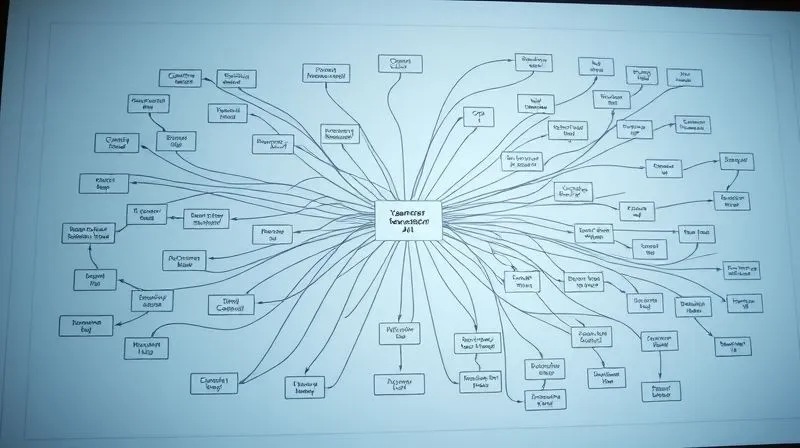
Furthermore, the role of data provenance is becoming crucial. If a cyberattack specifically targets and corrupts the training data of an AI, leading to erroneous or harmful outputs, the liability might shift towards the party responsible for the security and integrity of that data pipeline. This requires meticulous logging and auditing capabilities for all data interactions with the AI.
Contractual Agreements and Indemnification: Proactive Risk Mitigation
In the absence of clear, overarching AI-specific liability laws, contractual agreements are your strongest defense. I cannot stress enough the importance of meticulously drafted contracts between all parties involved in the AI lifecycle. These aren't just boilerplate documents; they are critical risk mitigation tools that define who is responsible for what, especially in the event of a cyberattack.
Key Contractual Elements for AI Systems
- Clear Scope of Work and Responsibilities: Explicitly define each party's role in development, data provision, integration, operation, maintenance, and security. Who is responsible for patching? Who monitors for anomalies?
- Cybersecurity Clauses: Detail specific security standards, penetration testing requirements, vulnerability management processes, and incident response protocols. Mandate adherence to frameworks like ISO 27001 or NIST CSF.
- Data Security and Privacy: Outline responsibilities for data encryption, access controls, data anonymization/pseudonymization, and compliance with data protection regulations (e.g., GDPR, CCPA).
- Indemnification Clauses: These are crucial. They determine which party will compensate the other for losses or damages arising from specific events, such as a cyberattack stemming from a party's negligence or breach of contract. Ensure these clauses are fair, reasonable, and clearly delineate triggers.
- Service Level Agreements (SLAs): For ongoing AI-as-a-Service, SLAs should include uptime guarantees, response times for security incidents, and penalties for non-compliance that could lead to vulnerabilities.
- Audit Rights and Transparency: Include provisions that allow for independent security audits and access to logs or data necessary to investigate a cyber incident. This helps overcome the 'black box' challenge retrospectively.
- Insurance Requirements: Mandate that all parties carry appropriate cyber insurance, and specify minimum coverage amounts. Consider 'first-party' and 'third-party' coverage for cyber incidents.
I've seen companies save millions in potential litigation simply because their contracts clearly laid out the responsibility for patching a specific vulnerability that an attacker later exploited. Conversely, vague contracts leave organizations exposed to prolonged and costly legal disputes.
Emerging Regulations and International Perspectives
The legal landscape for AI liability is not static; it's rapidly evolving. As an industry specialist, I'm closely monitoring global legislative efforts, which will inevitably shape how we legally assign liability for AI system cyberattack failures.
- European Union: Beyond the AI Act, the EU is also considering updates to its Product Liability Directive to explicitly address software and AI. This could lead to a 'producer' being liable for defects in AI systems, even if those defects emerge post-deployment due to learning or external manipulation.
- United States: While there isn't a single, comprehensive federal AI law, sector-specific regulations are emerging. For instance, in finance or healthcare, existing data breach notification laws and security mandates will apply directly to AI systems handling sensitive information. State-level initiatives, like California's new data privacy laws, also impact AI developers and deployers.
- United Kingdom: The UK is exploring a pro-innovation approach to AI regulation, focusing on existing regulators and encouraging responsible AI development. However, debates around AI liability are ongoing, with a focus on clarifying existing tort law.
- Asia-Pacific: Countries like Singapore and Japan are developing their own AI governance frameworks, often emphasizing ethical guidelines and responsible innovation, which implicitly touch upon accountability.
This global fragmentation means that multinational corporations deploying AI systems must navigate a complex web of differing legal requirements. What might be permissible or have a clear liability path in one jurisdiction could be ambiguous or highly risky in another. Staying abreast of these developments is not just good practice; it's a legal imperative. Organizations should engage legal counsel experienced in international cyber law and AI to ensure compliance across all operational territories.
Building a Robust AI Cyber-Legal Defense Strategy
Proactive measures are your strongest allies in mitigating liability for AI system cyberattack failures. As someone who has advised numerous organizations through the aftermath of breaches, I can tell you that an ounce of prevention is truly worth a pound of cure, especially in the complex world of AI liability.
- Conduct Regular AI Risk Assessments: Don't just assess your IT infrastructure; specifically evaluate your AI systems for unique vulnerabilities. This includes risks related to data poisoning, model evasion, adversarial attacks, and the security of your AI development and deployment pipelines.
- Implement an AI-Specific Incident Response Plan: Your general cyber incident response plan may not suffice. Develop protocols for detecting, responding to, and recovering from cyberattacks that specifically target or compromise AI systems. This should include forensic capabilities to analyze AI behavior post-attack.
- Ensure Data Provenance and Integrity: Maintain meticulous records of your AI's training data, its sources, and any transformations. Implement robust controls to prevent unauthorized access or alteration of data, as compromised data can directly lead to AI system failures and subsequent liability.
- Engage Expert Legal Counsel Early: Don't wait for a breach. Work with legal experts specializing in cyber law and AI to review your AI contracts, assess your liability exposure, and ensure compliance with relevant regulations.
- Foster a Culture of AI Ethics and Security: Educate your development, operations, and legal teams on the unique risks of AI. Promote ethical AI design principles that prioritize security, transparency, and accountability from the outset.
- Invest in AI-Specific Security Tools: Traditional cybersecurity tools might miss AI-specific threats. Explore solutions designed to protect machine learning models, detect adversarial attacks, and monitor AI system integrity.
Remember, the goal is not just to comply with the law, but to build resilient and trustworthy AI systems. This proactive approach not only reduces your legal exposure but also enhances your reputation and maintains customer trust.
Frequently Asked Questions (FAQ)
What's the biggest challenge in assigning AI liability after a cyberattack? The biggest challenge is often establishing clear causation. AI's 'black box' nature, autonomous learning capabilities, and multi-party development make it incredibly difficult to definitively prove that a specific human action or inaction directly led to the cyberattack failure, or that the resulting damage was foreseeable. This complexity fragments responsibility across the AI lifecycle.
Does general cyber insurance cover AI system cyberattack liability? Not necessarily. While many cyber insurance policies cover data breaches and network interruptions, they may have specific exclusions or limitations regarding AI system failures, particularly those stemming from algorithmic errors, autonomous actions, or novel attack vectors not explicitly covered. Organizations should review their policies carefully and consider specialized AI liability riders or standalone policies if available.
How can my organization best protect itself legally from AI cyberattack liability? The most effective strategy involves a multi-pronged approach: drafting robust, AI-specific contracts with all vendors and partners; conducting regular, comprehensive AI risk assessments; implementing an AI-tailored incident response plan; ensuring meticulous data provenance; and engaging expert legal counsel early to navigate the evolving regulatory landscape. Proactive risk management and clear contractual definitions are key.
What role does data provenance play in AI liability? Data provenance is critical. If a cyberattack involves the manipulation or poisoning of an AI's training or operational data, the liability could shift towards the party responsible for the security and integrity of that data. Establishing a clear audit trail for all data inputs and transformations helps to identify where a compromise occurred and who was responsible for its security at that stage.
Is there a global standard for AI liability yet? No, not yet. The legal landscape for AI liability is highly fragmented, with different jurisdictions (e.g., EU, US, UK) exploring various approaches, from adapting existing product liability laws to proposing new, AI-specific regulations. Multinational organizations must navigate this complex patchwork, emphasizing the need for expert legal guidance tailored to their operational regions.
Key Takeaways and Final Thoughts
Navigating the legal assignment of liability for AI system cyberattack failures is undoubtedly one of the most complex challenges facing organizations today. As an industry veteran, I’ve seen this problem evolve from theoretical discussions to pressing real-world dilemmas. The key insights I want you to walk away with are:
- AI's unique characteristics (autonomy, learning, black-box nature) fundamentally challenge traditional liability frameworks.
- Liability is rarely singular; it's often distributed across multiple stakeholders in the AI lifecycle.
- Proactive contractual agreements are your most powerful tool for defining responsibilities and mitigating risk.
- Emerging regulations will continue to shape the legal landscape, demanding continuous vigilance and adaptation.
- A robust, AI-specific cyber-legal defense strategy is essential, encompassing risk assessments, incident response, and expert legal counsel.
The journey to legally assign liability for AI system cyberattack failures is ongoing, but you don't have to face it unprepared. By understanding the nuances, embracing proactive measures, and fostering a culture of responsible AI development and deployment, you can significantly mitigate your risks and build a more resilient future. The time to act, to define, and to protect is now. Don't wait for a breach to understand your legal standing; anticipate it, plan for it, and secure your future in the AI era.
Recommended Reading
- 5 Critical Steps When New Environmental Regulations Impact Your Case
- Ransomware Attack? 7 Legal Steps Your Company Must Take Now
- Grand Jury Subpoena: 7 Urgent Steps When Your Company Receives One
- Does Your Entity Type Impact Liability? The Shocking Truth!
- Agency Procedures: Notice and Comment Explained Simply!





Comments
Leave a comment below. Your email will not be published. Required fields marked with *