


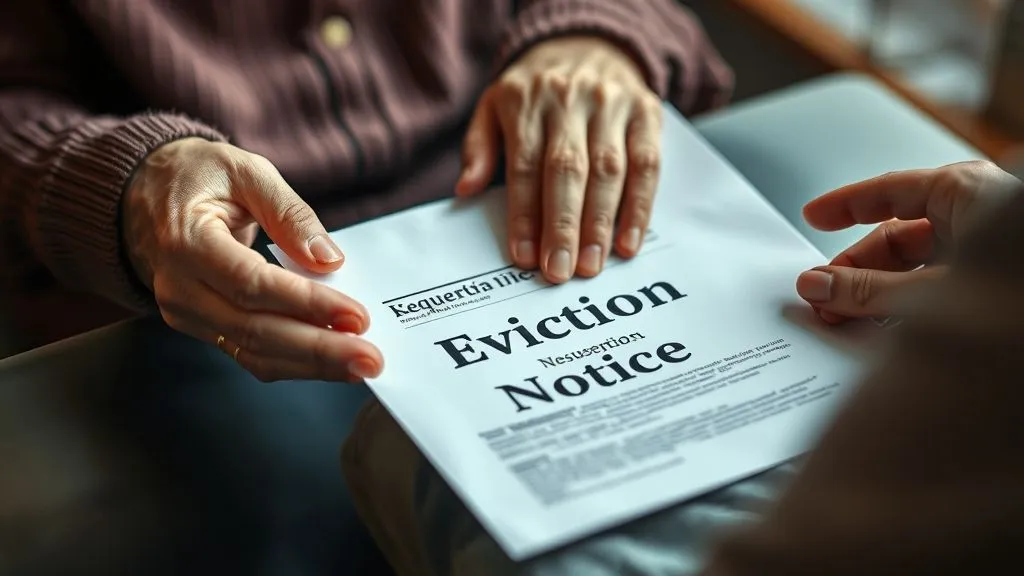
How to Legally Challenge a Nursing Home's Eviction Notice?
For over two decades in the intricate world of elder law, I've personally witnessed the devastating ripple effect of wrongful nursing home evictions. It's a scenario that often catches families off guard, turning a place meant for care and comfort into a source of immense stress and uncertainty. I've sat across from countless sons and daughters, their faces etched with worry, holding that dreaded piece of paper – an eviction notice.
The problem is profound: a nursing home eviction isn't just a change of address; it's a traumatic upheaval for vulnerable residents. It can disrupt critical medical care, sever social connections, and leave families scrambling to find suitable alternatives under immense pressure. The emotional toll, coupled with the logistical nightmare, can be overwhelming, often making families feel powerless against what seems like an unchallengeable institutional decision.
But I'm here to tell you that you are not powerless. This comprehensive guide isn't just a collection of facts; it’s a battle plan, forged from years of experience helping families navigate these very waters. We’ll delve into actionable frameworks, illuminate your legal rights, and walk through real-world scenarios to equip you with the expert insights needed to effectively challenge a nursing home's eviction notice and protect your loved one’s right to stay.
Understanding Your Rights: The Foundation of Any Challenge
Before you can effectively challenge an eviction notice, you must understand the bedrock of your rights as a nursing home resident or their advocate. Federal and state laws provide significant protections against arbitrary or unfair discharge. These aren't mere suggestions; they are legally mandated safeguards designed to ensure the stability and well-being of residents.
Federal Regulations: The Omnibus Budget Reconciliation Act of 1987 (OBRA '87)
The cornerstone of resident rights in nursing homes is the federal law known as the Omnibus Budget Reconciliation Act of 1987 (OBRA '87). This act established a comprehensive set of federal standards for nursing homes that receive Medicare or Medicaid funding, which includes the vast majority of facilities. OBRA '87 explicitly limits the reasons for which a nursing home can discharge a resident involuntarily.
Under OBRA '87, a nursing home may only transfer or discharge a resident for specific, legally defined reasons. These include:
- The resident's welfare: The transfer or discharge is necessary for the resident's welfare and the resident's needs cannot be met in the facility.
- Improvement of health: The resident's health has improved sufficiently so the resident no longer needs the services provided by the facility.
- Safety of others: The safety of individuals in the facility is endangered.
- Health of others: The health of individuals in the facility would otherwise be endangered.
- Non-payment: The resident has failed to pay (or to have paid on their behalf) for a stay at the facility.
- Facility closure: The facility ceases to operate.
"Understanding that a nursing home cannot simply evict a resident on a whim is your first, and most powerful, piece of leverage. Every discharge must be justified by one of these specific criteria, and the burden of proof lies squarely with the facility."
These federal regulations are enforced by the Centers for Medicare & Medicaid Services (CMS). You can find detailed information on these requirements on the CMS website.
State-Specific Protections
While federal laws provide a baseline, many states have enacted their own additional protections for nursing home residents, which can sometimes be even more stringent. These state laws might offer greater notice periods, expand the reasons for appeal, or provide more robust oversight mechanisms. It's crucial to research your specific state's regulations, as these can significantly impact your strategy for challenging an eviction.
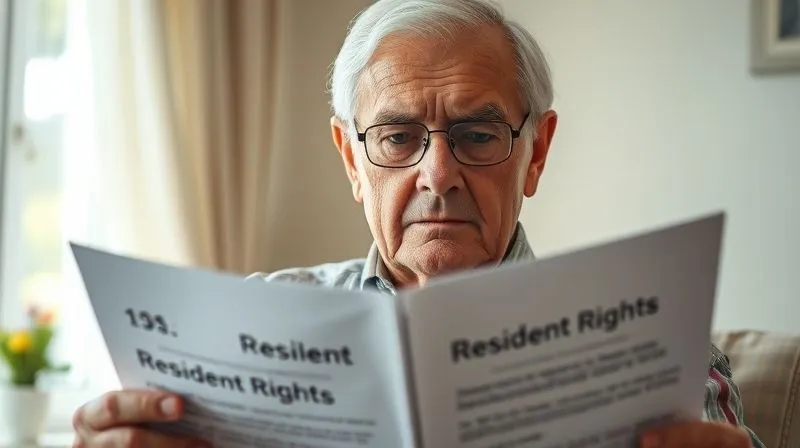
The Eviction Notice: What to Look For and Why It Matters
An eviction notice from a nursing home is not just a letter; it’s a formal legal document that triggers specific rights and timelines. Your immediate task is to scrutinize this document for critical information. A valid notice must contain certain elements, and any omission or error could be grounds for challenging its legitimacy.
Key elements of a valid nursing home eviction notice:
- The specific reason(s) for the transfer or discharge: This must align with the legally permissible reasons outlined by federal and state law.
- The effective date of the transfer or discharge: Federal law generally requires a minimum of 30 days' notice, though exceptions exist for immediate threats to health or safety.
- The resident's right to appeal the decision: This is a fundamental right and must be clearly stated.
- The procedures for appealing the decision: This includes the name, address, and telephone number of the State Long-Term Care Ombudsman.
- The right to remain in the facility: During the appeal process, the resident generally has the right to remain in the facility unless an expedited hearing determines otherwise.
"Do not underestimate the power of a legally flawed notice. If the facility fails to provide all required information or adhere to proper procedures, their eviction attempt may be invalid from the outset."
I've seen cases where notices were vague, lacked specific dates, or omitted crucial appeal information. These deficiencies can buy you valuable time and strengthen your challenge. Compare the notice you received against the table below to quickly identify potential issues:
| Element | Valid Notice | Invalid Notice (Potential Grounds for Challenge) |
|---|---|---|
| Specific Reason for Eviction | Clearly states one of the legally permissible reasons (e.g., 'Failure to pay for services,' 'Needs cannot be met'). | Vague statements (e.g., 'Facility decision,' 'Resident is difficult'), or reasons not aligned with law. |
| Effective Date of Discharge | Clearly states a date at least 30 days from notice date (or valid exception for shorter notice). | No date, or a date less than 30 days without proper justification. |
| Right to Appeal | Explicitly states the resident's right to appeal. | Omits mention of appeal rights entirely. |
| Appeal Procedures & Contacts | Provides name, address, and phone number of the State Long-Term Care Ombudsman, and steps to appeal. | Missing ombudsman contact, or unclear/incomplete appeal instructions. |
| Right to Remain During Appeal | States the resident's right to stay pending the appeal decision. | Suggests immediate departure or ignores stay of eviction. |
| New Location (if applicable) | If involuntary transfer, provides information about the new location. | No information on where the resident is to be transferred. |
Step 1: Immediate Action – Don't Delay, Document Everything
Receiving an eviction notice can feel like a punch to the gut, but panic is your enemy. Your immediate response is critical. The clock starts ticking the moment that notice is delivered, and every action you take, or fail to take, can impact the outcome.
Here's your actionable first response plan:
- Review the Notice Thoroughly, But Don't Sign Anything Hastily: Read every word. Understand the stated reason and the proposed discharge date. Do not sign any document that waives your rights or agrees to the eviction without fully understanding its implications and consulting with an advocate or attorney.
- Do NOT Pack Up or Agree Verbally to Leave: Even if the notice feels final, do not begin preparing to move or verbally agree to vacate the premises. Doing so can be interpreted as acquiescence to the eviction, weakening your position.
- Start a Detailed Communication Log: This is non-negotiable. Create a notebook or digital document where you record every interaction related to the eviction. Include:
- Date and Time: When the interaction occurred.
- People Involved: Names and titles of everyone you spoke with (e.g., 'Nurse Manager Sarah Jenkins,' 'Administrator John Doe').
- Method of Communication: Phone call, in-person, email, letter.
- Summary of Discussion: What was said, what was agreed upon, what questions were asked and answered.
- Gather All Relevant Documents: Begin compiling a comprehensive file of all documents related to the resident's stay. This includes:
- Admission Agreement: The contract signed upon entry to the nursing home.
- Medical Records: Especially those relevant to the stated reason for eviction (e.g., care plans, physician's orders, progress notes).
- Financial Statements: Proof of payment, Medicaid/Medicare statements, billing records.
- Any Prior Communication: Letters, emails, or notes regarding concerns, complaints, or changes in care.
The urgency here cannot be overstated. Every moment counts, and diligent documentation will be your most powerful asset in challenging the nursing home's decision.
Step 2: Understanding the Stated Reason for Eviction
The nursing home must provide a specific, legally permissible reason for the eviction. Your challenge hinges on disproving or mitigating this stated reason. In my experience, facilities sometimes use broad or vague justifications, hoping families won't dig deeper. This is where your investigative work begins.
Non-Payment of Fees
This is one of the most common reasons cited for eviction. However, it's often more complex than it appears. Non-payment can arise from several scenarios:
- Medicaid Application Issues: Delays in Medicaid approval, retroactive denials, or gaps in coverage.
- Private Pay Shortfalls: Running out of personal funds before Medicaid kicks in.
- Billing Disputes: Disagreements over charges, incorrect billing, or charges for services not rendered.
- Third-Party Payer Problems: Issues with long-term care insurance or other benefit programs.
If non-payment is the reason, you need to meticulously review all financial records. Gather proof of payments made, communication with Medicaid/Medicare, and any correspondence regarding billing disputes. Remember, a facility cannot evict a resident solely because a Medicaid application is pending, as long as the resident is actively pursuing eligibility. For more information on Medicaid and Medicare long-term care benefits, refer to the Centers for Medicare & Medicaid Services.
Case Study: Mr. Henderson's Medicaid Maze
Mr. Henderson, an 82-year-old resident, received an eviction notice stating 'failure to pay for services.' His family was distraught, believing they had exhausted all funds. Upon reviewing their paperwork, I discovered that Mr. Henderson's Medicaid application, submitted months prior, was still 'pending' due to a bureaucratic backlog at the state agency. The nursing home, despite being aware of the pending application, issued the eviction notice. We immediately submitted a formal appeal, providing documentation of the pending Medicaid application and correspondence with the state. We argued that under federal law, a resident cannot be evicted for non-payment while actively pursuing Medicaid eligibility. The appeal board sided with Mr. Henderson, ordering the nursing home to rescind the eviction notice and work with the family to resolve the Medicaid issue, ensuring his continued stay.
Medical Needs/Care Requirements
Sometimes, a nursing home claims the resident's medical needs have become too complex, and they can no longer provide appropriate care. This is a highly subjective area and requires careful scrutiny. The facility must demonstrate that they genuinely lack the resources or expertise to meet the resident's needs, and that reasonable accommodations cannot be made.
To challenge this, you might need to seek an independent medical assessment from a physician not affiliated with the nursing home. This assessment can confirm whether the resident's needs truly exceed the facility's capabilities or if the facility is simply trying to offload a more challenging resident. Care plans and medical records will be crucial here, looking for inconsistencies or evidence that the facility *could* meet the needs with proper staffing or training.
Safety Concerns
If the eviction notice states the resident poses a danger to themselves or others, the facility must have substantial, documented evidence to support this claim. This isn't about minor behavioral issues; it's about a credible threat. Look for incident reports, staff notes, and any prior interventions taken by the facility. Often, these claims can be mitigated by adjusting care plans, providing additional supervision, or administering appropriate medications, which the facility may have failed to adequately attempt.
Step 3: Initiating the Appeal Process – Your Right to Be Heard
Every resident facing an involuntary discharge has the right to appeal the decision. This is a fundamental safeguard and often leads to a 'stay' of the eviction, meaning the resident cannot be moved until the appeal process is complete. This critical step buys you time and provides a formal venue to present your case.
Here's how to initiate the appeal process:
- Locate the Appeal Instructions: The eviction notice itself should contain detailed instructions on how to appeal, including deadlines and contact information for the State Long-Term Care Ombudsman program.
- Submit a Written Appeal Within the Deadline: Time is of the essence. Most states have strict deadlines (e.g., 10-20 days from receipt of the notice). Submit your appeal in writing, clearly stating your intention to challenge the eviction. Keep a copy for your records and send it via certified mail with a return receipt requested to prove it was received.
- Request a Hearing: Your written appeal should explicitly request a hearing before an impartial administrative law judge or review board. This hearing is your opportunity to present evidence and testimony.
- Prepare Your Arguments and Evidence: Begin organizing all the documentation you gathered in Step 1 and 2. Outline the specific reasons why you believe the eviction is unwarranted, referencing federal and state regulations, and attaching supporting evidence.
"The appeal process triggers a 'stay' of the eviction. This means the nursing home cannot move your loved one until a decision on your appeal has been rendered. This 'stay' is invaluable, providing stability and time to build your case."

Step 4: Building Your Case – Evidence is Everything
A successful appeal hinges on the strength and clarity of your evidence. You need to proactively gather and organize documents that directly refute the nursing home's stated reason for eviction or demonstrate their non-compliance with regulations. Think of yourself as a detective, piecing together the facts.
Key types of evidence to collect:
- Medical Records: If the facility claims inability to meet needs, obtain recent medical evaluations, care plans, and physician's orders that demonstrate the resident's condition *can* be managed. Look for any discrepancies in the facility's documentation versus independent medical assessments.
- Financial Records: For non-payment claims, gather bank statements, cancelled checks, Medicaid/Medicare approval letters, denial letters with appeal information, and any correspondence with the facility's billing department.
- Witness Statements: If other residents, family members, or even former staff have witnessed conditions or incidents relevant to your case, ask them to provide written statements. These can be powerful.
- Communication Logs: Your detailed log of interactions with the facility will be crucial for establishing timelines and proving prior attempts to resolve issues.
- Facility Policies: Sometimes, the facility itself fails to follow its own written policies, which can be used as evidence against them. Request a copy of their discharge policies.
The Role of an Ombudsman
One of the most valuable resources at this stage is your State Long-Term Care Ombudsman. These individuals are advocates for residents' rights and are mandated by federal law. They can provide impartial advice, help mediate disputes with the facility, and even represent residents during the appeal process. They have extensive knowledge of state and federal regulations and can be an invaluable ally.
I strongly encourage reaching out to your local ombudsman program as soon as you receive an eviction notice. You can find contact information for your state's program through the National Long-Term Care Ombudsman Program website.
Step 5: The Appeal Hearing – Presenting Your Argument
The appeal hearing is your formal opportunity to present your case to an impartial decision-maker. This is not a casual meeting; it’s a quasi-judicial proceeding where evidence is presented and arguments are made. While it can feel intimidating, being prepared will significantly boost your chances of success.
What to expect and how to prepare:
- Understand the Format: Hearings typically involve an administrative law judge or a review panel. Both the nursing home and you (or your representative) will have the opportunity to present opening statements, introduce evidence, call witnesses, and make closing arguments.
- Present Your Evidence Clearly and Concisely: Have your documents organized and ready. Refer to specific pages or sections when presenting. Don't just hand over a stack of papers; explain what each document proves.
- Cross-Examine Facility Witnesses (if allowed/appropriate): If the nursing home brings staff to testify, you may have the opportunity to ask them questions. Focus on inconsistencies in their testimony or gaps in their documentation. If you have legal counsel, they will handle this.
- Maintain Composure: Hearings can be stressful. Remain respectful, calm, and focused on the facts. Emotional outbursts, while understandable, can detract from your credibility.
"Your goal in the hearing is to demonstrate, with clear evidence, that the nursing home's stated reason for eviction is either invalid, unsubstantiated, or that reasonable alternatives exist to prevent the discharge."
Remember, the burden of proof is usually on the nursing home to justify the eviction. Your role is to poke holes in their justification and present a compelling counter-narrative.
Step 6: Legal Counsel – When to Call an Elder Law Attorney
While this guide provides a robust framework, the complexities of elder law and administrative hearings often demand the expertise of a seasoned attorney. I've seen countless families try to navigate this alone, only to find themselves overwhelmed by legal jargon, procedural nuances, and the sheer power imbalance with institutional nursing homes.
An experienced elder law attorney can be your most powerful advocate. They can:
- Interpret Complex Regulations: They understand the intricacies of federal and state laws, identifying specific violations or loopholes in the nursing home's case.
- Navigate Procedural Nuances: They know the specific rules of evidence and procedure for administrative hearings, ensuring your case is presented correctly.
- Gather Expert Witnesses: In cases involving medical necessity, an attorney can help secure independent medical experts to provide testimony.
- Represent You in Hearings: Having professional legal representation ensures your arguments are articulate, evidence is presented effectively, and your rights are fully protected.
- Negotiate with the Facility: Attorneys can often negotiate a resolution with the nursing home, potentially avoiding a protracted hearing or finding alternative solutions.
According to advocacy groups like the National Consumer Voice for Quality Long-Term Care, residents who have legal representation in appeal hearings often have a significantly higher success rate. This isn't just about winning; it's about leveling the playing field.

Step 7: What Happens After the Appeal?
Once the appeal hearing concludes, the administrative law judge or review board will issue a decision. This decision will determine the fate of the eviction notice. Understanding the possible outcomes will help you prepare for the next steps.
Appeal Granted: The Resident Remains
If your appeal is granted, the eviction notice will be rescinded, and the resident has the right to remain in the nursing home. The facility will be ordered to continue providing care and cannot retaliate against the resident for having filed an appeal. This is, of course, the desired outcome and a testament to your diligent efforts in understanding and asserting your rights.
Appeal Denied: Further Legal Options
If the appeal is denied, it doesn't necessarily mean the fight is over. You may have further avenues for legal recourse, depending on your state's laws. These can include:
- Appealing to a Higher Administrative Body: Some states allow for an appeal of the administrative law judge's decision to a higher administrative review board.
- Judicial Review: In many jurisdictions, you can file a petition for judicial review in state court. This is a formal court proceeding where a judge reviews the administrative decision to ensure it was made in accordance with the law and supported by substantial evidence. This is a complex legal process that absolutely requires the involvement of an elder law attorney.
- Seeking an Injunction: In certain urgent circumstances, an attorney may be able to seek a court injunction to prevent the eviction while further legal challenges are pursued.
Even if the appeal is denied, the information and evidence gathered during the process will be invaluable for exploring these subsequent legal options. It's crucial to consult with an elder law attorney immediately if your initial appeal is denied to understand your full range of options and applicable deadlines.
Frequently Asked Questions (FAQ)
Question: Can a nursing home evict someone for non-payment if a Medicaid application is pending? No, generally not. Federal regulations protect residents from eviction solely due to a pending Medicaid application, provided the resident is actively pursuing eligibility and cooperating with the application process. The facility must work with the resident and family to resolve the financial issue, not just evict. However, you must be able to demonstrate that the application is indeed pending and that all required documentation has been submitted.
Question: How long does the eviction appeal process typically take? The timeline can vary significantly by state and the complexity of the case. Generally, once an appeal is filed, a hearing might be scheduled within a few weeks to a couple of months. The decision is usually issued shortly after the hearing. During this entire period, the resident typically has the right to remain in the facility due to the 'stay' of eviction.
Question: What if the nursing home threatens to move my loved one before the appeal hearing? This is a serious violation of resident rights. If an appeal has been properly filed, the resident has the right to remain in the facility until a decision is rendered, unless an expedited hearing determines otherwise due to an immediate threat. Immediately contact your State Long-Term Care Ombudsman and an elder law attorney if the facility attempts to move a resident prematurely. This could warrant legal action.
Question: Are there alternatives to eviction if the facility genuinely cannot meet needs? Yes, often. If a facility genuinely believes it cannot meet a resident's needs, it has an obligation to assist in finding an appropriate alternative placement. This should involve a collaborative process, not a unilateral eviction. Alternatives might include facilities with specialized care units, home health services, or assisted living facilities, depending on the resident's specific needs. An ombudsman or elder law attorney can help facilitate this process and ensure a safe transition, if necessary.
Question: Can I sue a nursing home for wrongful eviction? Yes, in many cases, if a nursing home unlawfully evicts a resident, you may have grounds to sue for wrongful eviction, damages, and other relief. This is a civil lawsuit that would typically be handled by an elder law attorney. Successful lawsuits can lead to the resident's reinstatement, financial compensation for damages incurred, and even punitive damages against the facility for egregious conduct. Consulting with an attorney is essential to assess the viability of such a claim.
Key Takeaways and Final Thoughts
- Know Your Rights: Federal and state laws provide robust protections against wrongful nursing home evictions. Understand the specific, legally permissible reasons for discharge.
- Act Immediately and Document Everything: Time is critical. Scrutinize the eviction notice, start a detailed communication log, and gather all relevant documents.
- Challenge the Stated Reason: Investigate and collect evidence to disprove or mitigate the nursing home's justification for eviction, whether it's non-payment, medical needs, or safety concerns.
- Utilize the Appeal Process: This is your fundamental right. File a written appeal promptly, request a hearing, and prepare to present your case with organized evidence.
- Seek Expert Guidance: Don't hesitate to contact your State Long-Term Care Ombudsman and, crucially, an experienced elder law attorney. Their expertise can significantly impact the outcome.
Facing a nursing home eviction notice is undoubtedly one of the most challenging situations a family can encounter. The fear, the uncertainty, and the feeling of powerlessness are real. However, as an industry veteran, I can assure you that with the right knowledge, swift action, and expert support, you absolutely have the ability to challenge these notices effectively. Empower yourself with the information in this guide, and remember that you are fighting for the fundamental right of a vulnerable individual to a safe and stable home. Don't back down; stand firm and protect their dignity and well-being.
Recommended Reading
- Urgent: 5 Steps to Legally Appoint a Salvor After a Maritime Casualty
- 5 Critical Steps: Protecting Business Assets After a Key Employee Plea Deal
- 7 Legal Strategies: How to Minimize Multi-State Property Tax Burden?
- 5 Crucial Steps: Mitigating EB-5 Regional Center Fraud Risk for Clients
- 7 Steps: How to Accurately Value Pain & Suffering in Injury Settlements





Comments
Leave a comment below. Your email will not be published. Required fields marked with *