


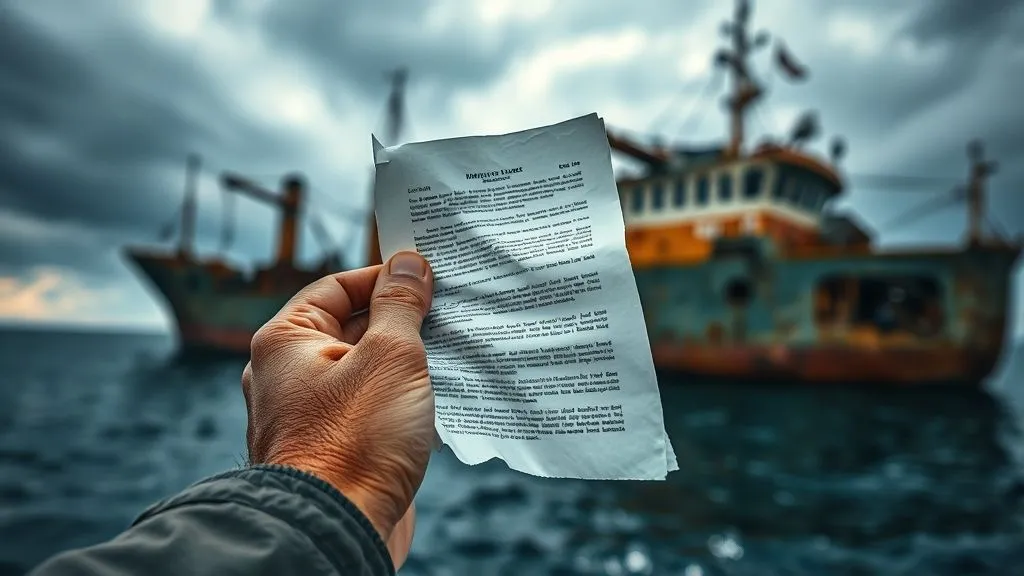
How to legally recover crew wages from an abandoned vessel abroad?
For over two decades in maritime law, I've witnessed the devastating impact of vessel abandonment on seafarers – a scenario that is not only a breach of contract but a profound humanitarian crisis. I've sat across from countless crew members, their faces etched with despair, stranded in foreign ports, often without food, medical care, or the means to return home, all while their rightful wages remain unpaid.
The scenario is tragically common: a vessel owner vanishes, declares bankruptcy, or simply cuts off communication, leaving the crew in an untenable position. The ship, their home and workplace, becomes a legal and logistical nightmare. The complexity of international jurisdictions, varying national laws, and the sheer power imbalance between a lone seafarer and a faceless corporation can make the prospect of recovering wages seem insurmountable.
But it doesn't have to be. In my experience, while challenging, legally recovering crew wages from an abandoned vessel abroad is absolutely possible with the right knowledge, strategic action, and expert guidance. This article will demystify the complex legal landscape, providing you with a clear, actionable framework, supported by real-world insights and practical steps, to reclaim your rightful earnings and secure your future.
Understanding the Legal Framework: Your Rights and International Conventions
Before any action can be taken, it's crucial to understand the legal bedrock that protects seafarers. The international maritime community, recognizing the unique vulnerabilities of seafarers, has established conventions and laws designed to safeguard their rights, particularly concerning wages and welfare.
The Maritime Labour Convention (MLC, 2006)
The Maritime Labour Convention, 2006 (MLC, 2006), often referred to as the 'seafarers' bill of rights', is the single most important instrument in this context. It sets out seafarers' rights to decent conditions of work, including the right to receive wages regularly and in full. Crucially, the MLC, 2006 also contains specific provisions regarding vessel abandonment.
Expert Insight: The MLC, 2006 mandates that shipowners provide financial security to ensure seafarers' repatriation and up to four months of contractual wages and entitlements in cases of abandonment. If your vessel is flagged in an MLC ratifying state, or calls at ports of MLC ratifying states, these protections are legally enforceable.
This financial security, often in the form of insurance or a bank guarantee, is a critical layer of protection. Understanding if your vessel's flag state has ratified the MLC and if the owner has complied with its financial security requirements is a primary step in assessing your recovery options.
Flag State and Port State Jurisdiction
The jurisdiction that governs your claim can be complex. Typically, the flag state (the country where the vessel is registered) has primary jurisdiction over the ship and its crew. However, when a vessel is abandoned in a foreign port, the port state (the country where the vessel is physically located) also gains significant jurisdiction, especially concerning humanitarian issues and enforcing international conventions like the MLC. This dual jurisdiction often provides multiple avenues for recourse.
Immediate Steps Upon Vessel Abandonment: Protecting Your Claim
The moments immediately following the realization of abandonment are critical. Your actions then will lay the foundation for any future legal claim. Panic is understandable, but swift, methodical documentation is your best defense.
Document Everything: The Foundation of Your Case
I cannot overstate the importance of meticulous record-keeping. Every piece of paper, every digital communication, every photograph can serve as vital evidence when you seek to legally recover crew wages from an abandoned vessel abroad.
- Logbook Entries: Ensure the vessel's logbook accurately reflects the date and circumstances of abandonment, including lack of provisions, fuel, or communication from the owner.
- Employment Contract & Pay Slips: Keep original copies of your employment contract, any collective bargaining agreements, and all pay slips, bank statements, or remittance advices. These prove your entitlement and the amount owed.
- Communication Records: Preserve all emails, text messages, and call logs with the shipowner, manning agent, or company representatives, especially those demonstrating non-payment or attempts to contact them.
- Crew List & Certificates: Obtain a copy of the official crew list, and ensure you have copies of all your personal identification and professional certificates.
- Photographic and Video Evidence: Document the vessel's condition, lack of provisions, and any specific issues related to abandonment. Geotagged photos can be powerful evidence.
- Witness Statements: If possible, get written statements from fellow crew members detailing the abandonment and the unpaid wages.
This comprehensive documentation is not just about proving what happened; it's about quantifying your claim accurately. Remember, the more evidence you have, the stronger your position.

Contacting Authorities and Unions
Once documentation is underway, immediate outreach to relevant authorities is paramount. This includes:
- Port State Authorities: Inform the local port authorities, maritime administration, and immigration officials about your situation. They can often provide immediate humanitarian assistance and initiate official investigations.
- Flag State Embassy/Consulate: Contact the embassy or consulate of the vessel's flag state in the country where you are stranded. They have a responsibility to their registered vessels and crew.
- Your National Embassy/Consulate: Inform your own country's diplomatic mission. They can offer consular assistance, including repatriation support and liaison with local authorities.
- Seafarers' Unions/Welfare Organizations: Organizations like the International Transport Workers' Federation (ITF) or local seafarers' welfare charities are invaluable. They have extensive networks, legal resources, and experience in dealing with abandonment cases.
Identifying the Responsible Parties and Assets
One of the trickiest aspects of vessel abandonment is piercing the corporate veil to identify who is truly responsible and what assets are available for recovery. Ship ownership structures can be deliberately complex, involving shell companies in various jurisdictions.
Ship Owners, Operators, and Insurers (P&I Clubs)
The primary responsible party is the shipowner. However, the vessel might be managed by a separate operator or chartered to another company. It's essential to identify all entities involved. Crucially, shipowners are legally required to have protection and indemnity (P&I) insurance. These P&I Clubs are mutual insurers that cover a wide range of liabilities, including crew wages, repatriation, and medical expenses. Identifying the P&I Club insuring the abandoned vessel is often the most direct route to recovery, especially under MLC, 2006 financial security provisions.
The Role of Charterers and Mortgagees
While less common for direct wage recovery, charterers (companies leasing the vessel) or mortgagees (banks holding a mortgage on the ship) might have an interest in the vessel that can be leveraged. In some jurisdictions, if a charterer effectively acted as the employer, they could be held liable. Mortgagees, particularly in the event of a forced sale, will have a senior claim, but understanding their position is part of the overall asset picture.
Case Study: The MV 'Sea Serpent' Saga
In 2018, the MV 'Sea Serpent', flagged in a prominent Asian nation, was abandoned in a European port. The crew of 15, from various developing countries, found themselves without pay for three months and dwindling provisions. Initial attempts to contact the registered owner proved futile. However, through diligent investigation by local maritime lawyers and the ITF, it was discovered that the vessel was entered with a major P&I Club, compliant with MLC, 2006. The lawyers presented the crew's meticulously documented wage claims to the P&I Club. After negotiation and verification, the P&I Club stepped in, arranging for the crew's repatriation and payment of their outstanding wages and entitlements, demonstrating the critical role of the MLC's financial security provisions and expert legal intervention.
Navigating Legal Avenues: Maritime Liens and Vessel Arrest
When direct negotiations or P&I claims don't yield results, or if the vessel is not MLC compliant, legal action against the vessel itself becomes a potent tool. This is where the concept of a maritime lien and vessel arrest comes into play.
What is a Maritime Lien for Wages?
A maritime lien is a special right granted by maritime law that attaches to a vessel, allowing a claimant to proceed against the ship itself to satisfy a debt. Importantly, liens for crew wages are considered 'privileged liens' – meaning they typically rank very high, often above mortgages and other claims, in the hierarchy of payments if a vessel is sold. This makes them a powerful instrument for seafarers.
The lien follows the ship, regardless of changes in ownership, making it a robust claim. You don't need to know who the current owner is; your claim is against the vessel itself.
| Lien Type | Priority | Enforceable Against | Basis |
|---|---|---|---|
| Crew Wages | Highest (privileged) | The Vessel Itself | Safety of life at sea, humanitarian principles |
| Salvage | High | The Vessel & Cargo | Preservation of property |
| Port Dues/Pilotage | Medium | The Vessel | Essential services |
| Ship Mortgage | Lower (often contractual) | The Vessel | Financing agreement |
The Process of Vessel Arrest in Foreign Jurisdictions
Vessel arrest is the legal process of detaining a ship by court order to secure a maritime claim. This is a complex procedure, typically requiring specialist legal representation in the jurisdiction where the vessel is located. When you seek to legally recover crew wages from an abandoned vessel abroad through arrest, the steps generally involve:
- Engaging Local Maritime Lawyers: They will assess the strength of your claim, the local legal framework, and the likelihood of success.
- Filing an Application with the Court: A formal application is made to the relevant Admiralty Court for an order of arrest.
- Providing Security: The court may require the claimant (or their legal representative) to provide security (e.g., a bank guarantee) to cover potential damages if the arrest is later found to be wrongful. This is a significant hurdle that often requires external support from unions or welfare organizations.
- Execution of Arrest: If the order is granted, the vessel is physically arrested by a bailiff or marshal, preventing it from leaving port.
- Forced Sale and Distribution: If the owner fails to satisfy the claim, the court can order the judicial sale of the vessel. The proceeds are then distributed to claimants according to the hierarchy of maritime liens, with crew wages typically taking precedence.
This process can be lengthy and expensive, but it is often the most effective way to compel payment when all other avenues have failed. For further reading on this complex area, I recommend consulting resources on Admiralty and Maritime Law.
Engaging Legal Counsel and International Support
Attempting to navigate the intricacies of international maritime law and foreign legal systems without expert help is a perilous undertaking. Professional guidance is not a luxury; it's a necessity.
Why Specialist Maritime Lawyers are Crucial
A maritime lawyer specializing in crew claims will be indispensable. They understand the nuances of international conventions, national admiralty laws, and the procedural requirements for vessel arrest and wage recovery. They can:
- Assess the merits of your claim and identify the best legal strategy.
- Navigate complex jurisdictional issues.
- Liaise with P&I Clubs, flag state authorities, and other stakeholders.
- Prepare and file all necessary legal documents.
- Represent you in court proceedings.
- Help secure funding for legal costs or security for arrest.
Their expertise can significantly expedite the process and improve the chances of a successful outcome.

Assistance from Embassies, Consulates, and NGOs
Beyond legal counsel, various organizations play a vital support role:
- Embassies and Consulates: Your national embassy can provide consular assistance, including emergency travel documents, communication with family, and liaison with local authorities. The flag state's embassy also has a duty to its vessel and crew.
- International Transport Workers' Federation (ITF): The ITF is a global federation of transport workers' unions. They have inspectors in ports worldwide who can assist abandoned seafarers, provide legal aid, and leverage their influence with shipowners and P&I Clubs. Their Seafarers' Trust also offers crucial support.
- Local Seafarers' Welfare Organizations: Many ports have charitable organizations (e.g., Missions to Seafarers, Apostleship of the Sea) that provide humanitarian aid, shelter, food, and communication facilities to stranded seafarers.
Alternative Recovery Methods and Compensation Schemes
While maritime liens and P&I claims are primary avenues, other options may exist, particularly if the conventional routes face significant obstacles.
Seafarers' Welfare Funds and State Schemes
Some countries, recognizing the plight of abandoned seafarers, have established national welfare funds or compensation schemes. These are often funded through levies on shipping or government appropriations. While not universally available, it's worth exploring if the flag state or port state has such provisions. These schemes are typically designed to cover immediate needs like repatriation and basic living expenses, and sometimes a portion of unpaid wages.
The ITF Seafarers' Trust and Other Support Organizations
The ITF Seafarers' Trust, funded by voluntary contributions, provides grants to support the welfare of seafarers worldwide. While not a direct wage recovery mechanism, they can provide critical humanitarian aid and support legal efforts through grants to organizations assisting abandoned crews. Similarly, other international NGOs focus on human rights in the maritime sector and can offer advocacy and support.
Overcoming Practical Challenges: Language, Logistics, and Time
Beyond the legal complexities, abandoned seafarers face immense practical challenges that can hinder their ability to seek justice. I've seen these issues derail even strong cases.
The Importance of Translation and Local Expertise
Operating in a foreign country often means confronting language barriers. Legal documents, court proceedings, and communication with local authorities will likely be in a language you don't understand. Engaging legal counsel with local expertise and access to certified translators is non-negotiable. Misunderstandings due to language can lead to critical errors or delays.
Managing Living Expenses and Repatriation
While pursuing a claim, seafarers still need to eat, find shelter, and eventually get home. This is where humanitarian aid from port state authorities, embassies, and welfare organizations becomes crucial. Securing temporary visas, arranging flights, and covering daily expenses are immediate concerns that must be addressed concurrently with the legal process. Repatriation is often covered by the MLC's financial security, but its activation can take time.
The Element of Time and Persistence
The process to legally recover crew wages from an abandoned vessel abroad is rarely swift. It can take months, sometimes even years, depending on the jurisdiction, the complexity of the ownership structure, and the availability of assets. Persistence, patience, and a strong support network are vital.
Expert Insight: Never give up. The international maritime community, despite its flaws, is increasingly pressured to uphold seafarers' rights. Every case, every successful recovery, strengthens the collective effort to prevent future abandonments. Your persistence is not just for your own wages, but for the safety and dignity of all seafarers.

Frequently Asked Questions (FAQ)
Q: How long does the wage recovery process typically take?
A: The timeline varies significantly based on several factors: the flag state's responsiveness, the P&I Club's cooperation, the jurisdiction of abandonment, and whether vessel arrest is required. Simple cases with clear MLC compliance might resolve in a few weeks to months, while complex cases involving vessel arrest and judicial sale could take six months to two years, or even longer. Patience and consistent follow-up are key.
Q: What if the vessel is under a different flag state than where it was abandoned?
A: This is a common scenario. While the flag state's laws primarily govern the vessel, the port state where the abandonment occurs gains significant jurisdiction, especially if it has ratified the MLC, 2006. This allows for the enforcement of international conventions and potentially the arrest of the vessel under local admiralty law, regardless of its flag. Specialist maritime lawyers are crucial for navigating these multi-jurisdictional complexities.
Q: Can I claim for more than just my basic wages (e.g., repatriation, medical costs)?
A: Absolutely. Under the MLC, 2006, seafarers are entitled to not only their outstanding contractual wages but also costs associated with repatriation (travel, accommodation, food), essential medical care, and any other contractual entitlements. If you incurred personal expenses due to the abandonment (e.g., buying food), retain receipts as these may also be recoverable. Your legal claim should encompass all these elements.
Q: What if I don't have all my documents, like my original contract or pay slips?
A: While having original documents is ideal, their absence doesn't necessarily invalidate your claim. Lawyers can often work with other forms of evidence such as bank statements showing past payments, crew lists, witness statements from fellow crew members, or even digital communications. The key is to provide as much verifiable proof as possible. P&I Clubs and courts often have mechanisms to verify claims even with incomplete documentation, especially if there's corroborating evidence.
Q: Is there a cost involved in pursuing a claim, and who pays for it?
A: Yes, there are legal fees, court costs, and potentially security costs for vessel arrest. However, many maritime lawyers who assist seafarers on abandonment cases work on a contingency basis, meaning they only get paid if you recover your wages. Seafarers' unions (like the ITF) and welfare organizations often provide legal aid or financial assistance to cover these costs. Under MLC, 2006, the shipowner's financial security should cover repatriation and up to four months' wages, and sometimes legal costs are also recoverable as part of the claim. Always discuss fees and funding options transparently with your legal counsel.
Key Takeaways and Final Thoughts
The abandonment of a vessel and the non-payment of wages is a traumatic ordeal for any seafarer. However, armed with the right knowledge and a proactive approach, reclaiming your entitlements is a tangible goal. Here are the most critical, actionable steps to remember:
- Document Everything: Your employment contract, pay slips, and communication records are your primary evidence.
- Understand MLC, 2006: It's your most powerful international protection for wages and repatriation.
- Act Swiftly: Inform port state authorities, your embassy, and seafarer welfare organizations immediately.
- Identify the P&I Club: This is often the most direct route to recovery under MLC financial security.
- Consider Maritime Liens & Arrest: When other avenues fail, these legal tools can compel payment by targeting the vessel itself.
- Engage Specialist Legal Counsel: A maritime lawyer is indispensable for navigating complex international laws and procedures.
- Seek Support: Leverage the resources of unions, welfare organizations, and diplomatic missions.
The maritime industry has a moral and legal obligation to protect its workforce. By understanding your rights and taking decisive action, you not only fight for your own justice but contribute to a safer, more accountable global shipping environment. Your resilience in the face of such adversity is a testament to the enduring spirit of seafarers worldwide. Don't let your voice be silenced; your wages are your right, and the law is on your side.
Recommended Reading
- IRS Notice of Deficiency? Your Urgent Guide to Responding Effectively
- Unraveling the Mystery: Do You Charge Sales Tax on Digital Products?
- Unpaid Alimony: What Happens If Spousal Support Is Not Paid?
- Mastering Your Tax Court Petition Hearing: The Ultimate Preparation Guide
- HOA Pet Breed Restrictions: Can They Really Ban Your Dog?




Comments
Leave a comment below. Your email will not be published. Required fields marked with *