


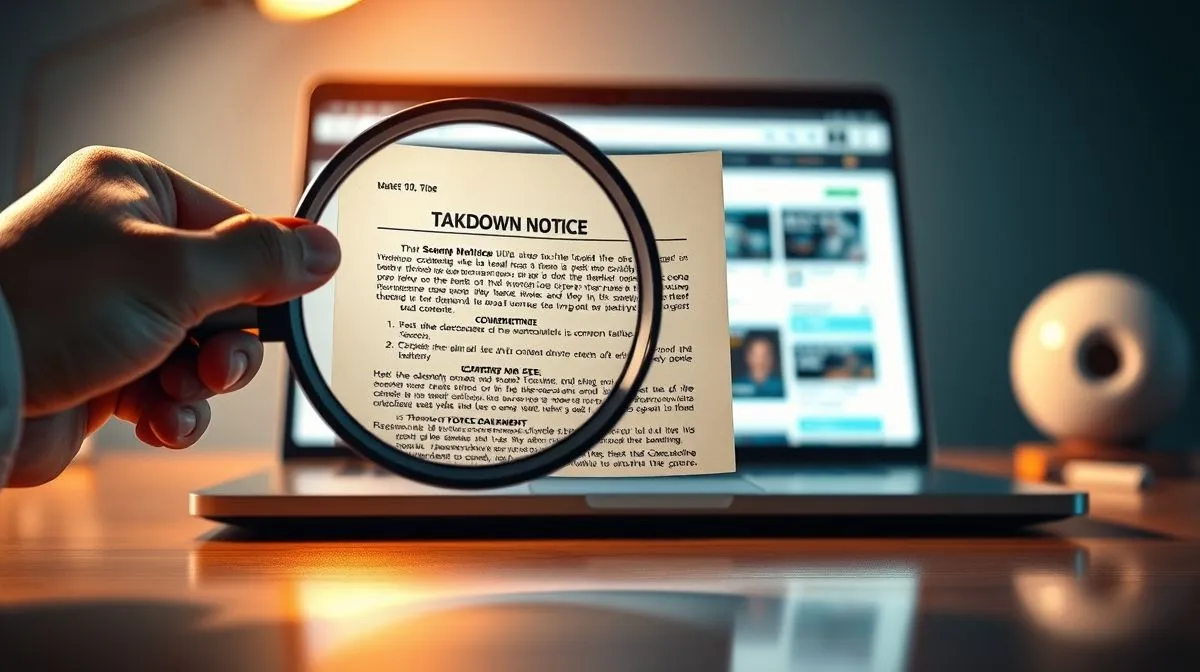
How to Legally Respond to Content Takedown Notices?
For over two decades in the trenches of cyber law, I've witnessed the digital landscape evolve from a nascent frontier to a complex web of rights and responsibilities. One of the most common, and often most terrifying, challenges content creators, businesses, and even individuals face is the sudden, jarring arrival of a content takedown notice. It hits like a bolt from the blue, often accompanied by the implicit threat of legal action, leaving many scrambling, confused, and sometimes, mistakenly deleting valuable content.
This isn't just a technical glitch; it's a legal minefield. The fear of litigation, the potential loss of online presence, and the sheer complexity of intellectual property law can be paralyzing. Many react impulsively, either by immediately complying, even when they shouldn't, or by ignoring the notice, which can lead to far graver consequences. Both extremes are detrimental.
In this definitive guide, I will pull back the curtain on content takedown notices, demystifying the legal jargon and providing you with a robust, actionable framework. You'll learn not just *what* to do, but *why* you're doing it, equipped with the expert insights and strategic options necessary to legally respond to content takedown notices with confidence and competence, protecting your digital assets and your peace of mind.
Understanding the Landscape: DMCA and Beyond
Before we dive into response strategies, it's crucial to understand the ecosystem these notices operate within. While the Digital Millennium Copyright Act (DMCA) is the most prominent framework in the U.S. for copyright-related takedowns, it's not the only game in town. Other types of notices can arise from trademark infringement, defamation, privacy violations, or even terms of service breaches on platforms.
The DMCA provides a 'safe harbor' for online service providers (OSPs) like YouTube, Facebook, or your web host. This means if they promptly remove allegedly infringing content upon receiving a valid notice, they can avoid liability for their users' infringements. This incentivizes them to act swiftly, sometimes without deep investigation, which places the burden of proof, or at least the burden of response, squarely on you, the content poster.
Key Players in a Takedown Notice
- The Rights Holder (Claimant): The individual or entity asserting ownership of the intellectual property (e.g., copyright, trademark) and claiming infringement. They initiate the takedown notice.
- The Online Service Provider (OSP): The platform, host, or service where the content is published (e.g., YouTube, Reddit, GoDaddy). They receive the notice and act as an intermediary.
- The Content Poster (You): The individual or entity who posted the allegedly infringing content. You are the recipient of the OSP's notification about the takedown.
The Anatomy of a Valid Takedown Notice
Not all takedown notices are created equal. Many are deficient, poorly drafted, or even fraudulent. Recognizing a valid notice is your first line of defense. A DMCA takedown notice, for instance, must contain specific elements as outlined in 17 U.S.C. § 512(c)(3). Without these, the notice may not be procedurally valid, and the OSP might not be obligated to act.
- Specific Identification of Copyrighted Work: The notice must clearly identify the specific copyrighted work claimed to have been infringed. 'All my photos' is not sufficient; it needs to be 'Image ID 1234 from my portfolio on X date.'
- Identification of Infringing Material: It must pinpoint the exact location (URL) of the allegedly infringing content on your site or the OSP's platform.
- Good Faith Belief: A statement that the complaining party has a good faith belief that the use of the material in the manner complained of is not authorized by the copyright owner, its agent, or the law.
- Accuracy and Perjury Statement: A statement that the information in the notification is accurate, and under penalty of perjury, that the complaining party is authorized to act on behalf of the owner of an exclusive right that is allegedly infringed.
- Contact Information: The full contact information of the complaining party, including name, address, telephone number, and email address.
- Signature: A physical or electronic signature of a person authorized to act on behalf of the owner of an exclusive right that is allegedly infringed.
“A takedown notice lacking these fundamental details is often procedurally deficient. Do not assume every notice you receive is legally sound. Verification is paramount.”
Immediate Steps Upon Receiving a Takedown Notice
Panic is the enemy of good judgment. When that notification lands in your inbox, take a deep breath. Your immediate actions are critical and can significantly impact the outcome.
- Don't Panic, Don't Delete Immediately: Your first instinct might be to remove the content to make the problem disappear. Resist this urge. Deleting content prematurely can remove your ability to assess the claim, gather evidence, and potentially defend your rights.
- Verify Authenticity and Validity: Check the sender. Is it truly from the OSP or a legitimate legal entity? Does the notice contain all the required elements discussed above? Look for missing information, generic statements, or suspicious email addresses. Many bad actors send fraudulent notices.
- Identify the Claimed Infringement: Carefully review the notice to understand precisely what content is being targeted and why. Is it an image, a video, a block of text, or an entire article? What specific right (copyright, trademark, etc.) are they claiming you violated?
- Assess Your Rights and Defenses: This is where your legal knowledge or that of your counsel comes into play. Do you have a license to use the material? Is it your original work? Does your use fall under a legal defense like fair use (for copyright) or nominative fair use (for trademark)? Were you given permission, even verbally?
- Consult Legal Counsel (When Necessary): For complex or high-stakes notices, especially if you believe you have a strong defense, engaging an attorney specializing in intellectual property or cyber law is highly advisable. An expert can assess the nuances, advise on risks, and draft a robust response.
Strategic Options: Responding to a Valid Claim
Once you've assessed the notice and determined that the claim of infringement appears valid, or if the risk of litigation outweighs the benefit of keeping the content up, you have several strategic options.
- Comply and Remove/Modify: This is often the simplest and safest path if you genuinely believe you've infringed or if the content isn't critical to your operations. Promptly remove the offending content or modify it to eliminate the infringing elements (e.g., replacing an image, rewriting a problematic section). Notify the OSP that you have complied. This often resolves the issue swiftly and leverages the OSP's safe harbor provisions.
- Negotiate with the Claimant: In some cases, the claimant might be open to a resolution short of content removal. You could offer to:
- Give prominent attribution to the rights holder.
- License the material for a fee.
- Modify the content to avoid infringement while retaining its core message.
- Offer a public apology or clarification if appropriate.
Case Study: Navigating a Copyright Claim - 'Creative Commons Chronicle'
An indie blogger, 'Creative Commons Chronicle,' received a takedown notice for an infographic used on their site. Instead of immediate deletion, they verified the image was indeed copyrighted by a small design studio. They then contacted the claimant directly, explaining their intent was not malicious and offering to either license the infographic for a nominal fee or replace it with an original design, but only after proper attribution for a grace period. The design studio, impressed by the blogger's professional and proactive approach, offered a royalty-free license in exchange for prominent attribution and a link to their portfolio. This saved the blog post, avoided a counter-notice battle, and built a positive professional relationship, demonstrating the power of respectful negotiation even in legal disputes.
Strategic Options: Issuing a Counter-Notice (When You Believe You're Right)
If you genuinely believe the takedown notice was issued in error, or that your use of the content falls under a legitimate legal defense (like fair use or a valid license), the DMCA allows you to file a counter-notice. This is a powerful, yet risky, step.
- Understand the Risks: Filing a counter-notice puts the ball back in the claimant's court. If they still believe you're infringing, their next step could be to initiate a lawsuit. By filing a counter-notice, you consent to the jurisdiction of the federal court in which your address is located (or in the U.S. District Court for the Northern District of California if you are outside the U.S.). Make sure you are prepared for potential litigation.
- Gather Evidence: Your counter-notice must be backed by strong evidence. This could include:
- Copies of licensing agreements or permissions.
- Proof of originality (e.g., original design files, timestamps of creation).
- A detailed legal argument explaining why your use constitutes fair use or another valid defense.
- Documentation demonstrating that the material was removed or disabled by mistake or misidentification.
- Drafting the Counter-Notice: The DMCA specifies exact requirements for a valid counter-notice. It must include:
- Identification of the material that was removed or disabled and the location where the material appeared before it was removed or disabled.
- A statement under penalty of perjury that you have a good faith belief that the material was removed or disabled as a result of mistake or misidentification of the material to be removed or disabled.
- Your name, address, and telephone number.
- A statement that you consent to the jurisdiction of the Federal District Court for the judicial district in which your address is located (or if you are outside the United States, for any judicial district in which the service provider may be found), and that you will accept service of process from the person who provided the original notification of infringement.
- Your physical or electronic signature.
“Issuing a counter-notice is a declaration of your legal position; ensure it's backed by solid grounds and a clear understanding of the potential legal ramifications. This is not a step to be taken lightly.”
The Fair Use Doctrine: Your Shield in Copyright Disputes
For copyright takedowns, the fair use doctrine is often your strongest defense. It allows for the limited use of copyrighted material without permission for purposes such as criticism, commentary, news reporting, teaching, scholarship, or research. Fair use is a flexible, fact-specific defense, and there's no bright-line rule. Courts weigh four factors:
- 1. Purpose and Character of the Use: Is your use commercial or non-profit educational? Is it transformative (i.e., does it add new meaning or expression to the original, or alter it with new information, aesthetics, insights, or understandings)? Transformative uses weigh heavily in favor of fair use.
- 2. Nature of the Copyrighted Work: Is the original work factual or creative? Using factual works (like news articles or scientific papers) is more likely to be fair use than using highly creative works (like songs or novels).
- 3. Amount and Substantiality of the Portion Used: How much of the copyrighted work did you use, and was it the 'heart' or most significant part of the work? Using a small, non-essential portion is more likely to be fair use.
- 4. Effect of the Use Upon the Potential Market: Does your use harm the market for or value of the original copyrighted work? If your use competes directly with the original or diminishes its commercial viability, it weighs against fair use.
As legal scholars and court rulings increasingly demonstrate, the 'transformative' nature of a new work is often the most critical factor in fair use analysis. For instance, creating a parody of a copyrighted song is more likely to be fair use than simply re-uploading the song verbatim. Always remember, fair use is a legal defense, not an automatic right; it's something you argue in response to an infringement claim.
For deeper understanding of fair use, I highly recommend consulting resources like the Stanford University Libraries' Copyright & Fair Use website, which offers comprehensive guidance and examples.
Beyond Copyright: Trademark, Defamation, and Privacy Takedowns
While DMCA notices primarily deal with copyright, you might also encounter takedown requests based on other legal grounds. The core principles of assessment and strategic response remain, but the specific legal frameworks differ.
Trademark Infringement Notices
These notices claim you've used a registered trademark (e.g., a brand name, logo, slogan) in a way that causes confusion about the source of goods or services. For example, using a company's logo to brand your own unrelated product could lead to a trademark takedown. Defenses might include nominative fair use (using a trademark to refer to the trademark owner's goods or services, like in a review) or parody.
Defamation Notices
These allege that you've published false statements of fact that harm someone's reputation. Truth is an absolute defense to defamation. Other defenses include opinion, privilege, or lack of actual malice (for public figures). These cases often involve nuanced legal arguments and frequently require legal counsel.
Privacy Violation Notices
These claims arise when you publish private information about an individual without their consent, leading to harm (e.g., doxing, revenge porn, publishing private medical records). These are particularly sensitive and often involve specific state laws or platform policies that prohibit such content.
Regardless of the type of notice, the process remains: verify the claim, understand your rights and defenses, gather evidence, and choose the most appropriate legal response. While the specific laws vary, the strategic framework of assess-decide-act is universally applicable.
Proactive Measures: Minimizing Future Takedown Risks
The best defense is a good offense. Implementing proactive strategies can significantly reduce your vulnerability to takedown notices and save you considerable legal headaches down the line.
- Implement a Robust Content Vetting Process: Before publishing any content, especially if it incorporates third-party elements (images, music, quotes, data), ensure you have the necessary rights or licenses. Train your content creation team on intellectual property basics.
- Maintain Meticulous Records: Keep detailed records of all licenses, permissions, and agreements related to the content you use or create. This includes purchase receipts for stock photos, email confirmations for permissions, and internal documentation of original work.
- Educate Your Team: Ensure everyone involved in content creation and publishing understands the fundamentals of copyright, trademark, fair use, and privacy laws relevant to your industry. Regular training sessions are invaluable.
- Regularly Audit Your Content: Periodically review your existing content for potential infringement risks. This is especially important if your content library is extensive or if you've been operating for a long time. Tools exist that can help identify unlicensed images or plagiarized text.
- Consult Legal Counsel Proactively: If your business heavily relies on digital content, or if you're venturing into new content formats, establish a relationship with an IP lawyer. Proactive advice on content strategy, licensing agreements, and terms of service can prevent many future disputes.
For more detailed guidance on intellectual property best practices and legal compliance, I often direct my clients to resources like the U.S. Copyright Office website, which provides official guidelines and registration information. Another excellent resource for understanding digital rights and free expression is the Electronic Frontier Foundation (EFF).
Frequently Asked Questions (FAQ)
What happens after I send a counter-notice? Once you send a valid counter-notice to the OSP, they typically forward it to the original claimant. The OSP then has 10 to 14 business days (under DMCA) to wait and see if the claimant files a lawsuit against you. If the claimant does not file a lawsuit within that period, the OSP is generally obligated to restore the removed content. However, if a lawsuit is filed, the content will remain down until the legal dispute is resolved.
Can I be sued for sending a counter-notice? Yes, there's a risk. By sending a counter-notice, you consent to the jurisdiction of a federal court, indicating your willingness to defend your position legally. If the original claimant still believes you are infringing, they may choose to file a lawsuit against you to enforce their rights. This is why a counter-notice should only be filed when you have a strong, good-faith belief that your content was mistakenly removed or disabled.
What if the takedown notice is for non-copyright issues like defamation? While the DMCA specifically addresses copyright, platforms often have internal policies and legal teams to handle other types of takedown requests, such as those for defamation, trademark infringement, or privacy violations. The response process is similar: assess the claim's validity, understand your legal defenses (e.g., truth for defamation, fair use for trademark), and then decide whether to remove, negotiate, or challenge the notice. These often require more direct legal consultation due to the varied and complex nature of the laws involved.
How quickly do I need to respond to a takedown notice? While the DMCA doesn't specify a strict deadline for the content poster, OSPs typically act quickly to avoid liability. They often give you a limited window (e.g., 24-72 hours) to respond before removing content. It's crucial to act swiftly, ideally within 24-48 hours, to assess the notice and communicate your intent to the OSP, even if it's just to confirm receipt and state that you are reviewing it. Prompt action can sometimes prevent immediate content removal.
Is 'fair use' a guaranteed defense? No, fair use is not a guaranteed defense. It is a legal doctrine that allows for the limited use of copyrighted material without permission under certain circumstances. It is a highly fact-specific analysis, and courts weigh the four factors differently in each case. What one court deems fair use, another might not. It's a defense you argue in court, not an automatic exemption. Always consult with legal counsel if you plan to rely on fair use in a dispute.
Recommended Reading
- Shield Your Event: Drafting Waivers to Defeat Liability Claims
- Unlock Government Secrets: How to Challenge a FOIA Request Denial Effectively?
- Unlock Lasting Legacy: Your Guide to Legally Establishing a Conservation Easement
- Can You Really Avoid Jail Time for Wire Fraud? The Ultimate Guide
- Unveiling the Shield: What Legal Frameworks Protect Critical Ecological Habitats?
Key Takeaways and Final Thoughts
- Don't Panic, Verify First: Always verify the authenticity and legal validity of any takedown notice before taking action.
- Know Your Rights: Understand the different types of takedown notices (copyright, trademark, defamation, privacy) and your potential legal defenses, especially fair use.
- Strategic Response is Key: Choose your response based on a thorough assessment: comply if clearly infringing, negotiate for a softer landing, or issue a counter-notice if you have a strong defense.
- Proactive Measures Save Headaches: Implement vetting processes, maintain records, and educate your team to minimize future risks.
- Legal Counsel is Your Ally: For complex or high-stakes situations, engage an experienced cyber law attorney.
Navigating content takedown notices can feel like walking a legal tightrope, but with the right knowledge and a strategic approach, it's a challenge you can absolutely overcome. My hope is that this guide empowers you, providing the clarity and confidence to protect your valuable content and continue to innovate in the digital space. Remember, your digital footprint is an asset, and understanding how to defend it is an essential skill in today's online world.



Comments
Leave a comment below. Your email will not be published. Required fields marked with *