


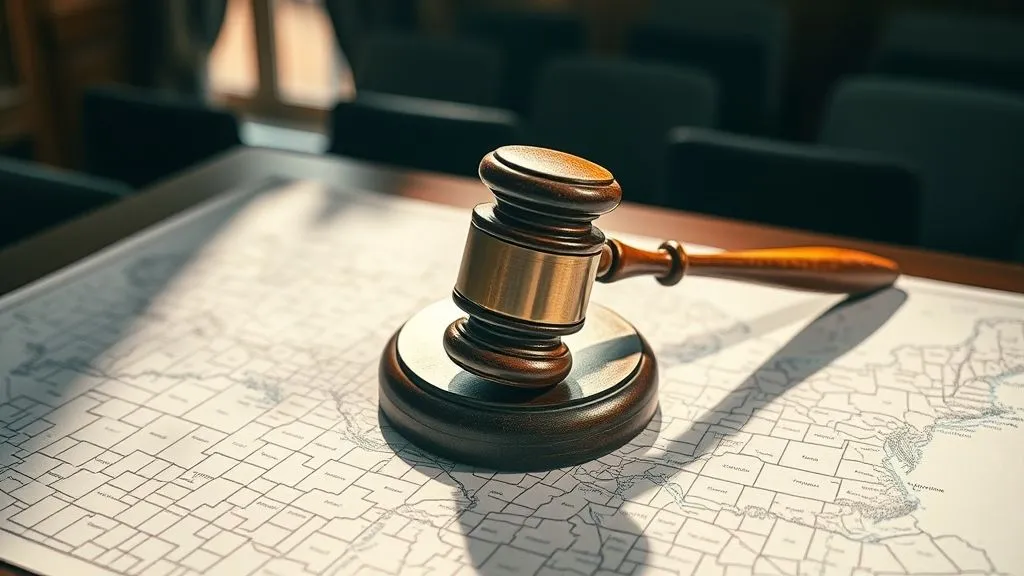
For over two decades in the trenches of constitutional law, specifically within the fraught battleground of voting rights, I've witnessed firsthand the devastating impact of racial gerrymandering. It’s a insidious practice that undermines the very foundation of our representative democracy, silencing voices and distorting political power along racial lines. While the legal theories may seem clear on paper, translating them into a winning courtroom strategy is an entirely different beast.
Many litigators, even seasoned ones, find themselves struggling with the sheer complexity of these cases. The blend of intricate legal precedent, sophisticated statistical analysis, and the often-elusive hunt for discriminatory intent can be overwhelming. The political stakes are always astronomically high, attracting intense scrutiny and well-resourced opposition, leaving many plaintiffs feeling outmaneuvered and disheartened.
This article is born from those experiences, designed to equip you with a robust framework for effectively litigating racial gerrymandering constitutional claims. We will delve into the critical legal foundations, explore innovative evidentiary techniques, and outline strategic approaches from pre-trial to appeal, drawing on real-world insights and actionable advice. My aim is to provide not just information, but a genuine blueprint for achieving justice and safeguarding the fundamental right to vote.
Understanding the Constitutional Landscape: The Legal Foundations
Before we can strategize on litigation, we must firmly grasp the constitutional and statutory bedrock upon which racial gerrymandering claims are built. These aren't simple cases of drawing lines on a map; they are profound challenges to the integrity of our electoral process, rooted in fundamental principles of equality and representation.
The Equal Protection Clause and One Person, One Vote
At the heart of many racial gerrymandering claims lies the Fourteenth Amendment's Equal Protection Clause. This clause dictates that no state shall “deny to any person within its jurisdiction the equal protection of the laws.” In the context of redistricting, this means that state action cannot be predicated on race. The Supreme Court, in cases like Shaw v. Reno and Miller v. Johnson, established that when race is the 'predominant factor' in drawing district lines, a district may be subject to strict scrutiny, requiring the state to demonstrate a compelling governmental interest and that the plan is narrowly tailored.
My experience has taught me that proving race was the 'predominant factor' is often the Everest of these cases. It requires meticulously peeling back layers of pretextual justifications to expose the underlying racial motivation. This isn't about proving a simple correlation; it's about demonstrating causation – that the lines wouldn't have been drawn as they were but for the racial considerations. This is where expert testimony, detailed demographic analysis, and a deep dive into the legislative process become indispensable.
"Racial gerrymandering cases are not merely about lines on a map; they are about the very soul of democratic representation and the promise of equal political participation."
Section 2 of the Voting Rights Act: A Critical Tool
While the Equal Protection Clause addresses intentional discrimination, Section 2 of the Voting Rights Act (VRA) provides a powerful statutory remedy for vote dilution, regardless of discriminatory intent. As amended in 1982, Section 2 prohibits any voting practice or procedure that results in a denial or abridgment of the right to vote on account of race or color. This is a results-oriented test, focusing on whether a protected class has 'less opportunity than other members of the electorate to participate in the political process and to elect representatives of their choice.'
To establish a Section 2 claim, plaintiffs typically must satisfy the three preconditions laid out in Thornburg v. Gingles:
- The minority group is sufficiently large and geographically compact to constitute a majority in a single-member district.
- The minority group is politically cohesive.
- The white majority votes sufficiently as a bloc to enable it usually to defeat the minority's preferred candidate.
If these preconditions are met, the court then considers the 'totality of the circumstances' to determine if vote dilution has occurred. I've found that Section 2 claims, while still demanding, can sometimes offer a clearer path to relief than Equal Protection claims, especially when direct evidence of discriminatory intent is scarce. It allows us to focus on the tangible impact on voters.
Building Your Case: Evidentiary Foundations and Expert Insights
The success of any racial gerrymandering claim hinges on the strength and sophistication of your evidentiary presentation. This is where legal theory meets empirical reality, and where the expertise of your team truly shines. You cannot simply assert; you must demonstrate with undeniable clarity.
Demographic Analysis and Statistical Proof
Data is the lifeblood of gerrymandering litigation. You'll need to meticulously analyze voter registration data, election returns, census demographics, and geographic information systems (GIS) data. This isn't just about showing where people live; it's about demonstrating voting patterns, racial polarization, and the potential for alternative, race-neutral district maps.
I always advise my teams to engage highly skilled demographers and statisticians early in the process. Their ability to model alternative plans, analyze precinct-level election results for racial bloc voting, and interpret complex demographic shifts is invaluable. They can reveal how district lines crack minority communities across multiple districts, diluting their collective power, or pack them into one district, minimizing their influence elsewhere. For example, understanding voter turnout rates among different racial groups can be crucial in demonstrating the true electoral power of a community.
Consider this comparative data for two hypothetical districts:
| District | Minority Population | Minority Voter Turnout | Minority Elected Reps |
|---|---|---|---|
| District A (Challenged) | 65% | 45% | 0 |
| District B (Proposed Alternative) | 55% | 58% | 1 |
This kind of data, when presented clearly, powerfully illustrates the impact of district design. It moves beyond abstract numbers to show real-world electoral consequences.
Intent vs. Effect: Proving Discriminatory Purpose
For Equal Protection claims, proving discriminatory intent is paramount. This is often the most challenging aspect, as states rarely admit to drawing lines for racial purposes. Instead, they offer 'race-neutral' justifications like compactness, preserving communities of interest, or following existing political boundaries. Your job is to expose these as pretextual.
Evidence of intent can come from various sources:
- Legislative History: Meeting minutes, emails, internal memos, and public statements from map drawers or legislators can reveal their true motivations. Look for explicit discussions of race, or thinly veiled proxies for race.
- Departures from Normal Procedures: Was the redistricting process unusually secretive? Were traditional districting criteria abandoned without explanation?
- Impact: While not sufficient on its own, a stark, racially disparate impact can serve as circumstantial evidence of intent, especially when combined with other factors.
- Historical Background: A history of discriminatory practices in the jurisdiction can provide context and bolster an intent claim.
I've seen cases turn on a single email or a poorly worded legislative debate transcript. Every piece of the puzzle matters when you're trying to reconstruct intent. It's like being a forensic historian, meticulously piecing together the narrative of how the maps came to be.

Case Study: The Pivotal Role of Expert Geographers
Case Study: How Plaintiffs in Fair Maps v. State X Uncovered Intent
In a recent hypothetical case, Fair Maps v. State X, plaintiffs challenged a newly enacted congressional map. The state argued its map prioritized 'compactness' and 'preserving municipal boundaries.' However, plaintiffs’ expert geographers, working with a team of data scientists, developed hundreds of alternative, race-neutral maps that were demonstrably more compact and adhered better to municipal boundaries, yet resulted in significantly more opportunities for minority voters to elect their preferred candidates. This empirical demonstration of feasible, race-neutral alternatives severely undermined the state's claimed justifications.
Furthermore, discovery revealed internal communications where a lead map drawer had explicitly discussed 'diluting the urban vote' – a thinly veiled reference to the predominantly minority urban populations. The combination of compelling alternative maps and direct evidence of intent proved decisive, leading to a court order for new maps. This case highlights the indispensable role of highly skilled experts in dismantling pretextual arguments.
Pre-Trial Strategies: Discovery, Motions, and Settlement
The battle in racial gerrymandering cases is often won or lost long before trial. Strategic pre-trial maneuvering, particularly in discovery and motion practice, is critical for shaping the narrative, narrowing issues, and positioning your case for success, whether through settlement or trial.
Navigating Complex Discovery in Redistricting Cases
Discovery in redistricting is notoriously complex and resource-intensive. You're seeking not just documents, but data, communications, and the thought processes behind the map-drawing. This involves:
- Document Requests: Demanding all drafts of maps, communications (emails, texts, internal memos) among legislators, staff, and consultants involved in redistricting, and any analyses of racial demographics or voting patterns.
- Depositions: Taking depositions of key decision-makers – legislators, legislative staff, hired consultants, and state election officials. I've found that carefully crafted deposition questions can often reveal inconsistencies in stated justifications or bring to light critical information about the map-drawing process.
- Expert Discovery: This includes exchanging expert reports, taking depositions of opposing experts, and preparing your own experts for their depositions. Understanding the methodologies and assumptions of the other side's experts is crucial for effective cross-examination at trial.
One common mistake I've observed is underestimating the volume and complexity of electronic discovery. Modern redistricting involves sophisticated software and massive datasets. Ensure your legal team, and your experts, have the technical prowess to manage and analyze this information effectively.
Strategic Motions Practice to Shape the Litigation
Motions practice provides opportunities to narrow the issues, strengthen your case, and potentially secure early victories. Key motions might include:
- Motions to Compel: Essential for ensuring you receive all relevant discovery, especially when the state is resistant.
- Motions for Summary Judgment: While rare in complex factual cases like gerrymandering, they can be used on specific, undisputed legal points.
- Motions to Exclude Expert Testimony (Daubert Challenges): Challenging the methodology or qualifications of opposing experts can significantly weaken their case.
- Motions for Preliminary Injunction: In some cases, you might seek a preliminary injunction to prevent the use of an allegedly unconstitutional map in an upcoming election. This requires demonstrating a likelihood of success on the merits, irreparable harm, and that the balance of equities favors an injunction.
I always impress upon my junior colleagues that every motion, even seemingly minor ones, should be part of a larger strategic plan. Each filing should contribute to building a coherent narrative and pressure point for the opposition.
Trial Advocacy: Presenting a Compelling Narrative
When settlement isn't possible, trial becomes the arena where your carefully constructed case must persuade the court. In gerrymandering cases, this means translating complex data and legal theories into a clear, compelling story of disenfranchisement and constitutional violation.
Storytelling in the Courtroom: Humanizing the Data
It's easy for racial gerrymandering trials to devolve into a battle of numbers and maps. However, judges are also human. They need to understand the real-world impact of these lines on actual voters and communities. I always advocate for humanizing the data.
- Plaintiff Testimony: Have compelling plaintiffs testify about how the district lines affect their ability to participate politically, their sense of community, and their representation.
- Visual Aids: Use clear, impactful visual aids – large maps, demographic charts, and even animations – to illustrate complex concepts. Work closely with your experts to create visuals that simplify, not complicate.
- Expert Narratives: Guide your expert witnesses to explain their findings in an accessible way, connecting the statistical analysis to the constitutional harms.
As a veteran, I've seen judges' eyes glaze over during hours of statistical testimony. Your challenge is to keep them engaged, to make them feel the injustice that the data represents. As Harvard Business Review emphasizes, storytelling is a powerful tool for persuasion.
Cross-Examination of Defense Experts
Effective cross-examination of the state's expert witnesses is crucial. These experts are typically well-prepared and articulate. Your goal is not necessarily to destroy their credibility, but to expose the limitations of their analysis, the assumptions underlying their models, or the selective nature of their data presentation.
Key strategies I employ include:
- Focus on Methodology: Challenge their choices of data, statistical models, or criteria for drawing maps. Are there alternative, equally valid methodologies they ignored?
- Expose Inconsistencies: Pinpoint any discrepancies between their report, their deposition testimony, or their trial testimony.
- Highlight Bias: While subtle, demonstrating that their analysis was designed to support a predetermined outcome, rather than objectively evaluate the facts, can be powerful.
- Confront with Alternatives: Use your own experts' alternative maps or analyses to show what was possible under race-neutral criteria, and why the state's map deviates.
Preparation is key. Know their reports inside and out, and work with your own experts to identify vulnerabilities. This is where the 'battle of the experts' truly plays out.

Remedies and Appeals: Securing Lasting Change
Winning a racial gerrymandering case is only half the battle. The true victory lies in securing a just and effective remedy that rectifies the constitutional violation and ensures fair representation. Furthermore, given the high stakes, an appeal is almost always inevitable.
Crafting Effective Remedial Plans
If a court finds an unconstitutional gerrymander, it will typically order the state to draw new maps. However, plaintiffs often have the opportunity to propose their own remedial plans. This is where your experts, particularly geographers and demographers, become critical once again.
When proposing remedial maps, consider:
- Constitutional Compliance: Ensure the proposed map remedies the specific constitutional or statutory violation found by the court.
- Traditional Redistricting Criteria: Adhere to generally accepted criteria like compactness, contiguity, and respect for political subdivisions, unless those criteria were used pretextually by the state.
- Minority Opportunity: Design districts that maximize the opportunity for minority voters to elect their candidates of choice, consistent with legal requirements.
- Practicability: The proposed plan must be feasible and capable of implementation within the court's timeline.
I've learned that a well-crafted remedial plan, presented with the same rigor as your initial case, can prevent a subsequent round of litigation over the 'fix.' It's about demonstrating not just what's wrong, but what's right.
Preparing for Appellate Scrutiny
Racial gerrymandering cases are almost always appealed, often directly to the Supreme Court. This means you must litigate with an eye toward the appellate record from day one. Every objection, every piece of evidence, every argument must be considered for how it will play before a higher court.
Key considerations for appeal:
- Preserving the Record: Ensure all arguments and evidence are properly presented and preserved in the trial court record.
- Clear Findings of Fact: Encourage the trial court to issue detailed findings of fact that support your legal theories, as appellate courts generally defer to factual findings unless clearly erroneous.
- Legal Arguments: Develop robust, well-supported legal arguments that anticipate the appellate court's questions and concerns.
- Mootness Issues: Be aware of potential mootness issues if an election occurs under the challenged map during the appeal process.
As a litigator, I always tell my team: 'You're not just arguing to the district judge; you're arguing to the circuit court, and potentially to the nine justices.' This mindset ensures a comprehensive and durable legal strategy.
The Role of Advocacy and Community Engagement
While the courtroom is where the legal battle is fought, the broader context of advocacy and community engagement often plays a vital, if indirect, role in the success of racial gerrymandering claims. These are not merely abstract legal disputes; they are deeply personal struggles for democratic fairness.
Empowering Plaintiffs and Building Coalitions
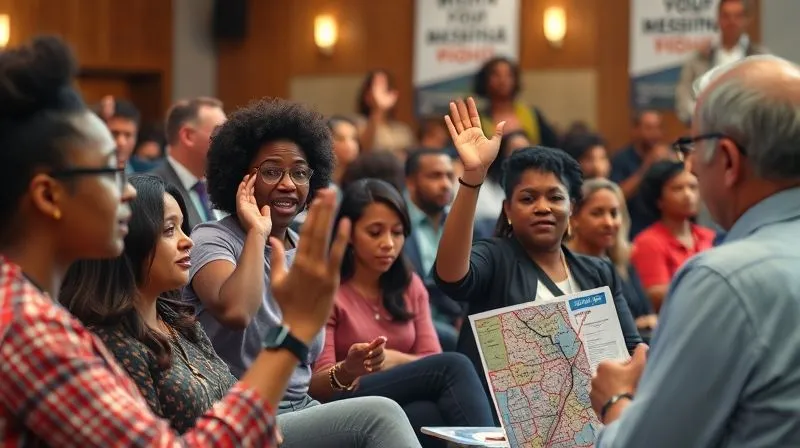
The plaintiffs in these cases are often ordinary citizens standing up for their constitutional rights. Empowering them, ensuring their voices are heard, and building strong coalitions with civil rights organizations, community groups, and other stakeholders can provide invaluable support. These coalitions can offer:
- Resources: Financial, logistical, and volunteer support.
- Publicity: Helping to raise awareness and garner public support for the cause.
- Local Knowledge: Providing crucial insights into community demographics, voting patterns, and historical context.
I've seen how deeply committed community leaders, even those without legal training, can provide invaluable perspectives that shape our legal strategy and strengthen our arguments. Their lived experiences are powerful testimony to the harm caused by gerrymandering.
Public Opinion and Media Strategy
While courts are supposed to be insulated from public opinion, the reality is that high-profile constitutional cases often attract significant media attention. A thoughtful media strategy can help educate the public, build support for your cause, and potentially influence the political climate surrounding the litigation.
Consider:
- Clear Messaging: Develop simple, compelling messages that explain the injustice of racial gerrymandering and the importance of fair maps.
- Spokespersons: Identify articulate plaintiffs or community leaders who can speak to the media.
- Press Releases & Briefings: Regularly update the media on key developments in the case.
- Social Media: Utilize platforms to disseminate information and engage with a broader audience.
As legal scholars at NYU have highlighted, public education on voting rights issues is crucial for sustaining democratic vigilance. While we argue in court, others can argue in the court of public opinion.
Common Pitfalls and How to Avoid Them
Even with the best intentions and legal talent, racial gerrymandering litigation is fraught with challenges. Understanding and anticipating these common pitfalls can significantly enhance your chances of success.
Underestimating the Political Dimension
Racial gerrymandering is inherently political. The defendants are often state legislatures or commissions with deeply vested interests in maintaining the electoral status quo. They will deploy significant resources, both legal and political, to defend their maps.
- Resource Imbalance: Plaintiffs often face well-funded state legal teams. Be prepared for a long, expensive battle and seek support from legal aid organizations, pro bono attorneys, and civil rights groups.
- Legislative Resistance: Even after a court order, legislatures may resist implementing truly fair maps, requiring further judicial oversight.
- Public Scrutiny: Be prepared for public criticism and attempts to discredit your claims or your clients.
I've learned that you must approach these cases with a clear-eyed understanding of the political forces at play. It's not just a legal fight; it's a political one, too.
Resource Management and Sustained Commitment
These cases are marathons, not sprints. They demand sustained commitment, significant financial resources, and a dedicated team. Burnout is a real risk.
- Budgeting: Develop a realistic budget for expert fees, discovery costs, and attorney time.
- Team Building: Assemble a diverse team of legal professionals, paralegals, data analysts, and experts who are committed for the long haul.
- Client Support: Provide ongoing support to your plaintiffs, who will endure public scrutiny and the emotional toll of litigation.
The commitment required is immense. As a litigator, I know that maintaining morale and focus over years of litigation can be as challenging as the legal arguments themselves. This is why building a resilient team and support network is paramount.
Frequently Asked Questions (FAQ)
What is the primary difference between a racial gerrymandering claim under the Equal Protection Clause and Section 2 of the VRA? The fundamental difference lies in the element of intent. An Equal Protection Clause claim requires proving that race was the predominant factor and that the map was drawn with discriminatory intent. Section 2 of the Voting Rights Act, on the other hand, is a 'results test' – it prohibits voting practices that have a discriminatory effect on minority voters, regardless of whether the intent was discriminatory. Proving intent is generally much harder than proving discriminatory effect.
How important is expert witness testimony in these cases? Expert witness testimony is absolutely critical. Demographers, statisticians, political scientists, and geographers provide the empirical backbone for your claims. They analyze election data, census figures, draw alternative maps, and provide sophisticated statistical models to prove racial polarization, compactness, and the feasibility of minority-opportunity districts. Without robust expert testimony, it’s exceedingly difficult to build a compelling case.
Can a racial gerrymandering claim be brought even if the minority population is not a majority in a district? Yes, but the nature of the claim might differ. While Section 2 claims often focus on the ability to form a majority-minority district (the first Gingles precondition), vote dilution can also occur through 'cracking' (spreading minority voters across many districts to dilute their power) or 'packing' (concentrating them into one district to minimize their influence elsewhere). The legal theories can adapt, though proving a constitutional injury without a clear majority-minority district can be more challenging under certain precedents.
What kind of remedies are typically sought or ordered in successful racial gerrymandering cases? The primary remedy is the invalidation of the unconstitutional district map and an order for the state to draw new, compliant maps. Sometimes, if the state fails to do so in a timely or satisfactory manner, the court may appoint a special master to draw remedial maps. The goal is always to restore fair and constitutional representation for the affected minority groups.
How long do these types of cases typically take, and what are the associated costs? Racial gerrymandering cases are among the most complex and protracted in constitutional law. They can easily take several years to litigate through trial and appeal, sometimes even longer if subsequent remedial challenges arise. Costs are substantial, often running into millions of dollars due to extensive discovery, expert fees, and attorney time. This is why securing strong funding and pro bono support is often essential for plaintiffs.
Key Takeaways and Final Thoughts
Litigating racial gerrymandering constitutional claims effectively requires a blend of deep legal expertise, sophisticated evidentiary analysis, unwavering strategic foresight, and a profound commitment to justice. It's a demanding field, but one where victories can profoundly impact the future of democratic representation.
- Master the Legal Foundations: Understand both Equal Protection and Section 2 VRA claims.
- Build an Evidentiary Fortress: Leverage demographers, statisticians, and geographers for irrefutable data analysis and alternative map generation.
- Prove Intent Meticulously: Dig deep into legislative history and communications to expose discriminatory purpose.
- Strategize Pre-Trial: Use discovery and motions to shape the case and narrow issues.
- Humanize the Data at Trial: Present a compelling narrative that connects complex analysis to real-world harm.
- Plan for Remedies and Appeals: Propose effective new maps and litigate with the appellate record in mind.
- Engage and Advocate: Build community coalitions and consider a thoughtful media strategy.
As I reflect on my years fighting these battles, I am continually reminded of the resilience of those who seek fair representation. The path is arduous, but the cause is just. By approaching these challenges with rigor, empathy, and strategic brilliance, we can continue to dismantle the insidious practice of racial gerrymandering and ensure that every voice truly counts in our democracy. The fight for fair maps is a fight for the future of our republic, and it is a fight worth winning.
Recommended Reading
- Safeguarding Athlete NIL: Legal Strategies for Sports Betting Endorsements
- Don't Skip It: What Are the Risks of Skipping a Real Estate Title Search?
- Deportation Appeal Denied? Your Urgent Next Steps Revealed
- 5 Legal Pathways: Challenge International Organization Immunity in Courts
- 5 Urgent Steps: Quickly Clear Probate Title Defects & Sell Fast





Comments
Leave a comment below. Your email will not be published. Required fields marked with *