


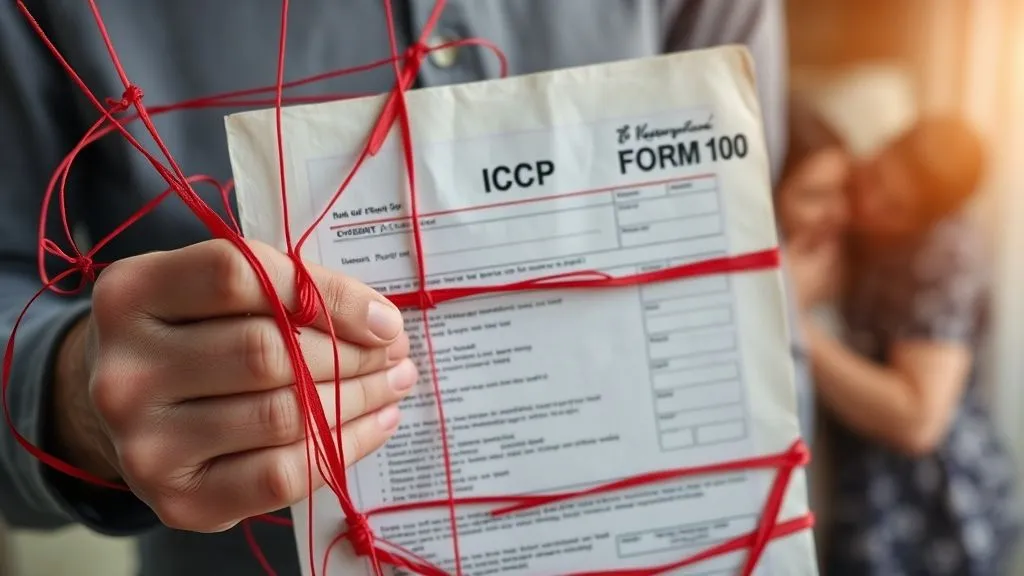
How to Navigate Interstate Adoption Compact (ICPC) Delays?
For over two decades in family law, particularly within the intricate world of adoption, I've witnessed the full spectrum of emotions. From the boundless joy of a child finally coming home to the agonizing despair of unforeseen delays. One of the most significant hurdles prospective adoptive parents often face, especially in interstate adoptions, is the Interstate Compact on the Placement of Children (ICPC) process. It’s a vital safeguard, yes, but it can also become a labyrinth of paperwork and waiting, often leading to frustrating, seemingly inexplicable delays.
The pain points are palpable: weeks turn into months, dreams hang in limbo, and families are left in emotional purgatory, often separated from a child they already consider their own. I’ve seen parents deplete their savings on temporary housing, endure the stress of being far from home, and battle a crushing sense of helplessness. These delays aren't just inconvenient; they're emotionally draining and financially burdensome, challenging the very resilience of hopeful parents.
In this definitive guide, I will draw upon my extensive experience to demystify the ICPC process and, more importantly, equip you with actionable strategies to proactively mitigate and effectively navigate interstate adoption compact (ICPC) delays. We'll explore expert insights, practical frameworks, and real-world advice designed to empower you, shorten your waiting period, and bring your child home as swiftly and smoothly as possible. This isn't just about understanding the rules; it's about mastering the art of navigation in a complex legal landscape.
Understanding the ICPC: More Than Just Paperwork
Before we dive into solutions, it's crucial to grasp the fundamental nature of the ICPC. It's not merely a bureaucratic hurdle; it's a statutory agreement between all 50 U.S. states, the District of Columbia, and the U.S. Virgin Islands. Its primary purpose is to ensure that children placed across state lines for adoption, foster care, or other placements receive the same protections and services as children placed within their home state. This means safeguarding against illegal placements and ensuring the child's well-being and the suitability of the prospective home.
The process itself involves a meticulous review of documents by both the sending state (where the child is located) and the receiving state (where the adoptive parents reside). Each state has its own ICPC office, and while they operate under the same compact, their internal procedures, staffing levels, and interpretations can vary significantly. This inherent decentralization is a major contributor to potential delays.
From my vantage point, many delays stem from a lack of understanding regarding what each state's ICPC office truly requires. It’s not just about submitting a complete package; it’s about submitting a *perfect* package that anticipates potential questions and adheres to the nuances of both states' requirements. A single missing signature, an outdated form, or a seemingly minor discrepancy can send your entire application back to square one, adding weeks or even months to your wait.
"The ICPC is a necessary guardian, but an often-impatient gatekeeper. Success lies in respecting its purpose while meticulously preparing for its scrutiny."
According to the Association of Public Human Service Agencies (APHSA) ICPC Guidebook, the compact outlines specific procedures for sending and receiving states, emphasizing the need for thorough documentation. However, the guidebook also acknowledges the challenges posed by varying state-level interpretations and workloads. This variability is precisely why a proactive and informed approach is paramount.
Proactive Preparation: Your First Line of Defense Against Delays
The single most powerful tool you possess against ICPC delays is proactive, meticulous preparation. I've seen this strategy save families countless weeks of anxious waiting. It begins long before the child is identified or the birth mother chooses your family.
Step-by-Step Pre-Submission Checklist:
- Engage an ICPC-Savvy Attorney: This is non-negotiable for interstate adoptions. An attorney specializing in ICPC can guide you through state-specific requirements, anticipate potential pitfalls, and ensure your initial submission is as complete and compliant as possible. They act as your advocate and navigator.
- Understand Both States' Requirements: Don't assume. The sending state (where the child is) and the receiving state (where you live) often have unique forms, specific home study addenda, or additional background check requirements. Your attorney will be vital here, but proactive research on state ICPC websites can also be beneficial.
- Gather All Documents Early: This includes birth certificates, marriage licenses, divorce decrees, financial statements, medical records, background checks, and home study reports. Ensure all documents are current, correctly notarized if required, and have no expired dates.
- Double-Check Your Home Study: Your home study is the cornerstone of your ICPC package. Ensure it's up-to-date, comprehensive, and addresses any specific requirements of both the sending and receiving states. Any amendments or updates should be processed immediately.
- Communicate with Your Agency and Attorney: Maintain open and frequent communication. Ensure everyone involved—your adoption agency, your attorney in the sending state, and your attorney in the receiving state—is on the same page regarding the ICPC submission timeline and requirements.
I often advise my clients to create a physical and digital "ICPC Binder" with every document, organized and clearly labeled. This level of organization drastically reduces the chances of missing items or submitting outdated information. Remember, the ICPC office isn't there to chase down missing documents; they're there to review what's submitted. Any incompleteness means rejection and resubmission, restarting the clock.
Here’s a snapshot of common documents and their potential for delay if not perfectly managed:
| Document Type | Potential Delay Factor | Mitigation Strategy |
|---|---|---|
| Home Study Report | Outdated, missing addenda, non-compliant with receiving state rules | Regular updates, pre-review by ICPC attorney in receiving state |
| Criminal Background Checks | Expired, missing state-specific checks, incorrect fingerprinting | Confirm validity periods, complete all required checks well in advance |
| Medical Clearances | Missing physician signatures, incomplete information, outdated | Schedule appointments early, confirm all sections are filled by doctor |
| Financial Statements | Missing pay stubs, bank statements, employment verification letters | Gather recent statements, request employment verification letters early |
By investing time and diligence upfront, you are not just preparing; you are actively preventing the most common causes of ICPC delays. This proactive stance transforms a potentially reactive, stressful situation into a more controlled and manageable process.
Mastering Communication: The Art of Engagement with ICPC Stakeholders
Once your ICPC package is submitted, the waiting begins. However, this isn't a passive waiting game. Effective communication with all parties involved can significantly impact the speed of your approval. In my experience, the silence can be deafening, but it doesn't mean nothing is happening – or that you can't influence the process.
Who are the Key Stakeholders?
- Your Adoption Agency: They are typically the primary submitter and liaison.
- Your Attorneys (Sending & Receiving State): They provide legal oversight and advocacy.
- ICPC Coordinators (Sending & Receiving State): The ultimate decision-makers on your application.
- Caseworkers/Home Study Providers: They provide crucial reports and may need to respond to queries.
The challenge lies in striking a balance between being persistent and being perceived as a nuisance. Here’s how to master this delicate art:
- Establish a Communication Protocol: Work with your adoption agency and attorneys to establish a clear understanding of who will communicate with whom, how often, and what information will be shared. This avoids redundant inquiries and ensures a unified approach.
- Regular, Respectful Check-ins: Instead of daily calls, agree on a reasonable frequency for check-ins (e.g., once a week or every ten days). When you do communicate, be polite, professional, and focus on specific questions or updates rather than general impatience.
- Document Everything: Keep a detailed log of all communications – dates, times, names of individuals spoken to, and a summary of the conversation. This documentation is invaluable if you need to escalate or clarify information later.
- Provide Requested Information Immediately: If the ICPC office or a caseworker requests additional information, respond with lightning speed. Delays in providing supplemental documents are a common cause of extended waiting times.
- Understand the Chain of Command: Know who to contact for what type of inquiry. Your agency or attorney can usually provide this guidance. Directing your questions to the correct person avoids unnecessary diversions.
I recall a particularly challenging case where a family was facing unusual delays due to a change in ICPC coordinators in the receiving state. My strategy was to facilitate a direct, albeit brief, conference call between the new coordinator, the sending state agency, and our legal team. This single conversation, where we respectfully clarified the status and offered to resubmit any forms, resolved a communication bottleneck that had stalled the case for weeks. It wasn't about demanding; it was about facilitating.
Strategic Advocacy: When and How to Escalate Effectively
Despite your best proactive efforts and excellent communication, some ICPC delays are inevitable. This is when strategic advocacy becomes critical. Knowing when and how to escalate your concerns can make a significant difference, but it must be done thoughtfully and with legal guidance.
When to Consider Escalation:
- Exceeding Stated Timelines: While there are no legally binding timelines for ICPC processing, many states publish internal goals (e.g., 5-7 business days for initial review). If your case significantly exceeds these, it's a trigger for concern.
- Lack of Communication: If your agency or attorney is unable to get a response from an ICPC office after repeated attempts, it might be time to escalate.
- Unexplained Stalls: If your case status hasn't changed for an extended period without a clear reason, it warrants investigation.
- Mistakes or Errors: If you identify a clear error on the part of an ICPC office (e.g., misplacing documents, misinterpreting a rule), escalating to correct it is appropriate.
How to Escalate Effectively:
- Consult Your Attorney: Always discuss escalation strategies with your adoption attorney first. They have the legal standing and expertise to determine the most effective approach and can often leverage their professional relationships.
- Formal Written Inquiries: Before direct appeals, a formal, well-documented letter or email from your attorney to the ICPC supervisor or director can often resolve issues. This creates a clear paper trail.
- Contacting the Compact Administrator: Each state has an ICPC Compact Administrator. If lower-level appeals are ineffective, your attorney may advise contacting the Administrator directly. This is a higher-level appeal and should be used judiciously.
- Engaging Legislative Offices (Rarely): In truly egregious and prolonged delay cases, and only with careful legal counsel, some families have found success by reaching out to their state legislators. This is a last resort and can be a double-edged sword, so absolute caution is advised.
- Involving the Judicial System (Extremely Rare): In very limited circumstances, an attorney might consider seeking a court order to compel ICPC action. This is exceptionally rare and typically reserved for situations where a child's welfare is at immediate risk due to bureaucratic inaction.
I recall a situation where a child was medically fragile and required specialized care in the adoptive parents' home state, but the ICPC approval was stuck in a bureaucratic loop. After numerous attempts at standard communication, my firm, in collaboration with the sending state's attorney, drafted a compelling letter to both state Compact Administrators, detailing the child's urgent medical needs and the compact's intent to protect children. This strategic advocacy, grounded in the child's best interest, expedited the review process significantly. It wasn't about blame; it was about highlighting the critical implications of the delay.
"Strategic advocacy isn't about being aggressive; it's about being informed, persistent, and precise in your efforts to overcome administrative inertia."
Navigating Specific Roadblocks: Common Delay Scenarios and Solutions
While general strategies are vital, understanding specific, common ICPC roadblocks can further empower you. I’ve seen these patterns emerge repeatedly over the years.
1. Missing or Incomplete Documents:
Problem: The most frequent culprit. A single missing signature, an outdated background check, or an incorrectly filled form. The package is returned, and the clock resets.
Solution: This circles back to proactive preparation. Work with your attorney and agency to create a comprehensive checklist for *both* the sending and receiving state. Have a second pair of expert eyes (your attorney's) review the entire package before submission. Use certified mail or trackable delivery for all submissions to confirm receipt.
2. Caseworker Changes or Workload Issues:
Problem: A caseworker assigned to your case leaves, or they are simply overwhelmed with a high caseload, leading to your file sitting untouched.
Solution: Maintain respectful, regular contact through your agency or attorney. If a caseworker change occurs, politely inquire about the new assignment and offer to resend any necessary documents to ensure a smooth transition. If workload is suspected, a polite inquiry from your attorney to a supervisor might help prioritize a review.
3. State-Specific Requirements or Interpretations:
Problem: What's acceptable in one state might not be in another. This often applies to home study content, background check types, or post-placement supervision plans.
Solution: Again, an attorney specializing in ICPC is invaluable. They should be intimately familiar with the nuances of both states involved. If a discrepancy arises, your attorney can often negotiate or clarify with the ICPC offices, sometimes providing legal precedent or statutory interpretation.
4. Post-Placement Report Delays:
Problem: After placement, ICPC requires post-placement reports. Delays in these reports can jeopardize finalization and even lead to removal in extreme cases.
Solution: Be proactive with your post-placement caseworker. Schedule visits well in advance, ensure all required information is readily available, and follow up respectfully to confirm reports have been submitted to ICPC in a timely manner. Your attorney should also monitor this critical phase.
Case Study: How Sarah & Mark Overcame a "Lost in the System" Delay
Sarah and Mark, a couple I represented, were adopting a newborn from a state three hours away. Their ICPC package was submitted, and after the initial statutory review period, silence. Weeks passed. Their agency's calls went unreturned by the receiving state's ICPC office. This was a classic "lost in the system" scenario.
My first step was to send a certified letter, detailing the submission date and politely requesting a status update. When no response came, I escalated to the receiving state's ICPC Compact Administrator. Simultaneously, I advised Sarah and Mark to keep meticulous records of all their living expenses in the sending state, as they were incurring significant costs while waiting. The Compact Administrator eventually intervened, discovering their file had been misindexed. Within two days of the Administrator's involvement, their approval was granted. This case highlighted the importance of a clear communication trail, persistent (but respectful) advocacy, and knowing when to elevate concerns to the appropriate authority.
The Psychological Toll: Managing Stress During ICPC Waiting Periods
Beyond the legal and logistical challenges, ICPC delays inflict a significant psychological toll. The emotional rollercoaster of adoption, combined with the uncertainty of waiting, can be incredibly taxing. As an expert who has guided countless families through this, I recognize the importance of addressing this human element.
Strategies for Emotional Resilience:
- Acknowledge Your Feelings: It's okay to feel frustrated, anxious, angry, or sad. These are normal reactions to an uncertain and highly emotional process. Don't suppress them.
- Build a Support System: Lean on trusted friends, family, or an adoption support group. Sharing your experiences with others who understand can be incredibly validating and therapeutic.
- Practice Self-Care: Engage in activities that help you de-stress. This could be exercise, meditation, hobbies, or spending time in nature. Prioritize your mental and physical well-being.
- Set Realistic Expectations: While we aim to expedite the process, it's wise to enter interstate adoption with the understanding that delays are possible. This realistic outlook can soften the blow if they occur.
- Focus on What You Can Control: You can't control the ICPC office's workload, but you can control your preparedness, your communication, and your self-care. Directing your energy towards actionable steps helps combat feelings of helplessness.
I often tell my clients that this waiting period is a test of patience, but also an opportunity to build resilience. It's a precursor to the many unexpected challenges and joys of parenthood. The strength you develop now will serve you well as a parent. Remember, you are not alone in this journey. Thousands of families have successfully navigated these waters before you, and you will too.

Leveraging Technology and Resources for ICPC Tracking
In today's digital age, while the ICPC process itself can feel antiquated, there are still ways to leverage technology and available resources to stay informed and organized. While there isn't a universal "ICPC tracker" app, smart use of existing tools can provide significant advantages.
Tools and Strategies:
- Digital Document Management: Use cloud storage (Google Drive, Dropbox) to keep all your ICPC documents organized, accessible, and shareable with your legal team. Ensure everything is encrypted and password-protected.
- Communication Platforms: Utilize secure messaging platforms or email for quick, documented communication with your agency and attorney. Always follow up important phone calls with an email summary for a clear record.
- State ICPC Websites: Regularly check the official ICPC websites for both the sending and receiving states. These sites often publish processing times (though they are estimates), contact information for coordinators, and updated forms or requirements. For example, the APHSA ICPC website is a central hub for general information and state-specific links.
- Adoption Forums and Support Groups (with caution): Online forums can be a source of shared experience and emotional support. However, be cautious about taking legal advice from non-professionals. Use these platforms for emotional connection, not for definitive legal guidance on your specific case.
- Spreadsheet for Tracking: Create a simple spreadsheet to track submission dates, anticipated review periods (if known), communication logs, and any pending items. This allows you to visualize the progress and identify potential delays early.
Remember, technology is a tool to support your process, not to replace the essential human element of legal expertise and advocacy. Your attorney and agency remain your primary navigators, but these resources can help you stay informed and empowered.
Frequently Asked Questions (FAQ)
Q: Is there a legal maximum time limit for ICPC processing? No, unfortunately, there is no federal or state law that dictates a maximum processing time for ICPC cases. While many states aim for a 5-10 business day turnaround for initial review, these are internal goals, not legally enforceable deadlines. This lack of a strict timeline is precisely why strategic advocacy and meticulous preparation are so crucial to avoid prolonged waiting periods.
Q: Can I travel with the child across state lines before ICPC approval? Absolutely not. This is a critical point. Transporting a child across state lines for placement without prior ICPC approval is a violation of the compact and can result in severe legal consequences, including the child being returned to their original state, criminal charges, and jeopardizing your adoption. Always wait for official ICPC approval (the Form 100 signed by both states) before crossing state lines with the child for placement.
Q: What if the birth parents live in a different state from the child? Which state is the "sending state" for ICPC? The "sending state" for ICPC purposes is the state where the child physically resides at the time the adoption plan is initiated and where the court having jurisdiction over the child's placement is located. It is not necessarily the birth parents' state of residence if the child is born or resides elsewhere. This distinction is vital for correctly initiating the ICPC process.
Q: Does ICPC apply to relative adoptions or stepparent adoptions across state lines? Yes, generally, the ICPC applies to any placement of a child across state lines for foster care, adoption, or other care, regardless of the relationship to the child, unless a specific statutory exemption applies. While some states have specific exemptions for certain types of relative placements, these are exceptions and not the rule. It is always best to consult with an adoption attorney to confirm if ICPC applies to your specific relative or stepparent adoption scenario. Assuming an exemption exists without verifying can lead to serious legal issues.
Q: What's the difference between ICPC approval and adoption finalization? ICPC approval is permission to transport the child across state lines for placement with the prospective adoptive parents. It signifies that both states agree the placement is suitable for the child to enter the receiving state. Adoption finalization, on the other hand, is the legal act by a court that permanently transfers parental rights from the birth parents to the adoptive parents. ICPC approval is a prerequisite for placement in an interstate adoption, but it is not the final step in the legal adoption process, which typically includes post-placement supervision and a final court hearing.
Key Takeaways and Final Thoughts
Navigating the ICPC process can be one of the most challenging phases of an interstate adoption, but it doesn't have to be an insurmountable barrier. My years in this field have taught me that success hinges on a blend of meticulous preparation, persistent communication, and strategic advocacy.
- Proactive Preparation is Paramount: Ensure every document is perfect, current, and meets both states' requirements before submission.
- Engage Expert Legal Counsel: An ICPC-savvy adoption attorney is your most valuable asset, guiding you through complexities and advocating on your behalf.
- Master Communication: Maintain respectful, regular contact with all stakeholders and document every interaction.
- Know When and How to Escalate: Utilize your legal team to strategically address prolonged or unexplained delays with appropriate authorities.
- Prioritize Your Well-being: The emotional journey is real; lean on support systems and practice self-care.
Remember, the ICPC exists to protect children, a goal we all share. By understanding its purpose and diligently adhering to its requirements, while simultaneously employing smart, proactive strategies, you can significantly reduce the likelihood and impact of delays. Your journey to parenthood is a testament to your love and commitment. With the right approach, you can and will navigate interstate adoption compact (ICPC) delays successfully, bringing your child home to begin your beautiful new life together.
Recommended Reading
- Unlock Hidden Savings: How Seniors Can Claim Medical Tax Deductions
- Cruise Claims: 5 Steps to Pinpoint Jurisdiction for International Passengers
- Stop Online Counterfeiters: What Legal Steps Truly Work Effectively?
- 7 Legal Shields: Protecting Personal Assets from Business Bankruptcy
- Unlocking Benefits: The True Impact of Special Needs Trusts on SSI & Medicaid





Comments
Leave a comment below. Your email will not be published. Required fields marked with *