


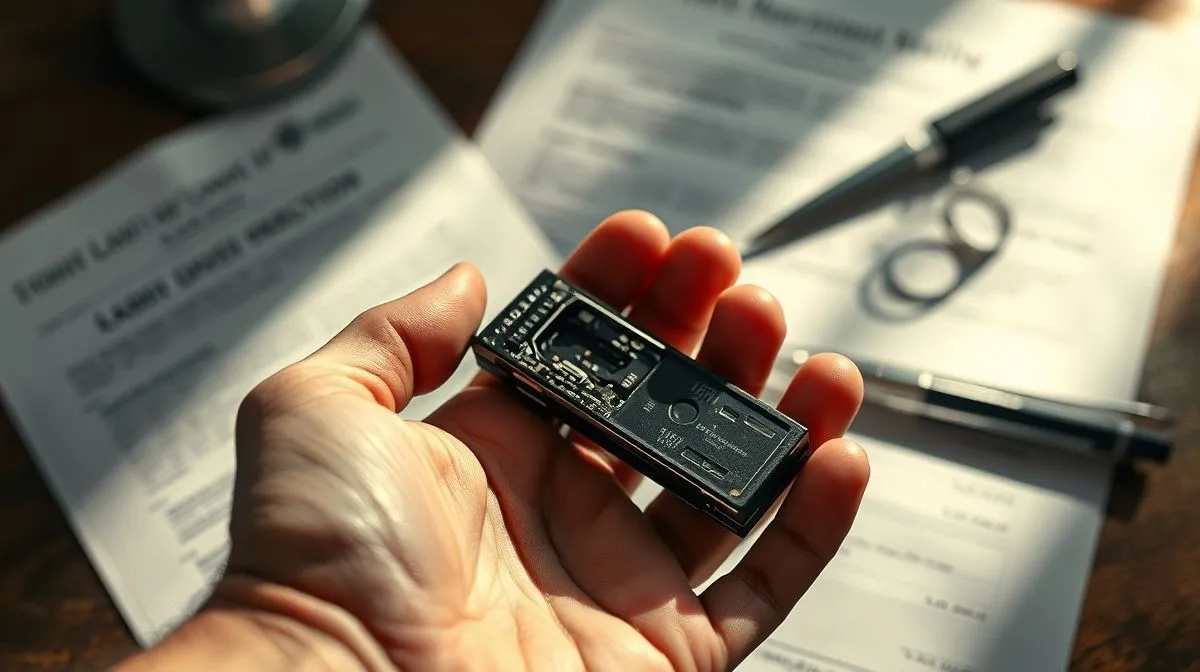
How to Prove Product Liability Claim Negligence: Your Definitive Guide
Imagine this: you've just purchased a brand-new appliance, excited to use it, only for it to malfunction spectacularly on its first use, causing significant damage or, worse, an injury. Or perhaps a medical device, meant to heal, instead causes unforeseen complications. In these moments of shock and potential harm, a crucial question arises: who is responsible, and can you hold them accountable?
The journey to justice often leads to a product liability claim, a complex area of law designed to protect consumers from defective or dangerous products. However, simply having been harmed isn't enough. The formidable challenge lies in proving that the manufacturer, designer, or seller was negligent – that their failure to exercise reasonable care directly led to your injury. This isn't just about identifying a faulty product; it's about meticulously dissecting the chain of events and decisions that allowed that product to reach your hands.
This comprehensive guide will demystify the intricate process of proving negligence in a product liability claim. From understanding the foundational legal elements to gathering compelling evidence and navigating the complexities of litigation, you'll gain the insights and strategic knowledge necessary to build a robust case and fight for the compensation you deserve. By the end, you'll understand precisely how to prove product liability claim negligence and the critical steps involved in securing justice.
Understanding Product Liability Claims and the Role of Negligence
Before diving into the 'how,' it's crucial to grasp the fundamental concepts. Product liability law holds manufacturers, distributors, suppliers, retailers, and others who make products available to the public responsible for the injuries those products cause. While there are different theories under which a product liability claim can be brought, negligence is one of the most common and often the most challenging to prove.
What is Product Liability?
Product liability refers to the legal liability of manufacturers or sellers to compensate buyers, users, and even bystanders for damages or injuries suffered because of defects in goods. These claims typically fall under three main categories:
- Manufacturing Defects: A flaw in the product that occurred during its production, making it different and more dangerous than its intended design.
- Design Defects: The product's design itself is inherently dangerous, even if manufactured perfectly.
- Warning/Marketing Defects: Failure to provide adequate warnings or instructions about the product's non-obvious dangers or proper use.
Each type of defect can potentially be linked to negligence, though some, like manufacturing defects, might also fall under strict liability, where fault doesn't necessarily need to be proven.
The Core of Negligence in Product Cases
Negligence, in legal terms, is the failure to exercise the care that a reasonably prudent person would exercise in similar circumstances. In the context of product liability, it means that a party involved in the product's chain of distribution (e.g., manufacturer, designer, assembler, retailer) failed to exercise reasonable care, and this failure caused the product to be defective and dangerous, ultimately leading to injury.
Unlike strict liability, where you only need to prove the product was defective and caused harm, a negligence claim requires you to prove fault. This means demonstrating that the defendant's actions (or inactions) fell below the accepted standard of care, leading to the defect.
The Four Pillars of Proving Negligence
To successfully prove negligence in any personal injury case, including product liability, four key elements must be established. Think of these as the building blocks of your case; if one is missing, your claim for negligence will likely fail. This is fundamental to understanding how to prove product liability claim negligence.
Duty of Care: The Manufacturer's Responsibility
The first element is establishing that the defendant owed a duty of care to the injured party. In product liability, this is generally straightforward: manufacturers, designers, and sellers have a legal obligation to ensure their products are safe for their intended and foreseeable uses. This duty extends to:
- Designing products safely.
- Manufacturing products without defects.
- Testing products adequately before release.
- Providing clear warnings about non-obvious dangers.
- Issuing recalls when defects are discovered post-sale.
This duty is owed not just to the direct purchaser but to anyone who might foreseeably be affected by the product.
Breach of Duty: Identifying the Flaw
Once a duty of care is established, you must prove that the defendant breached that duty. This means demonstrating that the defendant failed to act as a reasonably prudent manufacturer, designer, or seller would have acted under similar circumstances. This is where the specific defect comes into play.
- For manufacturing defects: Was there a deviation from the design specifications during production? Did quality control fail?
- For design defects: Could the product have been designed more safely without impairing its utility or increasing its cost excessively? Was there a safer alternative design available and feasible?
- For warning defects: Were warnings absent or inadequate? Were instructions unclear or misleading? Did the manufacturer fail to warn about known dangers?
Evidence often includes internal company documents, design blueprints, testing protocols, and expert analysis of the product itself.
Causation: Linking the Breach to Injury
This is often the most challenging element to prove. You must demonstrate a direct causal link between the defendant's breach of duty (the negligent act or omission) and your injury. Causation typically has two components:
- Cause-in-fact (But-for Causation): "But for" the defendant's negligence, would the injury have occurred? If the product had been properly designed, manufactured, or warned about, would you have been injured?
- Proximate Cause (Legal Causation): Was the injury a foreseeable consequence of the defendant's negligent act? The injury must not be too remote or improbable a result of the negligence.
For example, if a car's faulty brake system (breach of duty) caused an accident (injury), the causation is clear. But if you used a product incorrectly despite clear warnings, proving causation due to manufacturer negligence becomes much harder.
Damages: Quantifying Your Loss
Finally, you must prove that you suffered actual damages as a result of the injury caused by the defective product. Damages can include a wide range of losses, both economic and non-economic:
- Medical expenses (past and future).
- Lost wages and loss of earning capacity.
- Pain and suffering.
- Emotional distress.
- Property damage.
- Loss of enjoyment of life.
Accurate documentation of all losses is critical to maximizing your potential compensation.
Gathering Compelling Evidence: Your Legal Arsenal
The success of your product liability negligence claim hinges on the strength and volume of the evidence you present. Without concrete proof, even the most compelling story of injury will fall flat in court. This phase is about building an undeniable narrative supported by facts and expert opinions.
Preserving the Defective Product
The single most crucial piece of evidence is often the product itself. It is paramount to preserve the product in its current state, no matter how damaged. Do not attempt to repair it, tamper with it, or dispose of it. Store it safely and securely. The product will be central to expert analysis, allowing them to identify the defect and trace its origins to a negligent act.
Photographs and videos of the product, the injury, and the scene where the incident occurred can also provide invaluable context and support your narrative.
Medical Records and Injury Documentation
Your injuries are central to the 'damages' element. Comprehensive medical records are essential. This includes:
- Doctor's notes and diagnoses.
- Hospital records.
- Prescriptions.
- Therapy records.
- Bills for all medical treatments.
These documents not only prove the extent of your injuries but also establish a timeline and, crucially, link your injuries to the product's malfunction. Keep a detailed log of all medical appointments, treatments, and their associated costs.
Witness Testimonies and Discovery
Eyewitnesses, if any, can provide valuable accounts of the incident. Their testimony can corroborate your version of events and strengthen the chain of causation. Additionally, the legal process of discovery allows your legal team to obtain information directly from the defendant.
This can include:
- Internal company documents (design specifications, testing reports, quality control logs, consumer complaints).
- Emails and communications related to the product.
- Deposition testimony from company employees, engineers, and executives.
These documents can reveal a manufacturer's awareness of potential dangers, their testing procedures, and whether they cut corners or ignored red flags, directly establishing a breach of duty.
The Indispensable Role of Expert Witnesses
In product liability cases, especially those alleging negligence, expert witnesses are almost always critical. These professionals possess specialized knowledge that laypersons (including judges and juries) do not. They can:
- Engineers and Product Designers: Analyze the defective product, determine the nature of the defect, and explain how it occurred due to negligent design or manufacturing. They can also propose safer alternative designs.
- Medical Experts: Testify about the extent of your injuries, their prognosis, and directly link them to the product's failure.
- Economists: Calculate future lost wages, medical costs, and other economic damages.
Their testimony provides the technical and scientific backing necessary to prove breach of duty and causation, making their involvement a cornerstone of how to prove product liability claim negligence.
Common Types of Product Defects Leading to Negligence Claims
Understanding the specific type of defect is paramount, as it dictates the focus of your investigation and the arguments you'll present to demonstrate negligence. While we touched on them earlier, let's delve deeper into how negligence manifests in each category.
Manufacturing Defects
A manufacturing defect occurs when a product departs from its intended design, even though all possible care was exercised in the preparation and marketing of the product. Negligence here typically involves a failure in the production process, quality control, or inspection. Examples include a faulty bolt in a bicycle, a contaminated batch of medicine, or a faulty circuit board in an electronic device.
Proving negligence in manufacturing defects often involves:
- Showing a deviation from design specifications.
- Evidence of poor quality control procedures.
- Testimony from former employees about production shortcuts.
- Comparative analysis with non-defective units of the same product.
This is often easier to prove than design defects, as the standard is whether the product as produced matches the intended design.
Design Defects
A product has a design defect when its very design makes it unreasonably dangerous, regardless of how perfectly it was manufactured. Proving negligence in design defect cases is notoriously difficult because it challenges the fundamental choices made by the manufacturer's engineers and designers.
Key to proving negligence here is demonstrating that:
- The product was unreasonably dangerous as designed.
- A safer alternative design existed that was economically and technologically feasible at the time of manufacture.
- The safer alternative design would not have impaired the product's utility.
Expert engineering testimony is crucial to explain the flaws in the original design and present the viability of a safer alternative. This often involves complex risk-utility analyses.
Warning and Marketing Defects
These defects occur when a product is dangerous because it lacks adequate warnings or instructions for its safe use. Negligence in this context means the manufacturer or seller failed to warn about non-obvious dangers, or provided instructions that were unclear, insufficient, or misleading. This duty to warn extends to foreseeable misuses of the product.
To prove negligence in warning defect cases, you must show:
- The defendant knew or should have known about the product's danger.
- The danger was not obvious to the ordinary user.
- The defendant failed to provide adequate warnings or instructions.
- The lack of adequate warnings was the proximate cause of your injury.
For example, a medication without proper dosage instructions or a power tool without warnings about specific hazards could lead to such a claim. For more detailed information on product liability law, you can refer to resources like the Legal Information Institute at Cornell Law School.
Navigating the Legal Process: From Complaint to Verdict
Once you've gathered your evidence and understood the elements of negligence, the next phase involves navigating the formal legal process. This journey can be lengthy and complex, requiring expert legal guidance at every step.
Initial Consultation and Investigation
The first step is to consult with an experienced product liability attorney. They will assess the merits of your case, advise you on the legal theories available (negligence, strict liability, breach of warranty), and begin a thorough investigation. This initial phase involves collecting all available evidence, interviewing witnesses, and potentially engaging preliminary expert consultations.
Filing the Lawsuit
If your attorney believes you have a strong case, they will draft and file a formal complaint with the appropriate court. This document outlines your allegations against the defendant(s), the legal basis for your claim (including negligence), the injuries you've sustained, and the damages you are seeking. The defendant will then be formally served with the lawsuit.
The Discovery Phase
This is typically the longest and most intensive part of a lawsuit. Both sides exchange information and evidence. As the plaintiff, your attorney will:
- Send interrogatories (written questions) to the defendant.
- Request production of documents (internal memos, design plans, test results, consumer complaints).
- Take depositions (out-of-court sworn testimony) from key company personnel and expert witnesses.
The defendant will also engage in similar discovery, including deposing you and requesting your medical records. This phase is crucial for uncovering the evidence needed to prove the defendant's negligence.
Settlement Negotiations vs. Trial
Throughout the discovery phase, and often after it concludes, settlement negotiations will likely occur. Many product liability cases settle out of court, as trials are expensive, time-consuming, and carry inherent risks for both parties. Mediation or arbitration may be used to facilitate these discussions.
However, if a fair settlement cannot be reached, the case will proceed to trial. At trial, both sides present their evidence, call witnesses (including expert witnesses), and make arguments to a judge or jury. The jury then decides whether the defendant was negligent and, if so, the amount of damages to be awarded. The process of how to prove product liability claim negligence culminates here.
Challenges and Defenses in Product Liability Negligence Cases
Manufacturers and sellers are well-resourced and will mount a vigorous defense against product liability claims. Understanding their potential arguments is key to preparing a strong counter-strategy. The Consumer Product Safety Commission (CPSC) offers insights into product safety, but legal battles are often fought on specific details of product use and alleged negligence. You can find more information on product safety and recalls at the CPSC website.
Common Defenses by Manufacturers
- Product Misuse: The defendant may argue that the plaintiff used the product in an unforeseeable or improper way, and this misuse, not the product's defect, caused the injury.
- Assumption of Risk: If the plaintiff knew about the product's danger but voluntarily and unreasonably chose to use it anyway, the defendant might claim the plaintiff assumed the risk.
- Comparative Negligence: In many states, if the plaintiff's own negligence contributed to their injury, their awarded damages may be reduced proportionally.
- Statute of Limitations: Every state has a time limit within which a lawsuit must be filed. If the claim is filed too late, it will be dismissed.
- State of the Art Defense: The manufacturer may argue that at the time the product was made, its design or warnings were consistent with the highest level of scientific and technical knowledge available.
Overcoming Obstacles to Justice
Overcoming these defenses requires meticulous preparation and strategic legal representation. Your attorney will work to:
- Demonstrate that your use of the product was foreseeable, even if not explicitly intended.
- Prove that you were unaware of the specific danger or that the warning was insufficient.
- Minimize any alleged comparative negligence on your part.
- Ensure all filings are within the statutory deadlines.
- Present compelling expert testimony that discredits the manufacturer's 'state of the art' claims by showing feasible, safer alternatives existed.
A skilled attorney will anticipate these defenses and build your case to counter them effectively from the outset.
How to Prove Product Liability Claim Negligence: A Strategic Overview
Successfully navigating a product liability claim based on negligence is a marathon, not a sprint. It demands a systematic and evidence-driven approach. Your strategy must focus on meticulously building each of the four pillars of negligence: duty, breach, causation, and damages.
The journey often begins with a personal injury, a defective product, and the overwhelming feeling of injustice. But with the right approach, you can transform that initial frustration into a powerful legal case. Remember, the core of how to prove product liability claim negligence lies in demonstrating that the defendant's failure to act reasonably led directly to your harm. This involves a deep dive into the product's design, manufacturing processes, and marketing, often requiring the expertise of engineers, scientists, and medical professionals.
It's also crucial to understand that even if a product has been recalled, proving negligence still requires establishing the direct link between the manufacturer's actions (or inactions) and your specific injury. Recalls can serve as strong evidence of a known defect, but the burden of proof for causation and damages remains on the plaintiff. For instance, the FDA's medical device recall database can be a starting point for some claims, but it's not a substitute for a thorough legal investigation.
Ultimately, a successful negligence claim in product liability is a testament to thorough investigation, strategic legal planning, and the compelling presentation of evidence. It's about holding those responsible accountable and ensuring that consumers are protected from dangerous products.
Frequently Asked Questions (FAQ)
What is the difference between strict liability and negligence in product liability? Strict liability means you only need to prove the product was defective and caused injury, regardless of fault. Negligence requires proving the defendant failed to exercise reasonable care, and that failure caused the defect and your injury.
How long do I have to file a product liability claim? This varies by state, but generally, there is a "statute of limitations," which is a strict deadline (often 2-4 years from the date of injury or discovery of injury) by which you must file your lawsuit. It's crucial to consult an attorney immediately.
Can I still claim if I misused the product? It depends. If your misuse was unforeseeable and contributed significantly to your injury, it could weaken or bar your claim. However, if the manufacturer should have foreseen the misuse and failed to warn against it, you might still have a case. Many states apply comparative negligence rules, which might reduce your compensation based on your degree of fault.
What kind of damages can I recover in a product liability negligence case? You can seek economic damages (medical bills, lost wages, property damage) and non-economic damages (pain and suffering, emotional distress, loss of enjoyment of life). In some severe cases, punitive damages may also be awarded to punish the defendant for egregious conduct.
Do I need an attorney for a product liability claim? Absolutely. Product liability cases are incredibly complex, requiring extensive legal knowledge, resources for expert witnesses, and experience negotiating with large corporations and their legal teams. An experienced attorney is essential for navigating the process and maximizing your chances of success.
Recommended Reading
- Unmasking the Legal Minefield: Higher Ed Accreditation's Hidden Dangers
- Unlock Hidden Savings: How Seniors Can Claim Medical Tax Deductions
- US Visa Denial? Your Ultimate Guide to Overcoming Refusal & Reapplying!
- Unlock Justice: The Ultimate Guide to How to Apply for Legal Aid for Family Court Matters
- Can I Legally Rehabilitate Injured Wild Animals? Your Essential Guide
Conclusion
Proving product liability claim negligence is a demanding but achievable endeavor, requiring a deep understanding of legal principles, meticulous evidence collection, and the strategic deployment of expert testimony. By establishing the manufacturer's duty of care, demonstrating their breach of that duty, and unequivocally linking their negligence to your injuries and damages, you can build a compelling case for justice. Remember, the path to accountability for a defective product is paved with diligent preparation and unwavering advocacy. Armed with the insights from this guide, you are better equipped to challenge corporate negligence and secure the compensation you rightfully deserve.




Comments
Leave a comment below. Your email will not be published. Required fields marked with *