


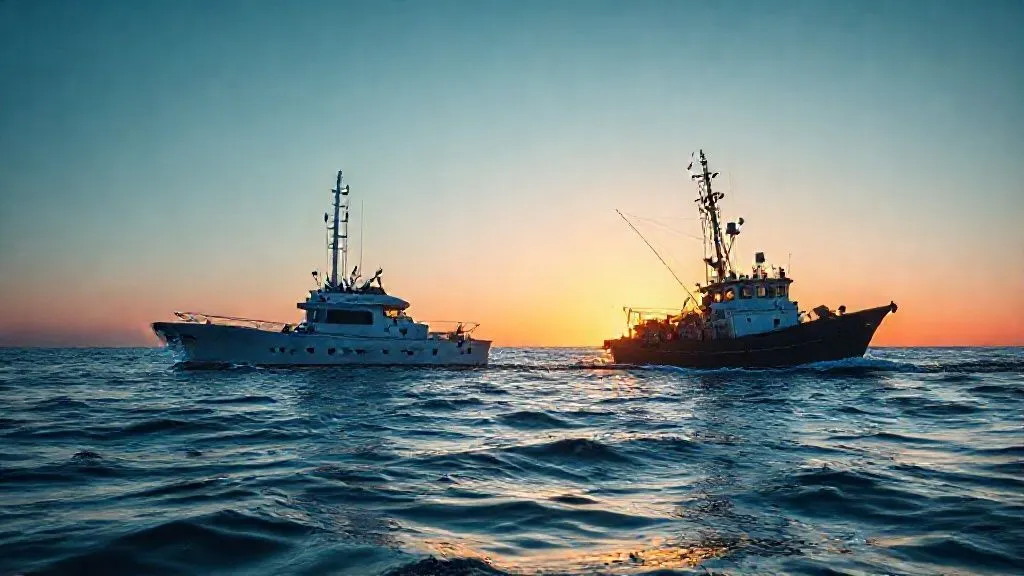
How to Resolve Illegal Fishing Vessel Detentions in Your EEZ?
For nearly two decades, navigating the complex and often turbulent waters of international maritime law, I've witnessed firsthand the profound challenges coastal states face in protecting their Exclusive Economic Zones (EEZs). It's a constant balancing act between asserting sovereign rights, adhering to international norms, and managing practical enforcement logistics. One of the most persistent and vexing issues I've encountered is the effective management and resolution of illegal fishing vessel detentions.
Illegal, Unreported, and Unregulated (IUU) fishing is not merely an economic drain; it's a direct assault on national sovereignty, environmental sustainability, and the livelihoods of legitimate fishers. When a foreign vessel is apprehended within your EEZ, it triggers a cascade of legal, diplomatic, and operational complexities that, if not handled with precision and expertise, can escalate into costly disputes or undermine future enforcement efforts. This isn't just about catching the bad guys; it's about doing it right, every single time.
This post will guide you through a comprehensive, step-by-step framework for not only detaining illegal fishing vessels but, crucially, resolving these incidents effectively, legally, and strategically. Drawing from my experience in international law and maritime security, I will provide actionable insights, reference key legal frameworks, and illustrate best practices to ensure your state can protect its maritime resources with authority and confidence. You'll learn frameworks, real-world considerations, and expert perspectives on what truly works.
Understanding the Legal Framework: Your EEZ and International Law
Before any enforcement action, a deep understanding of the legal landscape is paramount. Your EEZ is not simply an arbitrary line on a map; it's a zone established under international law where your state has sovereign rights for exploring and exploiting marine resources. The cornerstone of this understanding is the United Nations Convention on the Law of the Sea (UNCLOS), often referred to as the 'constitution of the oceans'.
The Pillars of UNCLOS
UNCLOS grants coastal states specific rights and jurisdiction within their EEZ, extending 200 nautical miles from their baselines. These rights include:
- Sovereign Rights: For the purpose of exploring and exploiting, conserving and managing the natural resources, whether living or non-living, of the waters superjacent to the seabed and of the seabed and its subsoil.
- Jurisdiction: With regard to the establishment and use of artificial islands, installations and structures; marine scientific research; and the protection and preservation of the marine environment.
However, these rights are not absolute. They are balanced against the rights and duties of other states, such as freedom of navigation and overflight, and the laying of submarine cables and pipelines. This delicate balance is where many detention issues become complex.
Coastal State Rights vs. Flag State Responsibilities
When an illegal fishing vessel is encountered, it typically flies the flag of another state. This brings in the concept of flag state responsibility. Under international law, the flag state has primary jurisdiction over its vessels on the high seas. However, within your EEZ, your coastal state jurisdiction takes precedence regarding resource exploitation.
In my experience, many disputes arise from a misunderstanding or deliberate disregard of this jurisdictional overlap. A coastal state has the right to take necessary enforcement measures, including boarding, inspection, and detention, against foreign vessels engaged in IUU fishing within its EEZ. The flag state, in turn, has a duty to ensure its vessels comply with international law and the laws of coastal states within their EEZs. Ignoring this duty can lead to international accountability. (UNCLOS Official Text)
Successful resolution often hinges on a clear articulation of these rights and responsibilities, backed by robust domestic legislation that aligns with international obligations.
Proactive Measures: Deterrence and Surveillance
The best way to resolve illegal fishing vessel detentions is to prevent them in the first place, or at least to detect them early. This requires a strong, proactive approach combining deterrence and sophisticated surveillance. Relying solely on reactive patrols is like trying to catch rain in a sieve; you'll always be behind the curve.
Enhanced Maritime Domain Awareness (MDA)
Robust Maritime Domain Awareness (MDA) is the bedrock of effective EEZ protection. It involves understanding everything happening in your maritime space – who is there, what they are doing, and whether it's legal. This isn't just about radar; it's a comprehensive, multi-layered approach.
- Integrated Surveillance Systems: Deploy satellite imagery (Synthetic Aperture Radar - SAR, Visible Infrared Imaging Radiometer Suite - VIIRS), Automatic Identification System (AIS), Vessel Monitoring Systems (VMS), and coastal radar networks. Merge these data streams into a single operational picture.
- Data Analytics and AI: Utilize artificial intelligence and machine learning to analyze vast amounts of data, identify anomalous vessel behavior, predict potential IUU hotspots, and track patterns of life for suspicious vessels.
- Inter-agency and International Cooperation: Share intelligence with national maritime agencies (navy, coast guard, fisheries, customs) and international partners. Regional information-sharing centers are invaluable.
- Regular Aerial and Surface Patrols: Supplement technological surveillance with physical presence. Patrols act as a visible deterrent and allow for closer inspection and verification of anomalies detected by other means.
I've seen nations transform their enforcement capabilities by investing in integrated MDA. It moves them from reactive chasing to proactive interdiction, significantly increasing the chances of successful apprehension and legal follow-through.

The Immediate Response: Interception and Boarding Protocols
Once a suspicious vessel is identified and confirmed as likely engaged in illegal fishing, the immediate response – interception and boarding – is critical. This phase is fraught with potential risks, both to personnel and to the legality of the subsequent detention. Precision, adherence to protocol, and safety are paramount.
Standard Operating Procedures for Interception
Every maritime law enforcement agency must have clear, well-rehearsed Standard Operating Procedures (SOPs) for interception. These should cover:
- Verification: Re-confirm the vessel's identity, flag, and any available intelligence regarding its activities. Use all available MDA tools.
- Approach Strategy: Plan a safe approach, considering sea conditions, vessel speed, and potential for evasive maneuvers. Maintain a safe distance initially.
- Communication: Establish clear radio contact with the vessel, identifying your authority and stating your intention to board for inspection. Record all communications.
- Warning Shots (if necessary): If the vessel fails to comply, national regulations might permit warning shots. This must be strictly governed by rules of engagement and international law, prioritizing safety and minimizing harm.
Ensuring Safety and Legality During Boarding
Boarding is the moment of direct contact. It's high-stakes and requires disciplined execution.
- Boarding Party Composition: A well-trained and equipped boarding party, including law enforcement officers, fisheries inspectors, and potentially legal advisors, is essential. They must be proficient in maritime safety, self-defense, and evidence collection.
- Safety First: Prioritize the safety of both the boarding party and the crew of the apprehended vessel. Follow strict safety protocols for transfers at sea, personal protective equipment, and securing the vessel.
- Present Authority: Upon boarding, clearly identify the boarding team leader and present official identification. Inform the master of the vessel of the reason for the boarding and the legal basis for the inspection.
- Initial Assessment: Conduct a rapid assessment of the vessel, its crew, and any visible fishing gear or catch. Look for immediate signs of illegal activity or potential threats.
- Secure the Scene: Ensure the vessel's navigation and communication equipment are secured to prevent tampering or escape attempts. Document this action.
I cannot stress enough the importance of training here. A well-drilled boarding team can de-escalate tensions and ensure that the crucial initial steps of detention are legally sound, protecting the entire case moving forward.
Detention and Investigation: Evidence Collection and Due Process
The success of resolving an illegal fishing vessel detention hinges almost entirely on the quality of the evidence collected and strict adherence to due process. Without these, even the most blatant illegal activity can be dismissed in court, leading to frustration and wasted resources. This is where the legal battle is truly won or lost.
Critical Evidence Gathering
The boarding party must act as meticulous investigators. Every piece of information, every observation, every item on board can be a crucial piece of evidence. This demands systematic documentation.
| Evidence Category | Specific Items |
|---|---|
| Vessel & Crew Identification | Flag State documents, registration, crew list, passports, licenses |
| Fishing Activity | Fishing gear (type, condition), recent catch (species, quantity, condition), logbooks, e-loggers, VMS data |
| Navigation & Communication | GPS data, charts, radar logs, communication logs, AIS data, satellite phones |
| Illegal Activity Proof | Undersized fish, prohibited species, concealed compartments, altered documents, absence of permits |
| Photographic & Video | Geotagged photos/videos of all relevant findings, vessel condition, crew, fishing gear, catch |
| Witness Statements | Statements from boarding party members, potentially from crew (if compliant and legally permissible) |
All evidence must be properly collected, labeled, and preserved following a strict chain of custody. Any break in this chain can render evidence inadmissible. I've seen strong cases collapse because a crucial piece of evidence wasn't handled correctly. It's tedious, but absolutely non-negotiable.
Adhering to Due Process
International law, as well as domestic legal systems, provides rights to the accused, even in maritime enforcement. Ignoring these rights can lead to international condemnation, diplomatic incidents, or the release of the vessel. Key aspects of due process include:
- Notification: Informing the master of the vessel of the charges against them and their rights.
- Right to Counsel: Ensuring the master and crew have access to legal representation.
- Consular Access: Notifying the flag state and ensuring consular officials have access to their nationals.
- Timely Proceedings: Ensuring that legal proceedings are initiated and conducted without undue delay. Prolonged detention without trial can be a major point of contention. (International Tribunal for the Law of the Sea often deals with prompt release cases).
These aren't optional extras; they are fundamental requirements. A state that respects due process builds its reputation as a responsible maritime power, enhancing its authority and legitimacy.

Navigating Legal Proceedings: Adjudication and Penalties
Once the vessel is detained and evidence is secured, the case moves into the legal proceedings phase. This involves bringing the case before national courts or, in some complex scenarios, engaging international mechanisms. The objective is to secure appropriate penalties that deter future illegal activity and recover costs associated with enforcement.
Domestic Legal Pathways
Most illegal fishing cases will be adjudicated in the coastal state's domestic courts. This requires:
- Robust National Legislation: Laws must clearly define illegal fishing offenses, prescribe appropriate penalties (fines, forfeiture of vessel/catch/gear, imprisonment), and align with UNCLOS and other international agreements.
- Trained Prosecutors and Judges: Legal professionals with expertise in maritime law, fisheries regulations, and international law are crucial. General criminal lawyers may lack the specific knowledge required.
- Efficient Court Processes: Delays in court can be costly for the detaining state (maintenance of vessel, crew support) and can be grounds for claims of 'prompt release' under UNCLOS Article 292.
In my experience, strong domestic legal frameworks, coupled with swift and fair judicial processes, are the most effective deterrents. When offenders know they will face severe and certain penalties, the calculus of illegal fishing shifts dramatically.
International Dispute Resolution Mechanisms
While most cases stay domestic, some detentions can escalate, particularly if the flag state disputes the legality of the detention or the severity of the penalties. In such cases, options under UNCLOS might come into play:
- Diplomatic Negotiations: Often the first step, involving direct communication between the coastal state and the flag state to resolve differences.
- International Tribunal for the Law of the Sea (ITLOS): Flag states can invoke ITLOS, particularly for prompt release applications under Article 292, arguing that the detaining state has not complied with UNCLOS provisions for the release of the vessel and crew upon posting a reasonable bond or other financial security.
- Arbitration: UNCLOS provides for compulsory procedures entailing binding decisions, including arbitration, if other means fail.
The goal in any legal proceeding, whether domestic or international, is not just punishment, but deterrence and the upholding of the rule of law. A well-prepared legal team, armed with irrefutable evidence and a clear understanding of international obligations, is your strongest asset. (FAO Legal Frameworks for Fisheries Enforcement)

Case Study: The 'Phoenix' Incident – A Diplomatic Resolution
Let me share a fictionalized, yet highly realistic, scenario to illustrate how these principles can play out. I'll call it the 'Phoenix' Incident.
Background of the Detention
In early 2022, 'Atlantis', a small island nation heavily reliant on its fisheries, detected the FV 'Phoenix', a large freezer trawler flagged to 'Xylos', operating deep within its EEZ without a valid license. Atlantis's MDA system had tracked the Phoenix for weeks, noting its suspicious patterns of disabling its AIS and entering Atlantis's waters under cover of darkness. A coordinated patrol vessel intercepted the Phoenix. The boarding team found significant quantities of undersized tuna and shark fins, along with falsified logbooks and a disabled VMS.
The Resolution Path
Atlantis immediately detained the Phoenix. Following strict protocols, they meticulously documented all evidence, including geotagged photos, crew statements, and expert analysis of the catch. The flag state, Xylos, initially protested, claiming the Phoenix was in international waters and that Atlantis's jurisdiction was being overstepped. However, Atlantis, through its Ministry of Foreign Affairs, presented Xylos with the irrefutable evidence, including satellite imagery tracking the Phoenix's illegal incursions and detailed reports from the boarding. They also highlighted their adherence to due process, including consular access and timely legal proceedings.
Facing overwhelming evidence and a clear demonstration of Atlantis's legal and operational competence, Xylos shifted its stance. Rather than risking a costly and likely losing battle at ITLOS, Xylos engaged in bilateral negotiations. Atlantis, while firm on its sovereign rights, offered a diplomatic off-ramp: a significant fine, forfeiture of the vessel and catch, and a commitment from Xylos to enhance its flag state control measures. In return, Atlantis agreed to expedite the repatriation of the crew, who had not been directly implicated in the command decisions.
Key Takeaways from Phoenix
The Phoenix incident, though fictional, underscores several critical lessons:
- Evidence is King: Meticulous documentation made the case undeniable.
- Adhere to Due Process: This removed any legitimate grounds for Xylos to challenge the detention on procedural flaws.
- Diplomacy as a Tool: While enforcement is crucial, diplomatic engagement, backed by strong evidence, can lead to quicker, less confrontational resolutions that still achieve the desired outcome.
- Clear Communication: Open and transparent communication with the flag state, supported by legal facts, helped de-escalate the situation.
This case demonstrates that resolving detentions isn't just about applying force, but about applying law and strategy with equal measure.
Beyond Detention: Long-Term Strategies for EEZ Protection
Detaining illegal fishing vessels is a reactive measure, albeit a necessary one. True long-term success in protecting your EEZ comes from implementing comprehensive, proactive strategies that build resilience and deter future infringements. As an industry specialist, I've seen that the most effective nations treat IUU fishing as a systemic problem requiring systemic solutions.
Bilateral and Multilateral Agreements
No single nation can effectively combat IUU fishing alone. The oceans are interconnected, and illegal operators exploit jurisdictional gaps. Engaging in bilateral and multilateral agreements is vital:
- Fisheries Access Agreements: Negotiate clear, transparent agreements with neighboring states and major fishing nations that define access rights, quotas, and enforcement cooperation.
- Information Sharing Protocols: Establish formal channels for sharing intelligence, vessel tracking data, and enforcement best practices with regional partners.
- Port State Measures Agreement (PSMA): Actively implement and promote the FAO Port State Measures Agreement, which prevents IUU-caught fish from entering markets through designated ports. (FAO PSMA)
These agreements create a web of accountability, making it harder for IUU operators to find safe havens or markets for their illicit catch.
Capacity Building and Training
Even the best laws and technologies are useless without skilled personnel to implement them. Investing in capacity building is a long-term strategy with immense returns.
| Area of Capacity Building | Key Skills & Knowledge |
|---|---|
| Maritime Law Enforcement | Boarding & inspection techniques, evidence collection, rules of engagement, international maritime law |
| Fisheries Management & Science | Fish stock assessment, species identification, quota management, ecosystem-based management |
| Legal & Judicial | Maritime prosecution, international law of the sea, prompt release procedures, forfeiture laws |
| Maritime Domain Awareness (MDA) | Satellite data analysis, AIS/VMS monitoring, intelligence fusion, predictive analytics |
| Diplomacy & Negotiation | International relations, dispute resolution, treaty negotiation, consular affairs |
This includes training for navy and coast guard personnel, fisheries inspectors, prosecutors, and judges. It also involves providing adequate equipment – from patrol vessels and aircraft to secure evidence storage facilities and advanced surveillance technology. Building human capital is, in my view, the most sustainable investment a coastal state can make in its EEZ protection.
Frequently Asked Questions (FAQ)
What if the flag state refuses to cooperate after its vessel is detained? This is a common challenge. Your primary recourse is to proceed with domestic legal action, ensuring strict adherence to due process. Simultaneously, escalate diplomatic pressure through your Ministry of Foreign Affairs, potentially involving regional bodies or international organizations. If the vessel is released on bond, ensure the bond is sufficient to cover potential penalties. In extreme cases, repeated non-cooperation can lead to international naming and shaming, or even sanctions, though these are rare for individual vessel detentions.
Can detentions lead to international disputes or even military confrontation? While the risk of military confrontation is extremely low, detentions can certainly lead to significant diplomatic disputes. This is precisely why meticulous adherence to international law, clear communication, and robust evidence are so crucial. Disputes typically revolve around the legality of the detention, the speed of proceedings, or the proportionality of penalties. Engaging in diplomatic channels early and effectively can often de-escalate tensions before they become critical.
What are the typical penalties for illegal fishing vessel detentions? Penalties vary widely based on national legislation and the severity of the offense. Common penalties include substantial fines (often in the hundreds of thousands or even millions of dollars), forfeiture of the vessel, its catch, and fishing gear, and imprisonment for the master and crew. The trend in international best practice is towards penalties that are sufficiently severe to deter future offenses, exceeding the economic benefits gained from illegal fishing.
How does technology aid in resolving these detentions effectively? Technology is a game-changer. Advanced MDA systems (satellite imagery, AIS/VMS, drones) provide irrefutable evidence of incursions and illegal activities, making it harder for vessels to deny wrongdoing. Digital evidence collection tools streamline the process and ensure data integrity. Furthermore, secure communication systems facilitate rapid coordination between enforcement agencies. Technology doesn't replace human expertise, but it dramatically enhances its reach and effectiveness.
What role do regional fisheries management organizations (RFMOs) play in this? RFMOs are crucial. They establish conservation and management measures for fish stocks in specific regions, often beyond national jurisdiction but impacting EEZs. They can provide intelligence on vessels known for IUU fishing, facilitate data sharing among member states, and even recommend actions against non-compliant vessels or flag states. Collaborating with relevant RFMOs strengthens your enforcement efforts by leveraging a broader, international framework.
Key Takeaways and Final Thoughts
Resolving illegal fishing vessel detentions in your EEZ is a multi-faceted challenge, demanding a blend of legal acumen, operational expertise, and diplomatic skill. It's a testament to a nation's commitment to its sovereignty, its environment, and the rule of law. From my vantage point, having navigated these waters for years, the path to effective resolution is clear:
- Know Your Law: Ground all actions in a robust understanding of UNCLOS and strong domestic legislation.
- Be Proactive: Invest in comprehensive Maritime Domain Awareness to detect and deter, rather than merely react.
- Execute with Precision: Follow strict, safe, and legally sound protocols for interception, boarding, and evidence collection.
- Uphold Due Process: Ensure fairness and transparency at every stage to fortify your legal position and avoid international challenges.
- Think Long-Term: Engage in bilateral/multilateral agreements and continuously build capacity to create a sustainable defense against IUU fishing.
The fight against illegal fishing is continuous, but with a strategic, informed, and resolute approach, coastal states can effectively protect their vital maritime resources. It requires dedication, continuous learning, and a collaborative spirit, but the rewards – a healthy ocean, sustainable livelihoods, and secure sovereignty – are immeasurable. Embrace these principles, and you will not only resolve individual detentions but establish a formidable and respected presence in your EEZ.
Recommended Reading
- Software Patent Rejected? 5 Steps to Overcome USPTO Setbacks
- Sales Tax Audit Errors: 7 Critical Steps When Significant Issues Emerge
- 7 Legal Strategies: Addressing Student AI Plagiarism in Higher Education
- Unreported Gifts? 5 Steps to Rectify & Avoid IRS Penalties
- Mastering Complex Whiplash: 7 Steps for Effective Injury Claim Litigation




Comments
Leave a comment below. Your email will not be published. Required fields marked with *