


How to resolve permitting delays for offshore wind farms?
For over two decades in environmental and energy law, I've witnessed the incredible potential of offshore wind projects. Yet, I've also seen countless initiatives, brimming with promise, become ensnared in bureaucratic red tape, their momentum dissipating amidst protracted permitting delays. It's a frustrating, often debilitating cycle that threatens our collective climate goals and dents investor confidence.
The problem isn't trivial; it's a multi-faceted beast involving a complex web of federal and state agencies, evolving environmental regulations, and diverse stakeholder interests. These delays translate directly into soaring project costs, missed deadlines, and a palpable sense of uncertainty that chills further investment. It's a critical bottleneck that we, as an industry, must proactively address.
In this definitive guide, I'll share my insights and provide a strategic framework to help you navigate and, more importantly, resolve permitting delays for offshore wind farms. We’ll delve into actionable strategies, draw on real-world scenarios, and equip you with the expert knowledge to accelerate your projects from concept to generation.
Understanding the Labyrinth: Deconstructing Offshore Wind Permitting Complexity
Before we can resolve permitting delays for offshore wind farms, we must first truly understand their root causes. The regulatory landscape for offshore wind is arguably one of the most complex in modern infrastructure development, involving an intricate dance between numerous federal and state entities, each with their own mandates and timelines.
The Multi-Agency Gauntlet: Federal & State Overlap
At the federal level, the Bureau of Ocean Energy Management (BOEM) leads the charge, managing leases and approving Construction and Operations Plans (COPs). However, BOEM is just one piece of the puzzle. The National Oceanic and Atmospheric Administration (NOAA) steps in for marine mammals and fisheries, the U.S. Army Corps of Engineers (USACE) for structures and dredging, the Environmental Protection Agency (EPA) for air and water quality, and the U.S. Coast Guard for navigation.
Layered on top of this are state-level permitting requirements, which can include coastal zone management consistency reviews, state environmental impact assessments, and specific state energy siting approvals. The challenge often lies in the lack of seamless coordination between these entities, leading to sequential reviews where parallel processing would be far more efficient. This creates a regulatory gauntlet where a single misstep or data gap can trigger cascading delays across multiple agencies.
NEPA & Environmental Impact Statements (EIS): The Bottleneck
The National Environmental Policy Act (NEPA) review process, culminating in an Environmental Impact Statement (EIS), frequently emerges as the most significant bottleneck. This comprehensive assessment requires extensive baseline data collection, impact modeling, and evaluation of alternatives, often stretching over several years.
Scoping, drafting the EIS, public comment periods, revisions, and ultimately the Record of Decision (ROD) are all time-consuming steps. The sheer volume of data required – from benthic habitats to avian migration patterns and marine mammal acoustics – coupled with the need for robust cumulative impact assessments, makes the EIS a monumental undertaking. Any perceived inadequacy or new information can trigger demands for supplemental analyses, pushing timelines back indefinitely.
Proactive Engagement: Building Bridges, Not Walls
In my experience, one of the most effective strategies to resolve permitting delays for offshore wind farms isn't found in a legal brief, but in genuine, proactive stakeholder engagement. Permitting is not merely a technical or legal exercise; it's a social license negotiation.
Early & Continuous Stakeholder Outreach
Identifying and engaging with all key stakeholders from the earliest stages of project development is paramount. This includes commercial and recreational fishing communities, indigenous tribes, environmental non-governmental organizations (NGOs), military branches, shipping industries, and local communities. Waiting until formal comment periods often means facing entrenched opposition rather than collaborative problem-solving.
Best practices involve direct, transparent communication, organizing workshops, sharing preliminary data, and even exploring co-design opportunities where feasible. Establishing trust and demonstrating a willingness to adapt based on legitimate concerns can transform potential adversaries into allies, significantly smoothing the permitting path.
"Permitting isn't just a legal process; it's a social license negotiation. Early, genuine engagement is your strongest asset against future opposition."
Marine Spatial Planning (MSP) & Conflict Avoidance
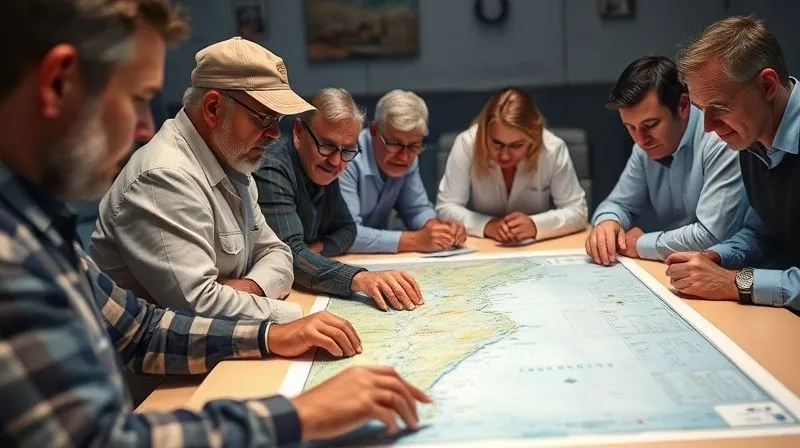
Leveraging Marine Spatial Planning (MSP) tools and data is another powerful proactive strategy. MSP allows developers to identify potential spatial conflicts – such as overlaps with critical fishing grounds, sensitive habitats, or military training zones – *before* committing to a definitive project design. This involves analyzing various data layers to inform site selection and turbine layout.
Case Study: How Oceanic Power Solutions Inc. Streamlined & Succeeded
Oceanic Power Solutions Inc. faced initial pushback from commercial fishing groups for their 'Horizon Wind' project, located off the coast of New England. Rather than pushing forward, they paused their initial design. By proactively engaging with local fishing cooperatives during the site selection phase and adjusting turbine layouts based on detailed data about traditional fishing grounds and transit routes, they made significant revisions to their proposed array. This collaborative approach not only secured local support but also streamlined their federal permitting process by demonstrating a robust, data-driven conflict avoidance strategy. This resulted in saving an estimated 18 months in the BOEM review timeline and prevented costly, protracted litigation from a powerful stakeholder group.
Data-Driven Expeditions: De-Risking Through Robust Information
The phrase "data is power" is never truer than in environmental permitting. Insufficient or flawed data is a primary driver of permitting delays, leading to agency requests for additional information, supplemental studies, and extended review periods. To resolve permitting delays for offshore wind farms, a commitment to rigorous data collection and analysis from day one is non-negotiable.
Comprehensive Baseline Data Collection
Investing in thorough environmental surveys – covering everything from benthic communities and avian migration patterns to marine mammal presence and fisheries resources – *before* submitting permit applications is critical. While these studies are expensive, the cost of data gaps, leading to re-survey requirements, EIS inadequacy findings, or even litigation, far outweighs the upfront investment.
A robust baseline provides the foundation for accurate impact assessments and informs effective mitigation strategies. It also builds credibility with regulatory agencies, demonstrating a commitment to environmental stewardship and a thorough understanding of the proposed project's potential effects.
| Data Category | Impact on Permitting | Risk of Delay (Low Data) |
|---|---|---|
| Benthic Surveys | Habitat mapping, essential fish habitat, critical for USACE/NOAA | EIS inadequacy, re-survey requirements, litigation |
| Avian & Bat Migration | Collision risk assessment, conservation plans, USFWS consultation | Extended consultation, project redesign, mitigation requirements |
| Marine Mammal Acoustics | Noise impact assessment, mitigation strategies, NOAA/BOEM | Stop-work orders, additional monitoring, revised permits |
Utilizing Advanced Modeling & Predictive Analytics
Beyond raw data, employing advanced modeling and predictive analytics can significantly enhance the quality and defensibility of environmental assessments. Tools leveraging Artificial Intelligence (AI) and Machine Learning (ML) can process vast environmental datasets to predict potential impacts, optimize mitigation measures, and visualize complex cumulative impacts more effectively.
For instance, sophisticated models can simulate noise propagation from pile driving, predict changes in ocean currents, or project bird migratory pathways. Presenting agencies with clear, data-backed projections, rather than broad assumptions, streamlines their review process and reduces the likelihood of requests for further information. According to a study published in Scientific Reports, AI applications are increasingly vital for complex environmental impact assessments.
Navigating the Regulatory Currents: Strategic Legal & Policy Approaches
Even with proactive engagement and robust data, the sheer volume and complexity of regulations demand a strategic legal approach. Understanding how to interact with agencies and structure your applications can make all the difference to resolve permitting delays for offshore wind farms.
Pre-Application Coordination & Agency Alignment
Never underestimate the power of pre-application coordination. Formal and informal meetings with all relevant federal and state agencies *before* submitting your definitive applications are invaluable. This allows developers to present their project concept, identify potential red flags early, and understand specific agency concerns or data requirements.
Developing a "master schedule" for reviews with agency input can also create a shared understanding of timelines and responsibilities. This collaborative front-loading of work fosters transparency, builds rapport, and reduces the chances of surprises during the formal review period. A well-orchestrated pre-application phase can shave years off the permitting timeline by addressing concerns upfront.
"A well-orchestrated pre-application phase, where agency concerns are addressed proactively, can shave years off the permitting timeline. It's about front-loading the work and building trust."
Adaptive Management & Phased Permitting
Designing projects with inherent flexibility through adaptive management strategies can be a game-changer. This involves building in mechanisms to incorporate new data, adjust mitigation measures, or refine operational protocols as monitoring results become available. Agencies often appreciate this approach as it demonstrates a commitment to continuous improvement and responsiveness to environmental conditions.
In some cases, a phased permitting approach, where separate permits are sought for surveys, construction, and operations, can also be beneficial. This allows earlier activities to commence while more complex assessments for later phases are still underway, maintaining project momentum. BOEM provides guidance on adaptive management strategies, which developers should thoroughly review and integrate into their plans. For example, the BOEM website offers insights into adaptive management for offshore wind projects.
Leveraging Policy Advocacy and Inter-Agency Collaboration
While individual project strategies are crucial, broader policy advocacy and fostering inter-agency collaboration at a systemic level are also vital to resolve permitting delays for offshore wind farms in the long term. Developers cannot operate in a vacuum; industry-wide efforts can create a more streamlined regulatory environment for everyone.
Advocating for Regulatory Streamlining
Industry groups, such as the American Clean Power Association (ACP), play a critical role in advocating for policy changes that streamline permitting processes. This includes pushing for legislative reforms, advocating for increased agency funding and staffing, and promoting the adoption of best practices across federal and state agencies. Collective action can highlight systemic inefficiencies and drive high-level solutions.
Successful examples include the establishment of federal task forces or memoranda of understanding (MOUs) between agencies, aimed at harmonizing review processes and establishing clear points of contact. These initiatives, often driven by industry input, help to reduce redundancy and accelerate decision-making across the board.
The Role of National Importance Designations
In certain circumstances, high-level political will can significantly accelerate projects. The designation of offshore wind projects as infrastructure of national importance, for example, can trigger executive orders or legislative efforts aimed at fast-tracking their review. This elevates the project's priority within the federal bureaucracy and can compel agencies to dedicate more resources and coordinate more effectively.
Developers should understand the criteria and pathways for such designations and consider engaging with policymakers to articulate the broader economic and environmental benefits of their projects. The Biden Administration's executive orders on climate crisis, for instance, have emphasized the importance of renewable energy infrastructure.
The Financial & Reputational Cost of Delays: Why Speed Matters
The imperative to resolve permitting delays for offshore wind farms extends far beyond mere administrative convenience. These delays carry substantial financial and reputational costs that can jeopardize project viability and undermine broader energy transition goals.
Quantifying the Economic Impact of Permitting Bottlenecks
Every month of delay adds significant costs to a project. These include increased financing costs, extended personnel expenses, escalation in equipment and material prices, and lost revenue from delayed energy production. These factors collectively push up the Levelized Cost of Energy (LCOE) for offshore wind, making it less competitive and less attractive to investors.
Beyond direct costs, delays introduce immense uncertainty, which is anathema to investors. This uncertainty can lead to higher interest rates, more stringent equity requirements, or even project cancellations, creating a chilling effect on future investments in the sector. The economic ripple effects can be substantial, impacting supply chain development and job creation.
Maintaining Social License and Investor Confidence
Protracted delays also erode public trust and can complicate future project siting. When projects languish in permitting limbo, it can be perceived as a failure of the developer or the regulatory system, leading to increased community skepticism and opposition. Maintaining social license – the ongoing acceptance and approval of your project by local communities and stakeholders – is crucial for long-term success.
Similarly, investor confidence is fragile. A track record of projects facing chronic delays can deter capital, regardless of the underlying market opportunity. Transparent communication with all stakeholders, including investors, during periods of delay is essential to manage expectations and maintain credibility. The ability to demonstrate a clear path forward, even amidst challenges, is key.
Frequently Asked Questions (FAQ)
What's the biggest legal challenge in offshore wind permitting? In my professional opinion, the biggest legal challenge lies in navigating the National Environmental Policy Act (NEPA) review process. The sheer volume of scientific data required, the complexity of cumulative impact assessments across multiple jurisdictions, and the potential for litigation from various stakeholders (e.g., environmental groups, fisheries) over perceived inadequacies in the EIS make it an incredibly resource-intensive and time-consuming undertaking. Inter-agency coordination failures within NEPA also exacerbate this challenge.
How can small developers compete with large corporations in navigating these delays? Small developers must focus on strategic partnerships and leveraging external expertise. Collaborating with experienced environmental consultants, legal counsel specializing in offshore wind, and even larger developers on specific aspects (e.g., shared data collection initiatives) can level the playing field. Furthermore, focusing on niche areas, adopting innovative technologies that reduce environmental impact, and meticulously planning pre-application engagement can allow smaller players to demonstrate agility and commitment, earning trust from agencies and communities.
Is litigation an effective strategy to resolve permitting delays? Litigation is rarely an effective primary strategy to resolve permitting delays for offshore wind farms, though it can be a necessary last resort. While it can compel agencies to act or challenge an unfavorable decision, it is inherently adversarial, extremely costly, and introduces significant additional delays. It can also damage relationships with regulatory bodies and stakeholders, making future projects more difficult. Proactive engagement, robust data, and collaborative problem-solving are almost always more productive and efficient paths.
How do evolving environmental regulations (e.g., new species listings) impact existing projects? Evolving environmental regulations, such as new endangered species listings or updated critical habitat designations, can significantly impact existing projects or those deep into the permitting process. They can trigger demands for supplemental environmental reviews, necessitate project redesigns, or require additional mitigation measures that were not initially planned. Developers must continuously monitor the regulatory landscape, build flexibility into their project designs, and maintain open communication with agencies to proactively address potential impacts from such changes, often through adaptive management plans.
What role does AI play in future permitting processes? AI is poised to play a transformative role in future permitting processes. It can rapidly analyze vast amounts of environmental data, predict potential impacts with greater accuracy, and identify optimal mitigation strategies. AI-powered tools can also streamline document review, identify regulatory compliance gaps, and even assist in generating parts of environmental assessments, significantly reducing manual effort and accelerating review timelines. This will lead to more efficient, data-driven, and potentially less contentious permitting outcomes.
Key Takeaways and Final Thoughts
- Proactive Engagement is Paramount: Early, genuine, and continuous dialogue with all stakeholders builds trust and pre-empts costly opposition.
- Data is Your Foundation: Invest in comprehensive baseline data and leverage advanced analytics to de-risk projects and strengthen environmental assessments.
- Strategic Legal & Regulatory Navigation: Master pre-application coordination, understand agency processes, and consider adaptive management to maintain momentum.
- Advocacy Matters: Support industry-wide efforts for regulatory streamlining and understand how policy advocacy can accelerate the broader sector.
- Understand the Costs: Recognize that permitting delays have profound financial and reputational impacts, making proactive mitigation an economic imperative.
The journey to resolve permitting delays for offshore wind farms is undoubtedly challenging, but it is far from insurmountable. By adopting a holistic, proactive, and data-driven approach – one that prioritizes collaboration and strategic foresight – developers can navigate the complex regulatory currents with greater confidence and efficiency. Our collective future, powered by clean, renewable energy, depends on our ability to overcome these hurdles and unlock the full potential of offshore wind. Let's build that future, together and on time.
Recommended Reading
- Product Recall Injuries? Know Your Rights to Compensation Now!
- Unlock Stability: What Are the Steps in Business Financial Reorganization?
- 5 Proven Strategies to Challenge Cruise Forum Clauses After Injury
- 7 Legal Mechanisms: How Do We Prevent Armed Conflict Escalation?
- 7 Legal Steps: How to Trace Hidden Marital Assets in Complex Divorce




Comments
Leave a comment below. Your email will not be published. Required fields marked with *