


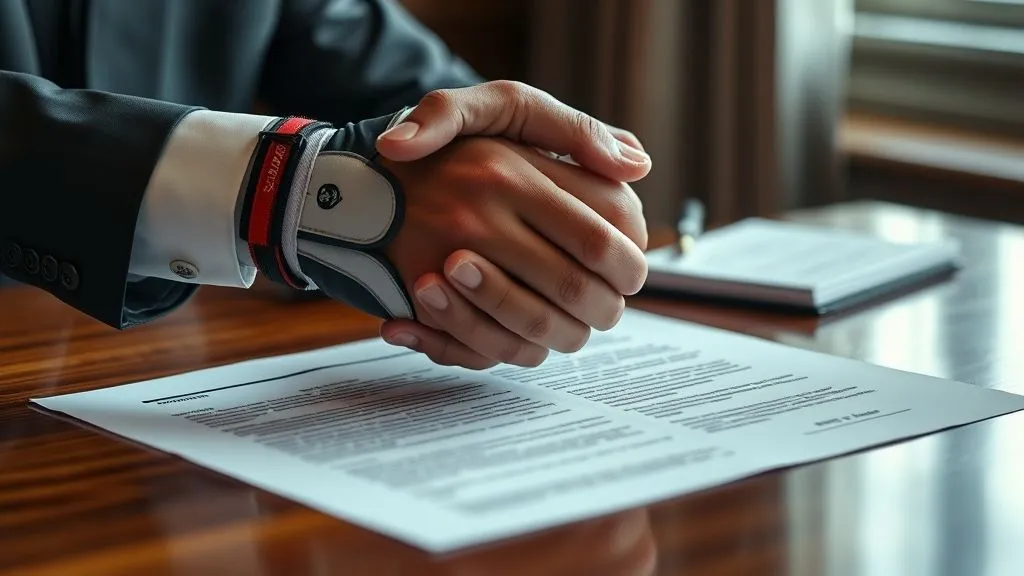
How to resolve player grievance over team disciplinary action?
For over 20 years in the intricate world of sports law and labor relations, I've witnessed firsthand the profound impact that unresolved player grievances can have on a team's morale, performance, and public image. It's a delicate dance between maintaining discipline and upholding the rights of athletes, and frankly, many organizations falter not because of malicious intent, but due to a lack of a structured, empathetic, and legally sound process.
The pain points are palpable: a disgruntled player can disrupt locker room harmony, become a media distraction, and potentially escalate a minor issue into a costly legal battle. Team disciplinary actions, while often necessary, can be perceived as unfair, arbitrary, or even retaliatory, leading to deep-seated resentment. This isn't just about a player's salary; it's about their career, their reputation, and their sense of justice within a system they've dedicated their lives to.
In this definitive guide, I will share the frameworks, practical steps, and expert insights I've gathered over two decades to effectively navigate and resolve player grievances stemming from team disciplinary action. My goal is to equip you with the knowledge to foster an environment of fairness, transparency, and trust, transforming potential conflicts into opportunities for stronger player-management relationships. We'll explore the legal landscape, the power of communication, and the critical role of collective bargaining agreements in achieving lasting resolutions.
Understanding the Landscape: The Foundation of Sports Labor Relations
Before we delve into resolution strategies, it's crucial to grasp the unique ecosystem of sports labor relations. Unlike traditional employment, professional sports operates under a complex web of collective bargaining agreements (CBAs), league rules, team policies, and individual player contracts. These documents are the bedrock upon which all disciplinary actions and subsequent grievances are built.
In my experience, the first mistake many teams make is failing to fully understand the specific provisions of their league's CBA. This document, negotiated between the league/owners and the player's association, often dictates the precise procedures for disciplinary action, the types of offenses that warrant punishment, and the grievance mechanisms available to players. Ignoring or misinterpreting these provisions is a surefire way to escalate a grievance and undermine the team's position. It's not just about what feels right; it's about what the agreed-upon rules stipulate.
"Ignorance of the CBA is not an excuse; it's a strategic vulnerability in sports labor relations."
Player associations, such as the NFLPA, NBPA, MLBPA, and NHLPA, play an indispensable role. They are not merely advisory bodies; they are powerful advocates for player rights, and their involvement in the grievance process is often mandated by the CBA. Understanding their functions, their legal standing, and their commitment to their members is paramount for any team or league looking to resolve disputes amicably and legally.
Key Elements to Review:
- Collective Bargaining Agreement (CBA): Identify specific articles pertaining to player conduct, disciplinary procedures, fines, suspensions, and the grievance process.
- Player Contract: Review the individual player's contract for any specific clauses related to conduct or disciplinary actions that may supplement or clarify CBA provisions.
- Team Handbook/Policies: Ensure team-specific rules are clearly articulated, accessible, and consistent with the CBA.
- League Rules & Bylaws: Certain offenses may fall under broader league jurisdiction, requiring adherence to league-wide protocols.
For example, if a player is disciplined for a violation of team curfew, the CBA might specify the maximum fine, the process for notifying the player, and their right to appeal. Disregarding these steps can invalidate the disciplinary action, turning a clear violation into a procedural nightmare.
The landscape is also shaped by external legal principles, particularly labor law and contract law. While CBAs often supersede some aspects of general labor law for unionized employees, fundamental principles of due process and fair treatment remain relevant. As the National Labor Relations Board (NLRB) outlines, ensuring fair labor practices is critical, even within the unique context of professional sports.
The Initial Steps: Prompt and Fair Internal Review
Once a disciplinary issue arises, the manner in which the team conducts its initial internal review is critical. This phase often sets the tone for whether a player grievance can be resolved swiftly or if it will fester into a protracted dispute. Transparency, objectivity, and adherence to established protocols are non-negotiable.
I've seen countless situations where a team, eager to impose discipline, rushes this phase, leading to procedural errors that are later exploited by player representatives. It's tempting to act quickly, especially when public pressure is high, but a methodical approach always pays dividends.
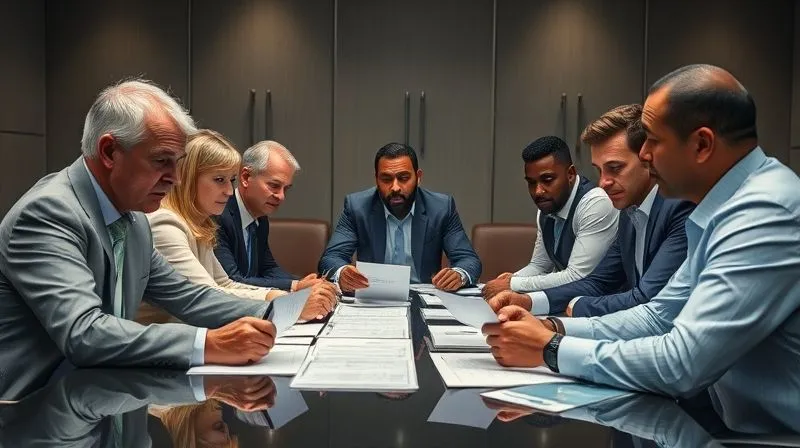
Conducting a Thorough Investigation:
- Gather Facts Impartially: Interview all relevant parties – the player, witnesses, coaching staff, and any other personnel with direct knowledge. Document everything.
- Review Evidence: Collect all available evidence, including video footage, communication logs (texts, emails), social media posts, and performance data.
- Provide Notice: Inform the player of the alleged infraction in writing, detailing the specific rule violated and the potential consequences. This is a fundamental due process right.
- Offer an Opportunity to Respond: The player must be given a fair chance to present their side of the story, explain their actions, and offer mitigating circumstances. This is not a formality; it's an essential part of natural justice.
- Consult the CBA/Team Policies: Before imposing any discipline, double-check that the proposed action aligns perfectly with the CBA's disciplinary matrix and team policies. Deviations will be challenged.
- Document Findings: Create a comprehensive report detailing the investigation, findings, disciplinary decision, and the rationale behind it. This document is crucial if the grievance escalates.
Case Study: The 'Missed Practice' Dilemma
Case Study: How the 'Phoenix Stars' Navigated a Disciplinary Grievance
The Phoenix Stars, a fictional professional basketball team, faced a situation where their star point guard, Marcus, missed a mandatory practice without prior notification. The head coach immediately wanted to suspend him for a game, citing a clear violation of team rules. However, the GM, recalling my advice, insisted on a structured internal review.
First, they formally notified Marcus of the alleged violation. During his opportunity to respond, Marcus explained he had received an urgent family medical emergency call late the night before and, in a moment of panic, forgot to inform the team. He provided a doctor's note and a detailed account. The team verified the information. Instead of a suspension, which the CBA allowed for unexcused absences, the Stars issued a significant fine, mandated a public apology to the team, and required him to attend a session with the team's player wellness coordinator. Marcus accepted the fine and the conditions, expressing gratitude for being heard. This resolution prevented a formal grievance, maintained team cohesion, and demonstrated fairness, ultimately strengthening the player-management relationship.
This case underscores the importance of a fair hearing. A player's perception of justice often hinges on feeling heard and understood, even if the outcome isn't exactly what they desired. It's about respecting their professionalism and their human dignity.
Navigating Collective Bargaining Agreements and Player Associations
Once disciplinary action is taken, if the player feels aggrieved, the next critical step is to understand and navigate the formal grievance process as outlined in the collective bargaining agreement. This is where the player association typically becomes directly involved, transforming an internal team matter into a formal labor dispute.
In my career, I've seen teams make the mistake of viewing the player association as an adversary from the outset. While their role is to advocate for their members, a collaborative and respectful approach can often lead to more productive dialogue and earlier resolution. The association's primary goal is to ensure fairness and adherence to the CBA, not necessarily to overturn every disciplinary action.
"Engage with player associations constructively; they are guardians of the CBA, not inherently your opponent."
The Grievance Process, Step-by-Step (Generalized):
- Formal Grievance Filing: The player, often through their agent or the player association, files a formal written grievance, specifying the disciplinary action being challenged and the CBA provisions allegedly violated. This starts the clock on defined timelines.
- Initial Meeting/Hearing: Typically, a meeting is scheduled between the player, their representative, team management, and league representatives (if applicable). This is an opportunity for both sides to present their arguments and evidence, often in an attempt to reach an informal resolution.
- Exchange of Information: Both parties are usually required to exchange relevant documents and witness lists. Transparency at this stage can prevent surprises later.
- Negotiation for Settlement: Before proceeding to more formal stages, there's often an opportunity for negotiation. This might involve reducing a fine, modifying a suspension, or agreeing on specific conditions for reinstatement.
It's vital to have your legal counsel and HR/labor relations specialists involved from the moment a formal grievance is filed. Their expertise in interpreting the CBA and navigating labor law is indispensable. They can help identify weaknesses in the team's case, strategize on potential settlements, and prepare for formal hearings.
| Grievance Stage | Key Participants | Goal |
|---|---|---|
| Informal Discussion | Player, Team Management, Agent (optional) | Early resolution, clarify misunderstanding |
| Formal Filing | Player, Player Association, Team Legal | Initiate official CBA process |
| Initial Hearing | Player, Player Association Rep, Team Management, League Rep (optional) | Present cases, seek negotiated settlement |
| Mediation | Player, Player Association Rep, Team Legal, Mediator | Facilitate agreement with neutral third party |
| Arbitration | Player, Player Association Legal, Team Legal, Arbitrator | Binding decision by neutral adjudicator |
The procedural integrity of this stage cannot be overstated. Any deviation from the CBA's prescribed timeline or process can be grounds for the player's association to challenge the disciplinary action on procedural grounds, regardless of the merits of the original infraction.
Mediation and Conciliation: Seeking Amicable Solutions
When initial discussions fail to resolve a player grievance, the next logical step in many CBAs is mediation or conciliation. These processes involve a neutral third party who facilitates communication and helps the disputing parties find common ground, without imposing a decision.
I've found mediation to be an incredibly powerful tool in sports labor disputes. It provides a safe space for open dialogue, often allowing both sides to articulate their underlying concerns and interests beyond the strict legal arguments. The mediator's role is not to judge, but to guide the conversation towards a mutually acceptable outcome, preserving relationships where possible.
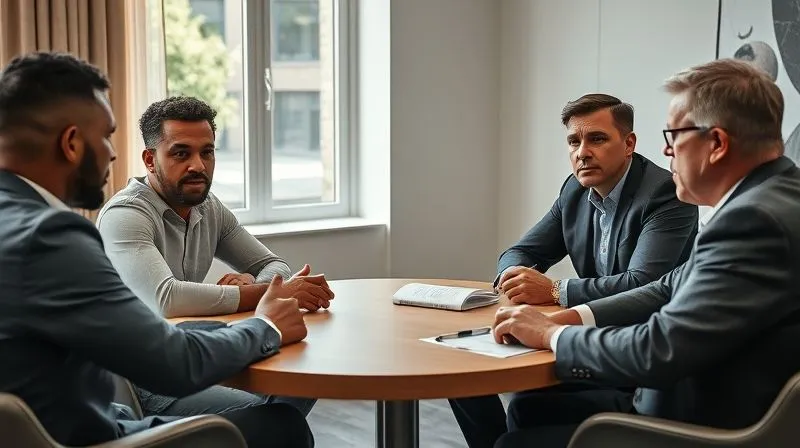
Benefits of Mediation:
- Confidentiality: Discussions are typically confidential, allowing parties to speak freely without fear of public scrutiny.
- Preservation of Relationships: Unlike adversarial processes, mediation aims to find a win-win solution, which is crucial for maintaining team harmony.
- Flexibility: The solutions can be creative and tailored to the specific circumstances, not limited by strict legal precedents.
- Cost-Effective: Generally less expensive and time-consuming than arbitration or litigation.
- Empowerment: Parties retain control over the outcome, rather than having a decision imposed upon them.
A skilled mediator can help bridge communication gaps, reframe issues, and identify areas of compromise that the parties might have overlooked. For example, a player disciplined for 'conduct detrimental to the team' might be willing to accept a fine if the team publicly acknowledges their off-field charity work, restoring their reputation. The solutions can be varied and nuanced, focusing on both the disciplinary action and the player's broader well-being.
It's important for both the team and the player's representative to enter mediation with an open mind and a genuine willingness to compromise. A rigid stance from either side will render the process ineffective. The goal here is not to 'win' but to resolve. The Federal Mediation and Conciliation Service (FMCS) offers valuable insights into effective mediation practices that are applicable across various labor disputes, including sports.
Arbitration: The Formal Adjudication Process
If mediation fails, or if the CBA mandates it as the next step, the player grievance will proceed to arbitration. This is a more formal, quasi-judicial process where a neutral arbitrator (or a panel of arbitrators) hears evidence and arguments from both sides and issues a binding decision.
In my experience, arbitration is where legal preparation truly shines. It's akin to a mini-trial, requiring meticulous documentation, well-prepared witnesses, and compelling legal arguments. The burden of proof typically lies with the team to demonstrate that the disciplinary action was for 'just cause' and consistent with the CBA.
"Arbitration is where facts, procedure, and legal acumen converge. Preparation is paramount."
Key Aspects of Sports Arbitration:
- Selection of Arbitrator: Often, the CBA provides a list of approved arbitrators, and the parties take turns striking names until a single arbitrator is chosen. The arbitrator's experience in sports labor disputes is a significant advantage.
- Pre-Hearing Briefs: Both sides typically submit written briefs outlining their arguments, the relevant CBA provisions, and the evidence they intend to present.
- The Hearing: This involves opening statements, presentation of evidence (documents, witness testimony, cross-examination), and closing arguments. Rules of evidence are usually more relaxed than in court, but fairness and relevance are still key.
- Arbitrator's Decision: After the hearing, the arbitrator will issue a written award, which is binding on both parties. This decision will explain the findings of fact, the interpretation of the CBA, and the rationale for the ruling.
The role of legal counsel is critical here. They will prepare witnesses, craft legal arguments, and navigate the procedural complexities of the hearing. As a team, you must be able to demonstrate that: (1) the player committed the alleged infraction, (2) the disciplinary action was consistent with the CBA and team policies, and (3) the penalty was appropriate for the offense.
The concept of 'just cause' is central to most sports arbitrations. This typically requires proving that the player was aware of the rule, the rule was reasonable, an investigation was conducted fairly, there was sufficient evidence of guilt, and the penalty was consistent with past practices and not arbitrary or discriminatory. Failing on any of these fronts can lead to the disciplinary action being overturned or modified.
The binding nature of arbitration means that, once the decision is rendered, it is generally final and enforceable, with very limited grounds for judicial review (e.g., fraud, misconduct by the arbitrator, or exceeding their authority). This finality is why thorough preparation at this stage is absolutely essential.
Legal Recourse and Appeals: When All Else Fails
While arbitration is typically the final step in the internal grievance process outlined in CBAs, there are extremely limited circumstances under which an arbitral award can be challenged in court. It's crucial to understand these narrow exceptions.
In my two decades, I've seen teams and players attempt to appeal arbitration decisions, but the success rate is remarkably low. Courts generally grant substantial deference to arbitral awards, respecting the intention of the parties to resolve disputes through their agreed-upon mechanism. This judicial deference to arbitration is a cornerstone of labor law.
"Court intervention in sports arbitration is rare; the arbitral award is typically the final word."
Grounds for Judicial Review of Arbitral Awards:
- Fraud or Corruption: If there's evidence that the award was procured by fraud, corruption, or undue means.
- Partiality or Misconduct by Arbitrator: If the arbitrator exhibited evident partiality or engaged in misconduct that prejudiced the rights of any party.
- Exceeding Powers: If the arbitrator exceeded their powers, or so imperfectly executed them that a mutual, final, and definite award upon the subject matter submitted was not made.
- Violation of Public Policy: In rare cases, if the award violates a well-defined and dominant public policy.
It's important to stress that merely disagreeing with the arbitrator's interpretation of the CBA or their factual findings is NOT a sufficient ground for appeal. The bar is extremely high. Legal challenges at this stage are often costly, time-consuming, and have a low probability of success, but they do exist as a final, albeit remote, recourse.
Beyond challenging the arbitration award, a player might also consider separate legal actions, though these are typically outside the scope of the CBA grievance process. For example, if a player alleges discrimination, harassment, or a breach of an individual endorsement contract that is separate from their playing contract, these might be pursued in civil court. However, disciplinary actions directly related to playing for the team are almost exclusively handled through the CBA's grievance and arbitration procedures.
Understanding these boundaries is key to properly advising both teams and players. As the American Bar Association often emphasizes, respecting the agreed-upon dispute resolution mechanisms is fundamental to the integrity of the legal system.
Preventative Measures: Building a Proactive Disciplinary Framework
While knowing how to resolve player grievance over team disciplinary action is crucial, the ultimate goal should be to minimize their occurrence in the first place. A proactive, well-communicated, and consistently applied disciplinary framework is your best defense against future disputes.
From my extensive experience, most grievances arise not from malicious intent, but from a lack of clarity, inconsistency in application, or a perceived lack of fairness. Prevention is always better than cure, especially when dealing with high-profile athletes and their careers.
Elements of a Strong Preventative Framework:
- Clear and Concise Policies: All team rules, codes of conduct, and disciplinary procedures must be written in plain language, easily accessible, and explicitly communicated to every player. Don't assume they know; ensure they understand.
- Regular Education and Training: Conduct annual or pre-season sessions to review policies, explain the rationale behind rules, and answer player questions. Use examples to illustrate acceptable and unacceptable conduct.
- Consistent Enforcement: This is perhaps the most critical element. Inconsistent application of rules – punishing one player severely for an infraction while letting another off lightly for the same offense – is a primary driver of grievances. Treat like cases alike.
- Fair and Timely Investigations: As discussed, every alleged infraction warrants a fair, impartial, and prompt investigation before any discipline is imposed.
- Open Lines of Communication: Foster an environment where players feel comfortable raising concerns or asking questions about rules without fear of reprisal. A strong player-management relationship built on trust can preempt many grievances.
- Player Input: Where appropriate and feasible, involve player leadership or player representatives in the development or review of certain team policies. This fosters buy-in and a sense of shared responsibility.
- Documentation: Maintain meticulous records of all disciplinary actions, investigations, communications, and decisions. This paper trail is invaluable if a grievance arises.
Consider the analogy of a well-maintained vehicle. Regular checks, clear instructions for operation, and consistent care prevent breakdowns. Similarly, a proactive disciplinary framework functions as a preventative maintenance schedule for team harmony and legal compliance.
The goal isn't to create an overly permissive environment, but one where discipline is understood as a necessary component of high performance, applied fairly and predictably. This breeds respect, not resentment, and ultimately strengthens the team's culture. As Harvard Business Review often highlights, clear communication and consistent application of policy are fundamental to organizational trust and effectiveness.
The Human Element: Restoring Trust and Team Cohesion
Resolving player grievances isn't just about legal procedures; it's profoundly about people. Even after a formal resolution, whether through negotiation, mediation, or arbitration, the human element – the restoration of trust and team cohesion – remains paramount. Failing to address this can leave lasting scars that impact performance and culture.
I've observed that the most successful resolutions are those that not only settle the dispute but also pave the way for healing and reintegration. A player, even if disciplined, needs to feel valued as a member of the team. Conversely, the team needs to feel that its authority has been respected and its rules upheld.
"Beyond the legal resolution, the true win is restoring trust and fostering a cohesive team environment."
Strategies for Post-Resolution Healing:
- Direct Communication: After a resolution, a direct, candid conversation between the player, coach, and possibly the GM can be incredibly beneficial. Acknowledge the difficulty, reiterate expectations, and express a desire to move forward.
- Reintegration Plan: If a player was suspended, ensure there's a clear plan for their return to practice, team activities, and eventual game play. Avoid any sense of 'shunning' or isolation.
- Team Leadership Engagement: Involve team captains or veteran players in supporting the reintegration process, helping to mend any rifts within the locker room.
- Focus on Future Performance: Shift the narrative from the past infraction to future contributions. Emphasize the player's talent and their importance to the team's success.
- Counseling/Support: For particularly sensitive issues, offer access to player wellness resources, mental health professionals, or life coaches. This shows a commitment to the player's overall well-being.
- Learn from the Experience: Internally, review the entire grievance process. What could have been done better? Were policies clear enough? This continuous improvement cycle is vital.
Remember, a team is a complex social organism. A disciplinary action, while necessary, can create tension. The resolution process, particularly the steps taken afterward, can either exacerbate that tension or transform it into an opportunity for growth and stronger bonds. It requires empathy, patience, and a genuine commitment to the individual as well as the collective.
Ultimately, the goal is not just to close a case file, but to ensure that the team can perform optimally, free from lingering resentment or unresolved conflict. This approach embodies true sports leadership – balancing accountability with support, and discipline with development.
Frequently Asked Questions (FAQ)
Question? What if the player's agent or lawyer threatens immediate legal action outside the CBA process?
Answer: This is a common tactic. Your first response should always be to reiterate the existence of the CBA's exclusive grievance and arbitration procedures. Most CBAs are designed to be the sole and final mechanism for resolving disputes related to player contracts and disciplinary actions. Unless there's a clear allegation of discrimination or a separate civil wrong unrelated to their playing duties (e.g., a personal injury outside of team activities), courts will typically defer to the CBA's dispute resolution framework. Consult your legal counsel immediately to draft a formal response affirming adherence to the CBA.
Question? How do we handle public perception and media inquiries during a player grievance?
Answer: Communication strategy is critical. Generally, it's best to adopt a 'no comment' or 'we are following league protocols as outlined in the CBA' approach for ongoing grievances. Avoid speculating or disclosing details, as this can prejudice the process and further inflame the situation. Acknowledge the situation professionally, state that you are addressing it internally and according to established procedures, and redirect focus to the team's performance. Have a designated spokesperson who is consistent and disciplined in their messaging.
Question? Can a player be disciplined for social media posts, and how does that factor into a grievance?
Answer: Absolutely. Many CBAs and team policies now explicitly address social media conduct, often under clauses like 'conduct detrimental to the team' or 'bringing disrepute to the league/team.' If a player's social media activity violates these clear policies, disciplinary action can be warranted. In a grievance, the team would need to demonstrate that the post violated an established and communicated rule, that the rule was reasonable, and that the disciplinary action was proportionate and consistent with past precedents. Screenshots and timestamped evidence are crucial here.
Question? What role does past disciplinary history play in resolving a current grievance?
Answer: Past disciplinary history can be a significant factor, particularly in determining the appropriateness of the penalty. If a player has a history of similar infractions and has been progressively disciplined, it strengthens the team's argument for a more severe penalty in the current instance. Conversely, if a player has a clean record, it might be argued that a lesser penalty is more appropriate, or that the team should consider mitigating factors. Consistent record-keeping of all disciplinary actions is essential for this reason.
Question? Is it ever advisable to settle a grievance even if the team feels it has a strong case?
Answer: Yes, absolutely. Settlement is often a strategic decision, even with a strong case. Considerations include the cost of arbitration (legal fees, staff time), the potential for negative media attention, the disruption to team chemistry, and the risk (however small) of an adverse arbitration ruling. A settlement can offer certainty, confidentiality, and allow both parties to move forward without further conflict. It's a pragmatic choice that prioritizes long-term team harmony and resource allocation over a purely 'legal' victory.
Key Takeaways and Final Thoughts
- Master the CBA: Your league's Collective Bargaining Agreement is the definitive guide for all disciplinary actions and grievance resolutions. Understand it intimately.
- Prioritize Fairness and Due Process: A fair, impartial, and well-documented internal review process is non-negotiable and can prevent escalation.
- Engage Constructively with Player Associations: View them as partners in upholding the CBA, not solely as adversaries.
- Leverage Mediation: Use neutral third parties to find creative, relationship-preserving solutions before resorting to formal arbitration.
- Prepare Rigorously for Arbitration: If it reaches this stage, treat it as a mini-trial, with meticulous evidence, witness preparation, and legal arguments.
- Focus on Prevention: Clear policies, consistent enforcement, and open communication are your best tools for minimizing future grievances.
- Address the Human Element: Beyond legal resolution, actively work to restore trust and foster team cohesion for lasting success.
Navigating player grievances over team disciplinary action is undoubtedly one of the most challenging aspects of sports management. It requires a delicate balance of legal acumen, empathetic leadership, and strategic communication. By embracing the structured approach I've outlined, grounded in fairness, transparency, and a deep understanding of sports labor law, you can transform these potential crises into opportunities to strengthen your organization's culture and ensure the continued success of your team. Remember, every challenge is an opportunity to reinforce your values and build a more resilient, cohesive unit.
Recommended Reading
- Software Patent Rejected? 5 Steps to Overcome USPTO Setbacks
- IRS Notice of Deficiency? Your Urgent Guide to Responding Effectively
- Unraveling the Mystery: What Happens If A Tenant Dies During A Lease?
- 7 Critical Legal Steps After a Cloud Data Breach: An Expert's Guide
- 7 Legal Risks: Forming an LLC Without an Operating Agreement? Avoid These Pitfalls!



Comments
Leave a comment below. Your email will not be published. Required fields marked with *