


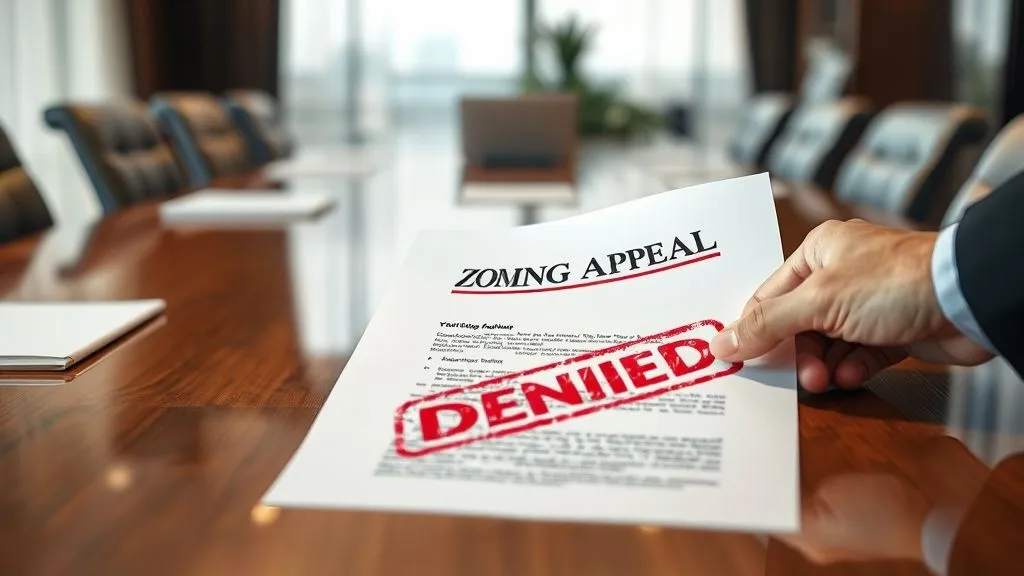
How to Successfully Appeal a Denied Commercial Zoning Variance?
For over two decades in real estate law, I've witnessed countless ambitious commercial projects halted, not by market forces, but by a single, often devastating word: 'Denied.' The initial sting of a rejected commercial zoning variance can feel like a death knell for your vision, a bureaucratic wall erected between your business plan and its physical reality. I've seen seasoned developers and eager entrepreneurs alike experience this profound disappointment, believing their project's fate is sealed.
This isn't just a minor setback; it's a significant financial and strategic blow. It can mean lost opportunities, wasted investment in planning, and a future clouded by uncertainty. Many business owners, understandably, view a denial as the end of the road, unaware that it's often just the first skirmish in a battle that can, and often should, be won. The complexity of zoning regulations, coupled with the subjective nature of board decisions, can make the appeals process seem impenetrable.
But here's the crucial insight I want to share: a denied variance is rarely insurmountable. It's an invitation to understand the specific objections, to refine your approach, and to present a more compelling case. In this comprehensive guide, I'll walk you through the precise, actionable strategies I've leveraged to help clients successfully appeal denied commercial zoning variances, transforming initial disappointment into ultimate approval. We'll delve into the legal frameworks, evidentiary requirements, and persuasive techniques that define a winning appeal, ensuring you have the tools to turn a 'no' into a 'yes.'
1. Deconstructing the Denial: Understanding the 'Why'
Before you can even think about appealing, you must thoroughly understand *why* your commercial zoning variance was denied. This isn't about guessing; it's about meticulous review. In my experience, a superficial understanding of the denial letter is one of the most common and costly mistakes. The denial letter, often accompanied by official findings of fact, is your roadmap to success.
Actionable Steps:
- Obtain the Official Decision: Request the full written decision, including all findings of fact and conclusions of law, from the Zoning Board of Appeals (ZBA) or equivalent body. Do not rely on verbal summaries.
- Identify Specific Grounds: Pinpoint the exact reasons cited for denial. Was it insufficient hardship? Negative impact on the neighborhood? Failure to meet specific ordinance criteria? Each reason is a target for your appeal strategy.
- Review the Relevant Ordinances: Re-read the specific zoning ordinances that apply to your property and the variance you sought. Understand how the board interpreted these rules in relation to your application.
- Analyze Public Hearing Transcripts: If available, review the transcripts or minutes from your initial hearing. This can reveal board members' concerns, questions, and specific comments that led to the denial. Often, the 'real' reason for denial isn't just a black-and-white ordinance violation, but a perceived community impact or a lack of clarity in your initial presentation.
Understanding these details allows you to frame your appeal directly against the board's stated objections, rather than launching a broad, unfocused challenge. It's about precision, not just persistence.
2. The Critical First Steps: Assessing Your Options and Timelines
Once you understand the denial, the clock starts ticking. Every jurisdiction has strict deadlines for filing an appeal, and missing one is almost always fatal to your case. I've seen promising projects derailed simply because the applicant was unaware of the tight windows for action.
Your Immediate Checklist:
- Identify the Appellate Body: Determine which body you need to appeal to. Is it the same ZBA for reconsideration? A higher municipal court? A state administrative board?
- Calculate the Appeal Deadline: This is paramount. Deadlines can range from 15 to 60 days from the date of the written decision. Mark it clearly and work backward to plan your strategy.
- Consult with an Experienced Real Estate Attorney: This is non-negotiable for a commercial variance appeal. A seasoned attorney specializing in land use and zoning law can quickly assess the merits of your case, identify the strongest legal arguments, and guide you through the labyrinthine process. They understand local nuances and precedents that an outsider wouldn't.
- Weigh the Costs and Benefits: Appealing a denied commercial zoning variance can be expensive, involving legal fees, expert witness costs, and potentially new studies. An attorney can help you perform a realistic cost-benefit analysis to ensure the potential gains outweigh the investment.
"In zoning appeals, time is not just money; it's often the entire case. Don't let a procedural misstep invalidate an otherwise strong argument." - Industry Specialist Insight
3. Building Your Case: Legal Grounds and Evidentiary Support
A successful appeal isn't about re-arguing your initial application; it's about demonstrating that the ZBA's denial was either legally flawed, unsupported by evidence, or that your revised proposal now addresses their specific concerns. This requires a robust, evidence-backed approach.

Identifying the Legal Basis for Appeal
Your appeal must be grounded in specific legal principles. Common grounds include:
- Procedural Error: The ZBA failed to follow proper legal procedures during the hearing or decision-making process (e.g., inadequate public notice, biased board members).
- Lack of Substantial Evidence: The ZBA's decision was not supported by sufficient evidence in the record. This is a powerful argument if their findings of fact are speculative or contradicted by expert testimony.
- Arbitrary and Capricious Decision: The ZBA's decision was unreasonable, made without a rational basis, or departed from established precedent without justification.
- Misinterpretation of Law: The ZBA incorrectly applied or interpreted a zoning ordinance or state statute.
- Unnecessary Hardship (Use Variance) or Practical Difficulty (Area Variance): You can demonstrate that strict application of the zoning ordinance creates an unnecessary hardship (for a use variance) or a practical difficulty (for an area variance) unique to your property, not self-created, and that the variance will not substantially impair public good or the intent of the zoning plan. This often requires compelling evidence of unique site conditions or existing non-conformities.
Gathering Compelling Evidence
Your evidence must directly refute the reasons for denial and support your chosen legal grounds. This often involves:
- Expert Reports: Traffic impact studies, environmental assessments, economic impact analyses, architectural renderings, engineering reports, and appraisals. These reports provide objective data to counter subjective concerns.
- Photographic & Video Evidence: Document existing conditions, neighboring properties, and potential impacts.
- Survey Data: Precise measurements and boundaries are crucial, especially for area variances.
- Testimony: Expert witnesses (planners, engineers, appraisers) and lay witnesses (neighbors, business owners) who can speak to the positive impacts or lack of negative impacts of your project.
- Legal Precedents: Citing successful variance appeals in similar situations within the same jurisdiction can be highly persuasive.
According to a study published by the American Planning Association's Planning & Law Division, cases with robust, third-party expert evidence have a significantly higher success rate in administrative and judicial appeals.
4. Navigating the Appeals Process: Boards, Hearings, and Deadlines
The appeals process itself is a formal, often quasi-judicial proceeding. Understanding its stages and preparing meticulously for each is paramount. It's not uncommon for an appeal to go through multiple layers, from a local board to a higher court.
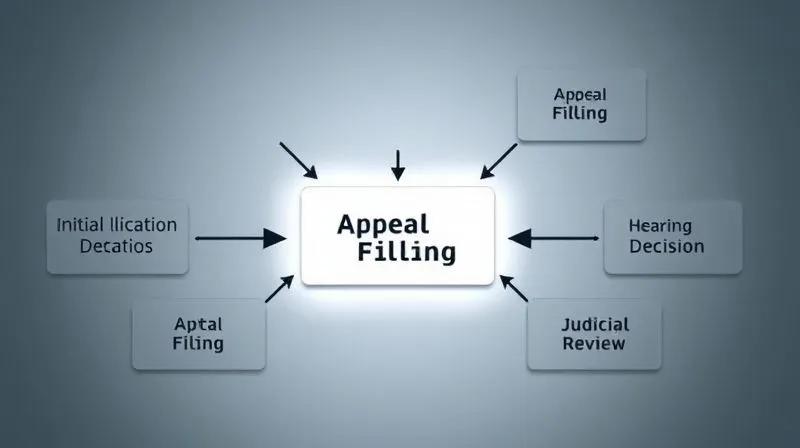
Key Stages of a Typical Zoning Appeal:
- Filing the Notice of Appeal: This formal document initiates the process. It must be filed within the statutory deadline and precisely adhere to jurisdictional requirements regarding content and service.
- Pre-Hearing Conferences: Some jurisdictions may schedule conferences to clarify issues, exchange evidence, and potentially explore settlement.
- The Appeal Hearing: This is your opportunity to present your case. It's typically more formal than the initial variance hearing, with rules of evidence and cross-examination.
- Board Deliberation and Decision: The appellate body will review the evidence and arguments, then issue a decision.
- Potential for Judicial Review: If the administrative appeal is unsuccessful, the next step is often to seek judicial review in a court of law. This involves challenging the administrative decision based on legal errors, not re-litigating the facts.
Preparing for Your Appeal Hearing:
- Organize Your Evidence: Create binders with all documents, reports, and exhibits, clearly labeled and indexed. Provide copies to the board and opposing counsel.
- Prepare Your Witnesses: Thoroughly brief all expert and lay witnesses on the questions they will be asked and how to present their testimony clearly and concisely.
- Anticipate Opposing Arguments: Work with your attorney to predict the arguments and questions from the zoning board and any opposing parties (e.g., neighborhood groups). Prepare rebuttals.
- Practice Your Presentation: Rehearse your opening statement, the flow of your evidence, and your closing arguments. Clarity and conciseness are key.
5. Crafting a Persuasive Presentation: Testimony and Argumentation
The appeal hearing is your moment to shine. It's not enough to have strong legal grounds and compelling evidence; you must present it persuasively. This is where the art of advocacy, honed over years, becomes critical.
Mastering the Art of Persuasion
Your presentation should be structured, logical, and compelling. Here's how I approach it:
- Tell a Story: Frame your project not just as a development, but as a benefit to the community. Emphasize job creation, economic growth, improved aesthetics, or services. Connect your variance request to the greater good.
- Address Objections Directly: Don't shy away from the reasons for the initial denial. Acknowledge them, then systematically dismantle them with your new evidence and arguments. Show how you've listened and adapted.
- Visual Aids are Powerful: Use high-quality maps, site plans, architectural renderings, and photographs. Visuals can convey complex information far more effectively than words alone, especially to a board composed of laypersons.
- Maintain Professionalism: Even if frustrations run high, always maintain a respectful and professional demeanor. Your credibility is paramount.
- Focus on the Unique Hardship/Difficulty: For variances, continuously emphasize the unique circumstances of your property that create the hardship, demonstrating that the variance is the minimum necessary to alleviate it, and that it won't set a negative precedent.
Remember, the board members are often volunteers from the community. They are swayed by clear, rational arguments and a demonstrated commitment to responsible development. As legal scholar Frederick Schauer notes in his work on legal reasoning and evidence, the presentation of facts significantly impacts their perception and acceptance.
6. The Power of Expert Witnesses and Professional Counsel
I cannot overstate the value of expert witnesses and seasoned legal counsel in a commercial zoning appeal. This isn't a DIY project. The stakes are too high, and the legal landscape too complex.
Case Study: Phoenix Development's Zoning Triumph
Phoenix Development, a mid-sized commercial builder, sought a variance to increase the allowable height for a mixed-use building in a rapidly developing urban corridor. Their initial application was denied due to concerns about neighborhood character and traffic impact. They initially tried to appeal themselves, but their arguments lacked the necessary legal precision and evidentiary depth. Facing substantial losses, they engaged my firm.
Our strategy involved:
- Engaging a Traffic Engineer: We commissioned an updated traffic study that utilized more sophisticated modeling, demonstrating that the proposed height increase would have a negligible impact on local traffic flow, especially with planned infrastructure improvements.
- Architectural & Urban Planning Expert: We brought in an urban planner who showcased how the increased height, with specific design elements, would actually enhance the streetscape and align with the city's long-term development goals for density and walkability, rather than detracting from neighborhood character.
- Economic Impact Analyst: An economist presented data on the significant job creation and tax revenue benefits the project would bring, framing the variance as a net positive for the community.
By presenting this multi-faceted expert testimony, we systematically addressed and refuted each of the ZBA's initial concerns. The board, faced with overwhelming, objective evidence, reversed its decision, granting the variance. Phoenix Development proceeded with their project, which became a cornerstone of the revitalized district. This case vividly illustrates that bringing in specialists can transform a losing battle into a resounding victory, providing the authoritative data points that administrative boards require.
An attorney specializing in zoning law acts as your strategist, advocate, and guide. They understand the intricacies of local ordinances, the personalities of board members, and the most effective legal precedents to cite. They can identify the strongest arguments, prepare your case, manage deadlines, and represent you effectively at hearings. For commercial ventures, this expertise is an investment, not an expense. The American Bar Association's Section of Real Property, Trust and Estate Law emphasizes the importance of specialized legal counsel in complex land use matters.
7. Considering Alternative Avenues and Negotiation
Sometimes, a direct appeal isn't the only, or even the best, path forward. Strategic negotiation or exploring alternative solutions can often lead to a faster, less contentious resolution, saving significant time and resources.
| Option | Pros | Cons | Best For |
|---|---|---|---|
| Direct Appeal | Formal process, clear legal grounds, potential for full reversal | Time-consuming, expensive, adversarial, uncertain outcome | Clear legal error, strong evidentiary case |
| Negotiation/Mediation | Faster, less expensive, preserves relationships, flexible outcomes | Requires compromise, outcome depends on willingness of both sides | Minor objections, potential for compromise solutions |
| Revised Application | Addresses specific concerns, shows good faith, potentially quicker approval | May require significant design changes, additional costs | When denial reasons are clear and addressable through modification |
Strategies to Consider:
- Re-engage with Planning Staff: Before or during an appeal, try to meet with municipal planning staff. They often have insights into the board's concerns and can sometimes facilitate a revised application that addresses those issues.
- Offer Conditions or Concessions: Can you modify your project slightly to mitigate the board's concerns? Perhaps reducing height, increasing setbacks, adding landscaping buffers, or changing operating hours? Offering voluntary conditions can sometimes turn a 'no' into a 'yes.'
- Community Outreach: Sometimes, denials stem from community opposition. Engaging with neighborhood groups, addressing their concerns, and securing their support (or at least neutrality) can significantly strengthen your position. A well-placed letter of support from a local community organization can be incredibly persuasive.
- Explore a New Application: If the denial was based on fundamental flaws in your original concept that are not easily appealed, sometimes withdrawing the appeal and submitting an entirely new, revised application is the most pragmatic approach. This demonstrates responsiveness and a commitment to working with the municipality.
Negotiation, when skillfully handled, transforms an adversarial process into a collaborative problem-solving exercise. It's about finding common ground and demonstrating your willingness to be a responsible and responsive developer, a trait highly valued by local authorities. My experience has shown that sometimes the most hard-fought victories are won not in a courtroom, but at a conference table with a carefully crafted compromise.
Common Pitfalls to Avoid in Commercial Zoning Appeals
Even with a strong case, certain missteps can jeopardize your appeal. I've seen these mistakes made repeatedly, leading to unnecessary delays or outright failure.

- Missing Deadlines: As mentioned, this is the ultimate pitfall. Always double-check and triple-check all statutory deadlines.
- Lack of Specificity: A vague appeal that doesn't directly address the ZBA's findings of fact will likely fail. Your arguments must be precise and evidence-based.
- Emotional Arguments: While frustration is understandable, appeals must be based on legal and factual grounds, not personal feelings or grievances.
- Insufficient Evidence: Hearsay, assumptions, or anecdotal evidence will not hold up against expert reports and objective data.
- Failure to Understand Local Politics: Zoning decisions often have a political dimension. Ignoring community sentiment or local political dynamics can be a grave error.
- Not Hiring an Expert: Attempting to navigate the complexities of zoning law without an experienced attorney is akin to performing surgery on yourself.
- Failure to Create a Complete Record: For judicial review, the court typically reviews only the record created at the administrative level. If crucial evidence or arguments aren't in that record, they can't be introduced later.
By being acutely aware of these common errors, you can proactively safeguard your appeal and significantly increase your chances of success. It's about foresight and diligent preparation.
Frequently Asked Questions (FAQ)
Question: How long does a typical commercial zoning variance appeal process take?
Answer: The timeline can vary significantly depending on the jurisdiction, the complexity of the case, and whether it proceeds to judicial review. Administratively, an appeal might take anywhere from 3 to 9 months. If it goes to court, it could extend to a year or more. Factors like board meeting schedules, evidence gathering, and potential for negotiation all impact the duration. I always advise clients to prepare for a marathon, not a sprint.
Question: Can I introduce new evidence during the appeal that wasn't presented in the initial application?
Answer: This depends heavily on the specific rules of the appellate body and the nature of the appeal. In many administrative appeals (e.g., to a ZBA for reconsideration), new evidence *can* be introduced, especially if it directly addresses the reasons for the initial denial or demonstrates changed circumstances. However, in judicial review (appealing to a court), courts typically review only the record that was before the administrative body. This distinction is critical, and why comprehensive evidence gathering is paramount from the outset. Your attorney will advise on what is permissible.
Question: What is the difference between a 'use variance' and an 'area variance,' and how does that impact the appeal?
Answer: A use variance permits a property to be used in a manner otherwise prohibited by the zoning ordinance (e.g., operating a commercial business in a residential zone). Appealing a denied use variance typically requires demonstrating 'unnecessary hardship' unique to the property, which is a very high legal bar. An area variance allows for deviations from dimensional requirements (e.g., setback, height, lot coverage). Appealing a denied area variance usually requires demonstrating 'practical difficulty,' a slightly lower standard, often focusing on the uniqueness of the property or the unreasonable burden of strict compliance. The specific legal tests for each type of variance significantly shape your arguments and the evidence you'll need to present in an appeal.
Question: What if the denial was due to strong community opposition? Can that be appealed?
Answer: Yes, community opposition is a common factor in zoning denials. While public sentiment is considered, a denial based *solely* on generalized community opposition, without specific, evidence-backed findings related to the zoning ordinance criteria (e.g., traffic impact, noise, safety), can sometimes be challenged as arbitrary or lacking substantial evidence. Your appeal would need to demonstrate that the board's decision wasn't based on legitimate planning concerns but rather on unfounded fears or political pressure. This is where expert reports (traffic, noise, economic impact) become crucial to objectively counter subjective community concerns.
Question: Is it possible to appeal a denied variance without hiring an attorney?
Answer: While technically possible in some jurisdictions for individuals to represent themselves, for a commercial zoning variance appeal, I strongly advise against it. The legal and procedural complexities, strict deadlines, evidentiary requirements, and the need for persuasive argumentation make it an extremely challenging undertaking for anyone without specialized legal training. The investment in an experienced real estate and land use attorney significantly increases your chances of success and can ultimately save you substantial time, money, and frustration. The nuanced understanding of local zoning law and precedent is invaluable.
Key Takeaways and Final Thoughts
Successfully appealing a denied commercial zoning variance is undoubtedly a challenging endeavor, but it is far from impossible. It requires a strategic mindset, meticulous preparation, and often, the guidance of experienced legal professionals. From my vantage point, having navigated countless such cases, the key lies in transforming a setback into an opportunity for a more robust, evidence-backed presentation.
- Understand the 'Why': Thoroughly deconstruct the denial to identify specific legal and factual weaknesses in the board's decision.
- Act Swiftly: Adhere to strict appeal deadlines to preserve your rights.
- Build a Strong Case: Base your appeal on solid legal grounds and compelling, objective evidence, leveraging expert reports and testimony.
- Master the Process: Understand the stages of the appeal, from filing to hearing, and prepare meticulously for each.
- Persuade with Precision: Craft a clear, logical, and visually supported presentation that directly addresses concerns and highlights benefits.
- Leverage Expertise: Engage an experienced land use attorney and relevant expert witnesses.
- Explore All Avenues: Be open to negotiation, revised applications, and strategic concessions.
A denied variance is not a rejection of your vision, but an invitation to refine your strategy and present a more compelling argument. With the right approach, diligence, and expert guidance, you can successfully appeal a denied commercial zoning variance and move your ambitious project forward from blueprint to reality. Don't let the initial 'no' define your project's future; let it be the catalyst for a more informed and ultimately successful 'yes.'
Recommended Reading
- Preventing Bias: Legally Mitigate Discrimination in School Choice Admissions
- NIL Compliance: 7 Legal Strategies for Sports Agencies to Mitigate Risk
- How to Reduce Domestic Assault Charges: 7 Expert Legal Strategies
- Protect Your Innovation: How to Secure IP in Multiple Countries
- Unraveling the Mystery: Do You Charge Sales Tax on Digital Products?



Comments
Leave a comment below. Your email will not be published. Required fields marked with *