



How to Successfully Appeal a Denied Land Use Variance Application
For over two decades in real estate law, I've witnessed the profound disappointment and frustration that comes with a denied land use variance application. It's a moment when months, sometimes years, of planning, investment, and dreams seem to evaporate. The initial 'no' can feel like an insurmountable wall, leaving property owners and developers bewildered about their next steps.
This isn't just about red tape; it's about your property rights, your vision, and often, significant financial implications. The complexity of zoning ordinances, the subjective nature of board decisions, and the sheer procedural hurdles can make the appeals process seem daunting, even impossible, without the right guidance.
But a denial is rarely the end of the road. In this definitive guide, I'll share the expert strategies, actionable frameworks, and real-world insights I've gleaned from years of navigating these intricate legal waters. You'll learn not just *what* to do, but *how* to build a compelling case, anticipate challenges, and significantly increase your chances of a successful appeal.
Understanding the Variance Denial: Why Was Your Application Rejected?
Before you can strategize your appeal, you must first understand the precise reasons behind the initial denial. This isn't always straightforward; denial letters can sometimes be vague or cite multiple reasons. My experience tells me that peeling back these layers is the most critical first step in determining your path forward.
Common Grounds for Denial
Local zoning boards and planning commissions typically deny variances based on a few key criteria. These often revolve around whether the request meets the legal standard for a 'hardship' that is unique to the property, isn't self-created, and wouldn't be detrimental to the public welfare or the intent of the zoning ordinance. Common reasons include:
- Lack of Unique Hardship: The applicant failed to demonstrate that the property possesses unique physical conditions (e.g., topography, irregular shape) that create a practical difficulty or unnecessary hardship, as opposed to a mere inconvenience.
- Self-Created Hardship: The difficulty was created by the applicant's own actions or inaction, such as purchasing a lot knowing its limitations.
- Detriment to Public Welfare: The proposed variance would negatively impact public health, safety, or welfare, or would alter the essential character of the neighborhood.
- Not in Harmony with Zoning Intent: The variance would undermine the purpose and intent of the local zoning ordinance.
- Insufficient Evidence: The application lacked the necessary documentation, studies, or expert testimony to support the request.
- Procedural Errors: Application was incomplete, filed incorrectly, or missed deadlines.
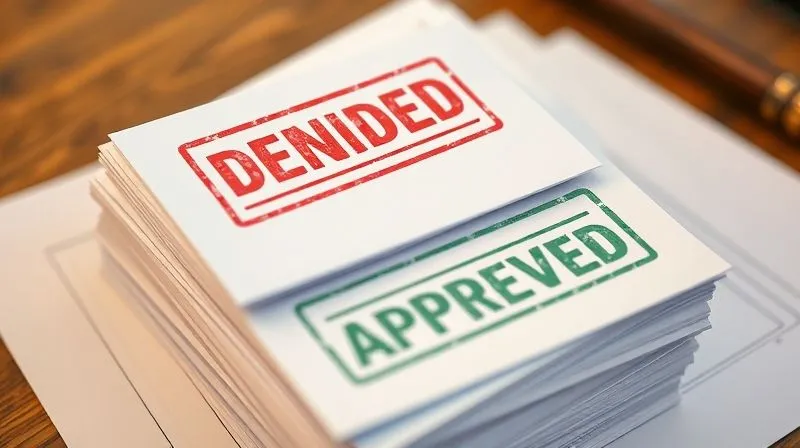
Each of these reasons requires a specific counter-argument supported by robust evidence. Understanding which of these was cited in your denial is paramount to formulating an effective appeal strategy.
The Critical First Step: Reviewing Your Denial Letter and Local Ordinances
Once you've received a denial, your immediate focus must turn to the official documentation. This is where the specific reasons for the denial are articulated, and where the clock for your appeal often begins ticking. I cannot stress enough the importance of meticulous review at this stage.
- Obtain the Official Denial Letter: Ensure you have the legally binding document that outlines the board's decision. This letter will typically state the specific grounds for denial.
- Identify Specific Reasons: Carefully read through the denial letter to pinpoint every reason given. Are they related to hardship, public impact, or procedural issues? List them out precisely.
- Review Relevant Zoning Ordinances: Cross-reference the denial reasons with your local zoning code. Understand the specific sections, definitions, and criteria the board is operating under. This will inform how you frame your arguments. Many municipalities, like the City of San Diego, provide detailed online access to their municipal codes, which can be an invaluable resource. San Diego Development Services - Zoning
- Note Appeal Deadlines: Every jurisdiction has strict deadlines for filing an appeal, often as short as 10-30 days from the date of the decision. Missing this deadline is a fatal error, regardless of the merits of your case. Confirm the exact date and mark it prominently.
- Request Meeting Minutes or Transcripts: If available, obtain the minutes or a transcript of the meeting where your application was heard. This can provide crucial insights into the board members' concerns, questions, and the specific arguments that resonated (or failed to resonate).
This initial deep dive into the 'why' and 'how' of your denial is the foundation upon which your entire appeal strategy will be built. Without it, you're essentially fighting blind.
Building a Strong Appeal: Gathering Evidence and Expert Support
A successful appeal transforms a 'no' into a 'yes' by presenting compelling evidence that directly refutes the reasons for denial or introduces new information that addresses the board's concerns. This isn't merely about reiterating your initial application; it's about a strategic, evidence-based rebuttal.
In my practice, I've seen countless cases where a well-prepared evidentiary package turned the tide. You need to gather data, reports, and professional opinions that speak directly to the board's stated reasons for denial.
The Power of Professional Consultants
This is where professional consultants become indispensable. While you might be passionate about your project, a land use attorney, a civil engineer, a certified land planner, or an appraiser brings objective expertise and credibility. They can:
- Interpret Complex Regulations: Translate legal jargon and zoning codes into actionable strategies.
- Conduct Specialized Studies: Provide traffic studies, environmental impact assessments, topographical surveys, or market analyses that address specific concerns.
- Offer Expert Testimony: Present findings to the board in a clear, authoritative manner, lending significant weight to your arguments.
- Design Alternatives: Propose modifications to your plan that mitigate identified negative impacts, often a key to compromise and approval.
Case Study: How Smith Developers Overturned a Setback Denial
I recall a case involving 'Smith Developers,' a mid-sized firm looking to build a small retail plaza on a challenging triangular lot. Their initial application for a setback variance was denied due to concerns about traffic flow and neighborhood character. The board felt the reduced setback would create an unsafe condition and an aesthetic blight.
Instead of giving up, Smith Developers engaged a land use attorney and a traffic engineer. The attorney helped them understand that the denial hinged on the 'public safety' and 'neighborhood character' clauses of the ordinance. The traffic engineer conducted a detailed study, demonstrating that the proposed setback, combined with a revised entrance/exit design, would actually *improve* traffic flow compared to the existing configuration, and would not create unsafe conditions. They also commissioned an architect to create 3D renderings showing how the building's design, even with the variance, would integrate harmoniously with the adjacent structures, addressing the 'neighborhood character' concern. This comprehensive, evidence-based approach, presented by their legal team, led to a unanimous approval on appeal.
This case vividly illustrates that simply asking again isn't enough; you need to change the narrative with irrefutable facts.
| Denial Reason | Required Evidence |
|---|---|
| Lack of Unique Hardship | Appraisal showing economic burden, topographical survey, expert testimony on site limitations |
| Negative Impact on Public Welfare | Traffic study, environmental impact assessment, public safety report, revised site plan |
| Inconsistent with Comprehensive Plan | Expert planning opinion, comparative analysis of similar approved projects, revised proposal aligning with goals |

Crafting Your Appeal Argument: Legal Strategy and Persuasion
Once you have your evidence, the next crucial step is to weave it into a coherent, persuasive legal argument. This is where your land use attorney's expertise truly shines. They understand the specific legal standards your local jurisdiction applies to variance appeals and can tailor your presentation accordingly.
Addressing the Legal Standards: Hardship, Uniqueness, and Public Good
Most jurisdictions require an applicant to demonstrate that:
- There is a Unique Hardship: This hardship must be unique to your property and not generally shared by other properties in the same zoning district. It's often related to the physical characteristics of the land, such as unusual topography, shape, or size.
- The Hardship is Not Self-Created: The difficulty must stem from the land itself, not from actions you took (like subdividing a lot into an unbuildable parcel).
- The Variance Will Not Be Detrimental to Public Welfare: Your proposal must not harm public health, safety, morals, or general welfare. This often involves showing that it won't negatively impact traffic, drainage, noise, or property values of neighbors.
- The Variance is the Minimum Necessary: The relief granted should be the least amount of deviation from the zoning ordinance that will alleviate the hardship.
- The Variance is Consistent with the Spirit of the Zoning Ordinance: Even with a variance, the overall intent and purpose of the zoning plan should be upheld.
The essence of a successful variance appeal lies not just in presenting facts, but in strategically framing those facts to demonstrate how your proposal, despite initial denial, truly aligns with the spirit of the zoning code and presents no undue burden on the community. It’s about convincing the board that your request is not just for your benefit, but is a reasonable and necessary adaptation given your property’s unique circumstances.
Your appeal argument must directly address each of these points, using your gathered evidence to build a compelling case. It’s not enough to simply state you have a hardship; you must prove it with data, expert opinions, and logical reasoning. For further reading on the legal nuances of zoning appeals, resources like Nolo's articles on property law can be quite insightful. Nolo - Property Owners' Rights
Navigating the Appeal Hearing: Presentation and Advocacy
The appeal hearing is your opportunity to present your case directly to the decision-makers. This isn't just a legal proceeding; it's a persuasive performance. The board members are often volunteers with varying levels of legal and planning expertise, so clarity, conciseness, and professionalism are key.
I've seen strong cases falter due to poor presentation, and weaker cases succeed because they were presented with conviction and clarity. Preparation is everything.
- Rehearse Your Presentation: Practice your opening statement, the sequence of your arguments, and how your experts will present their findings. Timing is crucial.
- Prepare Visual Aids: Maps, architectural renderings, photographs, and charts can make complex information easily digestible. High-quality visuals are far more impactful than dry statistics.
- Anticipate Questions: Think about every possible question the board members might ask, especially those related to their initial concerns. Prepare concise, evidence-based answers.
- Coordinate Expert Testimony: Ensure your experts are prepared to explain their findings clearly and concisely, and to respond to questions under pressure. Their credibility is a significant asset.
- Understand Procedural Rules: Be aware of time limits, public comment rules, and how evidence is submitted. Adhering to protocol demonstrates respect for the process.
- Maintain Professional Demeanor: Even if frustrations run high, always remain respectful and composed. Emotional outbursts or personal attacks undermine your credibility.
Your goal is to educate and persuade the board, demonstrating that their initial concerns have been addressed and that granting your variance is the appropriate decision. For tips on effective communication in administrative hearings, an article on public speaking strategies can be beneficial. Toastmasters - Public Speaking Tips
Beyond the Local Board: Judicial Review Options
What if, despite your best efforts and a well-prepared appeal, the local zoning board or appeals board still denies your land use variance application? While disheartening, this is not necessarily the absolute final word. In certain circumstances, you may have the option to pursue judicial review in a higher court.
This is a more complex and often costly path, and it should only be considered after careful consultation with an experienced land use attorney. A court's role in reviewing an administrative decision is typically limited; they generally don't substitute their judgment for that of the local board on the merits of the variance itself. Instead, they examine whether the board acted within its legal authority and followed due process.
When to Escalate to Court
Judicial review, often through a 'writ of certiorari' or similar procedural mechanism, is usually focused on challenging the *legality* of the board's decision, not just its wisdom. Grounds for a successful court challenge typically include:
- Procedural Errors: The board failed to follow its own rules, violated open meeting laws, or denied you due process (e.g., adequate notice or opportunity to be heard).
- Arbitrary and Capricious Decision: The board's decision was made without any rational basis, was based on personal bias, or was inconsistent with prior similar decisions.
- Lack of Substantial Evidence: The board's decision was not supported by any credible evidence in the record. This is a high bar, as courts often defer to the board's findings of fact if there's *any* evidence to support them.
- Error of Law: The board misinterpreted or misapplied a zoning ordinance or other relevant law.

Pursuing judicial review requires a deep understanding of administrative law and specific court procedures. It's a significant undertaking that demands specialized legal expertise, but it can be a viable option when a local board's decision is clearly flawed from a legal standpoint.
Common Pitfalls to Avoid in Your Land Use Variance Appeal
Even with a strong case, certain missteps can jeopardize your appeal. I've observed these pitfalls repeatedly, and avoiding them is as crucial as building a robust argument.
- Missing Deadlines: As mentioned, appeal deadlines are strictly enforced. A late filing will almost certainly lead to an automatic dismissal.
- Inadequate Documentation: Submitting an appeal without comprehensive, relevant evidence is a recipe for failure. The board can only consider what's in the record.
- Emotional Arguments Over Factual Ones: While personal impact is understandable, board decisions are based on legal criteria and evidence, not sympathy. Focus on facts, not feelings.
- Failing to Address Specific Denial Reasons: Your appeal must directly respond to each point raised in the denial letter. A generic appeal won't suffice.
- Not Engaging Experts: Believing you can navigate the complex legal and technical aspects alone is a common and often costly mistake. Experts lend credibility and crucial insights.
- Lack of Professional Presentation: A disorganized, unclear, or unprofessional presentation can undermine even the strongest arguments.
- Antagonizing the Board or Neighbors: Maintaining a respectful and collaborative tone, even in disagreement, is vital. Confrontational approaches rarely yield positive results.
Remember, the board members are often trying to balance property rights with community welfare. Presenting yourself as a reasonable individual seeking a reasonable solution will always serve you better than an adversarial stance.
| Action | Impact |
|---|---|
| DO: Thoroughly review the denial letter. | Crucial for understanding specific grounds and formulating targeted responses. |
| DON'T: Miss appeal deadlines. | An expired deadline can permanently bar your appeal, regardless of merit. |
| DO: Engage qualified legal and planning experts. | Their expertise provides credibility, strategic guidance, and professional representation. |
| DON'T: Rely solely on emotional pleas. | Decisions are based on legal standards and evidence, not personal hardship alone. |
| DO: Prepare a comprehensive, evidence-based presentation. | A well-organized, factual presentation significantly strengthens your case and persuades decision-makers. |
The Long Game: Patience, Persistence, and Professional Guidance
Appealing a denied land use variance application is rarely a swift process. It demands patience, meticulous attention to detail, and often, a significant investment of time and resources. From the initial review of the denial to gathering evidence, preparing for hearings, and potentially even considering judicial review, the journey can be protracted.
However, I've seen firsthand that persistence, coupled with strategic professional guidance, is often the key to success. Property development and land use are inherently long-term endeavors, and the appeals process is simply another phase of that journey. Don't let the initial 'no' deter you from advocating for your property rights and your vision.
Engaging a seasoned land use attorney from the outset can not only streamline the process but also significantly increase your odds of a favorable outcome. Their expertise in interpreting complex regulations, navigating local political landscapes, and crafting compelling legal arguments is invaluable. They are your advocate, guiding you through every step and ensuring your case is presented in the strongest possible light.

Frequently Asked Questions (FAQ)
Q: How long does a land use variance appeal typically take? A: The timeline varies significantly by jurisdiction and the complexity of the case. A simple administrative appeal might take a few weeks to a few months for a decision. If it involves multiple hearings, expert reviews, or judicial escalation, it could easily extend to six months to over a year. Patience is truly a virtue in this process.
Q: What are the typical costs involved in appealing a denied variance? A: Costs can range widely. Filing fees for appeals are usually modest (a few hundred dollars). However, the major expenses come from professional services: land use attorneys (hourly rates or retainers), land planners, civil engineers, appraisers, and other expert consultants. These fees can quickly accumulate into several thousands or tens of thousands of dollars, depending on the scope of work required. It's crucial to get a clear understanding of potential costs upfront.
Q: Can I appeal if my application was denied due to incomplete information? A: Generally, yes. If the denial was based on a procedural issue like incomplete information, your appeal would focus on demonstrating that you can now provide the missing data or that the initial assessment was incorrect. Often, it's easier to correct a procedural error on appeal than to overturn a substantive denial based on a lack of hardship.
Q: What if the board is consistently denying similar applications in my area? A: This indicates a potentially tougher battle, but not necessarily a lost cause. It suggests the board may have a firm policy or interpretation of the zoning code. Your appeal would need to highlight the unique aspects of your property and proposal even more strongly, perhaps demonstrating how your situation differs from previously denied cases or arguing that the board's consistent denials are an overly restrictive interpretation of the law. This is where expert legal counsel is absolutely critical.
Q: Is it always necessary to hire an attorney for a land use variance appeal? A: While it's not legally mandated in all jurisdictions for administrative appeals, I strongly advise it. Land use law is incredibly complex, with specific legal standards, procedural requirements, and evidentiary rules. An experienced land use attorney understands these nuances, can craft a compelling legal argument, manage the process, and represent you effectively. Going it alone significantly reduces your chances of success, especially against a municipal legal team.
Key Takeaways and Final Thoughts
- A Denial is Not the End: View a denied variance as a challenge, not a defeat. An appeal is a legitimate and often successful path forward.
- Understand the 'Why': Meticulously review your denial letter and local ordinances to pinpoint the exact reasons for rejection.
- Build an Evidence-Based Case: Gather robust documentation, studies, and expert opinions that directly address the board's concerns.
- Leverage Professional Expertise: Land use attorneys, planners, and engineers are invaluable assets in crafting and presenting a compelling appeal.
- Strategic Presentation Matters: A clear, concise, and professional presentation of your case can significantly influence the outcome.
- Be Prepared for the Long Haul: Appeals require patience, persistence, and often, multiple steps, including potential judicial review.
Navigating the intricacies of a land use variance appeal can be a challenging journey, but with the right strategy, comprehensive preparation, and expert guidance, you can significantly improve your chances of success. Remember, your vision for your property is worth fighting for, and with a well-executed appeal, that initial 'no' can absolutely transform into a resounding 'yes'.
Recommended Reading
- Driver Hit Me in a Crosswalk? Know Your Rights & What to Do!
- 7 Proven Strategies: Overcoming Juror Skepticism in Mild Traumatic Brain Injury Cases
- Ex-Employee Joins Rival? 7 Steps to Enforce Your Trade Secrets
- Pro Se Defense: Non-Dischargeable Debt Lawsuits - 7 Key Strategies
- 7 Strategies: Mediate Child Custody When a Parent Sabotages Agreements





Comments
Leave a comment below. Your email will not be published. Required fields marked with *