



How to Uncover Hidden IP Ownership Risks During Tech M&A Due Diligence?
For over 15 years, immersed in the intricate world of intellectual property, particularly within the high-stakes arena of tech M&A, I've witnessed firsthand how quickly a promising acquisition can unravel. The excitement surrounding a target company's groundbreaking technology or market share often overshadows the complex, sometimes murky, reality of its IP ownership. Hidden liabilities, unassigned patents, or undisclosed open-source entanglements aren't just minor hiccups; they are catastrophic deal breakers that can cost millions, derail integration, and even lead to protracted legal battles.
The allure of innovation can be blinding. Many acquiring companies, eager to close a deal, allocate insufficient time and resources to a thorough IP due diligence process. They might focus on financial statements and market fit, overlooking the very foundation of a tech company's value: its intellectual property. This oversight transforms potential synergy into significant post-acquisition headaches, eroding shareholder value and damaging reputation.
This deep dive isn't just a checklist; it's a strategic framework built on years of navigating these treacherous waters. I'll share actionable insights, real-world analogies, and the critical questions you must ask to proactively uncover hidden IP ownership risks during tech M&A due diligence, safeguarding your investment and future innovation. My goal is to equip you with the expertise to transform potential pitfalls into informed decisions.
The Stakes: Why Hidden IP Risks Are M&A Deal Breakers
In the high-octane world of tech M&A, intellectual property is often the crown jewel, representing innovation, market differentiation, and future revenue streams. However, if that crown jewel is tarnished by ownership disputes or encumbrances, its value can plummet, taking the entire deal with it. I've seen promising acquisitions grind to a halt, or worse, lead to protracted and expensive litigation, all due to overlooked IP issues.
The financial impact of hidden IP risks extends far beyond the initial deal valuation. It can manifest as costly infringement lawsuits, the inability to commercialize acquired technology, or even the forced divestiture of key product lines. Reputational damage, loss of competitive edge, and internal resource drain are often the unwelcome companions of a poorly executed IP due diligence. As a Harvard Business Review article once highlighted, M&A failures often stem from integration challenges, and IP issues are a prime culprit.
"The true cost of IP oversight isn't just the legal fees; it's the lost opportunity, the eroded market trust, and the fundamental undermining of the strategic rationale for the acquisition itself."
Common pitfalls include:
- Unclear Chain of Title: The belief that a company owns its core patents, only to discover they were never properly assigned by a former employee or contractor.
- Open Source Software (OSS) Non-Compliance: Integrating proprietary code with OSS components that demand reciprocal open-sourcing, jeopardizing commercial secrets.
- Undisclosed Litigation: A pending or threatened infringement suit that could prevent the acquired technology from being used or sold.
- Third-Party Encumbrances: IP assets pledged as collateral for previous loans, leading to unexpected claims from creditors.
- Invalid IP: Patents or trademarks that are vulnerable to challenge due to prior art or improper registration, making them unenforceable.
Phase 1: Pre-Diligence & Initial IP Mapping
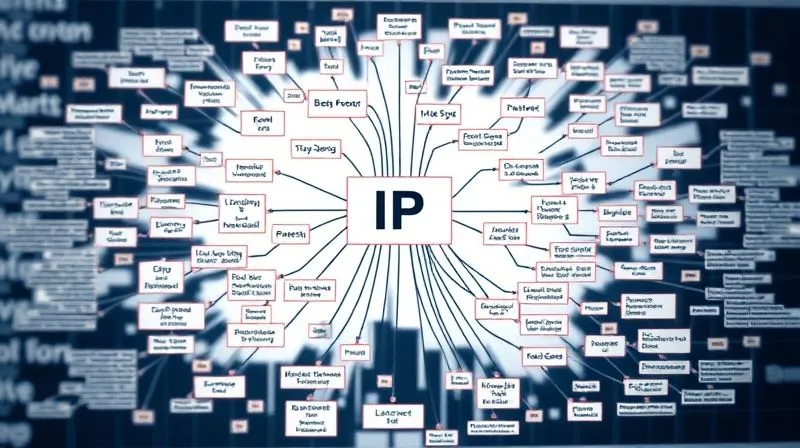
Before diving deep, it's crucial to get a high-level understanding of the target company's IP landscape. This initial mapping phase sets the stage for more granular investigations and helps prioritize areas of risk. Think of it as creating a strategic blueprint before constructing a complex building.
Understanding the Target's IP Landscape
My first step is always to gain a holistic view. What are the core technologies? What products and services rely on these technologies? And critically, what IP assets (patents, trademarks, copyrights, trade secrets) are claimed to protect them?
- What are the target company's primary revenue-generating products or services?
- Which intellectual property assets are considered most critical to these offerings?
- Has the company conducted any internal IP audits or valuations previously?
- What is the geographic scope of their operations and IP protection?
Initial Steps for IP Mapping:
- Request a Preliminary IP Schedule: Ask the target for a list of all patents, patent applications, trademarks, copyrights, and domain names they claim to own or license.
- Review Public Records: Cross-reference the provided schedule with public databases (e.g., USPTO, WIPO, national patent/trademark offices) to verify existence and basic ownership.
- Identify Key Personnel: Determine who within the target company is responsible for IP management and innovation.
- Scan for Obvious Gaps: Are there critical products or features that appear unprotected by registered IP?
This early reconnaissance helps identify potential red flags and areas requiring deeper investigation. It's about establishing a baseline understanding before the meticulous detective work begins.
Phase 2: Deep Dive into Ownership & Chain of Title
This is where many hidden IP ownership risks during tech M&A due diligence truly surface. The fundamental question is not just 'what IP does the target have?' but 'who *legally* owns it, and can it be transferred cleanly?'
Verifying Inventorship and Assignment Agreements
A patent is only as strong as its chain of title. Patents are initially granted to individual inventors. For a company to own a patent, the inventor must have properly assigned their rights to the company. This process is often overlooked or poorly documented, especially in early-stage startups.
"A missing assignment agreement for a foundational patent is like building a skyscraper on quicksand. It looks solid from the outside, but the ownership foundation is fatally flawed."
My approach here is meticulous:
- Review Inventor Records: Cross-reference all listed inventors on patents and applications with employment records and dates.
- Examine Assignment Documents: Obtain and review every assignment agreement for each patent and patent application. Verify signatures, dates, and proper recordation with the relevant patent office.
- Scrutinize Employee Invention Assignment Agreements (EIAs): Confirm that all employees and founders, particularly those involved in R&D, signed robust EIAs that assign all inventions created during employment to the company.
- Address Founder IP: Pay special attention to IP created by founders prior to the company's formal incorporation. Was this IP properly assigned to the company from day one? I've seen deals collapse because a founder's 'personal' IP was never legally transferred.
For more insights on IP strategy in M&A, I often refer clients to resources like this Forbes article on IP due diligence.
Navigating Open Source Software (OSS) Risks
Modern tech companies rely heavily on Open Source Software. While incredibly beneficial, OSS comes with specific licensing obligations. Non-compliance can force a company to open-source its proprietary code, a nightmare scenario for any tech acquisition.
Key areas of focus:
- Identify All OSS Components: Use software composition analysis (SCA) tools to scan the target's codebase for all OSS components and their associated licenses.
- Analyze License Obligations: Understand the specific requirements of each license (e.g., attribution, copyleft provisions, patent grants).
- Assess Compliance: Determine if the target company has met all obligations, particularly for 'strong copyleft' licenses like GPL, which can infect proprietary code.
- Review OSS Policy: Does the target have a clear policy for using and managing OSS?
Here's a summary of common OSS licenses and their associated risks:
| License Type | Key Risk | Mitigation |
|---|---|---|
| GPLv2/v3 | Strong copyleft – entire derivative work must be open sourced. | Strict code review, isolated deployment, clear policies. |
| LGPL | Weak copyleft – dynamic linking is okay, but modifications to LGPL library must be open sourced. | Ensure proper linking, avoid static linking if proprietary parts are involved. |
| Apache 2.0 | Permissive – includes patent grant, but attribution required. | Maintain clear attribution notices, understand patent implications. |
| MIT/BSD | Highly permissive – minimal restrictions, often just attribution. | Easy to integrate, but still requires basic attribution compliance. |
Identifying Prior Art and Freedom-to-Operate (FTO) Issues
Even if a patent is legally owned, its value is diminished if it's invalid or if its exploitation infringes on a third party's IP. This is where prior art and FTO analyses come into play.
- Prior Art Searches: Conduct searches to determine if the target's patents are truly novel and non-obvious, or if existing prior art could invalidate them.
- Freedom-to-Operate (FTO) Analysis: This is a critical step. An FTO opinion assesses whether the target's products or services infringe on any active patents owned by third parties. This is distinct from prior art, which looks at validity. You might own a valid patent, but still infringe someone else's broader patent.
- Review Patent Landscape: Understand the competitive patent landscape to identify potential litigation risks or limitations on future product development.
Accessing detailed patent information from sources like the USPTO patent search database is fundamental here.
Case Study: The 'Phantom Patent' Debacle
I recall a particularly challenging situation involving a mid-sized software company, 'InnovateCo,' that was being acquired for its revolutionary AI algorithm. During due diligence, our team discovered that a critical patent, foundational to the AI, was listed as owned by InnovateCo but lacked a proper assignment from its original inventor, a former university researcher who had consulted for the company years prior. The researcher claimed the initial agreement only covered a limited license, not a full assignment. InnovateCo's internal records were disorganized, and no clear assignment document could be found or retrospectively secured without significant concessions. The acquiring company, 'Global Tech Solutions,' realized the patent was essentially a 'phantom' asset – listed but not legally owned. Without this core patent, the value proposition of the acquisition crumbled, leading Global Tech Solutions to walk away from a multi-million dollar deal. This incident underscored the absolute necessity to how to uncover hidden IP ownership risks during tech M&A due diligence.
Phase 3: Employee Agreements & Contractor IP Clauses
The human element is often the weakest link in the IP ownership chain. People create IP, and how their rights are managed is paramount to securing the target company's assets. This is where I focus on the contractual bedrock of IP creation.
Ensuring Robust Invention Assignment Agreements
Every employee involved in creating intellectual property for the company must have a clear, enforceable agreement assigning their inventions to the company. This might seem basic, but I've seen countless instances where these agreements are either non-existent, poorly drafted, or not consistently signed.
- Review all Employee Invention Assignment Agreements (EIAs): Confirm that all current and former employees who contributed to key IP signed comprehensive EIAs.
- Check for Consistency and Enforceability: Ensure the language is broad enough to cover all relevant IP and is enforceable under relevant state or national laws. Some jurisdictions have specific requirements for what can be assigned.
- Address 'Trailer Clauses': Scrutinize clauses that attempt to assign inventions made *after* an employee leaves the company. These are often contentious and may not be enforceable.
- Verify Compliance with State Laws: Certain states (e.g., California) have specific laws limiting the scope of EIAs, particularly for inventions made on an employee's own time without company resources.
Addressing Contractor and Consultant IP Rights
The rise of the gig economy means many tech companies rely heavily on contractors and consultants. Their contributions, if not properly addressed, can create significant IP ownership gaps.
"Assuming a contractor's work product automatically belongs to you is a dangerous gamble. Without explicit assignment language, that code or design could still legally reside with the contractor."
My diligence here includes:
- Review all Independent Contractor Agreements (ICAs): Ensure every ICA includes clear 'work-for-hire' provisions (where applicable) and explicit assignment clauses transferring all IP created by the contractor to the company.
- Verify Payment and Performance: Sometimes, IP assignments are contingent on full payment or satisfactory performance. Confirm these conditions have been met.
- Address International Contractors: IP laws vary significantly across borders. Ensure agreements with international contractors are enforceable in their jurisdiction and clearly assign IP to the target company under its governing law.
This area is ripe for hidden IP ownership risks during tech M&A due diligence, and a thorough review of every relevant contract is non-negotiable. It's often where the 'smoking gun' of future litigation can be found. For more details on this, a good resource would be a specialized legal firm's insights on IP in M&A transactions.

Phase 4: Litigation, Encumbrances, and Security Interests
Even perfectly formed IP can be devalued or become a liability if it's entangled in legal disputes or used as collateral. This phase focuses on uncovering these external threats.
Searching for Pending or Threatened Litigation
A lawsuit, even if meritless, can be a significant distraction and financial drain. A pending IP infringement suit against the target could severely impact the value and future operations of the acquired entity.
- Review Litigation Dockets: Conduct searches of federal and state court dockets for any past or current IP-related lawsuits involving the target company.
- Interview Key Personnel: Ask direct questions to management, legal counsel, and even R&D leads about any threatened litigation, cease-and-desist letters received, or potential infringement claims.
- Examine Insurance Policies: Review the target's insurance policies for coverage related to IP litigation, which can indicate past issues or future preparedness.
- Public Statements and Press: Scan news articles, press releases, and industry forums for mentions of IP disputes involving the target.
Uncovering Liens, Mortgages, and Security Interests on IP
Intellectual property, especially patents and trademarks, can be used as collateral for loans. If the target company has pledged its IP as security, the acquiring entity could face unexpected claims from creditors post-acquisition.
This is a critical, often overlooked, area:
- UCC Filings (USA): For U.S. companies, conduct Uniform Commercial Code (UCC) searches in relevant states. UCC filings will reveal if any IP has been granted as a security interest.
- Patent and Trademark Office Records: Search the assignment records of the USPTO and other national/international patent and trademark offices for recorded security interests or liens. These are distinct from assignments of ownership.
- Review Loan Agreements: Scrutinize all loan and financing agreements for clauses where IP assets might have been pledged as collateral.
- International Registries: For companies with international IP, investigate relevant foreign registries for similar encumbrances.
Here's a checklist for identifying IP encumbrances:
| Search Area | Purpose | Risk Mitigation |
|---|---|---|
| USPTO Assignments | Identify recorded assignments of patents/trademarks. | Ensures target legally owns registered IP. |
| UCC Filings (USA) | Discover security interests in IP as collateral. | Prevents unexpected claims from creditors. |
| WIPO Global Brand/Patent Database | Check international registrations and assignments. | Covers global IP rights and potential liens. |
| Litigation Databases | Uncover past/pending IP disputes. | Reveals potential liabilities, infringement claims, or validity challenges. |
| Internal Company Records | Review internal IP logs, agreements, inventor declarations. | Identifies unrecorded or informal IP assignments. |
Phase 5: International IP Considerations & Jurisdictional Nuances
In today's globalized tech landscape, a purely domestic IP due diligence is often insufficient. Many tech companies operate and protect their IP across multiple jurisdictions, introducing layers of complexity.
Global IP Rights: Beyond Borders
IP rights are territorial. A U.S. patent provides no protection in Germany without a corresponding German or European patent. Understanding the global footprint of the target's IP and the validity of those rights is crucial.
- Verify International Registrations: Confirm that patents, trademarks, and copyrights are registered in all relevant countries where the target operates or plans to operate.
- Understand National Laws: IP laws, especially for trade secrets and software copyright, can vary significantly from country to country. What's protected in one jurisdiction might not be in another.
- Assess Portfolio Strategy: Does the target have a coherent international IP strategy, or is protection haphazard? Gaps can expose the acquiring company to significant risks.
- Address Exhaustion of Rights: Understand how the 'exhaustion of rights' doctrine applies in various jurisdictions, impacting parallel imports and distribution.
For a comprehensive understanding of international IP, the World Intellectual Property Organization (WIPO) website is an invaluable resource.
The Role of Local Counsel in Cross-Border Deals
I cannot overstate the importance of engaging local IP counsel when dealing with international assets. While a central team can oversee the process, local experts provide invaluable insights into jurisdictional nuances, filing requirements, enforceability, and potential cultural or legal pitfalls.
- Expertise in Local Law: Local counsel understand the specific requirements for IP registration, assignment, and enforcement in their country.
- Language and Cultural Barriers: They can navigate language barriers in documents and understand local business practices.
- Access to Local Databases: They have direct access to national IP registries and legal databases, which may not be easily accessible or searchable by foreign entities.
- Risk Assessment: They can provide a realistic assessment of litigation risks and enforceability of IP rights in their jurisdiction.
Leveraging Technology for Enhanced IP Due Diligence
The sheer volume of data involved in IP due diligence can be overwhelming. Fortunately, advancements in technology are providing powerful tools to streamline and enhance this process, helping us to uncover hidden IP ownership risks during tech M&A due diligence more efficiently.
AI/ML in Patent Analytics and Landscape Mapping
Artificial intelligence and machine learning are revolutionizing how we analyze patent portfolios. These tools can process vast amounts of patent data, identify trends, and even predict potential infringement risks.
- Automated Prior Art Searches: AI-powered tools can conduct incredibly thorough prior art searches, often identifying relevant documents that human searchers might miss.
- Patent Landscape Mapping: ML algorithms can create visual maps of entire patent landscapes, identifying white spaces, competitive clusters, and potential areas of infringement.
- Claim Analysis: AI can assist in analyzing patent claims for validity and scope, highlighting potential weaknesses or overlaps.
- Predictive Analytics: Some advanced tools can even predict the likelihood of patent litigation or the value of certain patent families.
Blockchain for IP Traceability (Emerging)
While still in its early stages for mainstream IP management, blockchain technology offers intriguing possibilities for enhancing IP traceability and ownership verification.
- Immutable Records: Blockchain's distributed ledger can create an unchangeable record of IP creation, ownership transfers, and licensing agreements.
- Timestamping: Provides verifiable timestamps for inventions, helping to establish priority of invention.
- Smart Contracts: Could automate IP licensing and royalty payments, reducing administrative overhead and disputes.
While not yet standard for M&A IP due diligence, keeping an eye on these emerging technologies is important for future-proofing your processes.

Building an Expert IP Due Diligence Team
No single individual possesses all the expertise required for a comprehensive IP due diligence. It's a team sport, requiring a blend of legal, technical, and business acumen. This multi-disciplinary approach is the most effective way to uncover hidden IP ownership risks during tech M&A due diligence.
The Multi-Disciplinary Approach
A robust IP due diligence team typically includes:
- Experienced IP Lawyers: To review legal documents, conduct searches, and provide opinions on ownership, validity, and enforceability.
- Technical Experts/Engineers: To understand the underlying technology, assess the novelty of inventions, and identify critical software components (especially OSS).
- Financial Analysts: To assist in valuing IP assets and understanding the financial implications of identified risks.
- Business Strategists: To align IP findings with the overall strategic rationale for the acquisition and identify how IP supports future business goals.
- Forensic Software Auditors: Specialists in code scanning and open-source license compliance.
"The best IP due diligence is a symphony of diverse expertise, not a solo performance. Each member brings a unique lens to uncover vulnerabilities that others might miss."
Internal vs. External Expertise
While internal legal and technical teams play a crucial role, I often advocate for bringing in external, specialized counsel and consultants. External experts offer:
- Objectivity: An unbiased perspective, free from internal pressures or pre-existing assumptions about the target.
- Specialized Knowledge: Deep experience in niche areas of IP law or specific technologies.
- Capacity: The ability to scale resources quickly to meet tight M&A timelines.
- Confidentiality: Maintaining a higher degree of separation and confidentiality during sensitive negotiations.
A well-structured team, combining internal knowledge with external specialization, is your strongest defense against hidden IP risks.
Frequently Asked Questions (FAQ)
What's the biggest mistake companies make in IP due diligence? The single biggest mistake I've observed is treating IP due diligence as a mere checklist item rather than a critical, strategic investigation. Many companies fail to allocate sufficient time, budget, and expert resources, leading to superficial reviews. This often results in overlooking fundamental ownership issues or critical open-source liabilities, which can have devastating post-acquisition consequences. A lack of deep technical and legal integration in the review process is also a common pitfall.
How much does a thorough IP due diligence cost, and is it always worth it? The cost of IP due diligence can vary widely, from tens of thousands for smaller, simpler deals to hundreds of thousands or even millions for complex, global tech acquisitions. Factors include the size and complexity of the IP portfolio, the number of jurisdictions involved, and the depth of technical analysis required (e.g., extensive code scanning). While it can seem like a significant upfront investment, it is almost always worth it. The cost of uncovering a hidden IP risk pre-acquisition pales in comparison to the potential financial, legal, and reputational damages of discovering it post-acquisition. Think of it as essential insurance for your investment.
Can open source software (OSS) really be a deal breaker in M&A? Absolutely, yes. I've seen deals collapse specifically due to OSS non-compliance. If a target company has inadvertently used strong copyleft licenses (like GPL) in a way that 'infects' its proprietary codebase, the acquiring company could be forced to open-source its valuable, core technology. This can destroy the strategic value of the acquisition, compromise trade secrets, and lead to significant legal exposure. Proper OSS governance and a thorough audit are non-negotiable in tech M&A.
What if the target company has no formal IP strategy or disorganized records? This is a significant red flag and indicates a higher level of risk. Disorganized records make it incredibly challenging to verify ownership, chain of title, and compliance. In such cases, the due diligence process will be more extensive, time-consuming, and costly. It may also necessitate greater reliance on representations, warranties, and indemnities in the acquisition agreement, and potentially an escrow account to cover unforeseen IP liabilities. Sometimes, it might even be a reason to reconsider the deal if the foundational IP cannot be reliably established.
How long does a thorough IP due diligence typically take? The timeline for IP due diligence is highly variable, depending on the complexity of the target's IP portfolio and the M&A deal timeline. For a moderately complex tech company, it can range from 4-8 weeks. For larger, more complex, or international deals, it could extend to several months. Expedited processes are possible, but they inherently carry higher risks of oversight. It's crucial to integrate IP due diligence early into the overall M&A timeline and allocate realistic durations.
Key Takeaways and Final Thoughts
Navigating the treacherous waters of tech M&A requires more than just financial acumen; it demands an obsessive focus on intellectual property. Hidden IP ownership risks are not theoretical; they are real, costly, and can irrevocably damage an acquisition. My experience has taught me that proactive, comprehensive IP due diligence is not an option, but a strategic imperative. By understanding how to uncover hidden IP ownership risks during tech M&A due diligence, you shield your investment and secure your future innovation.
- Prioritize IP Early: Integrate IP due diligence from the very outset of any tech M&A process.
- Verify Ownership Relentlessly: A clear chain of title for all critical IP assets is non-negotiable.
- Scrutinize Agreements: Employee, contractor, and licensing agreements are fertile ground for hidden risks.
- Embrace Technology: Leverage AI/ML tools for efficiency and depth in analysis.
- Build a Multi-Disciplinary Team: Combine legal, technical, and business expertise for a holistic review.
- Don't Ignore Global Nuances: Engage local counsel for international IP considerations.
The lessons learned from countless deals, both successful and failed, converge on one undeniable truth: the value of a tech company is inextricably linked to the integrity and enforceability of its intellectual property. By adopting the rigorous, expert-driven approach I've outlined, you're not just performing due diligence; you're building a foundation of certainty for your next strategic acquisition. Be vigilant, be thorough, and invest wisely in protecting what truly matters.

Recommended Reading
- Protect Your Future: Should Seniors Use a Trust for Medicaid Asset Protection?
- 7 Legal Shields: Protecting Personal Assets from Business Bankruptcy
- 5 Crucial Steps: Legally Protecting Trade Secrets in Tech Transfer Deals
- Employee Sexual Harassment Claim: 7 Critical Steps for Employers
- 5 Steps: Property Owner Denies Control Over Hazard? Your Legal Recourse




Comments
Leave a comment below. Your email will not be published. Required fields marked with *