



Immediate Legal Strategy for Probation Violation Hearing?
For over two decades in the trenches of criminal law, I've witnessed firsthand the profound anxiety and uncertainty that descends upon individuals facing a probation violation hearing. It’s a moment where your freedom, your future, and your reputation hang precariously in the balance.
The moment you learn about a probation violation allegation, a clock starts ticking. Panic can set in, leading to impulsive decisions or, worse, inaction. Many mistakenly believe that simply explaining their side of the story will suffice, unaware of the complex legal landscape they're about to navigate.
This guide will cut through the confusion and provide you with a definitive, expert-backed immediate legal strategy. I’ll walk you through actionable frameworks, real-world scenarios, and critical insights to empower you, not just with information, but with a robust plan to defend yourself effectively and protect your liberty.
1. Understanding the Allegation: The First Critical Step
Before any defense can be mounted, you must fully comprehend the specifics of the alleged violation. My experience tells me that ambiguity here is your greatest enemy. You need precise details, not vague accusations.
What Constitutes a Violation?
Probation conditions are legally binding orders from the court. Violations can be broadly categorized into two types: technical violations and substantive violations.
- Technical Violations: These involve failing to adhere to the specific terms set by the court or your probation officer. Examples include missing appointments, failing a drug test, not paying fines/fees, traveling out of state without permission, or failing to complete community service.
- Substantive Violations: This refers to being arrested for or charged with a new crime while on probation. This is often viewed more gravely by the courts.
It's crucial to obtain a written copy of the Notice of Probation Violation. This document will formally outline the alleged breaches of your probation terms. Do not rely on verbal explanations; get it in writing.
“The first rule of defense is absolute clarity on the accusation. Without knowing precisely what you're up against, any strategy is built on quicksand.”
Once you have the formal notice, meticulously review each allegation. Are the dates, times, and descriptions accurate? Does it align with your understanding of events? This initial fact-finding mission is paramount.
2. Act Fast: Why Time is Your Most Valuable Asset
The urgency of a probation violation cannot be overstated. Unlike a new criminal charge where you might have more time for investigation, PV hearings often move quickly. Delay can significantly compromise your defense.
Contacting Your Attorney Immediately
This is not merely advice; it's an imperative. The moment you suspect or are formally notified of a probation violation, your very next call should be to an experienced criminal defense attorney specializing in probation matters. Do not speak to your probation officer, law enforcement, or anyone else about the allegations until you've consulted with your lawyer.

Your attorney will act as your advocate, protecting your rights and guiding you through every step. They can advise you on what to say (and what not to say), help you understand the charges, and begin building your defense. Remember, anything you say can and will be used against you.
Gathering Documentation
Your attorney will need every piece of relevant documentation you can provide. This includes:
- Your original probation order: This details all the conditions you were supposed to follow.
- The Notice of Probation Violation: The formal document outlining the specific allegations.
- Any records supporting your compliance: This could be drug test results, community service logs, counseling attendance records, receipts for fines paid, or travel permits.
- Evidence refuting the allegations: If you believe an allegation is false, gather any proof, such as alibis, witness statements, or financial records.
- Mitigating circumstances documentation: Medical records, employment letters, or character references can be vital.
Start compiling these documents immediately. Organization and thoroughness will greatly assist your legal team in constructing a robust defense.
3. Building Your Defense: A Multi-Pronged Approach
A successful defense strategy for a probation violation hearing often involves a combination of contesting the violation itself and presenting mitigating circumstances. My experience shows that a single-minded approach rarely yields the best results.
Mitigation vs. Contesting the Violation
Your attorney will help you determine the most viable path. Sometimes, the evidence against you is strong, and contesting the violation outright might be difficult. In such cases, focusing on mitigation becomes crucial.
| Strategy Type | Focus | Examples |
|---|---|---|
| Contesting the Violation | Prove the allegation is false or unsubstantiated | Alibi, lack of evidence, mistaken identity, invalid test results |
| Mitigation | Explain why the violation occurred and demonstrate remorse/rehabilitation | Medical emergency, job loss, mental health crisis, completed treatment programs |
Contesting the Violation: This involves challenging the prosecution's evidence. For instance, if you're accused of a missed appointment, you might present proof of attendance or a legitimate scheduling error. If it's a failed drug test, your attorney might question the chain of custody or the test's accuracy. The burden of proof in a probation violation hearing is lower than in a criminal trial (typically a 'preponderance of the evidence' or 'reasonable certainty'), but it still requires the prosecution to present credible evidence.
Mitigation: Even if a violation occurred, presenting compelling reasons for it can significantly influence the judge's decision. This isn't about making excuses but providing context. Demonstrating genuine remorse, taking responsibility, and showing proactive steps to address underlying issues (e.g., enrolling in substance abuse counseling after a failed drug test) can make a substantial difference.
Case Study: The Proactive Approach Pays Off
Case Study: How Marcus Avoided Revocation
Marcus, a client on probation for a drug offense, faced a violation for a positive drug test. Initially, he felt hopeless. However, under my guidance, his immediate legal strategy focused on aggressive mitigation. We didn't dispute the positive test but instead presented a compelling narrative: Marcus had recently lost his job, leading to a relapse, but he had immediately sought help, enrolling himself in an intensive outpatient program *before* the violation hearing was even scheduled. We presented documentation from his therapist, proof of enrollment, and character letters from his employer (who offered to rehire him upon successful completion of treatment). The judge, seeing Marcus's proactive steps and genuine commitment to rehabilitation, reinstated his probation with modified, stricter conditions, rather than revoking it and sending him to prison. This resulted in Marcus maintaining his freedom and continuing his path to recovery.
4. Navigating the Hearing Process: What to Expect
A probation violation hearing is not a criminal trial, but it is a serious legal proceeding. Understanding its structure and your rights is essential for effective preparation.
The Role of the Probation Officer
Your probation officer (PO) plays a central role. They are typically the ones who initiate the violation proceedings by filing a report with the court. They will often testify at the hearing, presenting their account of the alleged violations and their recommendations to the judge. Your attorney will be able to cross-examine your PO.
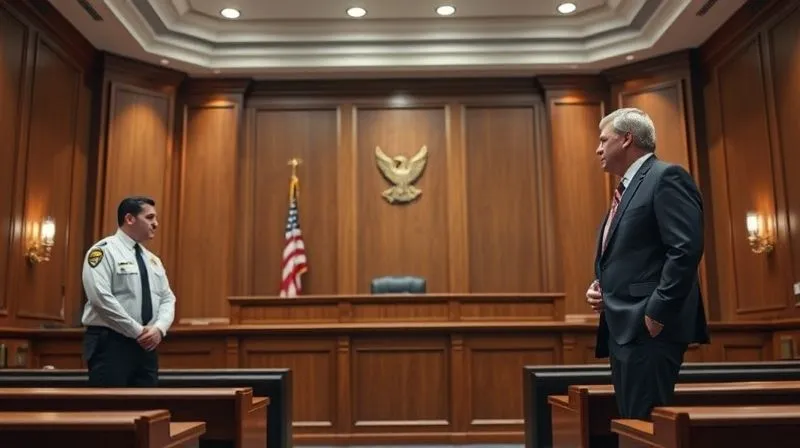
It's important to remember that your PO's primary role is to enforce probation conditions, not necessarily to advocate for you. Maintaining a respectful, professional demeanor with your PO, even amidst the violation, is always advisable.
Your Rights in a Probation Violation Hearing
While you don't have all the same constitutional rights as in a criminal trial (e.g., no right to a jury trial), you do have significant protections:
- Right to a written notice: As discussed, you must be informed of the specific allegations.
- Right to legal counsel: You have the right to an attorney, and if you cannot afford one, one will be appointed to you.
- Right to confront witnesses: Your attorney can question witnesses testifying against you (like your PO).
- Right to present evidence: You can call witnesses and submit documents in your defense or for mitigation.
- Right to speak: You may have an opportunity to address the judge directly, often guided by your attorney.
Understanding these rights is fundamental. For a detailed overview of due process rights in probation revocation, you can consult resources from reputable legal organizations. Learn more about criminal procedure and due process from the American Bar Association.
5. Presenting Your Case: Evidence and Testimony
The strength of your defense hinges on the quality and presentation of your evidence. Your attorney will meticulously prepare this aspect of your hearing.
Witnesses and Character Statements
If there were witnesses to events relevant to your alleged violation, your attorney might call them to testify. This could include an alibi witness, someone who can corroborate your compliance, or a professional who can speak to your efforts at rehabilitation (e.g., a therapist, employer, or community leader).
Character statements, submitted in writing, can also be powerful. These are letters from individuals who know you well and can speak positively about your character, your commitment to probation, or your efforts to address underlying issues. They provide the judge with a broader picture of who you are, beyond the specific allegation.
Documentary Evidence
As mentioned in the 'Gathering Documentation' section, tangible evidence is crucial. This can include:
- Medical records: If a health issue contributed to a missed appointment or other violation.
- Employment records: Proof of employment, job loss, or efforts to find work.
- Financial records: To show payment of fines or efforts to manage financial obligations.
- Certificates of completion: For anger management, substance abuse, or other court-mandated programs.
Each piece of evidence should directly support your defense or mitigation strategy. Your attorney will ensure it is properly introduced and explained to the court.
6. Potential Outcomes and Sentencing Advocacy
The judge has significant discretion in a probation violation hearing. The outcome can range from a minor slap on the wrist to full revocation of probation and imposition of the original sentence.
Reinstatement, Modification, or Revocation
These are the primary outcomes your attorney will be advocating for:
- Reinstatement: The judge finds no violation or finds that the violation does not warrant further action, and your probation continues under the original terms.
- Modification: The judge finds a violation but opts to modify your probation conditions rather than revoke it. This could mean extending the probation period, adding new conditions (e.g., more frequent drug testing, mandatory counseling), or requiring a short jail stay.
- Revocation: The most severe outcome. The judge revokes your probation and imposes all or part of the original suspended sentence, typically leading to incarceration.
Advocating for Leniency
Even if a violation is proven, your attorney's role is to advocate for the least restrictive outcome possible. This involves presenting all mitigating factors, highlighting your compliance history, and arguing for alternatives to incarceration. This might include:
- Intensive outpatient programs: For substance abuse issues.
- Mental health counseling: If underlying psychological issues contributed to the violation.
- Community service: As an alternative sanction.
- Work release programs: To maintain employment while serving a short period of incarceration.
The goal is always to convince the judge that you are salvageable, committed to rehabilitation, and that continued probation, perhaps with stricter terms, is in the best interest of justice and public safety. For resources on alternative sentencing and rehabilitation programs, consult government criminal justice reform initiatives. Explore resources from the Bureau of Justice Assistance on probation and re-entry programs.
7. Post-Hearing Actions and Long-Term Compliance
Regardless of the outcome, your actions immediately following the hearing, and in the long term, are critical. If your probation is reinstated or modified, consider it a second chance – and often, there won't be a third.
Adhering to New or Modified Conditions
If your probation conditions are changed, make sure you understand every new term. Ask your attorney to clarify anything that is unclear. Get a written copy of the modified order. Your meticulous adherence to these new terms is paramount. Any further violation, especially after being given a second chance, will likely result in a much harsher outcome.
- Maintain open communication: Keep your probation officer informed of any changes in your life (employment, address, health issues) that might impact your ability to comply.
- Proactive compliance: Don't wait until the last minute to fulfill conditions. Schedule appointments, pay fines, and complete programs well in advance.
- Seek support: If you're struggling with issues that led to the violation (e.g., addiction, mental health, unemployment), actively seek professional help and support systems.
The Importance of a Support System
My work has shown me that individuals with strong, positive support systems are far more likely to succeed on probation. This can include family, friends, mentors, support groups, or community organizations. These networks provide emotional support, practical assistance, and accountability.
Consider engaging with community-based re-entry programs or support groups if you feel isolated or overwhelmed. These resources can provide invaluable assistance in navigating the challenges of post-conviction life. Find re-entry program information and resources from the National Institute of Corrections.
Frequently Asked Questions (FAQ)
Q: Can I refuse to take a drug test if my probation officer asks? No. Refusing a drug test is almost always considered a direct violation of your probation conditions and can lead to immediate revocation. It's better to take the test and, if it's positive, work with your attorney on a mitigation strategy.
Q: What if I miss a probation appointment due to an emergency? Immediately contact your probation officer and your attorney. Provide documentation of the emergency (e.g., hospital records, tow truck receipt). While it's still a technical violation, demonstrating a legitimate reason and proactive communication can significantly mitigate the consequences.
Q: Is a probation violation hearing the same as a criminal trial? No. The standards of evidence and procedural rights are different. In a PV hearing, there's no right to a jury, and the burden of proof is lower than 'beyond a reasonable doubt.' The judge makes the final decision, not a jury.
Q: Can I get my probation reinstated after it's been revoked? It is extremely difficult. Once probation is revoked and a sentence is imposed, it's rare for the court to reconsider. Your attorney might explore options like appealing the revocation or filing for post-conviction relief, but success rates are low. Prevention is always the best strategy.
Q: How long does a probation violation stay on my record? A probation violation itself isn't typically a separate criminal conviction, but the fact that you violated probation becomes part of your criminal record associated with the underlying offense. It can impact future sentencing if you face new charges and may be considered by employers or housing providers.
Key Takeaways and Final Thoughts
Facing a probation violation hearing is undoubtedly a stressful and precarious situation, but it is not one without hope. As an experienced criminal defense attorney, I've seen countless individuals navigate these challenges successfully by employing a strategic, proactive, and well-informed approach.
- Act Immediately: Time is of the essence. Contact your attorney the moment you suspect a violation.
- Understand the Allegation: Get a written notice and meticulously review the charges against you.
- Build a Strong Defense: Strategize with your attorney on whether to contest, mitigate, or both.
- Know Your Rights: Be aware of your due process protections during the hearing.
- Prepare Thoroughly: Gather all relevant documentation and identify potential witnesses.
- Advocate for Leniency: Work with your attorney to present the best possible case for reinstatement or modification.
- Commit to Compliance: Post-hearing, adhere strictly to all conditions and seek necessary support.
Your freedom and future are invaluable. By following this immediate legal strategy for your probation violation hearing, you are not just reacting to a crisis; you are taking control, empowering your defense, and significantly improving your chances for a favorable outcome. Remember, you don't have to face this alone – skilled legal counsel is your strongest ally.
Recommended Reading
- The Ultimate Guide: Can I Switch from B2 to F1 Visa in the US?
- Maritime Liens: 7 Steps to Prevent Unexpected Vessel Arrest
- Challenging Excessive Port Demurrage: 7 Legal Strategies You Need Now
- 6 Essential Legal Steps: What to Do When Player Agent Misconduct Occurs
- Unlocking U.S. Citizenship: What is Good Moral Character for Naturalization?

Comments
Leave a comment below. Your email will not be published. Required fields marked with *