


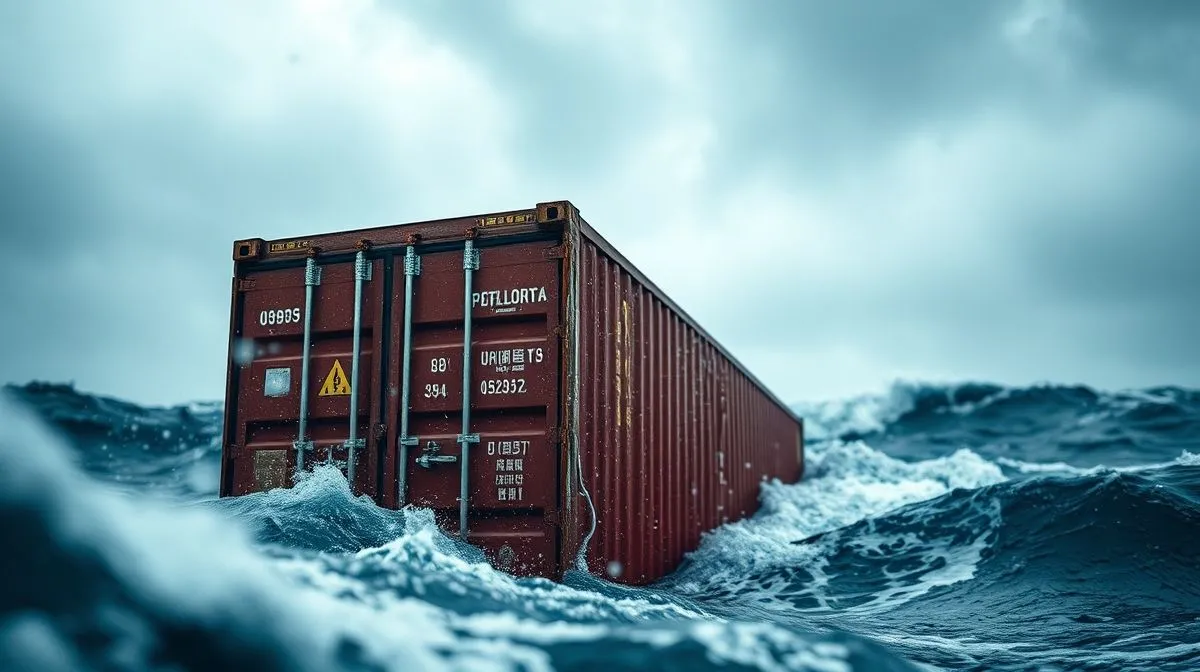
Unraveling the Legal Implications of Breach in Maritime Contracts?
Imagine a vast ocean, crisscrossed by colossal vessels carrying the world's commerce. At the heart of this intricate global network lie maritime contracts, the invisible threads that bind agreements between shipowners, charterers, cargo owners, and insurers. But what happens when one of these threads snaps? When a party fails to uphold their end of a bargain?
The consequences of such a breakdown can be catastrophic, leading to significant financial losses, legal battles spanning continents, and severe disruptions to international trade. The unique nature of maritime law, with its blend of national statutes, international conventions, and ancient customs, makes understanding the legal implications of breach in maritime contracts a formidable challenge.
This comprehensive guide will demystify the complexities surrounding breaches in maritime agreements. We will explore what constitutes a breach, the various remedies available, the nuances of jurisdiction, and crucial strategies for dispute resolution, providing you with the essential knowledge to navigate these turbulent legal waters.
Understanding Maritime Contracts: The Bedrock of Global Trade
Maritime contracts are the lifeblood of international shipping, governing everything from the carriage of goods to the hiring of vessels and marine insurance. These agreements are often complex, reflecting the inherent risks and global nature of the maritime industry.
Types of Maritime Contracts
There is a diverse array of contracts that fall under the umbrella of maritime law, each serving a specific purpose:
- Charter Parties: Agreements for the hire of a ship or a significant part of its carrying capacity. They can be for a specific voyage (voyage charter), a period of time (time charter), or bareboat (demise charter), where the charterer takes full control of the vessel.
- Bills of Lading: Documents issued by a carrier to a shipper, acknowledging receipt of cargo for shipment. They serve as a contract of carriage, a receipt for goods, and a document of title.
- Marine Insurance Contracts: Agreements where an insurer undertakes to indemnify the assured against marine losses. This includes hull and machinery insurance, cargo insurance, and protection and indemnity (P&I) insurance.
- Salvage Contracts: Agreements for the recovery of a vessel or cargo from peril at sea.
- Shipbuilding and Repair Contracts: Agreements for the construction or maintenance of vessels.
Key Elements of a Valid Maritime Contract
Like any contract, a maritime agreement must generally possess certain fundamental elements to be legally binding:
- Offer and Acceptance: A clear proposal by one party and an unequivocal agreement by the other.
- Consideration: Something of value exchanged between the parties (e.g., payment for service).
- Intention to Create Legal Relations: The parties must intend their agreement to be legally enforceable.
- Capacity: Parties must have the legal ability to enter into a contract.
- Legality: The purpose of the contract must be lawful.
Additionally, many maritime contracts are subject to specific international conventions and industry-standard forms, which introduce unique clauses and interpretations.
What Constitutes a Breach in Maritime Law?
A breach of contract occurs when a party fails to perform their obligations as stipulated in the agreement, without a valid legal excuse. In the maritime context, this can manifest in numerous ways, given the dynamic and often unpredictable nature of sea trade.
Express vs. Implied Breaches
Breaches can be broadly categorized based on how they arise:
- Express Breach: This occurs when a party explicitly states or clearly demonstrates that they will not fulfill their contractual obligations. An example might be a shipowner declaring they will not deliver a vessel on the agreed date.
- Implied Breach: This happens when a party's actions (or inactions) indicate a failure to perform, even without an explicit statement. For instance, a vessel deviating from its agreed-upon route without justification could be an implied breach of a voyage charter.
Material vs. Non-Material Breaches
The severity of a breach is crucial, as it determines the available remedies:
- Material Breach (or Fundamental Breach): A breach so significant that it defeats the essential purpose of the contract. It goes to the root of the agreement and allows the innocent party to terminate the contract and claim damages. For example, a ship failing to load the agreed cargo at all.
- Non-Material Breach: A minor breach that does not undermine the entire contract. The innocent party may claim damages for the loss suffered but cannot typically terminate the contract. An example might be a slight delay in delivery that causes minimal inconvenience.
Common Scenarios Leading to Breach
The maritime industry is fraught with potential for breaches. Some common scenarios include:
- Delay: Failure to deliver cargo or provide a vessel by the agreed-upon date.
- Cargo Damage or Loss: Failure to properly care for and deliver goods in their original condition.
- Non-Payment of Freight or Hire: Failure by the charterer or shipper to pay the agreed remuneration.
- Unseaworthiness: A vessel not being fit for its intended voyage, leading to damage or delay.
- Deviation: A vessel departing from its agreed or customary route without justification.
- Misrepresentation: Providing false information that induces another party to enter into a contract.
Jurisdiction and Applicable Law in Maritime Breach Cases
One of the most intricate aspects of dealing with the legal implications of breach in maritime contracts is determining which country's laws apply and which courts have the authority to hear the dispute. Given the international nature of shipping, this is rarely straightforward.
The Role of International Conventions
Many aspects of maritime law are harmonized by international conventions, which aim to provide uniformity across different jurisdictions. Key conventions include:
- The Hague-Visby Rules: Govern the rights and liabilities of carriers under bills of lading.
- The Hamburg Rules: An alternative to Hague-Visby, generally more favorable to cargo owners.
- The Athens Convention: Relates to the carriage of passengers and their luggage by sea.
- The Salvage Convention: Sets out principles for salvage operations.
These conventions, once ratified by a state, become part of its national law and often take precedence over purely domestic legislation. For more information on international maritime conventions, you can visit the International Maritime Organization (IMO) website.
Choice of Law Clauses
Parties to a maritime contract often include a 'choice of law' clause, specifying which country's laws will govern the agreement. This is a crucial element for predictability and certainty, especially in cross-border transactions. Without such a clause, courts will apply complex rules of private international law to determine the applicable law, which can lead to lengthy and unpredictable litigation.
Admiralty Courts and Arbitration
Most maritime disputes are heard in specialized admiralty courts or through arbitration. Admiralty courts, often part of a country's higher judicial system, have specific jurisdiction over maritime matters. However, arbitration is increasingly preferred in the maritime industry due to its flexibility, confidentiality, and the availability of arbitrators with deep industry expertise. Leading arbitration centers include London (LMAA), Singapore (SCMA), and New York (SMA).
Remedies for Breach of Maritime Contracts
When a breach occurs, the innocent party can pursue various remedies to mitigate their losses and enforce their rights. The choice of remedy often depends on the nature and severity of the breach, as well as the specific terms of the contract.
Damages: Types and Calculation
The most common remedy is a claim for damages, which aims to put the innocent party in the position they would have been in had the contract been performed. Types of damages include:
- Direct Damages: Losses that flow naturally and directly from the breach, such as the cost of repairing damaged cargo or the additional freight paid for alternative transport.
- Consequential Damages: Indirect losses that are a foreseeable result of the breach, such as lost profits due to delayed delivery. These are often more difficult to prove and may be limited by contract clauses.
- Liquidated Damages: A pre-agreed sum specified in the contract that will be paid in the event of a particular breach (e.g., demurrage for delayed loading/unloading). These clauses must be a genuine pre-estimate of loss, not a penalty.
- Nominal Damages: Awarded when a breach occurred but no actual financial loss can be proven.
Calculating damages in maritime cases can be complex, involving expert testimony and detailed financial analysis.
Specific Performance and Injunctions
While less common in maritime contract breaches, courts may, in certain circumstances, order:
- Specific Performance: A court order compelling the breaching party to fulfill their contractual obligations. This is typically granted only when monetary damages are an inadequate remedy, such as in contracts for unique vessels.
- Injunctions: Court orders prohibiting a party from performing certain actions (e.g., preventing a vessel from leaving port).
Termination of Contract
For a material or fundamental breach, the innocent party may have the right to terminate the contract. This releases both parties from future obligations, though the innocent party can still claim damages for losses incurred up to the point of termination. The decision to terminate is significant and should be made carefully, as an unjustified termination can itself constitute a breach.
Defenses Against Breach Claims in Maritime Law
When faced with a claim for breach of a maritime contract, the defending party may raise various legal defenses to avoid or reduce liability. These defenses often reflect the inherent risks and specific characteristics of the maritime environment.
Force Majeure and Frustration
- Force Majeure: Many maritime contracts include a force majeure clause, excusing a party from performance due to unforeseeable circumstances beyond their control (e.g., natural disasters, war, government embargoes). The event must be specifically covered by the clause, and the party must demonstrate that it directly prevented performance.
- Frustration: Even without a force majeure clause, the doctrine of frustration may apply if an unforeseen event makes it physically or commercially impossible to perform the contract, or transforms the obligation into something radically different from what was agreed.
Exclusion Clauses and Limitations of Liability
Maritime contracts frequently contain clauses that exclude or limit a party's liability for certain types of loss or up to a specified monetary amount. These clauses are generally upheld if they are clear, reasonable, and not contrary to public policy or mandatory international conventions. For instance, many bills of lading limit the carrier's liability per package or unit.
Waiver and Estoppel
- Waiver: Occurs when a party voluntarily gives up a right or claim. For example, if a shipowner consistently accepts late payments without protest, they might be deemed to have waived their right to terminate for late payment.
- Estoppel: Arises when one party's conduct leads another party to reasonably believe a certain state of affairs exists, and the second party acts upon that belief to their detriment. The first party may then be 'estopped' from denying that state of affairs.
The Role of Dispute Resolution in Maritime Breaches
Given the high stakes and international nature of maritime trade, efficient and effective dispute resolution mechanisms are paramount when dealing with the legal implications of breach in maritime contracts. Litigation is often seen as a last resort due to its cost, time, and public nature.
Negotiation and Mediation
The first step in resolving most disputes is direct negotiation between the parties. If direct talks fail, mediation, involving a neutral third party to facilitate discussions, can be highly effective. Mediation is non-binding and allows parties to maintain commercial relationships.
Arbitration: A Preferred Path
Arbitration is widely favored in the maritime industry. Most standard maritime contracts, like those published by BIMCO (Baltic and International Maritime Council), include arbitration clauses. Key advantages include:
- Expertise: Arbitrators often have deep knowledge of maritime law and industry practices.
- Confidentiality: Arbitration proceedings are typically private, protecting sensitive commercial information.
- Enforceability: Arbitral awards are generally easier to enforce internationally than court judgments, thanks to conventions like the New York Convention.
- Flexibility: Parties can tailor the arbitration process to their specific needs.
Litigation: When All Else Fails
While often avoided, litigation in national courts becomes necessary when other methods fail or when specific legal remedies (like injunctions) are required. Litigation can be complex, involving jurisdictional challenges, choice of law issues, and lengthy court processes. Understanding the intricacies of admiralty court procedures is vital if litigation is pursued.
Preventing Breaches and Mitigating Risks
Proactive measures are always more effective than reactive solutions when it comes to contract breaches. Minimizing the occurrence of breaches and having robust strategies to mitigate their impact are crucial for any maritime business.
Due Diligence in Contract Drafting
The foundation of preventing breaches lies in meticulously drafted contracts. This includes:
- Clarity and Precision: Ensure all terms, obligations, and responsibilities are unambiguous.
- Comprehensive Coverage: Address potential risks and contingencies, including force majeure, dispute resolution mechanisms, and limitation of liability clauses.
- Legal Review: Always have contracts reviewed by legal professionals specializing in maritime law.
Effective Communication and Monitoring
Open and continuous communication between contracting parties can often prevent minor issues from escalating into major breaches. Regular monitoring of vessel movements, cargo status, and market conditions allows for early identification of potential problems and proactive resolution.
Insurance as a Safeguard
Adequate marine insurance is an indispensable risk mitigation tool. It provides financial protection against losses arising from various maritime perils, including those that might lead to or result from a breach of contract. Companies should ensure their insurance policies comprehensively cover their specific activities and potential liabilities.
Frequently Asked Questions (FAQ)
What is the difference between breach of contract and frustration in maritime law? A breach of contract occurs when a party fails to perform their obligations. Frustration, on the other hand, happens when an unforeseen event makes contract performance impossible or fundamentally changes the nature of the obligation, excusing both parties from further performance without fault.
Can I terminate a maritime contract for any breach? No, generally only a material or fundamental breach, which goes to the root of the contract, gives the innocent party the right to terminate. For minor breaches, you can usually only claim damages.
Are liquidated damages clauses always enforceable in maritime contracts? Liquidated damages clauses are generally enforceable if they represent a genuine pre-estimate of the loss likely to be suffered from a breach. If the sum is deemed to be a penalty (i.e., disproportionate to the actual loss), a court or arbitrator may refuse to enforce it, and only actual proven damages would be awarded.
What is the significance of the New York Convention in maritime arbitration? The New York Convention on the Recognition and Enforcement of Foreign Arbitral Awards is crucial because it facilitates the enforcement of arbitral awards across different countries. Most major maritime nations are signatories, making arbitration a highly effective global dispute resolution mechanism.
Recommended Reading
- Are Digital Contracts Legally Binding? The Ultimate Guide [2024]
- Federal Pollution Control Act Penalties: What You Need to Know
- Unlock True Worth: How to Value Intellectual Property for Licensing Success
- Driver Hit Me in a Crosswalk? Know Your Rights & What to Do!
- Unlock Justice: Your Ultimate Guide to Filing an Environmental Lawsuit
Conclusion
The legal implications of breach in maritime contracts are multifaceted and demand a thorough understanding of both general contract law principles and the specialized nuances of admiralty law. From identifying what constitutes a breach to navigating complex jurisdictional issues and choosing appropriate remedies, the journey through a maritime contract dispute can be challenging. By prioritizing clear contract drafting, maintaining open communication, leveraging effective dispute resolution mechanisms like arbitration, and ensuring adequate insurance, maritime stakeholders can significantly mitigate their risks and navigate the high seas of global commerce with greater confidence and legal security. Always remember, expert legal counsel specializing in maritime law is invaluable when facing these intricate challenges.

Comments
Leave a comment below. Your email will not be published. Required fields marked with *