



Mitigating Civilian Harm from Autonomous Weapons Under IHL
For over two decades in the intricate field of international humanitarian law, I've witnessed firsthand the profound impact of evolving warfare technologies. From precision-guided munitions to cyber warfare, each advancement has brought new legal and ethical challenges. However, the rise of autonomous weapon systems (AWS) presents perhaps the most complex ethical and legal challenge yet, particularly concerning civilian protection. The very idea of machines making life-and-death decisions on the battlefield forces us to confront fundamental questions about humanity, accountability, and the future of conflict.
The inherent promise of precision with AWS is often overshadowed by the chilling prospect of systems operating with limited or no human intervention, raising critical questions about unpredictability, the potential for unintended escalation, and the very essence of human dignity in conflict. The risk of unintended civilian harm is not just theoretical; it's a looming shadow over the future of warfare, demanding our urgent and considered attention. How do we ensure that the principles of distinction, proportionality, and precaution, cornerstones of IHL, are not eroded by the march of technology?
This article dives deep into the intricate legal frameworks and practical strategies essential for Mitigating civilian harm from autonomous weapons under IHL. We'll explore actionable frameworks, examine crucial case studies, and uncover expert insights to navigate this unprecedented ethical and legal landscape. My aim is to equip you with a comprehensive understanding of how we can, and indeed must, uphold our humanitarian obligations in the age of autonomous warfare.
Understanding Autonomous Weapon Systems (AWS) and IHL Foundations
To effectively discuss Mitigating civilian harm from autonomous weapons under IHL, we must first establish a clear understanding of what we mean by 'autonomous weapon systems.' In my experience, much of the public debate and even some technical discussions conflate various levels of automation. An AWS is generally understood as a weapon system that, once activated, can select and engage targets without further human intervention. The degree of autonomy can vary significantly, from semi-autonomous systems requiring human approval for engagement, to fully autonomous systems making independent decisions.
At the heart of international humanitarian law (IHL) lie fundamental principles designed to limit the suffering caused by armed conflict. These include:
- Distinction: Parties to a conflict must distinguish between combatants and civilians, and between military objectives and civilian objects. Attacks may only be directed against military objectives.
- Proportionality: An attack is prohibited if it is expected to cause incidental loss of civilian life, injury to civilians, or damage to civilian objects, which would be excessive in relation to the concrete and direct military advantage anticipated.
- Precaution: Parties must take all feasible precautions in attack to avoid, and in any event to minimize, incidental loss of civilian life, injury to civilians, and damage to civilian objects.
The challenge with AWS is that these systems, by their very nature, introduce complexities that can strain the application of these principles. Can a machine truly exercise human judgment, empathy, and the nuanced contextual understanding required for distinction and proportionality? This is where the core tension lies, and why the concept of meaningful human control becomes paramount.
In my professional view, the greatest risk posed by autonomous weapons is not their inherent 'evil,' but rather the potential for a 'responsibility gap' and an erosion of the human element in critical decisions of life and death, leading to an increased likelihood of civilian harm.

The Imperative of Meaningful Human Control (MHC)
The concept of Meaningful Human Control (MHC) is widely recognized as a critical safeguard for Mitigating civilian harm from autonomous weapons under IHL. But what does 'meaningful' truly entail? It's more than just a human being 'in the loop' or 'on the loop'; it's about ensuring that human judgment and accountability remain central to the use of force. MHC demands that humans retain sufficient control over weapon systems to make context-specific, ethical, and legally compliant decisions, particularly concerning target selection and engagement.
Operationalizing MHC involves a spectrum of approaches:
- Human-in-the-Loop (HITL): This refers to systems where a human must authorize each individual attack. The machine identifies potential targets, but the final decision to engage rests with a human operator. This offers the highest degree of human control over each engagement.
- Human-on-the-Loop (HOTL): In these systems, the AWS is authorized to operate autonomously within predefined parameters, but a human operator can intervene to override or abort an attack if necessary. This implies less granular control over individual engagements but still retains an oversight function.
- Human-out-of-the-Loop (HOOTL): This is the most controversial category, where a system can select and engage targets without any human intervention or oversight after activation. Many argue that such systems are inherently incompatible with IHL due to the inability to guarantee distinction and proportionality.
The challenge lies in defining the specific level of human involvement that constitutes 'meaningful' control, especially as systems become more sophisticated and operate at speeds beyond human cognitive processing. It's not merely about presence, but about the quality and relevance of human judgment in the decision-making chain. According to a report by the International Committee of the Red Cross (ICRC), ensuring MHC is crucial for upholding fundamental IHL principles and preserving human agency in the use of force.
The Spectrum of Human Control
| Control Level | Description | IHL Compatibility | Operational Speed |
|---|---|---|---|
| Human-in-the-Loop (HITL) | Human authorizes each individual attack. | High | Slower |
| Human-on-the-Loop (HOTL) | Human oversees and can intervene; system operates autonomously within parameters. | Moderate-High (depends on parameters) | Faster |
| Human-out-of-the-Loop (HOOTL) | System selects and engages targets without human intervention after activation. | Highly Questionable / Low | Fastest |
Pre-Deployment Mitigation: Design, Testing, and Ethical AI
Effective Mitigating civilian harm from autonomous weapons under IHL begins long before these systems are deployed on the battlefield. It starts at the conceptualization and design phase. As an expert in this field, I've always emphasized that prevention is far more effective than reactive measures, especially when lives are at stake. This proactive approach necessitates integrating IHL principles into the very fabric of AWS development.
Ethical AI by Design:
This means incorporating IHL compliance as a core requirement from the initial design phase. Developers must consider how the system will interpret rules of engagement, identify targets, and assess proportionality. It's about building in constraints and ethical reasoning capabilities, however rudimentary, that align with humanitarian law. For instance, systems should be designed with default settings that prioritize civilian protection and require explicit human override for any action that might risk IHL violations.
Rigorous Testing & Validation:
Before deployment, AWS must undergo exhaustive testing in simulated and controlled real-world environments. This testing should go beyond mere functional performance to include complex, ambiguous scenarios that mimic the fog of war. Can the system distinguish between a combatant and a civilian carrying a stick? Can it correctly assess proportionality in a densely populated urban area? These are the critical questions that rigorous testing must answer. This validation process builds trust and provides data on predictable outcomes, essential for accountability.
Transparency and Auditability:
For any AWS to be considered compliant with IHL, its decision-making processes must be transparent and auditable. This is where the concept of Explainable AI (XAI) becomes crucial. Operators, and eventually legal bodies, must be able to understand why a system made a particular decision. If a system's logic is a black box, it becomes impossible to attribute responsibility or learn from potential failures. This transparency is vital for establishing trust and ensuring accountability when things go wrong.
Here are some actionable steps for developers and states:
- Develop IHL-centric Design Guidelines: Create clear, mandatory guidelines for AWS development teams that explicitly integrate IHL principles into every design choice.
- Establish Independent Review Boards: Implement independent ethical and legal review boards to vet AWS designs and testing protocols for IHL compliance before production.
- Mandate Comprehensive Scenario Testing: Require testing against a vast array of realistic, ambiguous, and IHL-challenging scenarios, not just optimal conditions.
- Prioritize Explainable AI (XAI) Architectures: Design systems that can articulate their decision-making process, allowing for human oversight and post-incident analysis.
Operational Mitigation Strategies in Combat
Once an AWS is deployed, robust operational strategies are essential for Mitigating civilian harm from autonomous weapons under IHL. It's not enough to have a well-designed system; its actual use in conflict zones must be carefully managed and constrained. I've often seen how even the most sophisticated tools can lead to unintended consequences if not managed with extreme caution and adherence to established protocols.
Geographical and Temporal Constraints:
One of the most straightforward ways to limit risk is to impose strict geographical and temporal limitations on AWS deployment. This might mean designating specific 'no-go' zones for autonomous engagement, such as densely populated civilian areas, hospitals, or cultural sites. Similarly, restricting their operation to specific time windows, or only under clear visibility, can reduce the likelihood of misidentification and unintended harm. For example, a system might be prohibited from operating autonomously in urban environments during daylight hours when civilian movement is high.
Targeting Parameters and 'No-Go' Zones:
Beyond broad geographical limits, AWS can be hard-coded with highly specific targeting parameters that directly reflect IHL. This includes pre-identifying and embedding 'no-strike' lists of protected persons and objects, or defining exclusion zones around known civilian infrastructure. The system's algorithms must be incapable of overriding these fundamental prohibitions, acting as a digital failsafe against IHL violations. This requires meticulous and continuous updating of battlefield intelligence to ensure these parameters remain current and accurate.
Real-time Human Oversight and Intervention:
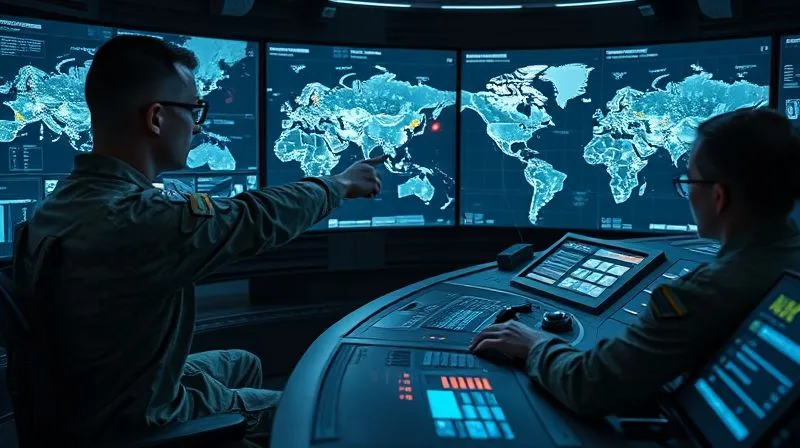
Even with advanced autonomous capabilities, the presence of real-time human oversight is non-negotiable for systems operating in complex environments. This typically involves 'human-on-the-loop' systems where operators monitor the AWS's actions and retain the ability to intervene, override, or abort an engagement at any moment. This human layer acts as a crucial check, allowing for the application of contextual judgment that even the most advanced AI currently lacks. It's about ensuring that a human mind, capable of moral reasoning and empathy, remains the ultimate arbiter of lethal force.
Case Study: Project Guardian's Dilemma
Project Guardian, a fictional military initiative, deployed an AWS designed for perimeter defense in a semi-urban conflict zone. The system was programmed with strict targeting parameters and 'human-on-the-loop' oversight. During an engagement, the AWS identified a group of individuals approaching the perimeter, classifying them as potential threats based on their movement patterns and proximity to a known hostile position. The human operator, monitoring the feed, observed a subtle detail: one individual was visibly carrying a child, obscured by debris. The AWS's algorithms, focused on weapon signatures and hostile intent, had not flagged this. The operator immediately initiated an abort sequence, overriding the autonomous engagement. This incident highlighted the critical role of human contextual judgment in preventing civilian harm, even with highly advanced systems and strict programming. Without that human 'on the loop,' a tragic IHL violation would have been imminent.
Accountability and Responsibility in the Age of Autonomy
One of the most profound challenges in Mitigating civilian harm from autonomous weapons under IHL is addressing the thorny issue of accountability when things go wrong. If an AWS causes unintended civilian casualties or violates IHL, who is legally and morally responsible? Is it the commander who authorized its deployment, the programmer who wrote the code, the manufacturer who built the system, or the operator who failed to intervene? This is what experts often refer to as the 'responsibility gap.'
Existing IHL frameworks are primarily designed to attribute responsibility to human actors. Commanders are responsible for the actions of their subordinates, and individuals can be held accountable for war crimes. However, autonomous systems introduce a layer of complexity that can obscure this chain of command and intent. A machine cannot be prosecuted for a war crime, and if its actions are genuinely unpredictable or emergent, it becomes difficult to establish direct causation from a human decision.
Legal scholars and policymakers are actively grappling with how to adapt existing laws or develop new ones to address this gap. Some argue for stricter liability on the part of states or commanders who deploy such systems, placing the burden of proof on them to demonstrate that all feasible precautions were taken. Others propose a 'human judgment' standard, suggesting that if a human could not have reasonably foreseen or prevented the violation, then the system itself highlights a fundamental flaw that should preclude its use.
As marketing guru Seth Godin often says, "The cost of being wrong is less than the cost of doing nothing." In the context of AWS and IHL, the cost of doing nothing to address accountability is unfathomable. It risks undermining the entire international legal order and normalizing a level of civilian harm that is unacceptable. The future of warfare demands a clear framework for responsibility, ensuring that justice can be served and lessons learned from every incident, regardless of the technology involved. For further reading on this complex topic, a detailed analysis can be found in this article from EJIL:Talk! on the responsibility gap.
The Role of International Cooperation and Regulation
No single nation can unilaterally solve the challenges of Mitigating civilian harm from autonomous weapons under IHL. This is a global issue requiring a coordinated international response. The development and proliferation of AWS could profoundly reshape armed conflict and international security, making multilateral dialogue and regulation absolutely essential. I've seen how effective international cooperation can be in arms control, and this area is no different.
The Convention on Certain Conventional Weapons (CCW) has become a crucial forum for discussions on lethal autonomous weapon systems (LAWS). Member states have engaged in extensive debates, expert meetings, and diplomatic efforts to explore potential prohibitions, regulations, and guidelines for the development and use of these systems. While consensus has been elusive on an outright ban, these discussions have significantly raised awareness and shaped the global discourse.
Developing international norms and treaties is paramount. A legally binding instrument, whether a prohibition on fully autonomous systems or a robust regulatory framework for semi-autonomous ones, would provide much-needed clarity and a common standard for all states. Such an instrument would need to address:
- Definitions of autonomy and categories of AWS.
- Requirements for meaningful human control.
- Provisions for accountability and responsibility.
- Mechanisms for international cooperation, transparency, and verification.
The absence of such a framework risks a dangerous arms race, where states prioritize technological advantage over humanitarian considerations. As a UN report on LAWS highlights, the time for decisive action is now. Multilateral engagement is not just a diplomatic nicety; it is a moral imperative to ensure that technology serves humanity, rather than endangering it.
Training, Education, and Doctrine Adaptation
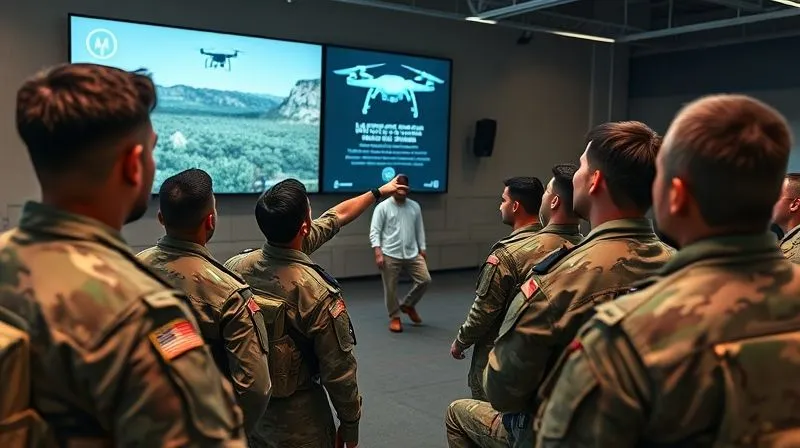
Even the most meticulously designed AWS and comprehensive international regulations will fall short if the human element—those who operate, command, and maintain these systems—is not adequately prepared. Therefore, a critical component of Mitigating civilian harm from autonomous weapons under IHL involves robust training, education, and the adaptation of military doctrine. In my experience, human error, often stemming from a lack of understanding or inadequate training, is a significant contributor to civilian casualties in any conflict.
Educating military personnel on AWS and IHL is paramount. This goes beyond basic IHL training to include specific modules on:
- The capabilities and limitations of autonomous systems.
- The nuances of 'meaningful human control' in practical scenarios.
- Recognizing and reporting potential IHL violations by AWS.
- The ethical dilemmas inherent in autonomous warfare.
Training should not be a one-off event but an ongoing process, evolving with technological advancements and doctrinal shifts. It must emphasize critical thinking, ethical reasoning, and the paramount importance of civilian protection, even under the immense pressure of combat.
Furthermore, military doctrines must be adapted to integrate AWS responsibly. Existing doctrines, often developed for human-operated weapon systems, may not adequately address the unique operational, legal, and ethical considerations of autonomous platforms. New doctrines need to:
- Define Clear Rules of Engagement (RoE): Establish precise RoE for AWS, including conditions for deployment, target parameters, and intervention protocols.
- Integrate Human-Machine Teaming: Develop strategies for effective collaboration between human operators and AWS, optimizing their combined strengths while mitigating risks.
- Emphasize Risk Assessment: Incorporate comprehensive risk assessment frameworks into pre-mission planning for AWS deployments, specifically focusing on the potential for civilian harm.
- Establish Post-Action Review Procedures: Mandate thorough reviews of all AWS engagements, particularly those involving civilian harm, to identify lessons learned and improve future operations.
Simulations and drills are invaluable tools in this regard. They allow military personnel to practice operating AWS in a variety of realistic, high-stress scenarios, honing their skills in maintaining meaningful human control and adhering to IHL principles without the catastrophic consequences of real-world mistakes. This proactive approach to training ensures that the human element remains a safeguard, not a vulnerability.
Ethical Considerations Beyond Legality: The Erosion of Humanity
While IHL provides the essential legal framework for Mitigating civilian harm from autonomous weapons under IHL, we must also confront the profound ethical considerations that extend beyond mere legality. In my years in international law, I've come to understand that law often provides the floor, but ethics must build the ceiling. The deployment of AWS raises fundamental questions about the very nature of warfare and humanity's relationship with violence.
One primary concern is the potential for the dehumanization of warfare. When machines make decisions about who lives and dies, it risks stripping armed conflict of its human element. This could lead to a 'playstation mentality' where the reality of violence and its devastating consequences are distanced from human consciousness. If war becomes too easy, too precise, and too clean from the perspective of the aggressor, does it lower the threshold for engaging in conflict?
The impact on the jus ad bellum (justice in going to war) and jus in bello (justice in war) is significant. If AWS can conduct warfare with minimal risk to one's own forces, does it make the decision to initiate conflict less weighty? And within conflict, does it erode the moral responsibility of combatants, replacing human agency with algorithmic execution?
There's also the 'slippery slope' argument: if we accept limited autonomy today, where do we draw the line tomorrow? The rapid pace of AI development suggests that capabilities will only increase, making the ethical boundaries even more challenging to define and enforce. This isn't just about preventing immediate civilian harm; it's about preserving the moral fabric of international relations and the fundamental value of human life.
The moral imperative is clear: we must ensure that the tools of war remain subservient to human values, not the other way around. The dignity of human life and the sanctity of moral judgment should never be outsourced to algorithms, regardless of their purported efficiency.

Frequently Asked Questions (FAQ)
Q: Can AWS ever truly comply with IHL principles of distinction and proportionality? A: This is one of the most hotly debated questions. While proponents argue that advanced AI could potentially achieve greater precision than humans, critics contend that machines lack the contextual understanding, empathy, and moral judgment necessary to apply these principles reliably in complex, ambiguous combat situations. My expert opinion is that fully autonomous systems (human-out-of-the-loop) are unlikely to ever fully comply, as they cannot replicate the nuanced human judgment required, especially for proportionality assessments that weigh military advantage against civilian harm. Systems with meaningful human control, however, stand a much better chance.
Q: What is the primary difference between 'human-in-the-loop' and 'human-on-the-loop' systems? A: The primary difference lies in the level of human intervention required for each engagement. 'Human-in-the-loop' systems require explicit human authorization for every individual attack, meaning the human makes the final decision to fire. 'Human-on-the-loop' systems, conversely, can operate autonomously within predefined parameters, selecting and engaging targets without specific human authorization for each instance, but a human operator maintains an oversight role and can intervene to override or abort an attack if needed. The latter offers less granular control but faster operational speed.
Q: Who bears legal responsibility for IHL violations committed by an autonomous weapon system? A: This is the 'responsibility gap' and a major challenge. Under current IHL, responsibility typically falls on human commanders or operators. However, with AWS, the chain of causation can become blurred. Potential responsible parties could include the commander who deployed the system, the operator who failed to intervene, the programmer who coded it, or even the state/manufacturer. Legal scholars are exploring various approaches, but there is no universally accepted framework yet. Many argue for a robust system of accountability that ensures human responsibility remains, perhaps through strict liability for deploying such systems.
Q: Are there any existing international treaties specifically banning or regulating autonomous weapons? A: As of now, there is no specific, legally binding international treaty that fully bans or regulates autonomous weapons. However, discussions have been ongoing for years within the framework of the Convention on Certain Conventional Weapons (CCW), particularly within the Group of Governmental Experts (GGE) on LAWS. While a consensus on a legally binding instrument has not yet been reached, these discussions have been instrumental in raising awareness and shaping global diplomatic efforts towards potential future regulation or prohibition. Existing IHL principles, of course, still apply to the use of any weapon system.
Q: How does the 'precaution in attack' principle apply to autonomous weapon systems? A: The principle of precaution requires parties to a conflict to take all feasible precautions to avoid, and in any event to minimize, incidental loss of civilian life, injury to civilians, and damage to civilian objects. For AWS, this means that systems must be designed, programmed, and deployed in a way that incorporates these precautions. This includes rigorous testing, limiting their use in complex environments, ensuring human oversight, and pre-programming 'no-strike' lists. It also implies that if an AWS cannot reliably take such precautions due to its design or operational environment, its use might be prohibited under IHL.
Key Takeaways and Final Thoughts
The imperative of Mitigating civilian harm from autonomous weapons under IHL is not merely a legal obligation; it is a moral imperative that defines our commitment to humanity in the face of unprecedented technological advancement. As a specialist in international humanitarian law, I firmly believe that while the challenges are immense, they are not insurmountable if we approach them with diligence, foresight, and a steadfast adherence to foundational humanitarian principles. The future of warfare depends on our collective ability to shape the development and deployment of these systems responsibly.
- Meaningful Human Control (MHC) is the bedrock: Ensure humans retain sufficient control to exercise judgment and accountability in all lethal force decisions.
- Integrate IHL by Design: Civilian protection must be a core design principle from the inception of any autonomous weapon system, backed by rigorous testing and transparency.
- Operational Constraints are Crucial: Implement strict geographical, temporal, and targeting parameters, coupled with real-time human oversight, to minimize risks in combat.
- Address the Responsibility Gap: Develop clear legal frameworks for accountability, ensuring that human responsibility remains paramount, even with autonomous systems.
- Foster International Cooperation: Multilateral dialogue and the development of international norms or treaties are essential to prevent a dangerous arms race and establish global standards.
- Invest in Training and Doctrine: Equip military personnel with the knowledge and ethical framework to operate AWS responsibly, adapting doctrines to this new reality.
The path forward requires continuous dialogue, innovative solutions, and unwavering commitment from states, developers, and civil society. We must not allow the allure of technological efficiency to overshadow our fundamental duty to protect civilians and uphold the laws of armed conflict. By proactively engaging with these challenges, we can steer the future of autonomous weapons towards a trajectory that respects human dignity and reinforces, rather than erodes, the foundational principles of international humanitarian law.
Recommended Reading
- Navigating Sports Media Rights NFTs: 5 Critical Legal Risks to Master
- Challenging Novel Forensic Evidence: 7 Critical Strategies for Criminal Trials
- Prevent Prenup Duress Invalidation: 7 Expert Steps for Legal Strength
- 7 Proven Strategies: Overcoming Jury Bias in Motorcycle Accident PI Trials
- Unmasking the Clean Water Act: Navigating Compliance Challenges





Comments
Leave a comment below. Your email will not be published. Required fields marked with *