


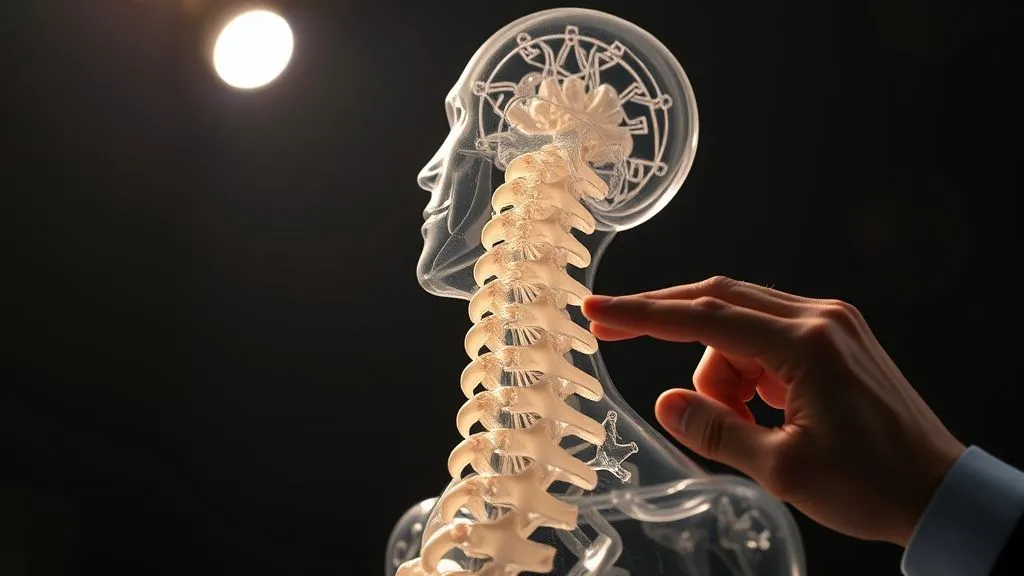
Overcoming Defense Expert's Biomechanics Testimony in Whiplash Cases
For over two decades in the personal injury arena, I've witnessed countless legitimate whiplash claims undermined by a formidable adversary: the defense biomechanical expert. These highly credentialed witnesses, often with impressive academic backgrounds, can paint a picture that minimizes injury severity, questions causation, and ultimately, threatens the fair compensation your client deserves.
The problem is pervasive. A client suffers a debilitating whiplash injury in a seemingly 'minor' fender bender, yet the defense expert testifies that the forces involved were insufficient to cause such harm. This testimony, often presented with scientific jargon and complex calculations, can sway juries and even intimidate less experienced legal teams, leaving victims feeling unheard and uncompensated.
But here's the truth: their testimony is not invincible. In this definitive guide, I will share my battle-tested strategies, actionable frameworks, and expert insights for effectively challenging and ultimately *Overcoming defense expert's biomechanics testimony in whiplash cases*. We'll delve into the nuances of medical evidence, accident reconstruction, and cross-examination tactics that empower you to protect your client's interests and secure justice.
Understanding the Biomechanical Defense Strategy
Before we can dismantle their arguments, we must first understand how defense biomechanical experts operate. Their primary objective is to create doubt about the causal link between the accident and your client's whiplash injury, often by asserting that the forces involved were too low to cause significant harm. They typically focus on the physics of the collision, using engineering principles to analyze vehicle dynamics, occupant kinematics, and injury thresholds.
I've seen these experts present elaborate simulations and calculations, often relying on idealized models that don't account for the unique vulnerabilities of individual human bodies. They might argue that because the car sustained minimal damage, the occupants couldn't have been seriously injured. This 'property damage equals injury' fallacy is a cornerstone of their strategy, and it’s one we must be prepared to aggressively challenge.
Their testimony often hinges on the concept of 'delta-V' (change in velocity) or acceleration forces, comparing these to published injury thresholds derived from crash test dummies or cadaver studies. The key insight here is that these studies, while scientifically valid in their own context, rarely replicate the real-world complexities of human injury mechanisms, especially for soft tissue injuries like whiplash.
"The defense biomechanical expert's goal is to turn a human injury into a mathematical equation, stripping away the individual's unique biology and the nuanced realities of trauma. Our job is to put the human back into the equation."
Deconstructing the Low-Impact Argument
The 'low-impact, no-injury' argument is perhaps the most common tactic employed by defense biomechanical experts. They contend that if vehicle damage is minor, the forces transmitted to the occupant were insufficient to cause whiplash. This argument, while seemingly logical on the surface, fundamentally misunderstands the biomechanics of soft tissue injury.
In my experience, this is where many attorneys get tripped up. They focus too much on the vehicle damage, conceding the 'low impact' point, rather than shifting the narrative to the human body's response. The reality is that whiplash injuries, particularly cervical acceleration-deceleration (CAD) syndrome, can occur at impact speeds as low as 5-8 mph, often with little to no visible vehicle damage. This is because the human body is not a rigid structure; it's a complex system of bones, muscles, ligaments, and nerves that can be acutely sensitive to rapid changes in acceleration and deceleration.
Here’s how to begin deconstructing this argument:
- Challenge the 'Property Damage' Fallacy: Emphasize that vehicle damage is a poor proxy for human injury. Modern vehicles are designed to absorb impact, protecting occupants by deforming. This means the car might crumple, but the occupant experiences a rapid acceleration-deceleration event before the vehicle's energy absorption kicks in.
- Focus on Occupant Kinematics: Shift the focus from the car's damage to the occupant's movement within the vehicle. Whiplash is caused by the rapid, uncontrolled hyperextension and hyperflexion of the neck, often exacerbated by head restraint position, occupant posture, and lack of bracing.
- Highlight Individual Variability: Stress that injury thresholds vary significantly from person to person due to age, pre-existing conditions (e.g., degenerative disc disease, arthritis), gender, and even awareness of impending impact. A force that might be innocuous to one person could be severely injurious to another.
Understanding these points is crucial. According to a study published in the Journal of Spine, even low-speed rear-end impacts can produce significant head and neck accelerations, consistent with known whiplash injury mechanisms. This scientific backing empowers your counter-arguments.
Leveraging Medical Expertise: Beyond the X-Ray
While biomechanical experts focus on physics, our strength lies in medicine. The defense often tries to dismiss whiplash because it's a 'soft tissue injury' – meaning it doesn't show up on conventional X-rays or even often on initial MRI scans. This is a critical vulnerability for their case and a powerful opportunity for ours.
I always emphasize that whiplash is a clinical diagnosis, not solely a radiological one. Your client's treating physicians – chiropractors, physical therapists, neurologists, orthopedic surgeons – are your most powerful allies. Their testimony, based on clinical findings, patient history, and ongoing treatment, directly contradicts the biomechanical expert's theoretical models.
Case Study: How Ms. Evans Overcame the 'No Damage, No Injury' Trap
Ms. Evans, a 45-year-old librarian, was involved in a rear-end collision where her vehicle sustained less than $1,000 in damage. The defense's biomechanical expert testified that the delta-V was too low to cause her chronic neck pain, headaches, and radiating arm pain. However, Ms. Evans' treating neurologist meticulously documented her symptoms, including objective findings like reduced range of motion, muscle spasms, and positive neurological tests (e.g., Spurling's maneuver). Crucially, the neurologist testified that while imaging was initially clear, her *clinical presentation* was entirely consistent with cervical acceleration-deceleration syndrome. He explained that micro-tears in ligaments and joint capsule inflammation, common in whiplash, are often not visible on standard imaging. By focusing on the treating physician's detailed clinical diagnosis and the patient's consistent symptomology, we successfully demonstrated causation, securing a favorable settlement that accounted for her long-term pain management and lost earning capacity.
To effectively leverage medical expertise, consider these steps:
- Thorough Medical Documentation: Ensure your client's medical records are impeccable, detailing every symptom, complaint, and treatment from day one.
- Depose Treating Physicians: Have treating doctors explain the *clinical* basis for their diagnosis, differentiating it from purely radiological findings. They can articulate how forces, even 'low' ones, can strain soft tissues beyond their physiological limits.
- Utilize Specialists: If necessary, bring in specialists (e.g., pain management, neurologists) who can explain the long-term effects of whiplash and the subjective nature of pain, which biomechanics often fail to address.
Remember, the human body is not a crash test dummy. It has pain receptors, emotions, and a unique history. Medical experts can articulate this complexity far better than a biomechanical engineer can.

The Power of Accident Reconstruction & Vehicle Damage
While I mentioned challenging the 'property damage equals injury' fallacy, vehicle damage and accident reconstruction still play a vital role – but not always in the way the defense intends. An independent accident reconstructionist can be an invaluable asset in *Overcoming defense expert's biomechanics testimony in whiplash cases* by providing a more nuanced and accurate picture of the collision dynamics.
Defense biomechanics often rely on simplified models or limited data. Your own accident reconstructionist can:
- Verify or Challenge Impact Speeds: They can use crush analysis, skid marks, and witness statements to provide a more accurate estimate of impact speed and delta-V, potentially revealing that the forces were higher than the defense claims.
- Analyze Occupant Kinematics: Beyond just vehicle movement, they can analyze how the occupant moved within the vehicle – the 'whipping' motion of the head and neck relative to the torso, which is the direct cause of whiplash.
- Identify Unique Factors: They can consider factors like seatbelt slack, pre-impact braking, occupant bracing, and seatback deformation, all of which influence injury potential.
Furthermore, vehicle damage, even if 'minor,' can be interpreted differently. For instance, bumper systems are designed to absorb energy. A minor scuff on a bumper might indicate that significant energy was absorbed by the bumper itself, preventing more severe damage to the vehicle structure, but not necessarily preventing rapid acceleration-deceleration forces on the occupant. Your expert can explain this distinction.
I find it incredibly effective to use visual aids here. Photographs of the vehicles, even with minimal damage, can be powerful when paired with an expert explanation of energy transfer and occupant kinematics. It shifts the focus from the superficial 'look' of the damage to the underlying physics of the event. A well-prepared accident reconstructionist can often expose the oversimplifications inherent in many defense biomechanical reports.
Documenting the Human Element: Symptomology & Activities of Daily Living
The biomechanical expert deals in numbers and physics. We deal in human suffering and impact on daily life. This is your most compelling narrative weapon. Whiplash isn't just a clinical diagnosis; it's a lived experience. By meticulously documenting your client's symptomology and the impact on their activities of daily living (ADLs), you create a powerful counter-narrative that resonates with juries and judges.
This goes beyond just medical records. It involves:
- Detailed Client Interviews: Spend time with your client. Understand their pain, their limitations, and how their life has changed since the accident. Ask specific questions: Can they lift their child? Can they drive for long periods? How does it affect their sleep, work, hobbies?
- Pain Diaries: Encourage clients to keep a daily pain diary, documenting pain levels, triggers, and the impact on their daily routines. This provides objective, consistent evidence of their ongoing struggle.
- Witness Testimony: Gather testimony from family members, friends, and co-workers who can corroborate the client's pre-accident capabilities and post-accident limitations. Their observations of the client's struggles add immense credibility.
- Functional Capacity Evaluations (FCEs): These are objective assessments performed by occupational therapists or physical therapists that measure a client's ability to perform work-related tasks and ADLs. An FCE can provide quantifiable data on functional impairment that directly refutes claims of minimal injury.
The defense biomechanical expert can talk about g-forces and delta-V, but they cannot refute the lived reality of a person who can no longer pick up their grandchild, enjoy their favorite hobby, or perform their job without excruciating pain. This human element is often what tips the scales in complex whiplash cases, providing a compelling reason for fair compensation that transcends abstract scientific models. The American Pain Society emphasizes the subjective and multi-faceted nature of pain, which cannot be reduced to a simple mechanical calculation. See American Pain Society for more on this.

Cross-Examination Mastery: Exposing Flaws in Biomechanics Testimony
Cross-examination of the defense biomechanical expert is your moment to shine. This isn't about attacking their credentials, but rather systematically exposing the limitations, assumptions, and biases in their methodology. I've found that a well-structured cross can significantly diminish their credibility and the weight of their testimony.
Here are key areas to focus on during cross-examination:
- Assumptions vs. Facts: Pin them down on the assumptions they made. Did they assume an average occupant weight? An ideal seat position? Did they account for pre-existing conditions? Expose how their models are often based on 'average' scenarios that don't reflect your client's unique circumstances.
- Lack of Medical Training: Emphasize that they are engineers, not medical doctors. While they can discuss forces, they cannot diagnose or prognose injuries. Ask if they have examined your client, reviewed their full medical history, or are qualified to offer a medical opinion.
- Basis of Injury Thresholds: Question the source of their injury thresholds. Were they derived from cadaver studies? Crash test dummies? Were those studies truly representative of a live human experiencing whiplash? Highlight the limitations and ethical considerations of such research.
- Failure to Account for Individual Variability: Press them on their inability to account for your client's specific age, gender, pre-existing conditions, or even their brace reflex. This is a critical point where their 'scientific' model breaks down against the reality of human biology.
- Financial Bias: Subtly, but effectively, highlight their financial relationship with the defense. How many times have they testified for insurance companies? What percentage of their income comes from defense work?
A powerful tactic is to use their own reports against them. Find inconsistencies, omissions, or areas where their conclusions are speculative rather than definitive. For example, if they state that 'it is unlikely' an injury occurred, ask them to quantify 'unlikely' and explain why it's not 'impossible.' The goal is to show the jury that their testimony is theoretical and generalized, while your client's injury is real and specific.
Building Your Own Biomechanical Counter-Narrative
While challenging the defense expert is crucial, sometimes the most effective strategy for *Overcoming defense expert's biomechanics testimony in whiplash cases* is to present your own. Hiring a plaintiff-side biomechanical expert, or an expert with a strong background in injury causation, can provide a robust counter-narrative and bolster your case.
Your expert can:
- Re-analyze the Accident: Provide an independent analysis of the impact forces, occupant kinematics, and potential for injury, often reaching conclusions that are more favorable to your client.
- Educate the Jury: Explain complex biomechanical principles in an understandable way, demonstrating how even seemingly 'low' forces can cause significant soft tissue damage, especially when coupled with factors like head position or pre-existing vulnerabilities.
- Critique the Defense Expert's Methodology: Directly address and highlight the flaws, assumptions, and limitations in the defense expert's report and testimony. This is incredibly powerful as it's an 'expert vs. expert' debate, not just attorney vs. expert.
- Bridge the Gap Between Physics and Medicine: A good plaintiff biomechanical expert can often articulate how the forces generated in the collision translate into the specific medical injuries diagnosed by the treating physicians, providing a crucial link that the defense tries to sever.
This proactive approach can transform a defensive posture into an offensive one. It shows the court and jury that you are not just reacting to the defense, but presenting a comprehensive, scientifically sound case for causation. While it's an investment, the return in terms of case value and successful outcomes can be substantial.
| Strategy Element | Key Focus | Impact on Case |
|---|---|---|
| Defense Biomechanics Expert | Minimizing forces, 'no damage, no injury' fallacy, theoretical models | Creates doubt, reduces perceived injury severity |
| Plaintiff Medical Expert | Clinical diagnosis, individual variability, functional impact, long-term prognosis | Establishes causation, validates pain and suffering |
| Plaintiff Biomechanics Expert | Accurate accident reconstruction, critique defense methods, human injury thresholds | Provides counter-narrative, bridges gap between physics and medicine |
Strategic Pre-Trial Preparation: Deposing the Defense Expert
The groundwork for *Overcoming defense expert's biomechanics testimony in whiplash cases* is laid long before trial, primarily during the deposition phase. This is your opportunity to gather crucial information, lock down their testimony, and identify potential weaknesses without the pressure of a jury present.
When deposing the defense biomechanical expert, I employ a structured approach, focusing on these key areas:
- Credentials and Experience: While you won't attack their credentials at trial, it's important to understand their background, publications, and specific experience with whiplash cases. This helps you identify areas of strength and potential overreach.
- Scope of Review: What materials did they review? Did they review all pertinent medical records, imaging, witness statements, and vehicle repair estimates? If they missed key documents, it can undermine the thoroughness of their analysis.
- Methodology and Assumptions: This is critical. Get them to articulate every assumption they made in their analysis: vehicle weights, occupant weights, seating positions, pre-impact speeds, coefficient of restitution, etc. The more assumptions, the more points of attack you have.
- Foundation for Opinions: Ask them to state, unequivocally, every single piece of data or study that supports each of their opinions. If they rely on a particular study, ask about its limitations, the population it studied, and how it directly applies (or doesn't apply) to your client.
- Alternative Explanations: Force them to acknowledge that other factors could have contributed to the injury, even if they don't believe they did. For instance, 'Is it *possible* that Ms. Smith's pre-existing arthritis made her more susceptible to injury, even at low speeds?'
- Acknowledge Limitations: Get them to admit the limitations of their field and their specific analysis. Do biomechanical models fully account for individual human variability? Can they definitively say that *no one* would be injured under these circumstances?
The goal is to gather soundbites that you can use during cross-examination at trial to highlight inconsistencies or demonstrate the narrow scope of their expertise. Every 'I don't know' or 'that's outside my area of expertise' is a small victory that chips away at their authority.
Frequently Asked Questions (FAQ)
Question: Can a whiplash injury truly occur in a 'low-impact' collision with minimal vehicle damage? Detailed answer: Absolutely. This is a common misconception perpetuated by defense experts. Whiplash is primarily caused by the rapid acceleration-deceleration of the head and neck, not necessarily by the degree of vehicle damage. Modern vehicles are designed with crumple zones and energy-absorbing bumpers that protect the car itself, but this energy absorption can still translate into significant G-forces on the occupants. Studies have shown whiplash can occur at impact speeds as low as 5-8 mph, often without visible damage. The human body's soft tissues are susceptible to these rapid movements, regardless of how much a car is dented.
Question: How can I effectively counter a defense expert who cites crash test dummy data to minimize my client's injury? Detailed answer: You can counter this by emphasizing the fundamental differences between crash test dummies/cadavers and living human beings. Dummies lack the biological complexity of a human, including muscle tone, pain receptors, pre-existing conditions, and the 'brace' reflex. They don't experience inflammation, nerve irritation, or psychological trauma. Highlight that these studies, while useful for vehicle safety, are not designed to accurately predict soft tissue injury in diverse human populations. Focus on the individual variability of human anatomy and the clinical findings of your client's treating physicians.
Question: Is it always necessary to hire my own biomechanical expert to counter the defense? Detailed answer: Not always, but it's a powerful tool, especially in complex cases or when the defense's expert is particularly aggressive. If the defense's biomechanical testimony is central to their case, a plaintiff's biomechanical expert can provide a direct counter-narrative, educate the jury, and expose flaws in the defense's methodology. If resources are limited, focusing on robust medical testimony, accident reconstruction (if applicable by a non-biomechanical expert), and detailed documentation of the client's functional limitations can often be sufficient. It's a strategic decision based on the specifics of each case.
Question: What role does pre-existing medical conditions play when countering biomechanical testimony? Detailed answer: Pre-existing conditions are a double-edged sword that can actually strengthen your case against biomechanical testimony. While the defense will try to blame the pre-existing condition for the symptoms, your medical experts can explain how the trauma of the accident *exacerbated* or *aggravated* that condition. A person with pre-existing degenerative disc disease, for example, is often *more* susceptible to injury from even minor forces. This directly refutes the biomechanical expert's 'injury threshold' arguments, as their thresholds rarely account for such vulnerabilities.
Question: How important are visual aids when presenting counter-arguments to biomechanical testimony? Detailed answer: Visual aids are incredibly important. Biomechanical testimony can be abstract and technical. Using clear, professionally prepared visual aids – such as anatomical models, diagrams explaining whiplash mechanics, comparative photos of vehicle damage (even minor), or animations of occupant kinematics – can help the jury grasp complex concepts. They can illustrate how forces translate to bodily injury, making your arguments more tangible and understandable, directly countering the often-dry, numbers-focused presentation of the defense expert.
Key Takeaways and Final Thoughts
Successfully *Overcoming defense expert's biomechanics testimony in whiplash cases* requires a multi-faceted, strategic approach. It's a battle of narratives – their theoretical physics against your client's lived reality and robust medical evidence.
- Know Your Enemy: Understand the core arguments and assumptions of defense biomechanical experts.
- Empower Your Medical Experts: Leverage treating physicians to articulate clinical diagnoses and individual vulnerabilities.
- Focus on the Human Element: Document symptomology and impact on daily life meticulously.
- Master Cross-Examination: Expose limitations, assumptions, and biases in their testimony.
- Consider a Counter-Expert: A plaintiff biomechanical expert can provide a powerful, proactive rebuttal.
- Prepare Diligently Pre-Trial: Use depositions to lock down testimony and identify weaknesses.
In my decades of practice, I've seen that justice is rarely simple, especially when complex scientific arguments are used to deny legitimate claims. By implementing these strategies, you can confidently challenge the defense's biomechanical narrative, ensuring your client's story is heard, their injuries are validated, and they receive the fair compensation they rightfully deserve. The fight for justice in whiplash cases is often won by those who are best prepared to defend the human experience against the cold calculations of physics.
Recommended Reading
- 7 Criteria: When Can a State Legally Justify Humanitarian Intervention?
- Stolen Trade Secrets? 7 Urgent Steps to Protect Your Business Now
- Driver Hit Me in a Crosswalk? Know Your Rights & What to Do!
- Challenge Executive Overreach: Separation of Powers Guide
- Challenging Novel Forensic Evidence: 7 Critical Strategies for Criminal Trials





Comments
Leave a comment below. Your email will not be published. Required fields marked with *