


Resolving Causation Disputes in Complex Bodily Injury Claims?
For over two decades in personal injury law, I've witnessed firsthand how crucial causation is. It’s the bedrock upon which every successful bodily injury claim stands, yet it’s also the most fiercely contested battleground. I’ve seen countless cases, otherwise strong, falter because the link between the defendant's actions and the plaintiff's injuries wasn't meticulously established.
The single biggest hurdle in many complex bodily injury claims isn't proving the injury itself, but establishing a clear, unbroken link—a chain of causation—between the defendant's alleged negligence and the plaintiff's damages. This is where defense attorneys often launch their most aggressive attacks, asserting pre-existing conditions, intervening causes, or simply a lack of scientific certainty. It's a frustrating, often overwhelming challenge for both clients and less experienced practitioners.
In this definitive guide, I'll share my proven frameworks, battle-tested strategies, and insights from challenging cases to help you effectively navigate and resolve even the most intricate causation disputes. We'll explore everything from foundational legal principles to advanced litigation tactics, ensuring you have the tools to build an unassailable case and secure the justice your clients deserve.
Understanding the Foundation: Legal vs. Factual Causation
Before we delve into strategies, it's vital to grasp the two core types of causation that underpin every bodily injury claim: factual causation and legal (or proximate) causation. In my experience, conflating these two is a common mistake that can weaken your entire argument.
Factual causation, often referred to as the 'but-for' test, asks: 'But for the defendant's actions, would the injury have occurred?' This is a purely empirical inquiry. Did the defendant's breach of duty actually cause the harm? This requires demonstrating a direct, unbroken chain of events. Without the defendant's action, the injury wouldn't exist.
Legal causation, or proximate causation, is a more nuanced concept. It asks whether the injury was a reasonably foreseeable consequence of the defendant's actions. Even if the defendant's actions were a factual cause, if the resulting harm was too remote, extraordinary, or unforeseeable, legal causation may not be established. This prevents endless liability for highly improbable outcomes.
"The distinction between factual and legal causation is not merely academic; it dictates how you frame your evidence, select your experts, and ultimately, how you tell your client's story to a judge or jury. Factual causation is about the 'how,' while legal causation is about the 'why this defendant should be held responsible.'"
Understanding both is crucial. A strong case requires both factual causation (the injury wouldn't have happened without the defendant) and legal causation (it was a foreseeable outcome of their actions). Ignoring one in favor of the other is a recipe for disaster in complex claims.
The Nexus of Proof: Gathering Compelling Evidence
Proving causation isn't about making assumptions; it's about building an undeniable evidentiary bridge from the incident to the injury. In my practice, I emphasize a multi-faceted approach to evidence gathering, ensuring every stone is turned and every piece of data is scrutinized. This is where the meticulous work truly begins, and it's often the difference between a successful claim and a rejected one.
Key Evidence Streams for Proving Causation:
- Medical Records (Pre- and Post-Incident): Comprehensive medical histories are paramount. Not just the records immediately following the incident, but also prior records to establish baseline health and post-incident records to track progression, treatment, and ongoing impact. These documents are the literal blueprint of your client's physical journey.
- Expert Medical Reports and Testimony: This is often the most critical component. A well-articulated report from a qualified physician, clearly linking the trauma to the injury, is invaluable. We'll delve deeper into expert selection shortly.
- Accident Reconstruction Reports: For incidents like car crashes or falls, a detailed reconstruction can scientifically demonstrate the forces involved and how they align with the reported injuries. This provides objective, scientific backing to your claims.
- Eyewitness Accounts: While not always directly proving causation, eyewitnesses can corroborate the circumstances of the incident, supporting the mechanism of injury.
- Diagnostic Imaging (X-rays, MRIs, CT Scans): Objective evidence showing fractures, disc herniations, soft tissue damage, or other injuries directly attributable to the incident. Comparing pre-incident imaging (if available) with post-incident scans can be incredibly powerful.
- Economic Impact Statements: While primarily for damages, these indirectly support causation by demonstrating the real-world consequences of the injury on the client's life and livelihood.

My actionable advice for gathering this evidence is systematic. Don't wait. Begin immediately after the initial client intake. Obtain all necessary authorizations and cast a wide net. It's better to have too much information than too little.
- Initial Client Interview: Go beyond the incident. Ask detailed questions about pre-existing conditions, prior injuries, and general health. Transparency here is crucial.
- Medical Record Request Blitz: Send requests to every single provider your client has seen in the last 5-10 years, not just those related to the immediate injury. This helps anticipate defense arguments regarding pre-existing conditions.
- Incident Scene Documentation: If possible, visit the scene, take photos, and gather any available police reports, incident reports, or surveillance footage.
- Consult Early with Experts: Even before formal litigation, a preliminary discussion with a medical expert can help you understand the medical nuances of causation for your specific case.
This diligent, proactive approach to evidence collection builds a robust foundation, making it significantly harder for the defense to poke holes in your causation argument. Remember, the defense will scrutinize every piece of evidence, so your collection must be flawless and comprehensive.
Leveraging Medical Expertise: The Role of Causation Experts
In complex bodily injury claims, a medical expert isn't just a witness; they are the linchpin of your causation argument. Their ability to articulate the precise medical link between the incident and the injury, in terms understandable to a lay jury, is invaluable. I've found that choosing the right expert and preparing them meticulously is one of the most critical investments you can make.
Selecting the Right Expert: More Than Just a Doctor
An effective causation expert possesses more than just medical credentials. They need to be: capable communicators, experienced in forensic examinations, and able to withstand rigorous cross-examination. Look for:
- Specialization: A specialist directly related to the injury (e.g., orthopedic surgeon for bone injuries, neurologist for brain injuries) carries more weight.
- Experience: Someone with prior experience testifying in court, familiar with deposition procedures, and comfortable explaining complex medical concepts simply.
- Credibility: A respected professional with a clean disciplinary record and no history of being a 'hired gun' for either side.
- Objectivity: Their opinion must be grounded in scientific principles, not advocacy.
Once selected, your role shifts to preparing them thoroughly. Provide them with all relevant medical records (pre- and post-incident), incident reports, diagnostic imaging, and any other evidence that helps them form a complete picture. Schedule detailed meetings to discuss your legal theories and how their medical opinion supports them.
Deposition Strategies for Causation Experts
During deposition, your expert's testimony will solidify the causation link. Ensure they clearly explain:
- The Mechanism of Injury: How the forces or events of the incident directly impacted the body.
- The Specific Injuries Sustained: A precise description of diagnoses.
- The Causal Link: A clear statement, often to a reasonable degree of medical certainty, that the incident caused or significantly aggravated the injuries.
- Exclusion of Alternative Causes: Address and dismiss potential pre-existing conditions or subsequent events as primary causes.
I always coach my experts to speak directly to the jury, using analogies where appropriate, and to avoid overly technical jargon. This humanizes the science and makes their testimony more persuasive.
Challenging Defense Experts on Causation
The defense will almost certainly present their own medical experts, often attempting to attribute injuries to pre-existing conditions or deny causation entirely. Your strategy here involves:
- Thorough Review of Their Report: Look for inconsistencies, unsupported conclusions, or reliance on incomplete medical records.
- Pre-Deposition Research: Investigate the defense expert's prior testimony, publications, and any potential biases. Have they consistently testified for the defense?
- Targeted Cross-Examination: Focus on areas where their opinion deviates from widely accepted medical literature or where they failed to consider all relevant evidence. Highlight any lack of direct examination of your client.
Remember, your expert's role is not just to state an opinion, but to educate the court on the medical realities of your client's situation, solidifying the causation link beyond reasonable doubt. This is a critical investment for building a strong expert witness case.
Addressing Pre-Existing Conditions and Intervening Causes
One of the most common and challenging defense tactics in complex bodily injury claims is to point to pre-existing conditions or argue for intervening causes. Defendants frequently try to shift blame or minimize their responsibility by asserting that the plaintiff's injuries were not new, or that something else broke the chain of causation. This is where your deep understanding of legal principles and meticulous evidence gathering truly pays off.
The 'Eggshell Skull' Doctrine: A Shield for Plaintiffs
A cornerstone of personal injury law is the 'eggshell skull' rule (also known as the 'thin skull' rule). This doctrine states that a defendant must take their victim as they find them. If a defendant's negligence aggravates a pre-existing condition, they are still liable for the full extent of the resulting injuries, even if a 'normal' person wouldn't have suffered such severe harm. This is a powerful tool for plaintiffs.
"The eggshell skull rule means you don't get a discount on liability just because your victim was more vulnerable. If your actions made their pre-existing condition worse, you're on the hook for the full aggravation. This is not about creating new injury, but exacerbating existing fragility."
To effectively invoke this doctrine, you must:
- Acknowledge the Pre-Existing Condition: Transparency builds credibility. Don't hide it; explain how it was stable or asymptomatic prior to the incident.
- Document the Aggravation: Use medical records, expert testimony, and client testimony to clearly show the *change* in condition post-incident. What was asymptomatic is now symptomatic? What was manageable is now debilitating?
- Focus on the Delta: Your case isn't that the defendant created the condition, but that they significantly worsened it, causing new pain, limitations, or medical needs.
Challenging Intervening and Superseding Causes
An intervening cause is an event that occurs after the defendant's negligent act but before the plaintiff's injury, and which contributes to the injury. A superseding cause is an intervening cause that is so unforeseeable and extraordinary that it breaks the chain of proximate causation, relieving the original defendant of liability.
Defense attorneys love to argue superseding causes. For example, if your client was in a car accident and then, while recovering, had a fall at home that worsened their back injury, the defense might argue the fall was a superseding cause. Your task is to demonstrate that the intervening event was either:
- Foreseeable: For example, a doctor's negligent treatment might be foreseeable if the initial injury necessitated medical care.
- Not a Break in Causation: It didn't entirely supersede the original injury as the primary cause of damage, but rather contributed to an ongoing problem initiated by the defendant.
- Directly Caused by the Original Injury: The initial injury made the client more susceptible to the subsequent event (e.g., dizziness from a concussion leading to a fall).
Here's a simplified comparison of how pre-existing conditions and intervening causes impact causation arguments:
| Scenario | Defense Argument | Plaintiff Strategy | Outcome Impact | |
|---|---|---|---|---|
| Pre-Existing Condition (Aggravated) | Injury not new, client already had condition. | Eggshell Skull Doctrine, prove *aggravation* of symptoms/condition. | Defendant liable for *increased* harm. | |
| Intervening Cause (Foreseeable) | Another event contributed, breaking chain. | Argue foreseeability, demonstrate original injury still primary cause. | Defendant likely still liable, potentially shared liability. | |
| Superseding Cause (Unforeseeable) | New, independent event broke causation. | Challenge unforeseeability, link to original injury. | Defendant may be relieved of liability. | Plaintiff injured in car accident, then suffers unrelated, catastrophic heart attack weeks later (unless heart attack linked to accident stress). |
Case Study: Overcoming Pre-Existing Degenerative Disc Disease
I recall a challenging case involving a client, a 55-year-old construction worker, who suffered a severe lumbar disc herniation after a slip-and-fall. The defense immediately seized on his extensive medical history of degenerative disc disease, arguing his injury was simply age-related wear and tear. Our strategy was multi-pronged. First, we obtained every single medical record for the past 15 years, showing that while he had DDD, it was largely asymptomatic and non-disabling. He was actively working in a physically demanding job. Second, our orthopedic expert meticulously reviewed the imaging, pinpointing a *new* disc herniation and clearly articulating how the trauma of the fall, with its specific mechanism of injury (a sudden, jarring impact), directly caused this new injury. We used the 'eggshell skull' doctrine to argue that even if he was more susceptible, the defendant was still liable for the specific, debilitating injury caused by their negligence. The jury ultimately agreed, awarding significant damages for the aggravation and new injury, recognizing that but for the fall, his condition would have remained stable. This demonstrated the power of a well-articulated causation argument, even in the face of strong defense claims about pre-existing conditions.
Successfully navigating these challenges requires a detailed understanding of both medicine and law, coupled with a strategic approach to presenting evidence.
Advanced Litigation Tactics for Causation Challenges
When settlement negotiations fail, and you find yourself preparing for trial, the battle over causation intensifies. It's not enough to simply have the evidence; you must present it strategically to resonate with the judge and jury. In my years of practice, I've developed several advanced litigation tactics specifically designed to bolster causation arguments and neutralize defense attacks.
Motions *in Limine*: Setting the Stage
A motion *in limine* is a powerful pre-trial tool that can prevent the defense from introducing certain evidence or arguments that are irrelevant, prejudicial, or lack proper foundation—especially concerning causation. For instance:
- Exclude Irrelevant Prior Injuries: If a prior injury was fully resolved and unrelated to the current claim, a motion *in limine* can prevent the defense from confusing the jury with irrelevant medical history.
- Challenge Defense Expert Opinions: If a defense expert's causation opinion lacks scientific basis or violates Daubert/Frye standards, you can move to exclude their testimony entirely. This can cripple the defense's causation argument before trial even begins.
- Prevent 'Golden Rule' Arguments: While not directly causation, ensuring fairness in arguments sets a tone that prevents the defense from making unfair comparisons.
By shaping the evidentiary landscape before trial, you can significantly strengthen your causation narrative and prevent distracting or misleading information from reaching the jury.
Crafting Persuasive Jury Instructions
Jury instructions are the roadmap the jury uses to apply the law to the facts. Clear, concise, and accurate instructions on causation are paramount. Work closely with the judge to ensure the instructions accurately reflect the applicable legal standards (e.g., 'but-for' causation, proximate causation, eggshell skull doctrine) and are easily understood by laypersons. I always advocate for instructions that:
- Define both factual and legal causation in plain language.
- Clearly explain the eggshell skull doctrine and its implications for pre-existing conditions.
- Explain the concept of 'significant aggravation' if applicable.
Well-crafted instructions ensure the jury understands precisely what they need to find to establish causation, guiding them towards a favorable verdict.
Strategic Settlement Negotiation with Causation in Mind
Even if you're prepared for trial, most cases settle. Your ability to negotiate effectively hinges on the strength of your causation argument. During mediation or direct negotiations, leverage your robust medical evidence and expert reports. Present a detailed causation narrative that leaves no room for doubt. Highlight:
- The Strength of Your Expert: Emphasize their credentials and the clarity of their causation opinion.
- Weaknesses in Defense Causation Arguments: Point out any gaps in their expert's analysis or reliance on incomplete information.
- The Foreseeability of the Injury: Demonstrate how the defendant's negligence directly led to the harm.
A strong causation argument gives you significant leverage at the bargaining table, often leading to more favorable settlements. According to a study published by the U.S. Department of Justice, the clarity of liability and causation are primary factors in settlement outcomes.
The Power of Storytelling: Crafting a Persuasive Narrative
In legal battles, facts are essential, but the way those facts are presented—the story you tell—can be equally, if not more, impactful. Especially in complex bodily injury claims laden with medical jargon and intricate timelines, simplifying the narrative while maintaining accuracy is a skill I've honed over years. This is about making causation understandable, relatable, and emotionally resonant for judges and juries.
Simplifying Complex Medical Facts
Your medical experts provide the scientific proof, but it's your job to translate that into an accessible narrative. Avoid overwhelming the jury with technical terms. Instead:
- Use Analogies: Compare a spinal disc to a jelly donut to explain a herniation, or the body's healing process to repairing a damaged building.
- Visual Aids: Utilize anatomical models, enlarged diagnostic images, and timelines to visually represent the injury and its progression.
- Focus on Impact: Instead of just stating 'L5-S1 disc herniation,' explain how that specific injury prevents your client from picking up their child, working, or enjoying hobbies. Connect the medical fact to the human experience.
The goal is to demystify the medical science, making it clear how the incident *directly* led to the specific suffering your client endures. This approach ensures that the factual causation is not only proven but also deeply understood.
Connecting the Dots for Judges and Juries
Your narrative must seamlessly connect the defendant's action, through the incident, to the injury, and finally to the damages. This is where you weave together all your evidence—eyewitness accounts, accident reconstruction, medical records, and expert testimony—into a coherent, compelling story of harm.
Consider this framework for your narrative:
- The 'Before': Describe your client's life, health, and activities prior to the incident. This establishes a baseline and highlights what was lost.
- The 'Incident': Detail the defendant's negligent act and the immediate impact. Focus on the mechanism of injury and how it directly relates to the forces involved.
- The 'After': Chronicle the immediate aftermath, the diagnosis, the treatment journey, and the ongoing struggles. This is where you bring in the medical evidence to show the direct consequences.
- The 'Impact': Explain how these injuries have fundamentally altered your client's life—their ability to work, enjoy hobbies, care for family, and experience joy. This ties the medical causation directly to the damages.
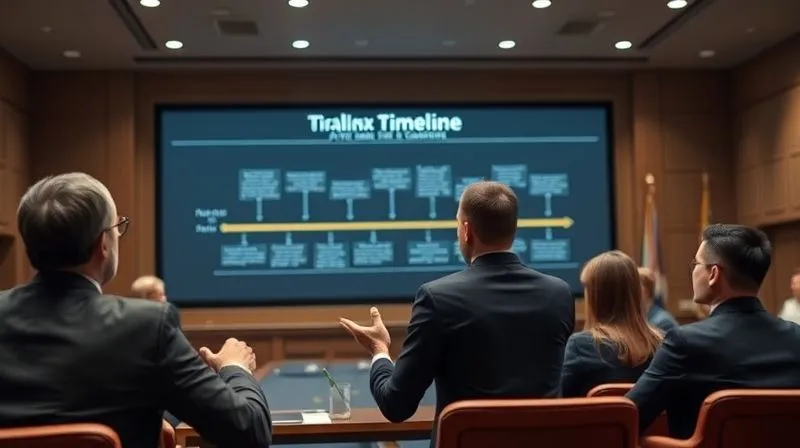
By presenting a clear, empathetic narrative, you transform abstract legal concepts into a human story. This not only clarifies the causation argument but also builds rapport and trust with the decision-makers, making your case far more persuasive. As legal scholar and author Jerome Bruner emphasized, narratives are fundamental to human understanding and memory.
Mediation and Arbitration: Alternative Dispute Resolution for Causation
While preparing for trial is crucial, not all cases need to end up in a courtroom. Alternative Dispute Resolution (ADR) methods like mediation and arbitration offer effective avenues for resolving complex causation disputes, often with greater efficiency and less cost. In my practice, I frequently recommend ADR, especially when the medical facts are intricate but both sides are genuinely seeking a resolution.
Benefits of ADR in Causation Disputes
- Confidentiality: Unlike public trials, ADR proceedings are private, which can be beneficial for sensitive medical information.
- Flexibility: Parties can tailor the process to their specific needs, including choosing a mediator or arbitrator with specialized medical or personal injury expertise.
- Cost-Effectiveness: Generally, ADR is less expensive and time-consuming than full litigation.
- Preservation of Relationships: While less common in personal injury, ADR can sometimes help maintain a more amicable tone, which can be beneficial in certain contexts.
- Focus on Resolution: The entire process is geared towards finding common ground and settlement, rather than adversarial victory.
Strategies for Success in Mediation
Mediation is a facilitated negotiation where a neutral third party (the mediator) helps the parties reach a voluntary settlement. For causation disputes, I advise:
- Prepare a Strong Mediation Brief: This document should clearly outline your causation argument, supported by concise summaries of medical records, expert opinions, and legal precedents. Make it easy for the mediator to understand the strength of your case.
- Bring Your Expert (If Necessary): In particularly complex medical causation cases, having your medical expert available (even via phone) to answer questions or clarify points for the mediator can be highly effective.
- Be Prepared to Educate: Your mediator, while neutral, might not be an expert in your specific medical field. Be ready to clearly and simply explain the medical science behind your causation argument.
- Listen Actively: Understand the defense's causation counter-arguments. Identifying their perceived weaknesses can help you craft more targeted responses and settlement offers.
Strategies for Success in Arbitration
Arbitration is more formal than mediation, resembling a mini-trial where a neutral third party (the arbitrator) hears evidence and makes a binding or non-binding decision. For causation, consider:
- Selecting the Right Arbitrator: Choose an arbitrator with a strong background in personal injury law or medical causation. Their expertise will be invaluable in evaluating the evidence.
- Focused Presentation of Evidence: Arbitration often has streamlined rules of evidence. Present your causation evidence (expert reports, medical records) clearly and concisely, focusing on the most impactful points.
- Direct and Cross-Examination: Be prepared to present your medical experts and cross-examine defense experts, just as you would in court, but often in a more condensed format.
ADR, particularly with a skilled mediator or arbitrator, can provide an excellent forum for resolving even the most entrenched causation disputes, allowing for creative solutions that might not be available in a courtroom setting. For more insights on the effectiveness of ADR, refer to resources from the American Arbitration Association.
Frequently Asked Questions (FAQ)
Q: What if the injured party has multiple pre-existing conditions? Having multiple pre-existing conditions makes the causation argument more complex but not impossible. The key is to meticulously document the client's health status *before* the incident and then clearly demonstrate how the incident either aggravated those conditions or caused new, distinct injuries. The 'eggshell skull' doctrine is vital here; the defendant must take the victim as they find them. Expert medical testimony becomes even more critical to differentiate between pre-existing pathology and incident-related damage or aggravation.
Q: How do I challenge a defense expert's causation report? Challenging a defense expert's report requires a thorough review for inconsistencies, unsupported conclusions, or a lack of scientific basis. Look for areas where their opinion deviates from widely accepted medical literature, or where they failed to consider all relevant medical records (e.g., pre-incident imaging that shows a stable condition). Your own expert can often provide a rebuttal report, highlighting these discrepancies. During deposition, focus on their methodology, assumptions, and any potential biases.
Q: Is it possible to settle a claim without clear causation? While challenging, it is sometimes possible to settle claims with less-than-perfect causation, especially if there are other strong liability factors or significant damages. However, expect a substantial reduction in settlement value. In such cases, a 'nuisance value' settlement might be pursued, or you might focus on the emotional impact and the defendant's potential exposure to litigation costs, even if causation is weak. Mediation can be particularly useful here to explore creative solutions.
Q: What's the difference between "but-for" and "proximate" causation in practice? In practice, 'but-for' (factual) causation is about the direct, scientific link: 'Would the injury have happened *if not for* the defendant's action?' Proximate (legal) causation is about fairness and foreseeability: 'Was the injury a reasonably foreseeable consequence of the defendant's action, making it fair to hold the defendant responsible?' You need both. For example, a driver runs a red light (but-for cause of collision). If a passenger then develops a rare, unforeseeable allergic reaction to the ambulance's oxygen mask, the collision is the but-for cause of the need for an ambulance, but the allergic reaction might not be a proximate cause of the driver's negligence if it was highly unforeseeable.
Q: When should I consider an accident reconstructionist for causation? An accident reconstructionist is invaluable whenever the mechanism of injury or the forces involved in an incident are critical to proving causation. This is especially true in complex motor vehicle accidents, slip-and-falls where the dynamics of the fall are disputed, or industrial accidents. Their scientific analysis can objectively link the physics of the incident to the type and severity of injuries sustained, making it much harder for the defense to argue a lack of causation or an alternative cause. Consider them early in cases where the incident's specifics are not immediately clear from eyewitness accounts alone.
Key Takeaways and Final Thoughts
Resolving causation disputes in complex bodily injury claims is undeniably one of the most challenging yet rewarding aspects of personal injury law. It demands meticulous preparation, a deep understanding of both legal and medical principles, and the strategic deployment of evidence and expert testimony. It’s a marathon, not a sprint, requiring patience, persistence, and an unwavering commitment to your client's well-being.
- Master Both Factual and Legal Causation: Understand the 'but-for' link and the 'foreseeability' of harm.
- Evidence is Your Foundation: Gather comprehensive medical records, incident reports, and diagnostic imaging from the outset.
- Leverage Expert Medical Testimony: Select highly credible and articulate experts who can clearly explain the causal link to a lay audience.
- Address Pre-Existing Conditions Proactively: Utilize the 'eggshell skull' doctrine and clearly distinguish between pre-existing issues and incident-related aggravation.
- Craft a Compelling Narrative: Simplify complex medical facts into an understandable and emotionally resonant story for the judge and jury.
- Consider ADR Strategically: Mediation and arbitration can offer efficient and effective pathways to resolution.
Remember, your role as a personal injury specialist is not just to advocate, but to educate—to bridge the gap between complex medical science and legal principles. By applying these expert strategies, you empower yourself to build unassailable causation arguments, overcome defense challenges, and ultimately secure the just compensation your clients deserve. The path may be intricate, but with diligence and expertise, success is within reach.
Recommended Reading
- IRS Bank Levy: 7 Urgent Steps When Your Client's Account is Frozen
- Accurate SCI Care Valuation: Your 7-Step Guide to Long-Term Costs
- 7 Steps to Contest Grandparent Access Rights in Family Court
- Stolen Trade Secrets? 7 Urgent Steps to Protect Your Business Now
- 7 Urgent Strategies: Slash Your C-Corp's Q4 Estimated Tax Payment Now!





Comments
Leave a comment below. Your email will not be published. Required fields marked with *