


Resolving Escrow Disputes in Complex Commercial Real Estate
For over two decades in commercial real estate law, I've witnessed the exhilarating highs of landmark deals closing and the gut-wrenching lows when transactions unravel. Few scenarios are as financially perilous and emotionally taxing as an escrow dispute in a complex commercial real estate transaction. It’s a situation where millions, sometimes hundreds of millions, hang in the balance, and the clock is always ticking.
The problem isn't merely a disagreement; it's a breakdown in trust, a misinterpretation of terms, or an unforeseen hurdle that threatens to derail months of negotiation, due diligence, and significant capital investment. I've seen promising developments halted, lucrative acquisitions collapse, and reputations tarnished, all because an escrow dispute wasn't handled with the precision and expertise it demands.
This article isn't just a theoretical overview; it's a practical guide forged from direct experience. I'll walk you through the anatomy of these disputes, illuminate the critical role of the escrow holder, and provide actionable frameworks and case studies to help you navigate these treacherous waters. My aim is to equip you with the insights and strategies needed for successfully resolving escrow disputes in complex commercial real estate, safeguarding your investments, and ensuring your deals cross the finish line.
Understanding the Anatomy of a Commercial Escrow Dispute
Before we delve into resolution, it's crucial to understand what constitutes a commercial escrow dispute. Unlike residential transactions, commercial deals often involve sophisticated parties, intricate financial structures, environmental considerations, zoning complexities, and multiple contingencies. These layers create fertile ground for disagreements that can quickly escalate.
Common Triggers for Escrow Disputes
- Failure of Contingencies: This is perhaps the most frequent culprit. A buyer might fail to secure financing, an environmental report could reveal unexpected contamination, or a zoning approval might be denied. The interpretation of whether a contingency was met (or legitimately failed) often sparks the dispute.
- Material Misrepresentation or Non-Disclosure: If a seller is accused of withholding critical information or misrepresenting the property's condition, the buyer may seek to terminate the agreement and recover their deposit.
- Breach of Contract: One party might allege the other has failed to perform their contractual obligations, such as not delivering required documents, failing to make repairs, or missing deadlines.
- Title or Survey Issues: Unexpected easements, encroachments, or unrecorded liens discovered during the title search can lead to disputes over marketability or who bears the cost of resolution.
- Earnest Money Deposit (EMD) Release: At the heart of most escrow disputes is the earnest money deposit. Both buyer and seller typically believe they are entitled to it upon a deal's collapse, leading to a standoff that the escrow holder cannot unilaterally resolve.
Understanding these triggers helps in anticipating potential flashpoints and structuring agreements to mitigate risk. In my practice, I've found that many disputes stem from ambiguously worded clauses, underscoring the importance of meticulous drafting.

The Escrow Holder's Role: More Than Just a Neutral Party
The escrow holder, often an escrow company or a title company, holds the earnest money and critical documents in trust. Their role is defined by the escrow instructions, which are essentially a mini-contract governing the escrow process itself. However, when a dispute arises, their neutrality becomes profoundly tested.
Limits of Escrow Holder Authority
It’s a common misconception that the escrow holder can simply decide who gets the earnest money. In reality, their primary duty is to strictly follow the joint instructions of both parties. If a dispute arises and both buyer and seller demand the EMD, the escrow holder cannot release it without mutual written consent or a court order. This is where the stalemate truly begins.
"The escrow holder is a stakeholder, not a judge. Their hands are tied until the parties agree or a court intervenes. Understanding this limitation is the first step in formulating your resolution strategy."
Interpleader Actions: The Escrow Holder's Recourse
When faced with conflicting demands for the earnest money, an escrow holder's most common legal recourse is to file an interpleader action. This is a lawsuit where the escrow holder deposits the disputed funds with the court, asking the court to determine who is rightfully entitled to them. Once the funds are deposited, the escrow holder is typically relieved of liability, and the buyer and seller then litigate against each other to claim the funds.
- Impact on Parties: An interpleader action means significant legal fees and delays for both buyer and seller. The funds remain locked up, and the transaction is definitively deadlocked.
- Costly and Time-Consuming: Litigation can take months, even years, adding substantial legal costs on top of the lost opportunity costs of the original deal.
My experience has taught me that avoiding an interpleader at all costs should be a primary goal for both parties involved. It's a lose-lose scenario that benefits no one but the attorneys.
Initial Steps When a Dispute Arises: Act Decisively
The moment a dispute surfaces, time is of the essence. Proactive and strategic action can often prevent escalation to a full-blown legal battle.
A Structured Approach to Initial Resolution
- Review the Contract Meticulously: Your commercial real estate purchase agreement is your bible. Carefully re-read all relevant clauses – contingencies, default provisions, earnest money forfeiture terms, notice requirements, and dispute resolution mechanisms. Identify precisely what conditions were (or weren't) met and what the contract dictates for such scenarios.
- Document Everything: Maintain a clear, chronological record of all communications (emails, letters, phone calls), notices, and relevant documents. This paper trail is invaluable if the dispute escalates.
- Communicate with the Other Party (Strategically): While emotions may run high, try to establish direct, professional communication. Sometimes, a misunderstanding can be clarified with a candid conversation. However, ensure any formal positions or demands are communicated in writing, adhering to contractual notice provisions.
- Notify the Escrow Holder: Inform the escrow holder of the dispute in writing, but do not issue conflicting demands for the earnest money prematurely. This is a crucial distinction. Simply notify them that a dispute exists and that you are seeking resolution.
- Engage Legal Counsel Immediately: This isn't an optional step. A seasoned real estate attorney can interpret the contract, assess your legal position, advise on the best course of action, and represent your interests effectively. The sooner you involve counsel, the better your chances of a favorable resolution.
I've seen clients try to go it alone, only to inadvertently prejudice their position by making statements or taking actions inconsistent with their contractual rights. Early legal intervention is an investment, not an expense, in these high-stakes situations. According to a recent survey by the American Bar Association, early legal consultation significantly increases the likelihood of out-of-court settlements in commercial disputes, saving both time and money. American Bar Association
Leveraging Contractual Provisions for Resolution
Many commercial real estate contracts include specific clauses designed to address disputes. Understanding and activating these can be your most powerful tool.
Key Contractual Clauses to Utilize
- Default Provisions: These clauses outline what constitutes a default by either party and the remedies available, including earnest money forfeiture or specific performance.
- Notice Requirements: Strict adherence to notice periods and methods of delivery is paramount. Failure to provide proper notice can invalidate your claim or defense.
- Cure Periods: Some contracts provide a period for the defaulting party to 'cure' their breach. This can be an opportunity to resolve the issue without terminating the agreement.
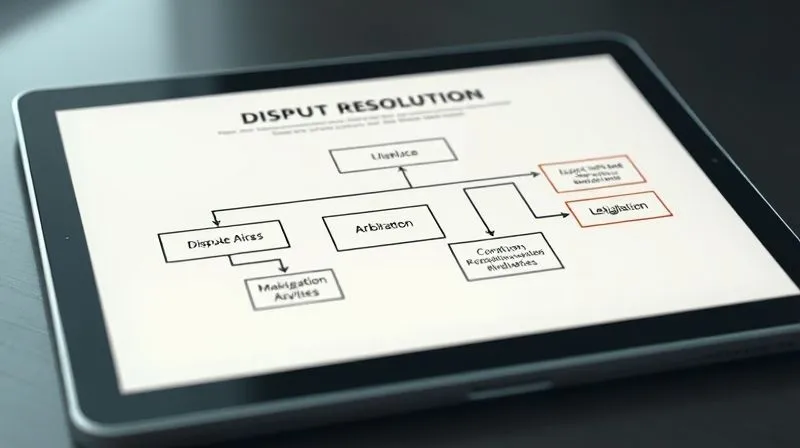
- Dispute Resolution Mechanisms: Many sophisticated commercial contracts mandate mediation or arbitration before litigation. These are critical steps that, when properly engaged, can lead to efficient resolution.
When I draft commercial contracts, I place immense emphasis on clear, unambiguous dispute resolution clauses. A well-crafted clause can save parties from years of litigation. For instance, a clause might state that "Any dispute arising out of or relating to this Agreement shall first be submitted to mediation in [City, State] in accordance with the rules of [Specific Mediation Service] before any litigation is commenced." This creates a clear roadmap.
Mediation and Arbitration: Preferred Paths to Settlement
When direct communication fails, but neither party wants to jump straight into court, mediation and arbitration offer viable, often mandatory, alternatives.
Mediation: Facilitating Agreement
Mediation involves a neutral third party (the mediator) who facilitates communication and negotiation between the disputing parties. The mediator does not make a decision but helps the parties explore solutions and reach a mutually acceptable settlement.
- Benefits: Less formal, confidential, preserves relationships, generally less expensive and faster than litigation, and allows for creative solutions not possible in court.
- My Approach: I always advise clients to enter mediation with an open mind and a clear understanding of their best alternative to a negotiated agreement (BATNA). Success often hinges on a willingness to compromise.
Arbitration: A Binding Decision
Arbitration is more formal than mediation. A neutral third party (the arbitrator, or panel of arbitrators) hears evidence and arguments from both sides and then renders a binding decision, similar to a judge. This decision is typically final and enforceable in court.
- Benefits: Faster and generally less expensive than litigation, private, and often handled by arbitrators with specific industry expertise (e.g., real estate law).
- Considerations: Limited rights of appeal, less formal rules of evidence, and the binding nature means you give up your day in court.
In complex commercial real estate, I've seen arbitration clauses prove incredibly effective. They can expedite resolution and keep sensitive financial details out of public court records. However, it's crucial to ensure the arbitration clause is well-drafted, specifying the rules, location, and number of arbitrators. Many organizations, like the American Arbitration Association (AAA), provide established rules and panels of experienced arbitrators. American Arbitration Association
Here's a comparison of these resolution methods:
| Method | Cost | Time | Control | Binding |
|---|---|---|---|---|
| Direct Negotiation | Low | Short | High | Only if agreement reached |
| Mediation | Medium | Medium | High (parties decide) | Only if agreement reached |
| Arbitration | Medium-High | Medium | Low (arbitrator decides) | Yes |
| Litigation | Very High | Long | Low (judge/jury decides) | Yes (with appeals) |
Navigating Litigation: When Other Options Fail
Sometimes, despite best efforts, a dispute cannot be resolved through negotiation, mediation, or arbitration. In such cases, litigation becomes unavoidable. This is typically the most expensive, time-consuming, and public option.
The Litigation Process for Escrow Disputes
- Filing a Complaint: One party files a lawsuit against the other (and often the escrow holder, who may then interplead the funds). The complaint outlines the factual basis for the claim and the legal relief sought.
- Discovery: Both sides exchange information, documents, and witness testimonies. This phase can be extensive in complex commercial cases, involving depositions, interrogatories, and requests for production of documents.
- Motions: Parties may file various motions with the court, such as motions to dismiss, motions for summary judgment, or motions to compel discovery.
- Trial: If no settlement is reached, the case proceeds to trial, where evidence is presented, and a judge or jury renders a verdict.
- Appeals: The losing party may have the right to appeal the trial court's decision to a higher court.
When litigation is the path, my focus shifts to building an unassailable case. This means exhaustive factual investigation, rigorous legal research, and skilled courtroom advocacy. We aim not just to win, but to secure a definitive resolution that aligns with our client's commercial objectives, whether that's recovering the earnest money, enforcing specific performance, or securing damages. It's a battle of attrition, and only the most prepared prevail.
Specific Performance vs. Damages
In commercial real estate litigation, a buyer might seek 'specific performance,' asking the court to compel the seller to complete the sale as per the contract. Alternatively, either party might seek monetary 'damages' for losses incurred due to the breach, which could include lost profits, out-of-pocket expenses, or the difference in market value. The choice of remedy is strategic and depends heavily on the specific facts and desired outcome. For more on contract remedies, a resource like Cornell Law School's Legal Information Institute provides excellent foundational knowledge. Cornell Law LII - Contract Law
Preventative Measures: Drafting Stronger Escrow Agreements
The best way to resolve an escrow dispute is to prevent it from happening in the first place. This begins with robust, clear, and comprehensive contract drafting.
Key Elements for Dispute Prevention
- Crystal-Clear Contingencies: Define each contingency precisely. What constitutes satisfaction or failure? What is the exact deadline? Who makes the determination, and how is it communicated?
- Earnest Money Release Provisions: Spell out the conditions under which the earnest money is released to the buyer or forfeited to the seller. Be explicit. Consider allowing for partial release upon certain milestones.
- Default and Remedy Clauses: Detail what constitutes a default and the specific remedies available to the non-defaulting party. This reduces ambiguity when a breach occurs.
- Notice Procedures: Mandate specific methods and addresses for all official notices. This avoids disputes over whether proper notice was given.
- Choice of Law and Venue: Specify which state's laws will govern the contract and where any legal actions must be filed. This simplifies potential litigation.
- Dispute Resolution Ladder: Include a multi-tiered approach: negotiation first, then mandatory mediation, then binding arbitration, and only then, litigation.
- Attorney's Fees Clause: A 'prevailing party' attorney's fees clause can incentivize parties to settle, as the losing party may be responsible for the winner's legal costs.
"An ounce of prevention in contract drafting is worth a pound of cure in litigation. Invest the time and expertise upfront to insulate your deals from future disputes."
In my experience, contracts that anticipate potential points of contention and provide clear, agreed-upon mechanisms for resolution are far less likely to end in protracted escrow disputes. It requires foresight and a deep understanding of commercial real estate dynamics.
Case Study: Resolving a Multi-Million Dollar Retail Escrow Dispute
How 'Central Plaza Developers' Navigated a Financing Contingency Stalemate
Central Plaza Developers (CPD) was under contract to acquire a prime retail center for $25 million from Evergreen Holdings (EH). The contract included a financing contingency, requiring CPD to secure a loan commitment within 60 days. Just days before the deadline, CPD received a loan commitment, but it contained a condition that the anchor tenant's lease be renegotiated to a longer term – a condition EH was unwilling to meet.
CPD asserted the financing contingency had failed legitimately, entitling them to their $1 million earnest money deposit. EH argued that CPD had not used 'commercially reasonable efforts' to secure financing without such an onerous condition, and therefore, the EMD should be forfeited. The escrow holder received conflicting demands.
The Resolution Process:
- Immediate Legal Counsel: Both parties engaged their respective real estate attorneys immediately.
- Contract Review: My team, representing CPD, meticulously reviewed the financing contingency clause, which specified 'commercially reasonable efforts' but did not define its scope regarding lease terms. We also noted the contract's mandatory mediation clause.
- Initial Communication & Proposal: We proposed a short extension to the financing contingency, suggesting CPD explore alternative lenders who might not impose the lease condition, or for EH to consider a limited concession on the lease term. EH initially refused, demanding forfeiture.
- Mandatory Mediation: As per the contract, the parties entered mediation. The mediator, a retired commercial real estate judge, quickly identified the ambiguity in 'commercially reasonable efforts' and the high cost of litigation for both sides.
- Creative Settlement: During mediation, we proposed a 'buy-out' of the dispute. CPD agreed to forfeit $250,000 of the EMD to EH as a termination fee, in exchange for the immediate release of the remaining $750,000. This allowed EH to quickly remarket the property without the cloud of litigation, and CPD recovered the majority of their EMD, preserving capital for other opportunities.
Outcome: The dispute was resolved in under 30 days post-mediation, avoiding an interpleader action and protracted litigation that could have cost each party hundreds of thousands in legal fees and years of uncertainty. This resulted in a pragmatic commercial outcome for both sides, demonstrating that even in complex disputes, creative solutions can be found through structured negotiation and expert guidance.
Frequently Asked Questions (FAQ)
Question: What is the typical timeline for resolving a complex commercial escrow dispute? The timeline can vary wildly. Simple disputes resolved through direct negotiation might take weeks. Mediation or arbitration could take 1-3 months. Litigation, especially if it goes through discovery and trial, could easily stretch from 6 months to several years, particularly with appeals. My advice is always to pursue the quickest, most amicable resolution path first.
Question: Can I avoid an escrow dispute by just walking away from the deal? Not necessarily. If you walk away without a contractual right to do so (e.g., a legitimate failure of a contingency), you could be in breach of contract. The seller might then have a claim to your earnest money deposit, or even pursue specific performance, depending on the contract terms. Always consult legal counsel before unilaterally terminating a commercial real estate contract.
Question: What are the risks of an interpleader action for the buyer and seller? The primary risks are significant legal costs and delays. The escrow holder will typically recover their attorney's fees from the interpleaded funds, reducing the amount available to the prevailing party. Furthermore, both buyer and seller will incur their own legal fees litigating against each other, and the funds remain inaccessible for the duration of the court process. It's a costly and frustrating process for all parties involved.
Question: How important is the escrow holder's reputation or experience in preventing disputes? While the escrow holder is neutral, their experience and efficiency can play a role in preventing procedural missteps that might inadvertently trigger disputes. A highly competent escrow officer will meticulously follow instructions, communicate clearly, and promptly identify any conflicting instructions, allowing parties to address them before they escalate. However, they cannot prevent a fundamental contractual disagreement between buyer and seller.
Question: Are there specific clauses I should insist on in my commercial real estate contract to protect myself from escrow disputes? Absolutely. In addition to clear contingency language, I always recommend robust default and remedy clauses, explicit earnest money release provisions, a tiered dispute resolution clause (negotiation > mediation > arbitration), and a 'prevailing party' attorney's fees clause. These provisions create clarity and incentives for resolution.
Key Takeaways and Final Thoughts
Resolving escrow disputes in complex commercial real estate demands a blend of legal acumen, strategic thinking, and a pragmatic approach. It's a high-stakes environment where every decision can have significant financial repercussions. My experience has shown me that preparation, clear communication, and timely legal intervention are paramount.
- Prevention is Paramount: Invest in meticulously drafted contracts with clear contingencies and dispute resolution mechanisms.
- Act Decisively, but Strategically: When a dispute arises, act quickly to gather facts, document everything, and engage expert legal counsel.
- Explore Alternatives to Litigation: Mediation and arbitration are often faster, cheaper, and more confidential ways to resolve disputes than going to court.
- Understand the Escrow Holder's Role: They are stakeholders, not decision-makers, and will likely file an interpleader if parties cannot agree.
- Focus on Commercial Outcomes: Sometimes, a pragmatic settlement, even if it means a partial concession, is far superior to a protracted legal battle.
Navigating these challenges requires not just legal expertise but also a deep understanding of the commercial real estate market and the motivations of all parties involved. By employing the strategies and insights I've shared, you can approach even the most complex escrow disputes with confidence, protect your interests, and ultimately, ensure the successful execution of your commercial real estate ventures. Remember, the goal is always to move forward, and a well-managed dispute resolution process is a vital tool in achieving that.
Recommended Reading
- Cruise Claims: 5 Steps to Pinpoint Jurisdiction for International Passengers
- 5 Critical Steps: How to Legally Terminate a Tenured Teacher Contract?
- 5 Legal Pillars: Proactively Managing Campus Active Shooter Threats
- 5 Crucial Strategies: Navigating EIA Legal Hurdles with Confidence
- Unlock Your Rights: How to Contest a Federal Administrative Agency Ruling Effectively




Comments
Leave a comment below. Your email will not be published. Required fields marked with *