


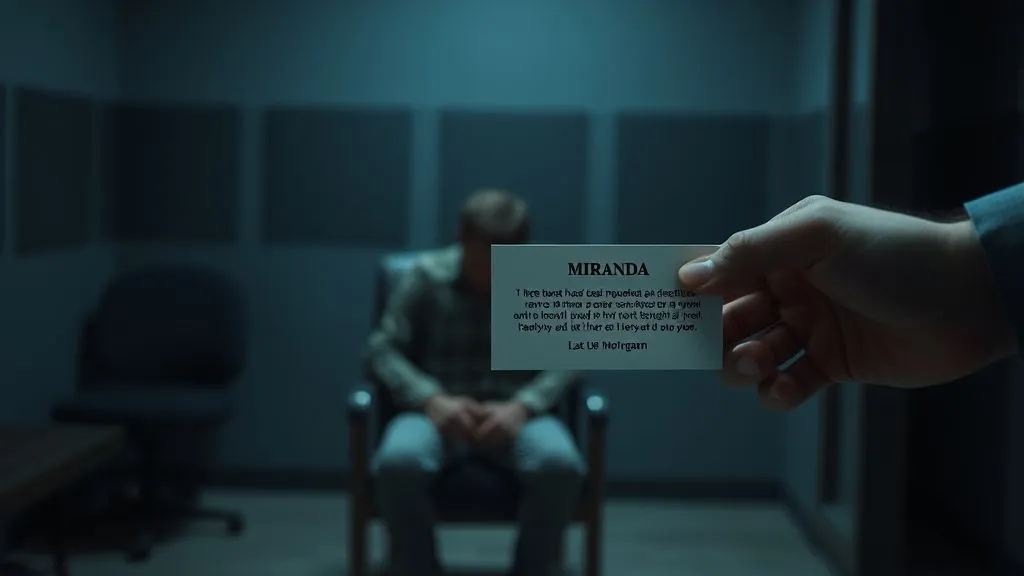
Suppressing Confession: Miranda Waiver Invalid Due to Intoxication?
For over two decades in the trenches of criminal defense, I’ve witnessed countless individuals, vulnerable and disoriented, make statements that irrevocably alter the course of their lives. It's a stark reality that in the high-pressure environment of a police interrogation, the line between cooperation and self-incrimination can blur, especially when an individual's mental faculties are compromised. I've seen defendants, under the influence of alcohol, drugs, or even severe emotional distress, unwittingly waive their most fundamental constitutional protections.
The problem is profound: proving that an individual's intoxication rendered their Miranda waiver invalid is one of the most challenging, yet crucial, battles in criminal law. The stakes couldn't be higher, as an improperly obtained confession can be the cornerstone of a prosecutor's case. Many defendants, and even some less experienced legal professionals, underestimate the legal hurdles involved, often assuming that mere intoxication automatically nullifies a waiver. This is a dangerous misconception that can lead to devastating outcomes.
This definitive guide will equip you with the expert insights, actionable frameworks, and case study examples needed to understand and vigorously challenge a Miranda waiver allegedly given while intoxicated. We'll delve into the intricacies of legal precedent, dissect the "totality of the circumstances" test, and provide a roadmap for gathering compelling evidence to argue that a confession should be suppressed. My goal is to empower you with the knowledge to fight for justice when an individual's rights have been compromised by impairment.
The Foundation: Understanding Miranda Waivers and Voluntariness
Before we can discuss how intoxication impacts a Miranda waiver, it's essential to grasp what a valid waiver entails. The Fifth Amendment to the U.S. Constitution protects individuals from self-incrimination, a right famously enshrined in the Supreme Court's landmark decision in Miranda v. Arizona. This ruling requires law enforcement to advise suspects in custody of their right to remain silent and their right to an attorney – the Miranda warnings.
What Constitutes a Valid Miranda Waiver?
A Miranda waiver is the suspect's agreement to speak with police without an attorney present and to answer questions, thereby giving up their rights to silence and counsel. For this waiver to be legally effective, it must meet two critical criteria: it must be voluntary and knowing and intelligent. These aren't just legal terms; they are the bedrock of constitutional protection against coercive police tactics and uninformed self-incrimination.
The "Knowing and Intelligent" Standard
A waiver is "knowing and intelligent" if the suspect understands the warnings themselves and the consequences of waiving those rights. This means they comprehend that they have a right to remain silent, that anything they say can be used against them, and that they have a right to an attorney, even if they cannot afford one. It doesn't require a perfect legal education, but a basic understanding of what is being given up. Intoxication directly challenges this standard, as a person under the influence may lack the cognitive capacity to truly understand these complex legal concepts.
The Role of Voluntariness in Confessions
Separate from the "knowing and intelligent" aspect of the waiver, the confession itself must also be voluntary. This means it must be the product of a free and deliberate choice, not coercion, threats, or promises. While Miranda addresses custodial interrogation, the voluntariness doctrine applies even if Miranda warnings weren't required or were properly waived. An intoxicated individual's confession might be deemed involuntary if their will was overborne by police tactics combined with their impaired state, regardless of whether they understood the Miranda warnings.
Intoxication as a Factor: Legal Precedent and Nuances
When does intoxication cross the line from mere impairment to a state that invalidates a Miranda waiver? This is where the legal analysis becomes nuanced, and where my experience has taught me the importance of meticulous detail.
When Does Intoxication Impair Capacity?
The core question is whether the suspect's intoxication, whether from alcohol, drugs, or a combination, was so severe that it rendered them incapable of understanding the Miranda warnings and the implications of waiving those rights. It's not about whether they were simply "buzzed" or "high"; it's about whether their cognitive functions were sufficiently impaired to negate the "knowing and intelligent" standard. Courts look for evidence that the suspect's mental state was so compromised that they could not rationally comprehend the situation.
Distinguishing Voluntary vs. Involuntary Intoxication
Generally, courts do not distinguish between voluntary and involuntary intoxication when assessing the validity of a Miranda waiver. The focus remains on the suspect's actual mental capacity at the time of the waiver, not how they became intoxicated. However, the circumstances of intoxication can be relevant to the totality of the circumstances test. For instance, if police provided the intoxicant, that would weigh heavily against voluntariness.
The Totality of the Circumstances Test
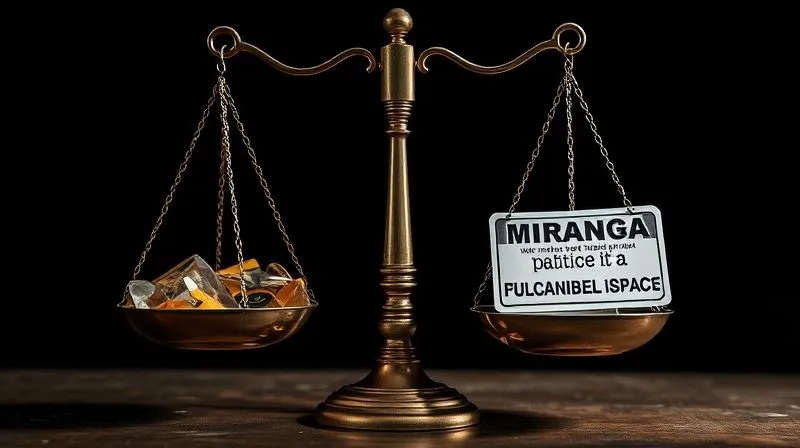
This is the prevailing legal framework for assessing the validity of a Miranda waiver, especially when intoxication is alleged. No single factor is determinative; instead, courts consider all relevant facts surrounding the interrogation and the waiver. This includes: the suspect's age, experience, education, and intelligence; their mental and physical condition at the time of the waiver; the nature of the interrogation (length, intensity, number of officers); and, critically, the degree of their intoxication. Evidence of severe impairment, such as slurred speech, unsteadiness, confusion, or inability to follow simple instructions, is crucial. As I often explain to clients, it's like painting a comprehensive picture for the judge, showing that every brushstroke points to a lack of genuine understanding.
In my experience, the "totality of the circumstances" test is less about a single silver bullet and more about a cumulative impact. Every detail, from the suspect's demeanor to the officers' actions, contributes to the overall narrative of whether a waiver was truly knowing and voluntary.
The complexities of assessing a person's mental state under duress and impairment require a careful examination of multiple interacting factors, making each case unique.
Gathering Evidence: Building Your Case for an Invalid Waiver
Successfully challenging a Miranda waiver due to intoxication hinges entirely on the evidence you can present. This isn't just about making an assertion; it's about providing concrete proof. Here’s how to build a robust evidentiary foundation.
Police Reports and Arresting Officer Observations
These are often the first, and sometimes most overlooked, sources of evidence. Officers are trained to document observations of impairment. Scrutinize police reports, incident logs, and field sobriety test results (even if refused or failed) for any mention of slurred speech, bloodshot eyes, unsteady gait, confusion, or unusual behavior. Sometimes, officers will downplay impairment in their official reports, but their initial notes or even radio transmissions might tell a different story.
Witness Testimony and Medical Records
Eyewitnesses who observed the suspect before, during, or immediately after the arrest can provide invaluable testimony regarding their state of intoxication. This could include friends, family, bartenders, or even paramedics. Furthermore, medical records from hospitals or clinics, especially if the suspect was transported for medical attention, can provide objective evidence of blood alcohol content (BAC) or drug levels. These records are often critical in establishing the degree of impairment.
Video and Audio Recordings of Interrogation
In today's era of widespread police body cameras and interrogation room recordings, these audiovisual records are goldmines. They offer an unfiltered view of the suspect's demeanor, speech patterns, coherence, and ability to understand and respond to questions. A suspect who is slurring their words, falling asleep, repeating themselves, or showing clear signs of confusion on video provides compelling evidence that their waiver was not knowing and intelligent. I always advise reviewing these recordings frame-by-frame.
Expert Witness Testimony (Toxicologists, Psychologists)
When the level of intoxication is disputed, or its impact on cognitive function needs scientific explanation, expert witnesses become indispensable. A toxicologist can interpret BAC levels or drug screening results, explaining their effects on the brain and behavior. A forensic psychologist can assess the suspect's mental state at the time of the interrogation, particularly if there are pre-existing conditions that might have exacerbated the effects of intoxication. Their testimony can translate complex scientific data into understandable legal arguments, strengthening your case significantly.
| Evidence Type | Key Information to Look For | Strategic Value |
|---|---|---|
| Police Reports/Logs | Observations of impairment (slurred speech, unsteadiness, confusion), FST results. | Initial documentation, officer's own assessment. |
| Witness Testimony | Observations of suspect's demeanor before/during/after arrest. | Corroborates impairment, provides context. |
| Medical Records | BAC levels, drug screens, medical assessments of consciousness/orientation. | Objective, scientific proof of impairment level. |
| Video/Audio Recordings | Suspect's demeanor, speech, coherence, responsiveness during warnings/interrogation. | Direct visual/auditory evidence of mental state, highly persuasive. |
| Expert Witness | Analysis of toxicology, psychological assessment of cognitive function. | Scientific explanation of impairment's impact on understanding/voluntariness. |
The Suppression Hearing: Legal Strategy and Argumentation
Once you've gathered your evidence, the battle for suppressing confession: Miranda waiver invalid due to intoxication? moves to the courtroom during a suppression hearing. This is where your strategic acumen and legal expertise truly come into play.
Filing the Motion to Suppress
The process begins with filing a formal motion to suppress the confession. This motion must clearly state the legal grounds for suppression – in this case, that the Miranda waiver was not knowing and intelligent, or the subsequent confession was not voluntary, due to the defendant's intoxication. The motion should be supported by a memorandum of law citing relevant case precedents and outlining the facts you intend to prove.
Presenting Evidence and Cross-Examining Officers
During the hearing, you will present your carefully collected evidence. This includes calling witnesses (lay and expert), introducing medical records, and playing relevant portions of audio/video recordings. Crucially, you will have the opportunity to cross-examine the arresting and interrogating officers. Your goal here is to highlight inconsistencies in their testimony, challenge their observations of the defendant's sobriety, and demonstrate any failures to adequately assess the defendant's capacity. Remember, officers are often incentivized to downplay a suspect's impairment, so a skilled cross-examination can expose these biases.
Crafting Compelling Legal Arguments
The legal argument must tie all the evidence together, demonstrating how the totality of the circumstances points to an invalid waiver. Emphasize how the defendant's impaired state, combined with the environment and methods of interrogation, rendered them unable to meaningfully understand and waive their rights. Cite specific case law where similar levels of intoxication or impairment led to suppression. This is where a deep understanding of precedent and persuasive legal writing makes all the difference.
- File a Detailed Motion: Clearly articulate the legal basis for suppression, specifically linking intoxication to the invalidity of the Miranda waiver.
- Subpoena All Relevant Records: Ensure you have every police report, medical record, and recording that could shed light on the defendant's state.
- Prepare Witnesses Thoroughly: Guide lay witnesses on how to describe their observations of impairment vividly and accurately. Prepare expert witnesses to explain the scientific impact of the intoxicant.
- Master the Interrogation Recordings: Identify key moments where the defendant's impairment is undeniable, or where officers' actions seem to take advantage of their state.
- Craft a Narrative: Weave all the evidence into a compelling story for the judge, illustrating how the defendant's compromised state negated their ability to exercise their constitutional rights.
- Anticipate Prosecution's Arguments: Be ready to counter claims that the defendant was merely feigning intoxication or that their impairment was not severe enough.
- Cite Strong Precedent: Reference specific cases where courts have suppressed confessions under similar circumstances to bolster your argument.
Case Study: The State v. Peterson
Case Study: The State v. Peterson
In a case I handled some years ago, let's call it The State v. Peterson, my client, Mr. Peterson, was arrested for a serious offense. He had consumed a significant amount of alcohol prior to his arrest and had also recently taken a new, powerful prescription sedative. Police reports initially noted he was "cooperative" but made no mention of intoxication. However, during discovery, we obtained the booking video. In the video, played during the suppression hearing, Mr. Peterson was visibly swaying, his eyes were unfocused, and he repeatedly asked the booking officer to repeat simple questions. During his Miranda advisement, he mumbled responses and signed the waiver form with an illegible scribble.
We introduced testimony from a toxicologist who explained the synergistic effect of alcohol and the sedative, projecting his likely cognitive impairment at the time of the waiver. We also called a family member who testified to Mr. Peterson's state just hours before his arrest. The prosecution argued that Mr. Peterson could still respond to questions, implying he understood. However, by demonstrating, through the video and expert testimony, that his responses were fragmented and his comprehension severely limited, the court agreed that the waiver was not knowing and intelligent. The confession was suppressed, significantly weakening the prosecution's case and ultimately leading to a more favorable outcome for Mr. Peterson. This case vividly illustrated that the visual evidence, combined with expert interpretation, can be far more powerful than an officer's written report.
Specific Challenges: Drugs, Alcohol, and Mental Impairment
The nature of the intoxication plays a significant role in how you approach your argument that a Miranda waiver invalid due to intoxication. Each substance, and even mental health conditions, presents unique evidentiary challenges and opportunities.
Alcohol Intoxication: Observable Signs and BAC
Alcohol is perhaps the most common intoxicant encountered. Observable signs like slurred speech, unsteady gait, odor of alcohol, bloodshot eyes, and disorientation are key. Blood Alcohol Content (BAC) is a critical objective measure. While there's no magic BAC number that automatically invalidates a waiver, a high BAC (e.g., above 0.15% or 0.20%) strongly supports an argument of impaired cognitive function. However, individual tolerance varies, so relying solely on BAC without corroborating behavioral evidence is risky. Expert testimony linking BAC to specific cognitive deficits is often necessary.
Illicit Drug Influence: Varying Effects and Proof
Illicit drugs present a more complex picture due to their diverse effects. Stimulants (like methamphetamine or cocaine) might make a suspect appear alert but paranoid or delusional, while depressants (like opioids or benzodiazepines) can lead to extreme drowsiness, confusion, or even unconsciousness. Proving drug influence often requires toxicology reports from blood or urine samples. Behavioral observations are paramount, as the specific effects of a drug can be more subtle or variable than alcohol. For instance, a suspect on hallucinogens might appear calm but be experiencing vivid internal hallucinations, making a knowing waiver impossible.
Prescription Medication and Underlying Mental Health Conditions
Often overlooked, prescription medications can have profound impairing effects, especially if misused, combined with other substances, or taken in new dosages. Many psychiatric medications, pain relievers, and sedatives can significantly affect judgment and comprehension. Furthermore, individuals with pre-existing mental health conditions (e.g., schizophrenia, severe depression, intellectual disabilities) are inherently more vulnerable to the effects of intoxication and police pressure. Their baseline cognitive function might already be compromised, making a knowing and intelligent waiver even less likely. Documenting these conditions through medical records and psychological evaluations is crucial for your defense.
The Role of the Defense Attorney: Your Advocate in Challenging Waivers
As an experienced criminal defense attorney, I cannot stress enough the importance of skilled legal representation when attempting to suppress confession: Miranda waiver invalid due to intoxication. This is not a battle for the faint of heart or the inexperienced.
Initial Assessment and Client Interview
My first step is always a thorough, empathetic interview with the client. It's critical to establish rapport and create a safe space for them to recount the events, no matter how hazy. I probe for details about their state of mind, what they consumed, when, and how they felt during the arrest and interrogation. I also inquire about any pre-existing medical conditions or medications. This initial information guides the entire investigation.
Investigation and Discovery
Following the interview, a rigorous investigation begins. This includes requesting all police reports, booking logs, arrest affidavits, and most importantly, any audio or video recordings of the arrest, transport, and interrogation. I also seek medical records, toxicology reports, and witness statements. This comprehensive discovery process is fundamental to uncovering the evidence needed to support the claim that the Miranda waiver was invalid due to intoxication. I leave no stone unturned, understanding that a single piece of overlooked evidence can make or break the case.
Negotiation and Trial Preparation
Armed with compelling evidence, the defense attorney can then engage in negotiations with the prosecutor, arguing for the suppression of the confession. If negotiations fail, the attorney prepares meticulously for the suppression hearing, crafting persuasive legal arguments, preparing witnesses, and strategizing cross-examination of law enforcement. The goal is not just to win the suppression hearing, but to leverage that victory (or the strong potential for it) to achieve the best possible outcome for the client, whether through plea negotiations or trial.
Common Pitfalls and How to Avoid Them
Even with strong evidence, challenging a Miranda waiver due to intoxication is fraught with potential missteps. Avoiding these common pitfalls is key to a successful outcome.
Assuming Intoxication Alone is Sufficient
A common mistake is believing that simply being intoxicated automatically invalidates a Miranda waiver. This is rarely the case. Courts require evidence that the intoxication was so severe that it prevented a knowing and intelligent waiver or rendered the confession involuntary. You must demonstrate the *degree* of impairment and its *impact* on cognitive function, not just its presence. This is where the "totality of the circumstances" test becomes paramount, and where a mere assertion of intoxication falls short. As the American Bar Association often highlights, the legal standard is high.
Failing to Document Impairment
Another critical error is not thoroughly documenting every piece of evidence related to the defendant's impairment. This includes not just toxicology reports, but also witness observations, medical evaluations, and detailed analysis of any audio/video recordings. If the defense cannot present concrete evidence of severe impairment, the court will likely defer to the officers' testimony that the defendant appeared coherent and understood their rights. Remember, the burden of proof for suppression typically rests with the defense.
Not Challenging Police Credibility
Police officers are often trained to minimize or ignore signs of intoxication to secure a confession. Failing to effectively cross-examine officers on their observations, their training regarding impaired individuals, or inconsistencies in their reports is a missed opportunity. A skilled defense attorney will use the officers' own words against them, highlighting discrepancies between their written statements and what is visible on video, or exposing their lack of specialized training in assessing severe intoxication. Trust me, a thorough and respectful but firm cross-examination can be incredibly effective in undermining the prosecution's narrative.
Frequently Asked Questions (FAQ)
Question: Can a person waive Miranda rights even if they appear slightly intoxicated? Yes, generally. The legal standard isn't just "any intoxication," but rather intoxication severe enough to prevent a "knowing and intelligent" waiver. If a person appears only slightly impaired but can still articulate understanding and respond coherently, a court may find their waiver valid. The defense must prove that the intoxication reached a level that fundamentally compromised their cognitive abilities.
Question: What if the police claim they didn't notice any signs of intoxication? This is a common scenario. It highlights the importance of independent evidence. While police testimony is powerful, it can be rebutted by video evidence (bodycam, interrogation room footage), medical records (BAC/drug tests), and independent witness testimony. A skilled attorney will also cross-examine officers on their training and experience in recognizing impairment, often revealing their limitations.
Question: Is there a difference if the intoxication was self-induced vs. involuntary? For the purpose of assessing whether a Miranda waiver was "knowing and intelligent" or a confession "voluntary," courts generally do not differentiate between self-induced and involuntary intoxication. The focus is on the suspect's actual mental capacity at the time of the waiver. However, the circumstances of how the intoxication occurred (e.g., if police supplied the intoxicant) could be a factor in the broader "totality of the circumstances" analysis for voluntariness.
Question: How long after an arrest can intoxication still be relevant to a Miranda waiver? The critical time frame is the moment the Miranda warnings were given and the waiver occurred. However, evidence of intoxication *before* or *immediately after* that moment can be used to infer the suspect's state at the precise time of the waiver. For example, a high BAC taken an hour after the waiver, combined with observable signs of impairment in booking videos, can be strong circumstantial evidence of intoxication during the waiver.
Question: What impact does a suppressed confession have on my case? Suppressing a confession can be a monumental victory. Without a confession, the prosecution's case often weakens significantly, as confessions are incredibly powerful evidence. This can lead to reduced charges, a more favorable plea bargain, or even dismissal of the charges, especially if the confession was the primary piece of evidence. It forces the prosecution to rely on other, potentially weaker, evidence.
Key Takeaways and Final Thoughts
- Successfully challenging a Miranda waiver due to intoxication requires proving the impairment was severe enough to negate a "knowing and intelligent" understanding of rights.
- The "totality of the circumstances" test is the guiding principle, considering all facts surrounding the interrogation and the suspect's condition.
- Compelling evidence, including police reports, medical records, witness testimony, and especially audio/video recordings, is crucial for building a strong defense.
- Expert witnesses (toxicologists, psychologists) can provide scientific backing for arguments about impaired cognitive function.
- A skilled criminal defense attorney is indispensable for navigating the legal complexities, gathering evidence, and effectively arguing for suppression in court.
- Avoid common pitfalls like assuming intoxication alone is sufficient or failing to thoroughly document every aspect of the impairment.
The fight to suppress a confession when a Miranda waiver invalid due to intoxication is a complex and arduous one, but it is a fight worth waging. As a veteran in this field, I've seen firsthand how a meticulous approach, combined with a deep understanding of the law and human psychology, can protect the rights of the vulnerable. Never underestimate the power of a well-prepared defense. If you or someone you know faces such a challenge, remember that justice often hinges on the details, and with the right strategy, those details can make all the difference.
Recommended Reading
- Navigating CWA: 5 Steps to Determine Isolated Wetland Jurisdiction
- Unlock the Truth: Non-Dischargeable Debts in Chapter 13 vs. Chapter 7
- 7 Legal Strategies: Defending Against Consumer Advocacy Claims
- Business Ignoring Your Complaint? Unlock the Ultimate Guide to Get Heard!
- 7 Steps to Prove Implied Warranty Breach After Express Warranty Expires

Comments
Leave a comment below. Your email will not be published. Required fields marked with *