



What Documentation Prevents IRS Audit Red Flags for Energy Tax Credits?
For over two decades in tax law, specializing in complex areas like energy tax credits, I've witnessed firsthand the confusion and anxiety that arises when the IRS comes knocking. Many individuals and businesses, genuinely believing they qualify for valuable energy credits, unfortunately, find themselves in hot water not because they were ineligible, but because their documentation simply couldn't stand up to scrutiny.
The pain point is palpable: the promise of significant tax savings from investing in clean energy can quickly turn into a nightmare of audits, disallowed credits, penalties, and interest. The IRS views these credits as a high-risk area due to the potential for misinterpretation of eligibility rules and insufficient proof of investment and performance. Without the right records, even the most legitimate claims can trigger an audit red flag, leading to lost benefits and immense stress.
My goal today is to equip you with the definitive knowledge and actionable strategies to build an audit-proof portfolio of documentation. We’re not just talking about a stack of receipts; we're delving into a strategic framework for what documentation prevents IRS audit red flags for energy tax credits, ensuring your claims are robust, transparent, and undeniably compliant. Let's transform potential audit anxiety into complete confidence.
Understanding the IRS's Scrutiny: Why Energy Credits are Targeted
From my vantage point in tax law, I've observed that energy tax credits, both for residential homeowners and businesses, are often under a microscope. Why? Because they represent a substantial financial incentive, and like any significant tax benefit, they attract attention. The IRS is wary of claims that lack precise substantiation, especially given the technical nature of energy-efficient improvements and renewable energy installations. They want to ensure that the spirit of the law – incentivizing genuine green investments – is upheld, and that taxpayers aren't claiming credits for ineligible property or inflated costs.
I've seen countless cases where a taxpayer genuinely invested in a solar array or upgraded their home's insulation, only to have their credit questioned because they couldn't produce the specific certifications or itemized costs the IRS demands. It's not about malice; it's about a lack of understanding of the stringent documentation requirements. The IRS isn't trying to deny legitimate claims, but they operate on verifiable facts, not good intentions.
In my experience, the biggest misconception taxpayers hold is that a simple invoice for an energy improvement is sufficient. The reality is far more nuanced; the IRS requires a comprehensive narrative supported by multiple, interlocking pieces of evidence to validate eligibility, cost, and proper installation.
The Foundation: General Record-Keeping Principles for Tax Credits
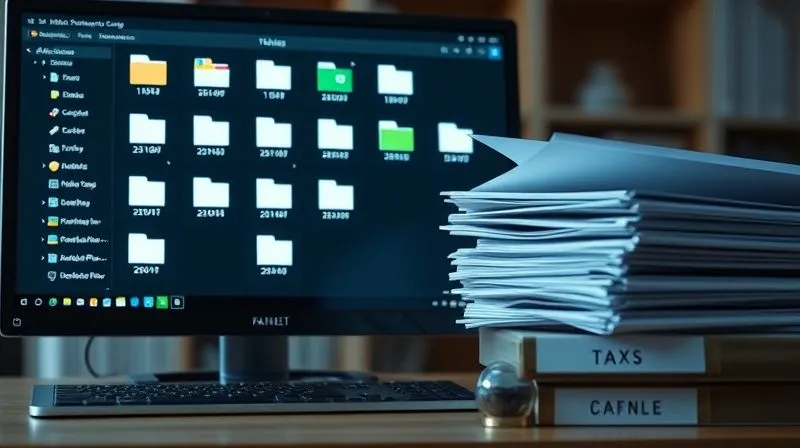
Before we dive into the specifics of energy credits, let's establish a universal truth in tax law: meticulous record-keeping is your first and best line of defense. This isn't just about saving receipts; it's about creating a coherent, accessible, and comprehensive file that tells a clear story of your investment. Think of it as building your legal case before any challenge arises.
I advise all my clients to adopt a disciplined approach to documentation from day one. This means not waiting until tax season, or worse, until an audit notice arrives, to gather your papers. Proactive organization is paramount. It reduces stress, saves time, and significantly strengthens your position should the IRS inquire about your claims.
- Establish a Dedicated System: Whether digital or physical, create a specific folder or digital directory for all energy credit-related documents. Label it clearly, perhaps '202X Energy Tax Credits.'
- Capture Everything Immediately: As soon as you incur an expense or receive a document related to your energy project, scan it or file the physical copy. Don't let papers pile up.
- Maintain Chronological Order: Organize documents by date to easily track the project's timeline, from initial quotes to final payments and certifications.
- Backup Digital Records: If you're going digital, ensure your files are backed up to a cloud service or external hard drive. Losing electronic records is just as detrimental as losing physical ones.
- Annotate When Necessary: For complex transactions or ambiguous receipts, add a brief, dated note explaining the relevance to your energy credit claim.
Adhering to these foundational principles will significantly streamline your process for what documentation prevents IRS audit red flags for energy tax credits, making it easier to retrieve and present information when needed.
Category 1: Proof of Purchase and Installation
This category forms the bedrock of your claim, demonstrating that you actually incurred costs for eligible property and had it installed. The IRS needs to see a clear paper trail connecting your investment to the specific energy-efficient improvements.
Invoices and Receipts: The Cornerstone
Every energy credit claim starts with the invoice. But it's not just any invoice; it needs to be detailed and specific. I've often seen audits triggered because an invoice was too vague, lumping eligible and ineligible items together without clear delineation. The IRS wants to know exactly what you paid for and that it directly relates to the credit you're claiming.
- Itemized Costs: The invoice must clearly break down the costs for eligible property and labor. If the project included non-eligible components (e.g., a new roof that wasn't solely for solar installation), these must be separated.
- Description of Property: A precise description of the energy-efficient item or renewable energy system, including make, model, and serial number if applicable.
- Installer Information: Full name, address, and contact information of the contractor or seller.
- Date of Purchase/Installation: Crucial for determining the tax year the credit applies to.
- Total Cost: The complete amount paid, matching your payment records.
Proof of Payment: Leaving No Doubt
An invoice shows what you *owe*, but proof of payment shows what you *paid*. This is a critical distinction that the IRS always checks. They want to see that the money actually changed hands and matches the amount on the invoice. This prevents claims based on unpaid or partially paid services.
I always advise clients to retain copies of:
- Cancelled Checks: Both sides, showing the endorsement.
- Bank Statements: Highlighting the specific transaction.
- Credit Card Statements: With the relevant purchase highlighted.
- Loan Documents: If financing was used for the energy improvement, especially for larger projects like solar installations, keep all loan agreements and payment schedules.
Installer Certifications and Contracts
For many energy credits, particularly the residential clean energy credit or business energy investment credit, the installation must be performed by a qualified contractor. The contract serves as a vital piece of what documentation prevents IRS audit red flags for energy tax credits, outlining the scope of work, materials used, and adherence to industry standards.
Ensure you have:
- Signed Contract: Detailing the scope of work, materials, costs, and timeline.
- Contractor's License/Certification: Proof that the installer is licensed and qualified to perform the work, especially for specialized installations like HVAC, solar, or geothermal.
- Warranties and Guarantees: These can indirectly support the legitimacy of the installation and the quality of the components.
Category 2: Certification of Eligible Property and Performance
Beyond proving you bought and installed something, you must prove that 'something' qualifies for the credit. This means meeting specific energy efficiency standards or being a recognized renewable energy technology. This is where many taxpayers stumble, assuming all 'green' products automatically qualify.
Manufacturer's Certification Statements
For many energy efficiency credits, the IRS requires specific documentation from the manufacturer stating that the product meets the applicable energy efficiency standards. This isn't just a label on the box; it's often a formal statement or certification number that can be cross-referenced.
For example, for windows, doors, or insulation, you'll need documentation confirming their U-factor and SHGC ratings meet the criteria. For furnaces or water heaters, look for AFUE or EF ratings. Always check the official IRS instructions for the specific credit (e.g., Form 5695 for residential credits) to see what exact certifications are needed. The IRS website provides detailed instructions and updates on eligible property.
Energy Star or Other Qualification Labels
While an Energy Star label is a strong indicator of efficiency, it's often not the sole piece of documentation. For some credits, the product must meet *specific* Energy Star criteria for that tax year, which can be more stringent than general labeling. Always keep the product's official Energy Star certificate or a copy of the product specifications that clearly indicate its qualification.
Similarly, for renewable energy property like solar panels, wind turbines, or geothermal heat pumps, you'll need documentation confirming they are certified by relevant industry bodies or meet specific technical standards. Energy.gov provides excellent resources on eligible technologies and standards.
System Performance Data and Specifications
For larger, more complex systems like solar or geothermal, the IRS may look beyond simple labels to actual system performance data. This could include:
- System Design Specifications: Detailed plans outlining the system's components, expected output, and configuration.
- Performance Guarantees: From the installer or manufacturer, indicating expected energy generation or savings.
- Monitoring Data (if available): While not strictly required for all credits, actual performance data from smart meters or monitoring systems can strongly corroborate your claims, especially for business credits.
Here's an example of how you might organize system specifications:
Category 3: Property Ownership and Usage
The IRS needs to confirm that you are the rightful owner of the property where the energy improvements were made and that the property's use aligns with the credit's requirements. This often comes down to distinguishing between a primary residence, a second home, or a business property.
Deeds, Property Tax Statements, and Utility Bills
These documents serve as irrefutable proof of ownership and residency. Always keep clear copies:
- Property Deed or Title: Establishes legal ownership.
- Property Tax Statements: Shows you are responsible for the property taxes.
- Utility Bills: Dated utility bills for the address where the improvements were made, especially for residential credits, prove occupancy.
Primary Residence vs. Rental Property: A Critical Distinction
This is a common area of confusion that can lead to audit red flags. Many residential energy credits (like the Energy Efficient Home Improvement Credit) are specifically for your primary residence. If the property is a rental or a second home, different rules or entirely different credits (like the Business Energy Investment Credit) may apply, or the improvement might not be eligible at all.
I've seen taxpayers incorrectly claim residential credits for rental properties, leading to immediate disallowance during an audit. It's crucial to understand the specific definitions for each credit. If your property has mixed use (e.g., a home office), careful allocation of costs may be necessary, which we'll discuss next. Understanding the distinctions between various energy credits is vital for compliance.

Category 4: Cost Allocation for Mixed-Use Property
When an energy improvement benefits both a qualifying use (e.g., a primary residence) and a non-qualifying use (e.g., a home office or rental portion), or when a business property has mixed personal and business use, you cannot claim the credit on the full cost. This is where meticulous cost allocation becomes essential, and it's a prime area for IRS scrutiny.
The Nuances of Business vs. Personal Use
Imagine you install a new, highly efficient HVAC system in your home, which also houses your dedicated home office. While the system benefits your entire home, the portion attributable to your home office might be considered a business expense (depreciated) rather than a personal energy credit. The IRS requires a reasonable and consistent method for allocating costs.
My advice is to document your allocation method clearly. This demonstrates due diligence and helps justify your credit claim. Common methods include:
- Square Footage: Allocate costs based on the percentage of square footage used for the qualifying purpose compared to the total area benefited by the improvement.
- Time/Usage: For certain components, if measurable, allocation could be based on the percentage of time or actual usage for the qualifying purpose.
- Direct Identification: If some components *only* serve a qualifying purpose, their costs can be fully attributed.
Always keep a detailed calculation showing how you arrived at your allocated cost. This spreadsheet or document should be part of your audit file.
Case Study: GreenTech Innovations and the BEIC Audit
Case Study: How GreenTech Innovations Secured Their BEIC
GreenTech Innovations, a small manufacturing firm, invested $500,000 in a new energy-efficient HVAC system for their facility, believing it qualified for the Business Energy Investment Credit (BEIC). Their initial claim was for the full amount. During an IRS audit, the agent noted that a significant portion of the building was leased out to another company, and GreenTech had not allocated the HVAC cost. The IRS flagged this as a red flag.
Drawing on my experience, I advised GreenTech to promptly perform a detailed cost allocation based on square footage. We demonstrated that 30% of the building was leased, and therefore, only 70% of the HVAC cost ($350,000) was attributable to GreenTech's qualifying business use. We provided a floor plan, lease agreements, and a clear spreadsheet detailing the calculation. This proactive and transparent approach, backed by solid documentation, successfully resolved the audit, preventing disallowance and potential penalties. GreenTech was able to claim the BEIC on the allocated amount, proving that what documentation prevents IRS audit red flags for energy tax credits isn't just about having *documents*, but having the *right* documents, correctly applied.
Proactive Audit Preparation: Beyond Basic Documentation
While the specific documents we've discussed are crucial, my experience tells me that true audit prevention goes beyond merely collecting papers. It involves a strategic mindset of proactive preparation, anticipating potential questions, and building an unassailable case for your claims.
Maintaining a Comprehensive Audit File
Think of your audit file as your complete narrative. It should contain not just the individual receipts but also a summary of your claim, how you calculated it, and why you believe you qualify. A well-organized audit file significantly reduces the burden if an audit occurs, making the process smoother and faster.
Your comprehensive audit file should include:
- A cover sheet summarizing the credit claimed, the amount, and the property involved.
- A copy of the relevant tax form (e.g., Form 5695, Form 3468) filed with your return.
- All invoices, receipts, and proof of payment.
- Manufacturer's certification statements and product specifications.
- Contracts with installers and their professional licenses.
- Proof of property ownership and residency/use.
- Any calculations for cost allocation or credit limits.
- Relevant IRS publications or guidance you relied upon.
Professional Advice: When to Engage a Tax Specialist
While this guide provides a robust framework, complex energy credit claims, especially for businesses or large-scale projects, often benefit from professional guidance. A qualified tax attorney or CPA specializing in energy tax can help interpret intricate rules, ensure proper documentation, and even represent you during an audit.
I always advise clients to consult with a professional if:
- The credit amount is substantial.
- Your property has mixed-use characteristics.
- You're unsure about the eligibility of specific components or systems.
- You've received an IRS notice or audit inquiry.

Seeking expert advice isn't an admission of weakness; it's a strategic investment in peace of mind and compliance. The cost of a professional can be far less than the penalties and disallowed credits resulting from an audit.
Common Red Flags and How Documentation Addresses Them
Understanding what triggers an audit is half the battle. From my years of experience, certain patterns consistently raise red flags for energy tax credits. Fortunately, each of these can be effectively addressed with the right documentation.
| Common Red Flag | Documentation Solution |
|---|---|
| Claiming a credit for an ineligible property (e.g., a standard window instead of an Energy Star certified one) | Manufacturer's certification statement, Energy Star label/specifications proving eligibility. |
| Inflated costs or claiming non-eligible costs (e.g., claiming a full roof replacement when only solar installation was eligible) | Itemized invoices clearly separating eligible property and labor from non-eligible components. |
| Lack of proof of payment for the claimed expenses | Bank statements, cancelled checks, credit card statements matching invoice amounts. |
| Claiming residential credits for rental properties or second homes | Property deed, utility bills, and clear declaration of primary residence status. |
| Unsubstantiated claims for large credit amounts without supporting details | A comprehensive audit file with all receipts, certifications, contracts, and a summary of calculations. |
By proactively addressing these common pitfalls with robust documentation, you significantly reduce the likelihood of attracting IRS scrutiny and are well-prepared should an inquiry arise. This proactive approach is the core of what documentation prevents IRS audit red flags for energy tax credits.
Frequently Asked Questions (FAQ)
Q: What if I lost a receipt or certification for my energy improvement? A: This is a common challenge. First, try to obtain a duplicate from the vendor, installer, or manufacturer. If that's not possible, gather secondary evidence. This might include bank or credit card statements, photographs of the installed product showing brand/model, or even sworn affidavits from the installer. While not ideal, a combination of circumstantial evidence can sometimes be accepted, but it's always riskier than original documentation.
Q: How long do I need to keep these records for energy tax credits? A: Generally, the IRS recommends keeping records for three years from the date you filed your original return or two years from the date you paid the tax, whichever is later. However, for energy credit claims, especially those involving substantial investments or property, I often advise clients to keep records for at least seven years, or even indefinitely for major property improvements, as the IRS can sometimes go back further if they suspect significant underreporting.
Q: Can I claim multiple energy tax credits for the same property? A: Yes, it's possible to claim multiple energy credits, but often not for the *same* expense. For instance, you might claim the residential clean energy credit for solar panels and the energy efficient home improvement credit for new windows in the same year. However, you cannot double-dip; the same dollar amount cannot be used to calculate two different credits. Always review the specific rules for each credit you intend to claim to ensure there are no overlapping restrictions.
Q: What happens if the IRS disallows my energy tax credit during an audit? A: If the IRS disallows your credit, they will typically send you a Notice of Deficiency, proposing additional tax, penalties, and interest. You have the right to appeal this decision, first through the IRS Appeals Office, and if unsuccessful, potentially through the U.S. Tax Court. This is where strong documentation and, ideally, professional representation, become absolutely critical. Without proper records, your chances of success on appeal are significantly diminished.
Q: Does the required documentation differ for residential versus business energy tax credits? A: Absolutely. While there's overlap in the need for proof of purchase and eligibility, business credits (like the Business Energy Investment Credit, or BEIC) often have more complex requirements. These can include demonstrating the property's use in a trade or business, specific energy generation or efficiency thresholds, and sometimes, prevailing wage and apprenticeship requirements for larger projects. The forms used (e.g., Form 3468 for BEIC vs. Form 5695 for residential) also dictate different information needs.
Key Takeaways and Final Thoughts
Navigating the landscape of energy tax credits can be immensely rewarding, offering significant financial incentives for making environmentally conscious choices. However, as an industry specialist, I cannot overstate the importance of bulletproof documentation to secure these benefits and avoid the pitfalls of an IRS audit. Understanding what documentation prevents IRS audit red flags for energy tax credits is not just about compliance; it's about protecting your investment and ensuring peace of mind.
- Proactive Documentation is Paramount: Start collecting and organizing documents from day one, using a dedicated, systematic approach.
- Three Pillars of Proof: Focus on proving purchase/installation, property eligibility/performance, and ownership/usage.
- Detail Matters: Itemized invoices, manufacturer certifications, and clear contracts are non-negotiable.
- Address Nuances: Pay close attention to primary residence rules, mixed-use property allocation, and specific credit requirements.
- Build an Audit File: A comprehensive, well-organized file is your best defense against IRS scrutiny.
- Don't Hesitate to Seek Expertise: For complex claims, a tax professional is an invaluable asset.
By embracing these strategies, you're not just preparing for a potential audit; you're building a foundation of financial security for your energy investments. Take these steps seriously, and you'll transform the abstract concept of tax credits into tangible, secure benefits. Your diligence today will pay dividends tomorrow.
Recommended Reading
- 6 Steps: Reconciling Conflicting Legal ESG Reporting Frameworks
- Job Move & Child Visitation: 5 Legal Steps to Protect Your Rights
- 7 Valid Grounds to Legally Terminate a Real Estate Contract
- 7 Steps to Safeguard Business Data During Government Agency Searches
- The Definitive Guide: Can You Get a Car Loan After Chapter 13 Discharge?





Comments
Leave a comment below. Your email will not be published. Required fields marked with *