


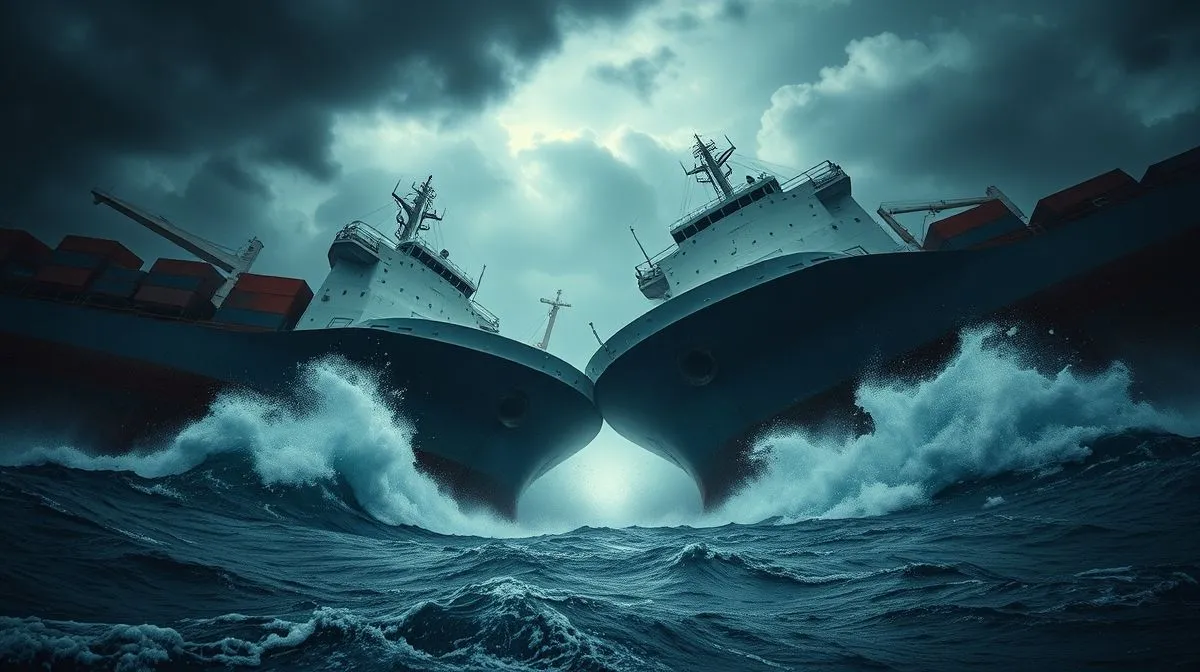
What Happens After a Ship Collision at Sea?
Imagine the chilling sound of metal grinding against metal, a sudden jolt that throws everything off balance. A ship collision at sea is a maritime nightmare, a scenario fraught with danger and complex consequences. But what exactly unfolds in the immediate aftermath, and what are the long-term repercussions?
The sheer scale of these incidents raises countless questions. Who is responsible? What steps are taken to ensure the safety of the crew and passengers? How is the environmental impact assessed and mitigated? Understanding these critical aspects is crucial, not just for those directly involved, but for anyone interested in the intricate world of maritime law and safety.
This comprehensive guide will navigate you through the complex chain of events that follow a ship collision. We'll explore the immediate emergency response, the meticulous investigation process, the legal battles that ensue, and the measures implemented to prevent future accidents. By the end of this article, you'll have a clear understanding of the multifaceted response to a ship collision at sea.
Immediate Actions Following a Ship Collision
The seconds and minutes after a ship collision are critical. The priority shifts immediately to damage control and ensuring the safety of all personnel onboard both vessels. Here's a breakdown of the immediate actions taken:
Assessing the Damage and Injuries
The first step is a rapid assessment of the damage sustained by each vessel. This includes:
- Identifying breaches in the hull.
- Evaluating the stability of the ships.
- Checking for fires or other hazardous conditions.
Simultaneously, the crew must account for all passengers and crew members and provide immediate medical assistance to anyone injured. This may involve administering first aid, stabilizing patients, and preparing for evacuation if necessary.
Alerting Authorities and Initiating Emergency Protocols
The captain of each vessel is obligated to immediately notify the relevant maritime authorities, such as the coast guard or maritime rescue coordination center. This notification includes:
- The location of the collision.
- The nature and extent of the damage.
- The number of people on board.
- Any immediate threats to life or the environment.
Emergency protocols are then activated, including sounding alarms, deploying lifeboats, and preparing for potential evacuation. Communication is key, both within the ship and with external rescue services.
Containing the Situation and Preventing Further Damage
Efforts are made to contain the situation and prevent further damage. This might involve:
- Closing watertight doors to prevent flooding.
- Activating fire suppression systems.
- Attempting to stabilize the vessels.
If there's a risk of pollution, such as an oil spill, measures are taken to contain the spill and minimize its impact on the environment. This may involve deploying booms and using skimmers to collect the oil.
The Investigation Process After a Ship Collision
A thorough investigation is crucial to determine the cause of the collision and prevent similar incidents in the future. These investigations are typically conducted by maritime authorities, such as the National Transportation Safety Board (NTSB) in the United States or the Marine Accident Investigation Branch (MAIB) in the United Kingdom.
Gathering Evidence and Witness Statements
The investigation begins with the collection of evidence from the scene of the collision. This includes:
- Examining the wreckage of the ships.
- Analyzing data from the vessel's voyage data recorder (VDR), often referred to as the "black box".
- Collecting witness statements from crew members, passengers, and other relevant parties.
Investigators also gather information about the weather conditions at the time of the collision, as well as the navigational equipment and procedures used by each vessel.
Determining the Cause of the Collision
Based on the evidence collected, investigators attempt to determine the cause of the collision. This may involve analyzing factors such as:
- Human error, such as negligence or fatigue.
- Mechanical failure, such as a malfunctioning engine or steering system.
- Navigational errors, such as improper use of radar or GPS.
- Adverse weather conditions, such as heavy fog or strong winds.
The investigation aims to identify all contributing factors and determine the primary cause of the collision. It is worth noting that in some cases, the cause may be multifactorial.
Issuing Recommendations to Prevent Future Accidents
Once the investigation is complete, the maritime authorities issue a report outlining their findings and recommendations. These recommendations may include:
- Changes to maritime regulations.
- Improvements to navigational equipment and procedures.
- Enhanced training for maritime personnel.
- Modifications to ship design or construction.
These recommendations are intended to prevent similar accidents from occurring in the future and improve maritime safety overall. According to the International Maritime Organization (IMO), cooperation between flag states is crucial for effective implementation of safety measures [IMO Website].
Legal and Financial Ramifications of a Ship Collision
Ship collisions often result in complex legal battles and significant financial losses. Determining liability and allocating damages can be a lengthy and contentious process. The legal framework governing maritime accidents is complex, often involving international conventions and national laws.
Determining Liability and Negligence
Determining liability is a crucial step in resolving a ship collision case. This involves identifying which party or parties were at fault for the accident. Factors that may be considered include:
- Violation of maritime regulations.
- Failure to maintain proper lookout.
- Negligent operation of the vessel.
- Unseaworthiness of the vessel.
If negligence is established, the responsible party may be held liable for damages resulting from the collision.
Maritime Law and Insurance Claims
Maritime law, also known as admiralty law, governs legal matters related to ships and shipping. In the event of a ship collision, maritime law dictates the procedures for filing claims, determining liability, and allocating damages.
Marine insurance plays a critical role in mitigating the financial losses associated with ship collisions. Ship owners typically carry various types of insurance, including hull and machinery insurance, which covers damage to the vessel itself, and protection and indemnity (P&I) insurance, which covers liabilities to third parties, such as passengers, crew members, and cargo owners. Claims are often complex and require specialized expertise.
Compensation for Damages and Losses
Victims of a ship collision may be entitled to compensation for various types of damages and losses, including:
- Personal injuries and medical expenses.
- Lost wages and earning capacity.
- Property damage to the vessel and cargo.
- Environmental damage and cleanup costs.
- Loss of life and related expenses.
The amount of compensation awarded will depend on the extent of the damages and the degree of liability assigned to each party. Legal proceedings are often long and costly, involving expert witnesses and complex legal arguments. The United Nations Convention on the Law of the Sea (UNCLOS) also plays a role in defining rights and responsibilities related to maritime incidents [UNCLOS Website].
Environmental Impact and Pollution Control
Ship collisions can have devastating consequences for the marine environment. Oil spills, chemical leaks, and the release of other pollutants can cause significant harm to marine ecosystems, wildlife, and coastal communities. The environmental impact of a ship collision must be addressed promptly and effectively.
Risk of Oil Spills and Other Pollutants
One of the most significant environmental risks associated with ship collisions is the potential for oil spills. When a tanker or cargo ship carrying oil is involved in a collision, the impact can rupture the hull and release large quantities of oil into the sea.
In addition to oil, ships may also carry other pollutants, such as chemicals, hazardous materials, and sewage. These pollutants can also be released into the environment as a result of a collision, posing a threat to marine life and human health.
Containment and Cleanup Efforts
In the event of an oil spill or other pollution incident, immediate action must be taken to contain the spill and minimize its impact. This may involve:
- Deploying booms to contain the spill and prevent it from spreading.
- Using skimmers to collect the oil from the water's surface.
- Applying dispersants to break up the oil and facilitate its natural degradation.
- Cleaning up contaminated shorelines and habitats.
The cleanup process can be lengthy and expensive, often requiring the involvement of specialized contractors and government agencies. The Exxon Valdez oil spill in 1989 serves as a stark reminder of the devastating consequences of maritime pollution [NOAA Website].
Long-Term Environmental Monitoring
Even after the immediate cleanup efforts are completed, it is important to conduct long-term environmental monitoring to assess the full extent of the damage and track the recovery of the ecosystem. This may involve:
- Monitoring water quality and sediment contamination.
- Assessing the health of marine organisms and wildlife populations.
- Restoring damaged habitats and ecosystems.
The long-term environmental monitoring process can take years or even decades, depending on the severity of the pollution and the resilience of the ecosystem.
Preventing Future Ship Collisions
While ship collisions can never be completely eliminated, there are several measures that can be taken to reduce the risk of such accidents. These measures include:
Improving Navigation and Communication Systems
Advanced navigation and communication systems can help ships avoid collisions by providing real-time information about their surroundings. These systems may include:
- Radar and Automatic Identification System (AIS) technology.
- Electronic charts and navigation software.
- Satellite communication systems.
Proper training and use of these systems are essential to prevent accidents.
Enhancing Maritime Regulations and Enforcement
Stringent maritime regulations and effective enforcement can help ensure that ships operate safely and responsibly. These regulations may address issues such as:
- Crew training and certification.
- Ship maintenance and inspection.
- Speed limits and traffic separation schemes.
- Alcohol and drug testing for crew members.
Regular inspections and audits can help ensure that ships comply with these regulations.
Promoting a Culture of Safety and Responsibility
Creating a culture of safety and responsibility within the maritime industry is crucial to preventing accidents. This involves:
- Encouraging open communication and reporting of safety concerns.
- Providing ongoing training and education for maritime personnel.
- Recognizing and rewarding safe practices.
- Holding individuals and organizations accountable for their actions.
A strong safety culture can help prevent accidents by fostering a sense of vigilance and responsibility among all stakeholders.
Frequently Asked Questions (FAQ)
What is the first thing that should be done after a ship collision? The immediate priority is assessing the damage, ensuring the safety of the crew and passengers, and alerting maritime authorities.
Who is responsible for investigating a ship collision? Maritime authorities, such as the National Transportation Safety Board (NTSB) or the Marine Accident Investigation Branch (MAIB), typically conduct investigations.
What kind of insurance covers damage from ship collisions? Hull and machinery insurance covers damage to the vessel, while protection and indemnity (P&I) insurance covers liabilities to third parties.
What are the long-term environmental impacts of a ship collision? Long-term impacts can include water and sediment contamination, harm to marine organisms, and damage to coastal habitats.
How can future ship collisions be prevented? Improving navigation systems, enhancing maritime regulations, and promoting a culture of safety can help prevent future collisions.
Recommended Reading
- Online Scam Victim? What To Do After Falling For It (2024 Guide)
- CAA Citizen Suits: Your Right to Sue for Clean Air Explained
- Federal Pollution Control Act Penalties: What You Need to Know
- Protect Your Savings: How to Shield Assets From Nursing Home Costs
- Tenant Rights During Eviction: Your Ultimate Protection Guide
Conclusion
A ship collision at sea sets in motion a complex chain of events, from immediate emergency response and damage control to extensive investigations, legal battles, and environmental remediation efforts. Understanding the processes involved, from the initial assessment to the implementation of preventative measures, is crucial for all stakeholders in the maritime industry. Ultimately, prioritizing safety, adhering to regulations, and fostering a culture of responsibility are paramount in mitigating the risks and consequences of these maritime incidents. By learning from past mistakes and embracing innovation, we can strive to create a safer and more sustainable future for maritime transport.

Comments
Leave a comment below. Your email will not be published. Required fields marked with *