



What if my EB-5 investment project fails before green card?
For over two decades specializing in immigration law, especially investor visas, I've witnessed the exhilarating highs and devastating lows of the EB-5 program. One of the most common, yet deeply unsettling, questions that keeps investors awake at night is precisely this: 'What if my EB-5 investment project fails before green card?' It’s a scenario no one wants to imagine, yet it's a critical aspect of due diligence and risk management that far too many overlook until it’s too late.
The fear is palpable: the loss of a significant investment, the potential forfeiture of years spent waiting, and, most critically, the jeopardizing of your family’s dream of a permanent life in the United States. This isn't just about money; it's about security, future, and the immense emotional toll. Many investors feel trapped, unsure of their legal standing, or what recourse they might have when their carefully chosen project falters.
In this definitive guide, drawn from my extensive experience navigating these complex situations, I will walk you through the precise steps, legal frameworks, and strategic considerations necessary if your EB-5 investment project faces distress or outright failure. We'll explore actionable frameworks, dissect real-world scenarios, and arm you with the expert insights needed to protect your investment, your immigration status, and your family’s future, even when the unexpected happens.
Understanding the Nuances of EB-5 Project Failure
Before we delve into solutions, it's crucial to define what 'failure' means within the stringent parameters of the EB-5 program. It's not always a dramatic collapse, but often a gradual erosion of the project's ability to meet its core obligations: primarily, the creation of at least 10 full-time jobs for qualifying U.S. workers per investor, and the sustained 'at-risk' nature of the capital investment.
Project distress can manifest in various forms: a regional center losing its designation, significant delays in construction, insufficient job creation projections, or even outright bankruptcy of the New Commercial Enterprise (NCE). The implications vary greatly depending on whether you're invested through a Regional Center or a Direct Investment model, and crucially, at what stage of your immigration process the failure occurs.
USCIS policy guidance, particularly memos on redeployment and sustained investment, provides some framework, but often these situations are novel and require creative legal strategies. As an experienced attorney, I've seen that understanding these nuances is the first step towards formulating an effective recovery plan.

Immediate Steps When Your EB-5 Project Shows Distress
The moment you suspect your EB-5 project is in trouble, time becomes your most critical asset. Early detection and swift, informed action can make all the difference between salvaging your investment and immigration petition, and facing a complete loss. Don't wait for official notifications; proactive monitoring is key.
Common early warning signs include prolonged silence from the regional center or developer, missed communication updates, negative local news reports about the project, or unexplained delays in construction or business operations. These are red flags that demand immediate investigation, not passive waiting.
"In my experience, investors who act decisively at the first hint of trouble are far more likely to mitigate damage. Delay is the silent killer of EB-5 recovery efforts."
Here are the immediate, actionable steps I advise my clients to take:
- Verify the Project's Status: Reach out to the regional center, project developer, or relevant public records to confirm the operational status. Document all communications, or lack thereof.
- Gather All Relevant Documents: Compile your I-526 petition, subscription agreement, loan agreements, escrow agreements, business plan, economic analysis, and all correspondence. These documents are your legal roadmap.
- Consult an Experienced EB-5 Attorney: This is non-negotiable. A lawyer specializing in EB-5 project failures can assess your specific situation, interpret contractual clauses, and advise on your legal standing and options.
- Understand Your Contractual Rights: Your investment and loan agreements often contain clauses regarding default, remedies, and investor rights. A seasoned attorney will help you decipher these complex provisions.
- Do Not Sign New Agreements Without Legal Review: Developers in distress might propose new terms or agreements. Never sign anything without a thorough review by your independent counsel.
This proactive approach ensures you're not caught off guard and can respond strategically to unfolding events, rather than react impulsively. The goal is to protect your immigration status and financial interests simultaneously.
| Distress Signal | What it Means | Immediate Action |
|---|---|---|
| Lack of communication from RC/Developer | Potential operational issues or financial strain | Send formal inquiry, check public records, consult attorney |
| Significant project delays or halts | Job creation at risk, capital not fully deployed | Request detailed project updates, evaluate job creation reports |
| Negative media reports about the project | Public perception issues, legal/financial troubles | Verify information, assess impact on NCE, seek legal counsel |
| Missed interest/dividend payments | Financial distress of the NCE | Review loan/equity agreements, understand default clauses |
Navigating I-526 Petition Issues Post-Failure
The status of your I-526 petition is paramount. If your EB-5 investment project fails before green card approval, specifically before your I-526 petition is adjudicated, the situation is precarious. USCIS requires that the investment be 'at risk' and that the New Commercial Enterprise (NCE) is operating or will operate to create the requisite jobs. A project failure directly undermines these requirements.
If the project fails while your I-526 is pending, USCIS will likely issue a Request for Evidence (RFE) or a Notice of Intent to Deny (NOID), asking for proof that the investment remains viable and job creation is still expected. Without a viable project, your I-526 will almost certainly be denied. In such cases, the primary strategy often involves identifying a new, qualifying EB-5 project for redeployment, if possible, or preparing to file a new I-526 petition.
Case Study: The Chen Family's Predicament
I recall working with the Chen family, whose I-526 petition had been approved, but their conditional green card was still pending, and the underlying regional center project unexpectedly ceased operations. The family was distraught, fearing their conditional green card would be revoked before they even received it. We immediately engaged with the regional center's receiver and USCIS. Our strategy involved demonstrating that the capital had indeed been invested and was at risk, and then working to identify a suitable redeployment opportunity. Through diligent effort, we found a new, USCIS-compliant project for redeployment, allowing the Chen family to maintain their eligibility and eventually proceed to their conditional green card interview. This demonstrates that even with an approved I-526, vigilance is crucial.
If you have already received your conditional green card (I-526 approved, I-485/DS-260 processed), and the project subsequently fails before you file your I-829 petition to remove conditions, the focus shifts to proving that your capital was sustained 'at risk' for the duration of the conditional residency and that the job creation requirement was either met or will be met through a permissible redeployment. This is where the concept of 'material change' becomes critical; USCIS scrutinizes any changes to the original business plan submitted with your I-526.
The Critical Role of Re-deployment and Sustained Investment
One of the most complex, yet vital, strategies when an EB-5 project fails is the concept of re-deployment. USCIS policy dictates that EB-5 capital must remain 'at risk' throughout the investor's conditional residency period, up until the I-829 petition is adjudicated. If the original project completes its business purpose or fails prematurely, the capital may need to be re-deployed into another qualifying investment.
Redeployment is not a simple transfer of funds. The new investment must also meet specific USCIS criteria: it must be a 'commercial activity,' located within the same regional center (if applicable), and importantly, the capital must remain 'at risk.' Finding a new, compliant project that can absorb the re-deployed funds and satisfy the job creation requirements can be a significant challenge, often requiring extensive due diligence on the new venture.
"The 'at-risk' requirement isn't just about initial investment; it's a continuous obligation that underscores the entrepreneurial nature of the EB-5 program. Redeployment is a complex dance between preserving capital and satisfying immigration mandates."
According to guidance from the American Immigration Lawyers Association (AILA), the timing and nature of redeployment are crucial. It must be a bona fide investment, and not merely a parking of funds. This often means finding another job-creating enterprise, which can be difficult under duress. My role often involves working with financial advisors and project developers to identify and vet such opportunities, ensuring they align with USCIS expectations.
Exploring Alternative EB-5 Options and Strategies
When an EB-5 project fails, it doesn't necessarily mean the end of your immigration journey. While challenging, there are alternative strategies and options to consider, often requiring a fresh perspective and robust legal guidance. This might involve looking beyond the original regional center or even exploring different visa categories.
For instance, if your original regional center project collapses, you might consider a 'direct investment' EB-5 project. This involves investing directly into a new commercial enterprise that you solely or primarily manage, taking on more operational control but also direct responsibility for job creation. This path, while demanding, offers greater transparency and control over your investment's fate.
Another strategy, if feasible, could be to interfile a new I-526 petition with a completely different, viable EB-5 project. This is effectively starting anew, but with the benefit of hindsight from your prior experience. The decision to pursue this path depends on various factors, including the stage of your original petition, the availability of funds, and your personal risk tolerance.
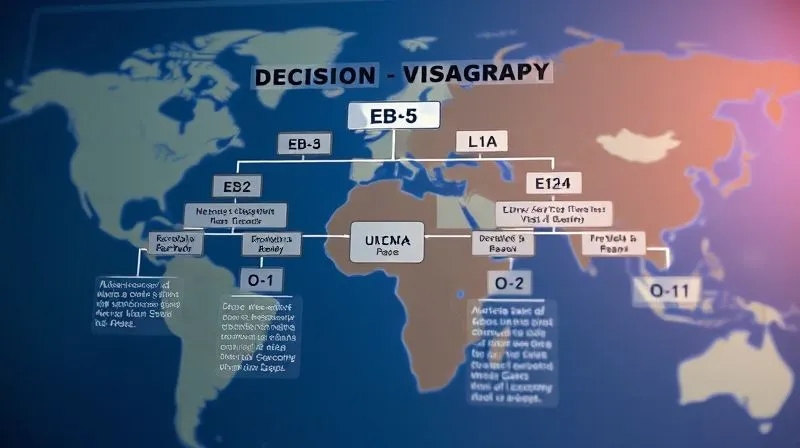
In some extreme cases, where the EB-5 path becomes untenable, I advise clients to explore other U.S. visa categories. Options like the E-2 Treaty Investor Visa (if applicable), L-1A Intracompany Transferee Executive or Manager Visa, or even O-1 visas for individuals with extraordinary ability, might offer alternative routes to residency or long-term stay. This comprehensive approach ensures that your immigration goals remain a priority, even if the initial EB-5 vehicle fails.
Legal Recourse and Investor Protection Mechanisms
Beyond immigration strategies, it's crucial for investors to understand their legal recourse when an EB-5 project fails. While the primary goal is often to salvage the immigration petition, recovering lost capital is also a significant concern. This is where the intersection of immigration law, corporate law, and securities law becomes critical.
Depending on the nature of the failure, investors may have grounds for litigation against the regional center, developers, or even their agents for breach of contract, fraud, misrepresentation, or violations of federal or state securities laws. For instance, if there's evidence that the project was a sham, or that funds were egregiously misused, the U.S. Securities and Exchange Commission (SEC) might become involved, as they have in numerous EB-5 fraud cases.
Escrow accounts play a vital role in protecting investor funds. Properly structured escrow agreements ensure that capital is not released to the project until the investor's I-526 petition is approved. While this doesn't guarantee project success, it provides a layer of protection against premature capital deployment into a non-viable project. Always scrutinize the escrow agreement before investing.
"Prevention is always better than cure. Thorough due diligence before investing is your first and best line of defense against project failure and the need for complex legal recourse."
I advise clients to pursue all available avenues simultaneously: work on immigration solutions while also exploring potential legal claims for financial recovery. These processes are often lengthy and complex, but with the right legal team, they can yield results. It's about holding responsible parties accountable and protecting your financial future.
Communication with USCIS and Your Legal Team
Effective and transparent communication is paramount throughout the EB-5 process, and especially so when a project faces distress or failure. Your immigration attorney acts as your primary liaison with USCIS, ensuring that all correspondence is handled appropriately and strategically. Never attempt to communicate directly with USCIS regarding complex issues without your attorney's guidance.
If USCIS issues a Request for Evidence (RFE) or a Notice of Intent to Deny (NOID) related to the project's viability or job creation, your attorney will formulate a comprehensive response. This response must be meticulously prepared, supported by evidence, and clearly articulate how you intend to meet the EB-5 requirements despite the project's challenges, perhaps through redeployment or other mitigating factors.
Maintaining a detailed and organized record of all project updates, financial statements, communications with the regional center, and legal advice received is crucial. This documentation forms the backbone of any response to USCIS or potential legal action. As an expert in this field, I emphasize that thorough record-keeping can be the difference between success and denial.
Regular check-ins with your legal team are essential. The landscape of EB-5 policy and project status can change rapidly. An experienced attorney will keep you informed of any new developments, policy changes, or legal precedents that might impact your case, allowing for agile adjustments to your strategy. This continuous engagement ensures you are never in the dark about your immigration future.
Long-Term Planning: Protecting Your Immigration Future
Even when navigating the immediate crisis of an EB-5 project failure, it's vital to maintain a long-term perspective on your immigration goals. The EB-5 journey is often lengthy and fraught with uncertainties, and a single project failure should not derail your entire plan for a future in the United States.
Think of your immigration strategy as a portfolio: diversification and contingency planning are key. While EB-5 is a powerful tool, it's wise to consider other potential pathways to U.S. residency or long-term stay, if they are applicable to your circumstances. This doesn't mean abandoning your EB-5 efforts, but rather building a resilient strategy.
This might involve maintaining eligibility for other visa types, even if you don't pursue them actively, or ensuring that you have other investment opportunities that could potentially serve as a basis for a different visa in the future. The goal is to avoid putting all your 'immigration eggs' in one basket, especially given the inherent risks of investment-based immigration.

Frequently Asked Questions (FAQ)
Question: Can I get my money back if my EB-5 investment project fails? Detailed answer: Recovering your investment capital after an EB-5 project failure is highly dependent on the specifics of your investment agreement, the nature of the failure, and the financial health of the New Commercial Enterprise (NCE) or Regional Center. If the failure is due to fraud or gross mismanagement, legal action (litigation, SEC involvement) might lead to recovery, though this can be a lengthy and uncertain process. If the project simply didn't perform as expected, your recourse might be limited to what's outlined in your subscription and loan agreements. It's crucial to consult an attorney immediately to assess your options for capital recovery, as this is separate from, though related to, your immigration petition.
Question: Will my I-526 automatically be denied if the project fails? Detailed answer: Not necessarily automatically, but the risk of denial is extremely high. If your project fails while your I-526 is pending, USCIS will likely issue a Request for Evidence (RFE) or a Notice of Intent to Deny (NOID) to inquire about the project's viability and job creation. If you cannot demonstrate that your capital remains at risk in a qualifying enterprise that will create the required jobs, your I-526 will likely be denied. However, if you can redeploy your capital into another qualifying project in a timely and compliant manner, you might be able to save your petition. This requires immediate action and expert legal guidance.
Question: What if I already have a conditional green card and the project fails? Detailed answer: If you have already received your conditional green card (I-526 approved, I-485/DS-260 processed), and the project fails before you file your I-829 petition to remove conditions, the focus shifts. You must demonstrate to USCIS that your capital remained 'at risk' for the duration of your conditional residency and that the job creation requirement was either met by the original project or will be met through a permissible redeployment. USCIS allows for redeployment into another qualifying investment to meet the 'sustained investment' and job creation requirements for I-829. This is a complex area, and the timing and nature of the redeployment are critical.
Question: How quickly do I need to act if I learn of project distress? Detailed answer: You need to act immediately. As an experienced attorney, I cannot stress enough that time is of the essence. Delays in responding to early warning signs can severely limit your options for both immigration relief and financial recovery. The moment you suspect distress, you should gather all your investment documents and consult an experienced EB-5 immigration attorney. They can help you verify the project's status, understand your rights, and formulate a proactive strategy before the situation deteriorates further.
Question: Is it possible to switch to another EB-5 project? Detailed answer: Yes, it is possible, but it's not a simple process. If your original project fails, you might have options for redeploying your capital into another qualifying EB-5 project. This is often necessary to meet the 'sustained investment' and job creation requirements for your I-829 petition. The new project must also meet USCIS criteria, including being 'at risk' and creating the requisite jobs. In some cases, if your I-526 is pending, you may need to file a new I-526 petition for a different project. The feasibility and strategy for switching projects depend heavily on the stage of your immigration process and the specific circumstances of the project failure.
Key Takeaways and Final Thoughts
- Proactive Monitoring is Essential: Don't wait for official notifications; be vigilant for early warning signs of project distress.
- Immediate Legal Counsel is Critical: Engage an experienced EB-5 attorney at the first hint of trouble to assess your options.
- Understand Redeployment: Be prepared for the complexities of redeploying capital to meet sustained investment and job creation mandates.
- Explore All Avenues: Consider alternative EB-5 strategies or even other visa categories to protect your immigration future.
- Document Everything: Maintain meticulous records of all project communications, financial statements, and legal advice.
- Due Diligence is Ongoing: Even after investment, continuous oversight and informed decision-making are vital.
Navigating an EB-5 project failure before green card approval is undoubtedly one of the most challenging situations an investor can face. However, it is not an insurmountable obstacle. With a clear understanding of the legal landscape, swift and strategic action, and the guidance of an experienced legal team, you can significantly increase your chances of protecting your investment, preserving your immigration petition, and ultimately achieving your dream of permanent residency in the United States. Remember, resilience and informed decision-making are your strongest allies in this journey.
Recommended Reading
- Unlock the Secrets: How to Handle Brownfield Redevelopment Legal Challenges Effectively
- Suspecting Elder Financial Abuse? 7 Critical Legal Steps to Take Now
- Unraveling Common Law Marriage Asset Division Rules: Your Ultimate Guide
- Land Use Variance: What's Allowed and How to Get Approved?
- 5 Essential Strategies: Mitigating Business Legal Risk in Conflict Zones





Comments
Leave a comment below. Your email will not be published. Required fields marked with *