



What Specific Grand Jury Motions Can Prevent Client Indictment?
For over two decades in the demanding arena of criminal law, I've witnessed firsthand the profound anxiety and devastating consequences that a grand jury indictment can bring. It's a critical juncture where a client's future hangs precariously, often feeling like an unstoppable force. Many believe that once a case reaches the grand jury, an indictment is all but inevitable – a mere formality. This perception, while understandable, is a dangerous misconception.
The truth is, while grand juries often operate with a degree of secrecy and deference to the prosecution, they are not impervious to challenge. The legal landscape offers avenues, specifically certain strategic grand jury motions and pre-indictment advocacy, that can indeed prevent a client from being indicted. The key lies in understanding these mechanisms and deploying them with precision and expertise.
In this comprehensive guide, I will draw upon my extensive experience to illuminate the specific grand jury motions and proactive strategies that can serve as powerful shields against indictment. We'll delve into actionable frameworks, real-world scenarios, and expert insights to equip you with the knowledge needed to navigate this complex phase of criminal proceedings and, crucially, protect your client's liberty.
Deciphering the Grand Jury's Power: Your Client's Pre-Indictment Vulnerability
Before we dissect the preventative motions, it's vital to grasp the grand jury's function and the inherent vulnerabilities it presents. A grand jury's primary role is to determine whether there is probable cause to believe a crime has been committed and that the accused committed it, thereby warranting an indictment. Unlike a trial jury, their proceedings are typically non-adversarial from the defense perspective; the prosecutor largely controls the narrative and evidence presented.
This imbalance creates a significant vulnerability for the client. Without proper legal representation and strategic intervention, the grand jury often hears only the prosecution's side of the story, making a 'true bill' (indictment) a common outcome. My experience has taught me that this is precisely why proactive defense is not just beneficial, but absolutely essential. Understanding this power dynamic is the first step in formulating an effective strategy to prevent indictment.
The Strategic Imperative: Why Early Intervention & Proactive Motions Are Crucial
The adage 'an ounce of prevention is worth a pound of cure' holds immense weight in the grand jury context. Waiting until an indictment is handed down to begin a robust defense significantly limits options. Early intervention allows counsel to shape the narrative, challenge procedural missteps, and even influence the prosecutor's decision-making process before the grand jury votes.
From my perspective, the window of opportunity to prevent an indictment opens the moment a client becomes aware they are the subject or target of a grand jury investigation. This is when a skilled attorney can begin to assess the potential charges, identify weaknesses in the prosecution's anticipated case, and strategically deploy motions designed to either halt the process or undermine the basis for indictment. It's about being several steps ahead, leveraging every available legal tool.
Challenging Subpoenas: Motions to Quash and Limit Grand Jury Scope
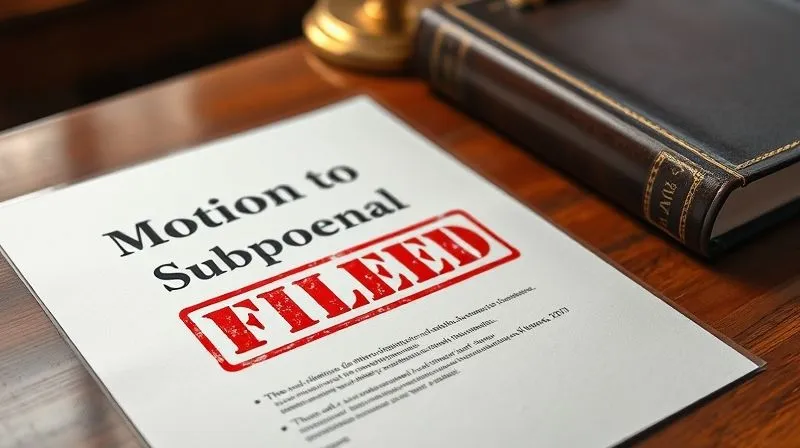
One of the most common and effective pre-indictment strategies involves challenging grand jury subpoenas. Grand juries often issue subpoenas for documents, testimony, or other evidence. If these subpoenas are overly broad, vague, or seek privileged information, a motion to quash can be a powerful tool to prevent harmful evidence from reaching the grand jury.
Grounds for Quashing a Subpoena
- Overbreadth: The subpoena demands an unreasonable amount of information or information irrelevant to the legitimate scope of the grand jury's inquiry.
- Vagueness: The subpoena is unclear about what is being requested, making compliance difficult or impossible.
- Privilege: The subpoena seeks information protected by legal privileges (e.g., attorney-client privilege, spousal privilege, Fifth Amendment privilege against self-incrimination).
- Undue Burden: Compliance would impose an unreasonable and oppressive burden on the subpoenaed party.
Strategic Considerations for Motions to Quash
Filing a motion to quash is not merely about avoiding compliance; it's a strategic maneuver. It can signal to the prosecution that the defense is vigilant and prepared to litigate every aspect of the case. More importantly, successfully quashing a subpoena can prevent critical pieces of evidence, or even entire lines of inquiry, from ever being presented to the grand jury, thereby weakening the prosecution's case for indictment. It forces the prosecution to refine their requests or abandon certain avenues, directly impacting their ability to secure a true bill.
Asserting Privileges: Protecting Confidential Information from Grand Jury Scrutiny
Closely related to quashing subpoenas is the assertion of legal privileges. Protecting privileged information is paramount to preventing indictment. If the prosecution gains access to communications protected by attorney-client privilege, for instance, it could severely compromise the defense strategy and provide the grand jury with information it should not consider. I've often seen prosecutors push the boundaries here, making it crucial for defense counsel to stand firm.
Types of Privileges to Assert
- Attorney-Client Privilege: Protects confidential communications between a client and their attorney for the purpose of seeking legal advice.
- Fifth Amendment Privilege: Protects individuals from being compelled to be a witness against themselves. A witness can invoke this privilege to refuse to answer questions that might incriminate them.
- Spousal Privilege: Protects confidential communications between spouses, or in some jurisdictions, allows a spouse to refuse to testify against the other.
- Doctor-Patient Privilege: Protects confidential communications between a patient and their doctor related to medical treatment.
Successfully asserting these privileges, often through specific motions or by instructing a client to invoke their rights, can prevent the grand jury from hearing damaging testimony or reviewing incriminating documents. This directly impacts the prosecution's ability to establish probable cause for an indictment. As marketing guru Seth Godin often says, "The cost of being wrong is less than the cost of doing nothing." In this context, failing to assert privilege can be catastrophically wrong.
The American Bar Association's Model Rules of Professional Conduct provide a foundational understanding of an attorney's duty of confidentiality, which underpins many privilege assertions.Motions to Dismiss Based on Pre-Indictment Prosecutorial Misconduct or Irregularities
While challenging an indictment post-issuance is more common, there are rare but critical instances where pre-indictment prosecutorial misconduct or severe procedural irregularities can be challenged through motions, effectively preventing an indictment. This is a more complex and often uphill battle, as the secrecy of grand jury proceedings makes it difficult to uncover such issues. However, when evidence of misconduct surfaces, it must be vigorously pursued.
Common Forms of Pre-Indictment Prosecutorial Misconduct
My experience indicates that these issues, though often hidden, can undermine the integrity of the grand jury process:
- Failure to Present Exculpatory Evidence: In some jurisdictions, prosecutors have a duty to present substantially exculpatory evidence to the grand jury. Failure to do so can be grounds for challenge.
- Improper Influence or Coercion: Directing or pressuring grand jurors to indict, or making inflammatory remarks.
- Introducing Perjured Testimony: Presenting testimony known to be false.
- Unauthorized Persons in Grand Jury Room: Allowing individuals not authorized by law to be present during proceedings.
A motion based on these grounds, if successful, seeks to invalidate the grand jury proceedings before an indictment is returned, or to prevent a vote based on a tainted process. It's a powerful statement that the integrity of the justice system must be maintained from the earliest stages. According to a study published in the Yale Law Journal, while difficult, successful challenges to grand jury proceedings based on misconduct do occur and underscore the importance of vigilant defense.
| Misconduct Type | Impact on Grand Jury | Preventative Motion |
|---|---|---|
| Failure to Present Exculpatory Evidence | Skews probable cause determination | Motion for Dismissal/Intervention based on Due Process Violation |
| Improper Influence/Coercion | Undermines juror independence | Motion to Quash Grand Jury Proceedings/Dismissal |
| Introducing Perjured Testimony | False basis for indictment | Motion for Dismissal/Investigation |
| Unauthorized Presence | Violates secrecy and procedural rules | Motion to Quash/Dismiss Grand Jury Proceedings |
Demanding Specificity: Leveraging a Motion for a Bill of Particulars Strategically
While typically filed after an indictment, a motion for a bill of particulars can, in certain strategic scenarios, be used to pre-emptively reveal weaknesses in the prosecution's case, potentially influencing their decision to pursue an indictment. If information about the potential charges is known or anticipated, demanding specifics can force the prosecution to lay out their evidentiary hand prematurely.
When to File a Bill of Particulars (Pre-Indictment Context)
If a client is aware they are the target of an investigation and has some indication of the charges being considered, a proactive request for particulars, even if informally made to the prosecutor, can be beneficial. It forces the prosecution to articulate the specific acts, dates, and locations they intend to present to the grand jury. If they cannot provide these details with sufficient specificity, it highlights the weakness of their case.
Impact on Grand Jury Proceedings
By forcing the prosecution to define the scope and specifics of their case early, a defense attorney can:
- Identify gaps in the evidence.
- Uncover potential inconsistencies.
- Prepare counter-arguments or exculpatory evidence to present (if permitted).
The Proffer Agreement & Exculpatory Evidence: Influencing the Prosecutor's Discretion
Beyond formal motions, some of the most impactful strategies to prevent indictment involve direct engagement with the prosecutor. This often takes the form of a proffer agreement or presenting exculpatory evidence directly to the prosecutor, hoping to convince them not to present the case, or certain charges, to the grand jury.
The Proffer Session
A proffer, or 'queen for a day' agreement, allows a client (or witness) to provide information to the prosecution with the understanding that this information cannot be directly used against them in a subsequent prosecution. It's a high-stakes move, requiring careful consideration and an experienced attorney. The goal is to present information so compellingly exculpatory or to offer cooperation so valuable that the prosecutor decides against seeking an indictment.
Presenting Exculpatory Evidence
While the defense generally cannot present evidence directly to a grand jury, an attorney can often present exculpatory evidence to the prosecutor. This might include witness statements, documents, or even a detailed explanation of events that contradicts the prosecution's theory. The hope is that the prosecutor, upon reviewing this information, will recognize the weakness of their case or the injustice of pursuing an indictment.
Case Study: The Misunderstood Transaction
I recall a case where my client, a small business owner, was under investigation for alleged wire fraud. The prosecution believed a series of international transfers were part of a scheme. After receiving a target letter, we immediately began compiling documents and witness statements that explained the transactions as legitimate business dealings with a foreign partner. Instead of waiting for a subpoena, we proactively requested a proffer session. During the session, we presented a meticulously organized binder of contracts, invoices, and authenticated communications, demonstrating the legitimacy of each transfer. The prosecutor, seeing the comprehensive and exculpatory nature of the evidence, ultimately decided not to present the case to the grand jury. My client was never indicted. This proactive approach, while not a formal motion, was a direct intervention that prevented indictment.

Challenging Grand Jury Composition: Motions Alleging Bias or Procedural Flaws
Another avenue, though often challenging, is to attack the very composition or procedures of the grand jury itself. These motions argue that the grand jury was improperly constituted or that its proceedings were so flawed as to deny due process, thereby making any potential indictment invalid or preventing one from being issued.
Grounds for Challenging Grand Jurors
- Systematic Exclusion: The grand jury selection process systematically excludes a cognizable group (e.g., based on race, gender, socioeconomic status). This violates constitutional rights.
- Bias: While difficult to prove, if there is evidence that a grand juror harbors a specific bias against the client or the type of crime, it could be grounds for challenge.
- Lack of Impartiality: Though grand jurors are not expected to be as impartial as trial jurors, extreme instances of partiality could be challenged.
Such challenges are typically brought before an indictment is returned, seeking to halt proceedings or to have the grand jury discharged. While grand jury challenges are complex and rarely successful, the threat of such a motion can sometimes prompt prosecutors to review their processes more carefully or even reconsider their pursuit of an indictment if the procedural grounds are strong. The U.S. Attorney's Manual outlines guidelines for grand jury proceedings, which can be a basis for identifying procedural flaws.
Strategic Timing and Ethical Considerations in Pre-Indictment Advocacy
The timing of these motions and interventions is as critical as the motions themselves. Filing too early without sufficient information can be counterproductive, while waiting too long can close the window of opportunity. An experienced attorney must carefully assess the investigation's stage, the client's risk profile, and the available evidence before deciding on a course of action.
Furthermore, ethical considerations are paramount. All actions must be within the bounds of legal and professional ethics. This includes truthful representations to the court and prosecutors, and diligent adherence to rules of professional conduct. My guiding principle has always been to be zealous in advocacy, but always scrupulously ethical.
It's also important to manage client expectations. Preventing an indictment is a difficult task, and success is never guaranteed. However, by strategically deploying these motions and engaging in proactive advocacy, an attorney significantly increases the client's chances of avoiding the profound impact of a formal indictment. It's about building a robust defense from the earliest possible moment, using every tool in the legal arsenal to protect their rights and future.

Frequently Asked Questions (FAQ)
Can a client testify before a grand jury to prevent an indictment? Generally, no. While a grand jury may permit a target to testify, it's almost always a terrible idea. The client does not have their attorney present in the grand jury room, and their testimony can be used against them. A proffer session with the prosecutor, with counsel present, is a far safer and more strategic alternative.
How often do grand jury motions actually prevent an indictment? It's difficult to quantify precisely, as many successful interventions happen behind the scenes (e.g., successful proffer agreements or quashing subpoenas that cripple the prosecution's case). Formal motions to dismiss based on misconduct are rare, but successful challenges to subpoenas or privileges are more common and can significantly impact the outcome by limiting the evidence presented. The goal is to make indictment less attractive or less viable for the prosecution.
What if the grand jury has already begun hearing evidence? Is it too late for these motions? No, not necessarily. While early intervention is ideal, motions to quash subpoenas, assert privileges, or even challenge misconduct can often be filed even while the grand jury is active. The window typically closes once a true bill has been returned, but until then, opportunities for intervention exist.
Is it possible to convince a prosecutor not to seek an indictment without filing formal motions? Absolutely. In my experience, some of the most effective pre-indictment work involves direct negotiation and presentation of exculpatory evidence to the prosecutor. If the prosecutor is convinced that there isn't sufficient probable cause, or that the case is not strong enough to warrant a true bill, they may choose not to present it to the grand jury or to present it with reduced charges. This often happens quietly, without public filings.
What is the difference between a grand jury and a trial jury? A grand jury determines if there is enough probable cause to bring criminal charges (to indict), and its proceedings are typically secret. A trial jury (petit jury) hears evidence in a criminal trial and determines guilt or innocence beyond a reasonable doubt, and its proceedings are public. The grand jury acts as a screening mechanism, while the trial jury delivers a verdict.
Key Takeaways and Final Thoughts
Navigating a grand jury investigation is one of the most stressful experiences a client can face, but it is not a foregone conclusion that an indictment will follow. As an experienced criminal defense attorney, I want to emphasize that proactive and strategic intervention is not just possible, but critical.
- Early Engagement is Paramount: The moment a client becomes a target, the defense strategy must begin.
- Leverage Specific Motions: Motions to quash subpoenas, assert privileges, and challenge grand jury irregularities are potent tools.
- Proactive Advocacy Matters: Engaging with prosecutors through proffers or presenting exculpatory evidence can significantly influence outcomes.
- Integrity and Strategy Go Hand-in-Hand: Ethical, well-timed legal maneuvers are the most effective.
The journey through a grand jury investigation demands not just legal knowledge, but strategic foresight, tenacious advocacy, and a deep understanding of the procedural nuances. By understanding and deploying the specific grand jury motions and pre-indictment strategies outlined here, you can significantly enhance your client's chances of preventing an indictment and safeguarding their future. Remember, vigilance and expertise are your strongest allies in this critical phase of criminal defense.
Recommended Reading
- Defective Product Injury? How to Sue the Manufacturer and Win
- Is Using a VPN for Sports Betting Illegal? Uncover the Truth Now!
- Unlocking the Truth: How Effective Are International Legal Frameworks Truly?
- 7 Legal Shields: Protecting Personal Assets from Business Bankruptcy
- 5 Steps: Objecting to a Chapter 11 Reorganization Plan Effectively


Comments
Leave a comment below. Your email will not be published. Required fields marked with *