


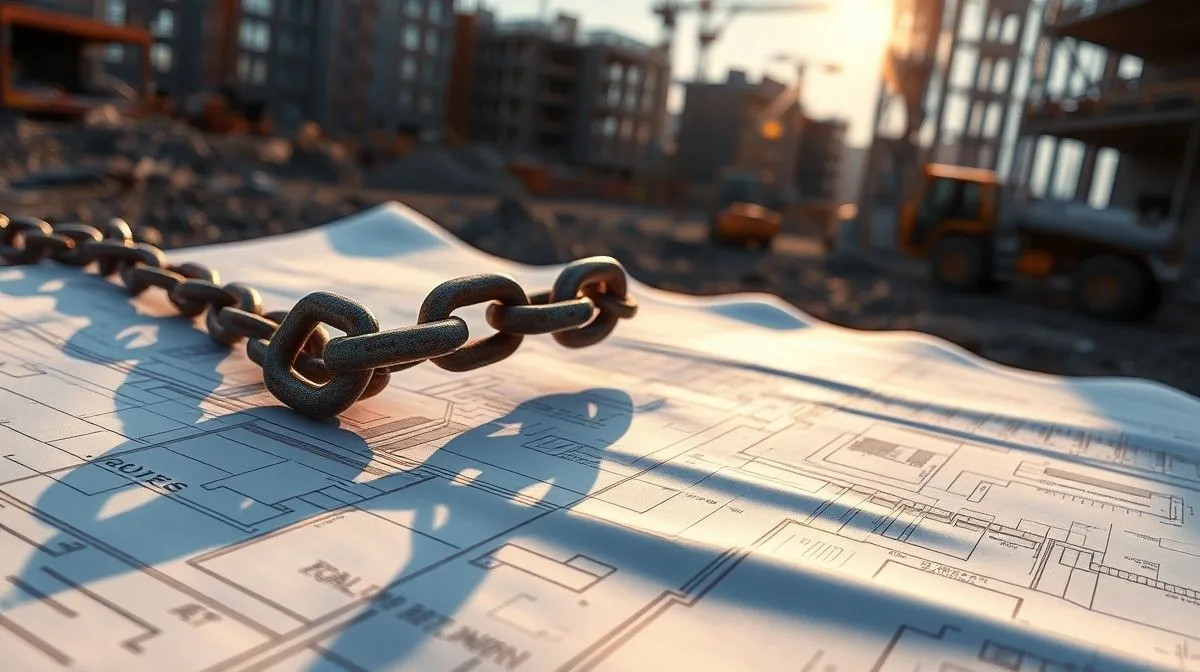
What to do when a property easement blocks new development?
For over two decades in real estate law, I've witnessed the crushing frustration developers and landowners face when an unexpected legal encumbrance derails their ambitious projects. It’s a scenario I’ve seen play out countless times: a meticulously planned development, perhaps a new commercial complex or a residential community, grinds to a halt because of a seemingly innocuous line item on a title report – an easement.
The dream of a new build, a lucrative expansion, or a transformative redevelopment can crumble under the weight of such a discovery. You've invested time, capital, and vision, only to find a pre-existing right held by another party threatens to make your plans impossible or prohibitively expensive. This isn't just a legal hurdle; it's a significant financial and emotional setback.
This comprehensive guide draws from my extensive experience resolving complex property disputes. I'll walk you through the actionable frameworks, real-world case studies, and expert insights needed to understand exactly what to do when a property easement blocks new development. My goal is to equip you with the knowledge to navigate this challenge strategically, protect your investment, and ultimately, move your project forward.
Decoding the Easement: Not All Obstacles Are Equal
Before we dive into solutions, it's crucial to understand the nature of the beast. An easement is a legal right to use another person's land for a specific purpose. It's a non-possessory interest, meaning the easement holder doesn't own the land, but they have a right to use it in a defined way. Think of it as a permanent permission slip that's often tied to the land itself, not just the original parties.
In my practice, I've encountered countless types, each presenting its own unique set of development challenges:
- Utility Easements: These are the most common, granting utility companies (power, water, sewer, gas, telecom) the right to install, maintain, and access their lines or pipes across your property. Building over or too close to these can be prohibited.
- Access Easements (Right-of-Way): Granting someone the right to cross your property to reach their own, especially if their land is landlocked. This can impact road placement or building footprints.
- Drainage Easements: Allowing the flow of water across your property, often for public storm drains or natural watercourses. Disrupting these can lead to flooding or legal issues.
- Prescriptive Easements: Similar to adverse possession, these arise when someone openly, continuously, and hostilely uses a portion of your land for a statutorily defined period (which varies by state) without your permission. This can be particularly tricky as it may not be recorded.
- Conservation Easements: These restrict development to protect natural resources or historical features, often held by land trusts or government agencies. They are typically permanent and very difficult to modify.
- Appurtenant Easements: Benefit an adjacent parcel of land (the dominant estate) by burdening another (the servient estate). They 'run with the land' and transfer with property ownership.
- Easements in Gross: Benefit a specific person or entity, not an adjacent property. Utility easements are often easements in gross.
The impact on your development depends entirely on the easement's scope, location, and the specific rights it grants. A buried sewer line might only restrict deep foundations, while an access easement could bisect your prime development area. Understanding these nuances from the outset is paramount.
The Critical First Step: Thorough Due Diligence and Easement Analysis
When clients first come to me with an easement problem, my immediate advice is always the same: a deep dive into due diligence. You can't solve a problem you don't fully understand. This isn't just about reviewing the deed; it's about uncovering every layer of legal documentation and physical reality.
- Obtain a Current Title Report and All Underlying Documents: Don't rely on an old report. Order a new, comprehensive title report and insist on getting copies of all recorded documents referenced, especially the original easement grant. This document is the cornerstone of your analysis.
- Scrutinize the Easement Language: The precise wording in the easement grant is critical. Does it specify width, height, or depth restrictions? Does it grant exclusive or non-exclusive use? Does it permit relocation? Is there a specified term, or is it perpetual? Ambiguity can sometimes be an opportunity.
- Review Plat Maps and Surveys: Compare the easement's legal description with current plat maps and a recent survey of your property. This will show its exact location relative to your proposed development. I often advise clients to commission a new ALTA/NSPS Land Title Survey, which specifically identifies all easements and encroachments.
- Understand the Easement Holder's Rights and Obligations: What exactly is the easement holder allowed to do? What are their responsibilities for maintenance? What are your rights as the servient estate owner? You typically retain all rights to use your land that don't unreasonably interfere with the easement holder's rights.
- Assess Practical Impact: How does the easement physically affect your proposed building footprint, access roads, parking, or utility connections? Can your project be redesigned to accommodate it, or is direct conflict unavoidable?
- Consult a Licensed Surveyor and Engineer: Their expertise is invaluable. A surveyor can mark the exact boundaries of the easement on the ground, and an engineer can assess the feasibility of building near or over it, or the cost of relocating utilities.
Expert Insight: "The devil is in the details. Many developers rush to negotiate or litigate without fully understanding the exact parameters of the easement. Every word in that original document matters, and a comprehensive analysis can reveal hidden opportunities or insurmountable obstacles."
Strategic Negotiation: The Path of Least Resistance
In my experience, the most cost-effective and time-efficient solution often lies in negotiation, not litigation. Engaging directly with the easement holder can lead to a mutually beneficial outcome, especially if you approach it with a clear understanding of their needs and a creative problem-solving mindset.
- Identify the Easement Holder and Their Interests: Who holds the easement? Is it an individual, a utility company, a government entity, or a homeowners' association? Understand their primary objective for holding the easement. A utility company wants uninterrupted service; a neighbor wants access.
- Propose a Win-Win Solution: Instead of demanding removal, consider alternatives. Can you offer to relocate the easement to a less impactful part of your property at your expense? Can you provide an alternative access route? Can you compensate them for the inconvenience or for the release of their rights?
- Highlight Benefits to the Easement Holder: Sometimes, your development can offer advantages. A new road might improve their access, or upgraded utilities could benefit both parties. Frame your proposal in terms of mutual gain.
- Draft a Clear Agreement: If a deal is struck, ensure all terms are meticulously documented in a formal, legally binding agreement. This could be an easement modification agreement, an easement release, or a new substitute easement grant. Specify who pays for what, timelines, and any conditions.
- Record the Agreement: Once signed, the agreement must be recorded in the county land records to be legally binding and provide notice to all future parties.
Case Study: Navigating a Utility Easement for a Mixed-Use Project
I recently advised 'Green Valley Developments' on a complex mixed-use project that was suddenly threatened by an old, unrecorded (but valid) storm drain easement running directly through the proposed footprint of their anchor retail building. The city's water department held the easement.
Initial panic set in, as relocating a large storm drain would be immensely expensive. Instead of fighting, I advised Green Valley to approach the city with a proactive, collaborative proposal. They offered to:
- Re-route the storm drain around the building, entirely at Green Valley's expense.
- Upgrade the pipe's capacity and materials to modern standards, benefiting the city's infrastructure.
- Grant a new, clearly defined, and more accessible easement for the relocated drain.
- Provide a temporary construction easement for the city's contractors during the work.
This comprehensive offer was presented with detailed engineering plans and cost estimates. The city, recognizing the long-term benefits of an upgraded system and the avoidance of a costly legal battle, agreed. Green Valley bore the cost of relocation, but it was significantly less than the cost of litigation or scrapping the project. This resulted in the successful completion of their project, albeit with a slight delay, and a positive working relationship with the city.
Legal Avenues: When Negotiation Isn't Enough
While negotiation is often preferred, there are instances where the easement holder is uncooperative, unreasonable, or simply cannot be found. In such cases, legal action may be your only recourse. This path requires a deep understanding of property law and often involves court proceedings.
Easement Release or Modification
If negotiation succeeds, this is the legal instrument you'll use. An easement can be formally released by the easement holder, or its terms can be modified by mutual agreement. This requires a new legal document, signed by all parties, and recorded with the county recorder's office. This is the cleanest solution if attainable.
Declaratory Judgment Action
When the language of an easement is ambiguous or its scope is unclear, you can file a declaratory judgment action in court. You're asking a judge to interpret the easement's terms and declare the rights and obligations of both parties. This can clarify whether your proposed development is indeed prohibited or if there's room to build around or over it. I've seen this effectively used to narrow overly broad easement grants.
Challenging Easement Validity (Abandonment, Merger, Necessity)
In some situations, an easement may no longer be legally valid, even if it's still recorded. You can bring a lawsuit to quiet title, asking the court to declare the easement invalid based on specific legal theories:
- Abandonment: If the easement holder has clearly demonstrated an intent to permanently give up their rights (e.g., by building a permanent structure that blocks their own access, or failing to maintain a utility line for a very long period). Mere non-use is usually not enough; there must be overt acts.
- Merger: If the dominant estate (the property benefiting from the easement) and the servient estate (your property) come under common ownership. An easement cannot exist over one's own land. If the properties are later split, a new easement may need to be created.
- Necessity (Termination of): An easement created out of necessity (e.g., to access a landlocked parcel) may terminate if the necessity ceases to exist (e.g., a new public road provides alternative access).
- Adverse Possession (for the servient estate): While rare, it is possible for the owner of the servient estate to extinguish an easement through adverse possession by openly, notoriously, and continuously preventing the easement holder from using it for the statutory period. This is incredibly difficult to prove.
Eminent Domain (Last Resort)
In very rare circumstances, if your project is for a public purpose (e.g., a city-led redevelopment), the government may be able to use its power of eminent domain to condemn the easement. This involves providing just compensation to the easement holder. For private developers, this is generally not an option unless working in partnership with a governmental entity.
- Consult with Experienced Counsel: This step is non-negotiable. Litigation is complex, time-consuming, and expensive. You need a real estate attorney with specific experience in easement disputes.
- Gather All Evidence: This includes all documents from your due diligence, surveys, historical aerial photos, and expert reports (e.g., engineering assessments).
- File the Appropriate Legal Action: Your attorney will advise on the best type of lawsuit to achieve your objectives (e.g., quiet title, declaratory judgment).
- Prepare for Discovery and Trial: This involves exchanging information with the other side, depositions, and potentially a full trial.
- Negotiate Settlement: Even during litigation, opportunities for settlement often arise. A strong legal position can facilitate a favorable negotiated outcome.
Innovative Development: Working Around the Easement
Sometimes, the most practical solution isn't to remove or modify the easement, but to design your project in a way that accommodates it. This requires creative architectural and engineering solutions, coupled with a thorough cost-benefit analysis.
- Redesigning the Footprint: Can your building be shifted, re-oriented, or reduced in size to avoid the easement area?
- Building Over or Under: For certain types of easements (e.g., buried utility lines), it might be permissible to build over them with proper structural support and access points, or to tunnel underneath. This requires close coordination with the utility company and rigorous engineering.
- Creating Bridges or Cantilevers: If an easement crosses a critical area, can you design a structure that bridges over it, leaving the easement area clear for its intended use?
- Revising Site Plans: Adjusting parking layouts, landscaping, or non-critical structures to avoid the restricted area.
This approach often requires obtaining specific approvals from the easement holder or relevant authorities. It's crucial to understand that even if you can physically work around an easement, you must still ensure your solution doesn't unreasonably interfere with the easement holder's rights. I often advise clients to get written consent from the easement holder for any such work-around, even if they believe it falls within their rights as the servient estate owner.
The Role of Expert Legal Counsel: Your Indispensable Ally
I cannot overstate the importance of retaining a seasoned real estate attorney when dealing with property easements blocking new development. This isn't a DIY project. The nuances of property law, the specific language of easement grants, and the complexities of negotiation and litigation demand specialized expertise.
In my experience, trying to navigate these waters alone often leads to costly mistakes, prolonged delays, or even the complete abandonment of a project. A skilled attorney will:
- Interpret Complex Documents: They can decipher obscure legal language in old deeds and easement grants.
- Advise on Strategy: They will help you determine the most viable path forward – negotiation, litigation, or alternative design.
- Negotiate on Your Behalf: They can leverage their legal knowledge and negotiation skills to achieve the best possible terms.
- Represent You in Court: If litigation becomes necessary, they will prepare and present your case effectively.
- Mitigate Risk: They can help you avoid inadvertently violating the easement or creating new liabilities.
According to a study published by the American Bar Association, complex real estate disputes, especially those involving property rights, are significantly more likely to reach a favorable resolution when parties are represented by experienced legal counsel. Don't view legal fees as an expense, but as an essential investment in protecting your much larger development investment.
Preventing Future Easement Headaches
While this article focuses on what to do when you already have an easement problem, a significant part of my practice involves helping clients avoid them in the first place. Proactive measures are always less expensive and less stressful than reactive solutions.
- Thorough Due Diligence Before Acquisition: Before purchasing any property for development, conduct exhaustive due diligence. This includes a comprehensive title search, review of all recorded easements, and a current survey.
- Understand Local Regulations: Be aware of any local ordinances or zoning laws that might create implied easements or require specific setbacks for utilities or drainage.
- Careful Drafting of New Easements: If you are granting an easement to another party, ensure the terms are as specific and narrow as possible to minimize future impact on your property. Define its exact location, scope, and duration.
- Obtain Title Insurance: A good title insurance policy can protect you from financial losses due to unknown easements or defects in title. While it won't remove an easement, it can compensate you for damages if an unrecorded easement surfaces after purchase.
Frequently Asked Questions (FAQ)
Question: Can an easement holder prevent *any* development on the easement area? No, not necessarily. An easement grants a specific right of use, not ownership. As the property owner (servient estate), you generally retain all rights to use your land that do not unreasonably interfere with the easement holder's defined rights. For example, you might be able to build a temporary structure or even a permanent one with proper engineering and consent, if it doesn't obstruct their access or purpose. The key is 'unreasonable interference,' which can be a point of dispute.
Question: How much does it cost to remove or modify an easement? The cost varies wildly. Negotiation might involve a few thousand dollars in legal fees and a compensation payment (which could be anything from a token amount to hundreds of thousands, depending on the easement's value to the holder). Litigation, if required, can easily run into tens of thousands or even hundreds of thousands of dollars in legal fees, expert witness costs, and court fees, plus potential settlement or judgment amounts. It's a significant investment, which is why strategic negotiation is always the preferred first step.
Question: What's the difference between an easement and a right-of-way? A right-of-way is a type of easement. While all rights-of-way are easements, not all easements are rights-of-way. A right-of-way specifically grants the right to pass over or use a strip of land for passage (e.g., a road, path, or utility line). Other easements, like a drainage easement, might not involve passage at all.
Question: Can I build *on* an easement? It depends on the type of easement and the specific language in the grant. Generally, you cannot build permanent structures that would interfere with the easement holder's use. For instance, building a house over a sewer line would be prohibited as it prevents the utility company from accessing and maintaining their infrastructure. However, you might be able to build non-interfering structures like a fence or a shed, or even cantilever over it, with proper engineering and the easement holder's express permission. Always seek legal and engineering advice before building on or near an easement.
Question: What if the easement holder is unresponsive or refuses to cooperate? If repeated good-faith attempts at negotiation fail due to unresponsiveness or unreasonable demands, you will likely need to explore legal avenues. This could involve sending formal legal notices, or ultimately, initiating a lawsuit (e.g., a quiet title action or declaratory judgment) to force a resolution through the courts. This is where the expertise of a seasoned real estate attorney becomes indispensable.
Recommended Reading
- Free Speech at Work: What Are Your Rights? The Ultimate Guide
- Master Your Criminal Court Appearance: The Ultimate Guide to Preparation
- Unlocking Student Records: Can Divorced Parents Get Access?
- Adoption Disrupted? What Happens Legally If An Adoption Fails
- Unlock True Worth: How to Value Intellectual Property for Licensing Success
Key Takeaways and Final Thoughts
Navigating an easement that blocks new development is undoubtedly challenging, but it is rarely an insurmountable obstacle. As a veteran in real estate law, I've seen projects of all sizes successfully overcome these hurdles by employing a strategic, informed, and patient approach. Remember these critical takeaways:
- Due Diligence is Non-Negotiable: Understand the easement's precise terms and physical impact fully before making any decisions.
- Prioritize Negotiation: Most easement disputes are best resolved through direct, strategic negotiation, offering creative solutions to the easement holder.
- Know Your Legal Options: If negotiation fails, be prepared to explore legal avenues like easement release, modification, or challenging the easement's validity in court.
- Consider Innovative Design: Sometimes, working around the easement through clever architectural and engineering solutions is the most pragmatic path.
- Expert Counsel is Essential: Do not attempt to tackle complex easement issues without a qualified real estate attorney by your side.
The journey to resolve an easement issue can be complex and demanding, but with the right knowledge and expert guidance, you can transform a seemingly project-ending roadblock into a manageable challenge. Your vision for development is valuable; don't let an easement extinguish it without a strategic fight. Take these steps, arm yourself with knowledge, and reclaim your property's potential.




Comments
Leave a comment below. Your email will not be published. Required fields marked with *