


What to do when an agency bypasses formal rulemaking steps?
For over two decades navigating the intricate currents of administrative law, I've witnessed firsthand the profound frustration and significant harm that can arise when an administrative agency appears to operate outside the established legal framework. It's a scenario that plays out in countless industries, from environmental regulation to financial oversight, and it often leaves individuals and businesses feeling powerless against the might of the state.
It's a common and deeply unsettling scenario: an administrative agency takes action that profoundly impacts your rights, business, or community, yet it seems to have sidestepped the very procedures designed to ensure transparency, public input, and reasoned decision-making. You read about the Administrative Procedure Act (APA) and its requirements for notice-and-comment rulemaking, but the agency’s action looks nothing like it. This bypass isn't just a bureaucratic oversight; it's a potential violation of due process and a threat to the rule of law, leaving affected parties scrambling to understand their recourse.
This post isn't just about identifying the problem; it's about equipping you with the knowledge and actionable strategies to challenge such unlawful agency behavior effectively. We will delve into the nuances of administrative law, providing you with a clear framework, real-world insights, and concrete steps to take when an agency bypasses formal rulemaking steps, ensuring your voice is heard and the law is upheld.
Understanding the Formal Rulemaking Process: A Quick Refresher
Before we can truly understand what it means for an agency to bypass formal rulemaking, we need a solid grasp of what that process entails. In the U.S. federal system, the Administrative Procedure Act (APA) is the bedrock for how federal agencies develop and issue regulations. It's designed to ensure fairness, transparency, and accountability.
At its core, formal rulemaking – often called "notice-and-comment" rulemaking – requires agencies to:
- Publish a Notice of Proposed Rulemaking (NPRM): This notice, published in the Federal Register, informs the public about a proposed new rule or a change to an existing one. It must include the legal authority for the rule, the substance of the proposed rule, and a description of the subjects and issues involved.
- Provide an Opportunity for Public Comment: After the NPRM, the agency must allow a period (typically 30-60 days) for interested parties to submit written comments, data, or arguments. This is a critical opportunity for affected individuals and groups to provide input, raise concerns, and offer alternative solutions.
- Consider and Respond to Comments: The agency isn't just collecting comments; it's legally obligated to consider them. When issuing the final rule, the agency must include a "concise general statement of their basis and purpose," which often includes a summary of the significant issues raised in comments and the agency's responses.
- Publish a Final Rule: The final rule, along with its effective date and the agency's response to comments, is published in the Federal Register. Generally, a rule cannot become effective less than 30 days after its publication.
This process, while sometimes lengthy, is vital. It allows for public participation, ensures agencies consider diverse perspectives, and creates a clear administrative record that can be reviewed by courts. It builds legitimacy and trust in the regulatory system. When an agency bypasses formal rulemaking steps, it strips away these fundamental safeguards.
Identifying the Bypass: When is an Agency Action Not a Rule?
The first challenge in addressing an agency's procedural shortcut is to accurately identify it. Agencies are often adept at cloaking substantive regulatory changes in the guise of actions that purportedly don't require formal rulemaking. They might label their actions as "guidance documents," "interpretive rules," or "policy statements." The critical distinction, however, lies not in the label the agency applies, but in the actual effect of the agency's action.
As I've learned through years of litigation and policy work, the courts generally look to two key factors to distinguish between a legislative (or substantive) rule, which requires notice and comment, and a non-legislative rule (like an interpretive rule or policy statement), which generally does not:
- Legal Effect: Does the agency action create new rights or duties, or change existing ones? If it has the force and effect of law, binding the agency and the public, it is likely a legislative rule. Interpretive rules merely clarify or explain existing law or regulations, without adding new substantive requirements.
- Agency Intent: Did the agency intend for the action to be binding, or merely advisory? While harder to prove, courts examine the language used, the context, and how the agency actually applies the action.
A classic example of an agency trying to bypass formal rulemaking is issuing a "guidance document" that, in practice, operates exactly like a binding regulation. If non-compliance with the guidance leads directly to enforcement actions or penalties, or if the guidance significantly alters the legal landscape for regulated entities, it's highly likely to be a legislative rule in disguise, requiring full APA procedures.
Expert Insight: "The line between a binding legislative rule and a non-binding interpretive rule or policy statement can be incredibly blurry. Always look beyond the agency's chosen label to the actual impact and enforceability of the action. If it walks like a duck and quacks like a duck, it's probably a legislative rule, regardless of whether the agency calls it a 'feathered aquatic bird advisory.'"
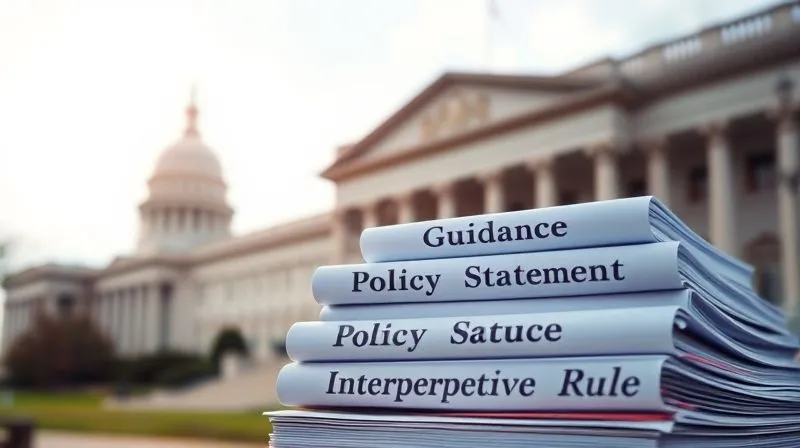
Initial Assessment: Is It Truly a Bypass, or Something Else?
Before launching a challenge, a thorough initial assessment is crucial. Not every agency action that affects you without notice and comment is an unlawful bypass. Certain categories of rules are exempt from the APA's notice-and-comment requirements:
- Interpretive Rules: As discussed, these clarify existing law or regulations.
- General Statements of Policy: These advise the public prospectively of the manner in which an agency proposes to exercise a discretionary power.
- Rules of Agency Organization, Procedure, or Practice: These relate to internal agency management or procedural steps, not substantive rights or duties.
- Good Cause Exemption: In rare circumstances, if an agency finds that notice and public procedure are "impracticable, unnecessary, or contrary to the public interest," it can issue a rule without prior notice and comment. This is a high bar and requires the agency to explain its reasoning.
Your initial assessment should scrutinize whether the agency's action genuinely falls into one of these exemptions. I've often seen agencies stretch these exemptions beyond their legal limits. For example, a procedural rule might have such a significant practical effect on regulated parties that courts deem it a substantive rule requiring notice and comment.
Consider the immediate impact: Does the agency action impose new obligations? Does it strip away existing rights or benefits? Does it impose penalties for non-compliance? If the answer to any of these is yes, then the agency's claim of an exemption becomes highly suspect. This diagnostic phase is critical for determining the strength of your potential challenge.
Step 1: Document Everything – Building Your Evidentiary Foundation
In administrative law, as in all legal endeavors, evidence is king. When you suspect an agency has bypassed formal rulemaking, your first, most critical step is to meticulously document every piece of information related to the agency's action. Think of yourself as a legal detective, gathering clues that will form the basis of your argument.
- Identify the Specific Agency Action: Pinpoint the exact document, statement, or directive that you believe constitutes an unlawfully issued rule. Is it a memo, a press release, a FAQ on their website, an enforcement guidance, or a letter to a regulated entity?
- Gather All Related Communications: Collect any and all correspondence from the agency regarding this action. This includes emails, letters, public statements, meeting minutes, and internal documents obtained through Freedom of Information Act (FOIA) requests.
- Document the Impact: Crucially, record how this agency action affects you or your organization. Quantify the financial burden, operational changes, competitive disadvantage, or other tangible harms. This is vital for establishing standing in court.
- Search the Federal Register: Systematically search the Federal Register to confirm that no Notice of Proposed Rulemaking or Final Rule pertaining to this action was ever published. This provides concrete evidence of the procedural bypass.
- Consult Agency Websites and Public Records: Agencies often publish "guidance" or "policy statements" on their websites without formal publication in the Federal Register. Screenshot these pages, noting dates and URLs.
This diligent documentation is not just for your records; it's the foundation upon which any successful challenge will be built. Without a clear, well-supported factual record, even the strongest legal arguments can falter. As a former colleague often quipped, "In administrative law, if it's not written down, it didn't happen – and if it is, make sure you have a copy!"
Step 2: Engaging with the Agency – Internal Advocacy and Exhaustion
Before escalating to formal legal challenges, it's often prudent, and sometimes legally required, to engage directly with the agency. This step serves multiple purposes: it might resolve the issue informally, it builds an administrative record for later review, and in many jurisdictions, it's a prerequisite known as "exhaustion of administrative remedies."
- Informal Inquiry: Start with a polite, but firm, letter or email to the relevant agency contact. Express your concerns, reference the specific agency action, and ask for clarification on its legal basis and the procedural steps followed. This can sometimes lead to an agency realizing its error and correcting course.
- Formal Petition for Reconsideration: If an informal approach doesn't yield results, consider filing a formal petition for reconsideration or clarification. Many agencies have procedures for such petitions. This document should clearly state your legal arguments, citing the APA and relevant case law, and explain why the agency's action constitutes an unlawful bypass of rulemaking.
- Request for Agency Action (Citizen Petition): Under 5 U.S.C. § 553(e), "Each agency shall give an interested person the right to petition for the issuance, amendment, or repeal of a rule." While this is typically for proposing new rules, it can be adapted to challenge an existing, unlawfully adopted "rule" by petitioning for its repeal, arguing it was never properly promulgated.
- Seek an Informal Conference: Request a meeting with agency officials to present your case directly. This human element can sometimes be surprisingly effective, especially if you can demonstrate the practical negative impacts of their action.
Engaging with the agency demonstrates your good faith and provides them an opportunity to self-correct. It also strengthens your position if you later need to pursue judicial review, as courts generally prefer that administrative remedies be exhausted before they intervene. This process can be time-consuming, but skipping it can jeopardize your entire case.
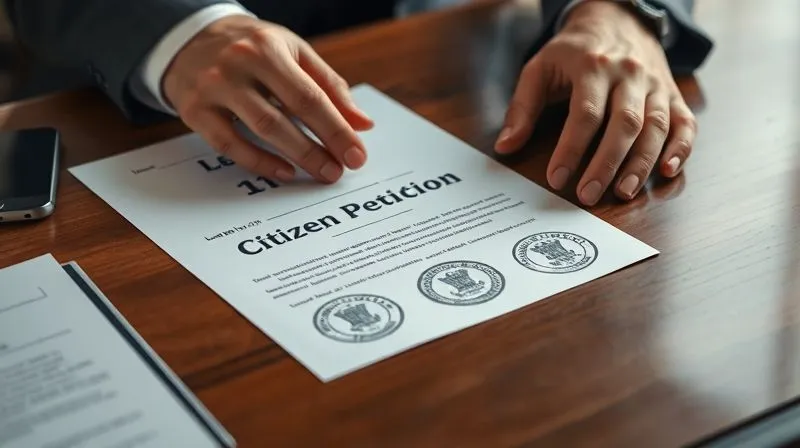
Step 3: Crafting a Citizen Petition – A Formal Call for Action
When informal engagement fails, a formal citizen petition under 5 U.S.C. § 553(e) can be a powerful tool. While often used to propose new rules, it can be strategically employed to challenge an existing agency action that you contend was unlawfully promulgated without notice and comment. The goal here is to formally request the agency to initiate rulemaking to repeal or properly promulgate the contested action.
Key Components of an Effective Citizen Petition:
- Clear Identification of the Agency Action: Precisely identify the "rule" (whether labeled as guidance, policy, etc.) you are challenging.
- Statement of Legal Grounds: Articulate clearly why the agency action is a legislative rule that required notice-and-comment rulemaking under the APA, and why the agency failed to meet those requirements. Cite relevant sections of the APA and supporting case law.
- Demonstration of Harm: Explain in detail how you or your constituents are adversely affected by the agency's unlawfully adopted action. This helps establish your standing and the practical importance of your petition.
- Proposed Relief: Clearly state what you want the agency to do – typically, to initiate notice-and-comment rulemaking to repeal the contested action, or to properly promulgate it following APA procedures.
- Supporting Documentation: Attach all relevant evidence you've gathered in Step 1, including the agency's contested action, any communications, and data demonstrating impact.
Agencies are legally obligated to consider these petitions, though they are not required to grant them. However, their denial must be reasoned and defensible. A denial can then become part of the administrative record and potentially subject to judicial review. This step formalizes your challenge within the administrative sphere, laying a strong foundation for future litigation if necessary.
Step 4: Seeking Judicial Review – Taking the Fight to the Courts
If all administrative avenues are exhausted or prove futile, the ultimate recourse for challenging an agency's bypass of formal rulemaking steps is judicial review. This means filing a lawsuit in federal court (typically a U.S. District Court or, for some agency actions, a U.S. Court of Appeals) to challenge the agency's action as unlawful under the Administrative Procedure Act.
Key Legal Considerations for Judicial Review:
- Standing: You must demonstrate that you have "standing" to sue, meaning you have suffered an injury in fact that is concrete and particularized, caused by the agency's action, and redressable by a favorable court decision. This is where your detailed documentation of harm from Step 1 becomes critical.
- Ripeness: The issue must be "ripe" for judicial review, meaning the agency's action is final and there are no further administrative steps that could alter its impact.
- Standard of Review: Courts typically review agency actions under the "arbitrary and capricious" standard (5 U.S.C. § 706(2)(A)). When an agency bypasses notice-and-comment, the court will often find the action procedurally arbitrary and capricious because it failed to follow mandatory statutory procedures. The agency's failure to provide public notice and opportunity for comment is a fundamental procedural error.
- APA Section 706: This section of the APA empowers courts to "hold unlawful and set aside agency action, findings, and conclusions found to be... without observance of procedure required by law." This is the statutory hook for your challenge.
Case Study: The GreenTech Coalition vs. Environmental Protection Bureau (EPB)
The GreenTech Coalition, representing small and medium-sized renewable energy firms, faced a significant hurdle when the Environmental Protection Bureau (EPB) issued a "Technical Guidance on Emission Offset Calculations." This guidance, published only on the EPB's website and distributed via an industry newsletter, dramatically altered the methodology for calculating emission offsets, making it far more costly and complex for GreenTech's members to comply with existing environmental permits. The EPB argued it was merely an "interpretive rule" clarifying existing law.
The GreenTech Coalition, advised by experienced administrative law counsel, meticulously documented how the new guidance functioned as a binding legislative rule. They showed that EPB enforcement actions were already citing the guidance, and permits were being denied based on its new calculations. After exhausting administrative remedies, including a formal citizen petition which the EPB denied with a cursory explanation, GreenTech filed a lawsuit in federal district court.
The court, applying the arbitrary and capricious standard, found that the EPB's "guidance" was indeed a substantive rule because it created new legal obligations and significantly impacted regulated entities. Crucially, the court ruled that the EPB's failure to conduct notice-and-comment rulemaking was a clear violation of the APA's procedural requirements. The court vacated the guidance, ordering the EPB to either withdraw it or initiate proper rulemaking procedures. This victory not only protected GreenTech's members but also reaffirmed the importance of procedural regularity in administrative governance.
Step 5: Leveraging Legislative and Public Pressure
While legal challenges are often the most direct route, they are not the only tools at your disposal. Sometimes, a multi-pronged approach that includes legislative and public pressure can be highly effective, especially in complex or politically charged situations. I've seen this strategy turn the tide when legal battles alone seemed insufficient.
- Congressional Oversight: Members of Congress have significant oversight authority over federal agencies. If an agency is overstepping its bounds or ignoring statutory procedures, your elected representatives can raise questions, hold hearings, or even introduce legislation to rein in the agency. Contacting your Congressional representatives with well-documented evidence of agency misconduct can prompt inquiries and exert political pressure.
- Media Engagement: Publicizing the agency's procedural bypass and its negative impacts can generate public awareness and outrage. Investigative journalists are often keen to cover stories of government overreach. A well-placed article or news segment can put immense pressure on an agency to reconsider its actions, as no agency wants to be seen as acting unlawfully or unfairly.
- Coalition Building: You are likely not alone in being affected by an agency's unlawful action. Forming coalitions with other businesses, advocacy groups, or affected individuals amplifies your voice and resources. A unified front often carries more weight with both agencies and the public.
- Public Interest Groups: Many non-profit organizations specialize in administrative law, environmental protection, consumer rights, or industry advocacy. Partnering with these groups can provide additional legal expertise, public relations support, and lobbying power.
These strategies, while not direct legal remedies, create an environment where the agency faces increasing scrutiny and pressure, potentially forcing them to comply with the law or face significant reputational and political costs. They are powerful complements to legal action.
| Strategy | Primary Goal | Key Resource | Timeframe |
|---|---|---|---|
| Judicial Review | Legal Injunction/Vacatur | Attorneys, APA | Long (1-3+ years) |
| Citizen Petition | Agency Reconsideration/Repeal | Legal Arguments, Evidence | Medium (6-12 months) |
| Congressional Pressure | Political Scrutiny/Legislation | Lobbying, Public Relations | Variable |
| Media Engagement | Public Awareness/Reputational Risk | Press Releases, PR Firm | Short-Medium |
Strategic Considerations and Common Pitfalls
Navigating challenges to agency actions is not for the faint of heart. It requires a strategic mindset, patience, and a deep understanding of administrative law. Over my career, I've observed several key considerations and common pitfalls that can make or break a case.
Strategic Considerations:
- Cost-Benefit Analysis: Legal challenges can be expensive and time-consuming. Before embarking on a lawsuit, carefully weigh the potential costs (legal fees, staff time, reputational risk) against the potential benefits (reversal of agency action, setting precedent, preventing future harm).
- Picking Your Battles: Not every agency misstep warrants a full-blown legal challenge. Sometimes, a more limited, informal approach or even accepting a minor inconvenience is the more pragmatic choice. Focus your resources on actions that cause significant, demonstrable harm.
- Precedent: Consider the broader implications. Will a successful challenge set a favorable precedent for your industry or other regulated entities? Will an unsuccessful one create unfavorable law?
- Relationship with the Agency: While challenging an agency, maintain a professional demeanor. Burning bridges unnecessarily can make future interactions more difficult.
Common Pitfalls:
- Lack of Documentation: As emphasized, a weak evidentiary record is a fatal flaw. Don't underestimate the importance of meticulous record-keeping.
- Failure to Exhaust Administrative Remedies: Rushing to court without first engaging with the agency can lead to dismissal of your case. Courts generally prefer agencies to have the first crack at resolving disputes.
- Mischaracterizing the Agency Action: Incorrectly identifying an action as a legislative rule when it truly falls under an APA exemption (e.g., interpretive rule) will lead to a swift defeat. Expert legal analysis is crucial here.
- Underestimating Agency Resources: Agencies typically have vast legal resources and experienced counsel. Be prepared for a robust defense.
- Ignoring Political Context: Administrative law doesn't operate in a vacuum. Understanding the political motivations behind an agency's action and the broader political landscape can inform your strategy.
In my experience, the most successful challenges are those that are well-researched, strategically planned, and executed with a clear understanding of both the legal landscape and the practical realities of administrative governance. Don't go it alone; seasoned administrative law counsel is an invaluable asset.
Frequently Asked Questions (FAQ)
Q: What's the fundamental difference between a legislative rule and an interpretive rule, and why does it matter?
A: A legislative (or substantive) rule has the force and effect of law, creating new rights or duties, and requires formal notice-and-comment rulemaking under the APA. An interpretive rule, by contrast, merely clarifies or explains existing law or regulations without adding new substantive requirements; it generally doesn't require notice and comment. This distinction matters immensely because if an agency issues a legislative rule disguised as an interpretive rule, it has bypassed crucial public participation steps, making the rule vulnerable to legal challenge.
Q: Do I always have to exhaust administrative remedies before going to court?
A: Generally, yes, the doctrine of exhaustion of administrative remedies requires you to pursue available relief through the agency's internal processes before seeking judicial review. This allows the agency to correct its own errors and builds a complete administrative record for the court. However, there are exceptions, such as when administrative remedies are clearly futile, inadequate, or would cause irreparable harm. It's a complex area, and a legal expert can help determine if an exception applies to your specific situation.
Q: What does 'arbitrary and capricious' mean when challenging an agency's procedural bypass?
A: Under the APA, courts can set aside agency actions found to be "arbitrary, capricious, an abuse of discretion, or otherwise not in accordance with law." When challenging an agency's bypass of formal rulemaking, the argument is often that the agency's action is procedurally arbitrary and capricious because it failed to follow the mandatory notice-and-comment procedures required by law. The agency's decision to bypass these procedures without a legally recognized exemption is itself an arbitrary act.
Q: How long does judicial review of an agency action typically take?
A: The timeline for judicial review can vary significantly depending on the complexity of the case, the court's docket, and whether there are appeals. A federal district court case might take anywhere from one to three years to reach a final decision, and an appeal to a circuit court could add another year or more. This is why a thorough cost-benefit analysis and strategic planning are essential before embarking on litigation.
Q: Can I recover attorney's fees if I successfully challenge an agency's unlawful action?
A: In the United States, under the "American Rule," each party generally bears its own attorney's fees. However, there are exceptions. The Equal Access to Justice Act (EAJA) allows prevailing parties in certain civil actions against the U.S. government to recover attorney's fees and costs, provided they meet specific eligibility criteria (e.g., net worth limits for individuals and small businesses) and the government's position was not "substantially justified." This can be a crucial consideration for smaller entities challenging federal agencies.
Key Takeaways and Final Thoughts
Challenging an administrative agency that bypasses formal rulemaking steps is a complex but often necessary endeavor to protect your rights and ensure governmental accountability. It demands diligence, strategic thinking, and a firm grasp of administrative law principles. Here are the critical takeaways:
- Understand the APA: Know the formal rulemaking process and the narrow exemptions.
- Document Meticulously: Your evidentiary foundation is paramount for any successful challenge.
- Engage with the Agency First: Exhaust administrative remedies and build your record.
- Leverage All Avenues: Combine legal challenges with legislative and public pressure for maximum impact.
- Seek Expert Counsel: Administrative law is highly specialized; an experienced attorney is invaluable.
While the path may be arduous, standing up to agency overreach is a vital part of maintaining the integrity of our regulatory system. I've seen countless instances where determined individuals and organizations, armed with knowledge and expert guidance, have successfully compelled agencies to adhere to the rule of law. Your vigilance and willingness to act are not just for your benefit, but for the broader public interest, ensuring that administrative power remains checked and balanced.
Recommended Reading
- 7 Steps: Effectively Challenging Judicial Liens in Chapter 7 Bankruptcy
- 5 Legal Strategies: Businesses vs. Government Internet Censorship Orders
- 7 Steps to Prove Implied Warranty Breach After Express Warranty Expires
- Marine Insurance: What Damage is Covered? The Ultimate Guide
- Enforcing Arbitration Awards Against States: A 7-Step Expert Framework




Comments
Leave a comment below. Your email will not be published. Required fields marked with *