



How to ensure school board compliance with new open meeting laws?
For over two decades, I've had the privilege of working alongside school boards, superintendents, and legal teams across diverse districts. In this time, I've witnessed firsthand the profound impact of transparent, compliant governance – and, regrettably, the significant pitfalls when adherence to foundational laws like open meeting statutes falters.
The landscape of education law is perpetually shifting, and new open meeting laws, often driven by a greater demand for public accountability and technological advancements, present significant challenges. School boards, under immense pressure to make critical decisions, can inadvertently stumble into non-compliance, risking legal penalties, reputational damage, and a corrosive erosion of public trust.
This isn't merely about avoiding legal trouble; it's about fostering a truly democratic and effective school system. In this comprehensive guide, I'll draw upon my experience to provide you with a definitive, actionable framework on how to ensure school board compliance with new open meeting laws? We'll explore practical strategies, best practices, and the critical mindset shifts required to navigate these complexities with confidence and integrity, transforming potential liabilities into opportunities for stronger community engagement.
Understanding the Evolving Landscape of Open Meeting Laws
The very fabric of democratic governance relies on transparency, especially at the local level where decisions directly impact daily lives. Open meeting laws, often referred to as Sunshine Laws, are designed to ensure that public bodies conduct their business in the open, allowing citizens to observe and participate in the decision-making process. As an expert in education law, I've observed that these laws are not static; they evolve, reflecting societal shifts, technological advancements, and a persistent public demand for greater accountability.
The 'Why' Behind New Regulations
Why do these laws change? Often, it's a direct response to perceived gaps in transparency, public outcry over backroom dealings, or the need to adapt to new communication methods. For instance, the rise of remote work during the pandemic led to rapid amendments in many states, allowing for virtual public meetings while still attempting to uphold the spirit of open access. These changes are fundamentally about reinforcing public trust and ensuring that governmental bodies, including school boards, remain answerable to the communities they serve.
"Transparency isn't just a legal requirement; it's the bedrock of public confidence. Without it, even the most well-intentioned decisions can be viewed with suspicion, undermining the very foundation of effective school governance."
Key Provisions Often Updated
While specific state laws vary, I've consistently seen updates focus on several key areas:
- Notice Requirements: What constitutes adequate and timely public notice for meetings, including emergency sessions.
- Remote Participation: Rules governing board members' ability to participate remotely, and public access to those remote meetings.
- Executive Sessions: Stricter definitions and procedures for closed-door meetings, limiting their scope and duration.
- Public Comment: Regulations around public input, including sign-up procedures, time limits, and handling disruptive behavior.
- Record Keeping: Enhanced requirements for minutes, recordings, and accessibility of public records.
Staying ahead of these changes requires vigilance and a proactive approach, which brings us to our first actionable step.
Step 1: Conduct a Comprehensive Legal Audit of Current Practices
Before you can ensure compliance with new open meeting laws, you must first understand your current standing. In my experience, many school districts operate on policies and practices that are years, if not decades, old. A thorough legal audit is not merely a formality; it's a critical diagnostic tool, revealing vulnerabilities and areas for immediate improvement.
Here’s how I advise districts to approach this:
- Review Existing Policies and Bylaws: Gather all current board policies, bylaws, and administrative regulations related to public meetings, agendas, minutes, and public participation. Look for dates of last revision.
- Compare Against New Legislation: Systematically cross-reference every relevant clause in your existing documents with the specific language of the new open meeting laws in your jurisdiction. Highlight any discrepancies, omissions, or areas where your policies are less stringent than the new legal mandates.
- Interview Key Personnel: Talk to the Board Secretary, Superintendent, Board Chair, and other administrators involved in meeting preparation and execution. Understand their current practices – not just what's written, but what actually happens. Are there informal procedures that might conflict with new rules?
- Observe Actual Meetings: Attend a few board meetings, both regular and special, from the perspective of a public citizen. Document how notice is given, how agendas are followed, how public comment is handled, and how executive sessions are entered and exited. This often reveals practical gaps that policies alone won't.
- Document Findings and Prioritize: Create a detailed report outlining all areas of non-compliance or potential risk. Prioritize these findings based on legal exposure and ease of remediation. This document becomes your roadmap for compliance.
This initial audit provides the foundational knowledge necessary to build a truly compliant framework. It's an investment of time that pays dividends in legal security and public trust.

Step 2: Develop and Implement Robust Training Programs
A legal audit identifies the 'what,' but effective training addresses the 'how' and 'why.' I've seen countless instances where well-intentioned board members or administrators inadvertently violate open meeting laws simply due to a lack of current, comprehensive training. It’s not enough to hand out a legal brief; true compliance requires ongoing education that resonates with practical scenarios.
Training must extend beyond just the school board members. Superintendents, district administrators, and especially the Board Secretary, who often manages the logistical aspects of meetings, are critical to upholding compliance. Each role has distinct responsibilities under open meeting laws, and training should reflect this nuance.
Tailored Training Modules
Effective training isn't one-size-fits-all. It needs to be tailored, practical, and regularly updated. Here's what I recommend:
- Content Specificity: Modules should cover notice requirements, agenda preparation, rules for public comment, proper procedures for entering and exiting executive sessions, permissible topics for closed meetings, and consequences of non-compliance.
- Interactive Scenarios: Use real-world, anonymized examples or hypothetical situations to engage participants. Role-playing common dilemmas (e.g., a board member receiving an email chain from a quorum) can be highly effective.
- Regular Refreshers: Legal landscapes shift. Annual training is a minimum, with additional sessions whenever significant new legislation is enacted or a new board member joins.
- Mandatory Participation: Make training mandatory for all board members and relevant administrative staff. Document attendance and comprehension.
| Role | Focus Areas | Frequency |
|---|---|---|
| Board Members | Notice, Agendas, Executive Sessions, Public Comment, Serial Meetings | Annually & New Member Onboarding |
| Superintendents/Admin | Agenda Prep, Record Keeping, Public Access, Policy Implementation | Bi-annually & Policy Updates |
| Board Secretaries | Minutes Accuracy, Public Records Requests, Tech Compliance, Meeting Logistics | Quarterly & Software Updates |
Case Study: Evergreen District's Compliance Turnaround
The Evergreen School District, a mid-sized urban district, faced a series of public complaints regarding alleged open meeting law violations, including insufficient notice for special meetings and inappropriate discussions during executive sessions. The district's reputation suffered, and a formal complaint was filed with the state's Attorney General. Recognizing the severe risk, Superintendent Dr. Anya Sharma engaged legal counsel (myself, in this hypothetical scenario) to conduct a full audit and implement a new compliance framework.
Our initial audit revealed significant gaps in understanding among board members and administrative staff. The solution wasn't just about revising policies; it was about education. We implemented a comprehensive training program, custom-designed for Evergreen, featuring interactive workshops, case studies, and clear, concise legal summaries. Board members participated in mandatory quarterly sessions, and the Board Secretary received specialized training on digital record-keeping and public notice protocols.
Within six months, Evergreen saw a dramatic shift. Public complaints ceased, board meeting minutes became exemplars of clarity and accuracy, and community engagement during public comment periods became more constructive. The district not only avoided penalties but rebuilt significant trust with its community, demonstrating that proactive training is the most powerful tool for ensuring school board compliance with new open meeting laws.
Step 3: Standardize Agenda Preparation and Meeting Notification
Many open meeting law violations stem from seemingly minor procedural errors in agenda preparation and meeting notification. As an expert, I've observed that these are often the first points of failure, leading to public frustration and legal challenges. New open meeting laws frequently tighten requirements in these areas, demanding greater specificity and broader accessibility.
Crafting Compliant Agendas
An agenda is more than just a list of topics; it's a legal document that informs the public and dictates the scope of discussion. Here are crucial elements for compliance:
- Specificity: Vague agenda items like "Old Business" or "Discussion" are red flags. Each item must be specific enough for a reasonable person to understand what will be discussed or acted upon. For example, instead of "Personnel Matter," use "Discussion and possible action regarding Superintendent's annual performance review."
- Timing: New laws often dictate minimum timeframes for public posting of agendas (e.g., 48 or 72 hours before a regular meeting, 24 hours for special meetings). Ensure your process accounts for weekends and holidays.
- Supporting Documents: If board members receive background materials for agenda items, these documents should generally be made available to the public simultaneously with the agenda, unless legally exempt.
- Action vs. Discussion: Clearly delineate items for discussion only versus those requiring a vote or formal action.
For more detailed guidance specific to your state, I strongly recommend consulting your State Attorney General's Office guidance on open meeting laws, as they often publish comprehensive manuals.
Ensuring Timely and Accessible Public Notice
The goal of notice is to ensure the widest possible public awareness. New laws often expand the methods required for public notification:
- Official Posting Locations: Maintain designated physical posting sites (e.g., district office bulletin board) as required by law.
- Online Portals: A dedicated section on the district website for all meeting agendas, minutes, and related documents is now almost universally expected. This portal should be easily navigable and accessible.
- Email Subscription Services: Offer an opt-in email list for community members to receive automatic notifications of upcoming meetings and agenda postings.
- Media Notification: Some laws require notification to local media outlets. Ensure your district has a clear process for this.
- Emergency Meeting Protocols: Understand and adhere to the stricter notice requirements for emergency meetings, which are typically only for immediate threats to public health, safety, or welfare.
Standardizing these processes, ideally with a checklist or automated system, significantly reduces the risk of non-compliance and enhances public confidence.
Step 4: Master the Nuances of Executive Sessions
Executive sessions, or closed meetings, are perhaps the most scrutinized aspect of open meeting laws. While necessary for certain sensitive discussions, their misuse or improper conduct can quickly lead to legal challenges and deeply damage public trust. In my career, I've seen more districts face issues with executive sessions than almost any other aspect of open meeting compliance.
New open meeting laws frequently impose stricter conditions on when and how executive sessions can be held. The underlying principle is simple: if it can be discussed in public, it must be.
Permissible Reasons for Executive Sessions
The list of permissible reasons for closing a meeting is typically exhaustive and narrowly defined by state law. Common categories include:
- Personnel Matters: Discussion of the employment, appointment, performance, dismissal, or discipline of a specific public officer or employee. Note: General personnel policies or budget discussions that impact many employees are typically not permissible in executive session.
- Legal Strategy: Consultation with legal counsel regarding pending or contemplated litigation, or to obtain legal advice on specific matters where public discussion would jeopardize the district's legal position.
- Property Negotiations: Discussions concerning the purchase, exchange, lease, or value of real property, if public knowledge would affect the negotiating position.
- Student Discipline/Confidentiality: Discussions involving specific student disciplinary matters or other issues protected by student privacy laws (e.g., FERPA).
- Security Matters: Discussions related to the security of public property or the safety of students and staff, where public disclosure would create a risk.
It's crucial to remember that these are exceptions, not the rule. The burden is always on the school board to justify closing a meeting.
Strict Procedural Requirements
Even when a valid reason exists, specific procedures must be followed to legally enter and conduct an executive session:
- Public Vote to Enter: The board must vote in open session to go into executive session. This vote should clearly state the specific statutory exemption being invoked and the general topic to be discussed.
- Limited Discussion: Only the topics explicitly stated in the motion to enter executive session may be discussed. No other business, especially that which could be conducted in public, is allowed.
- No Action (Generally): Most states prohibit formal votes or final actions in executive session, except for very limited circumstances (e.g., voting on a settlement offer).
- Minutes Requirement: Even though the session is closed, detailed minutes or a recording must typically be kept. These records are often confidential but may be reviewed by a court if a violation is alleged.
- Return to Open Session: The board must return to open session before adjourning the meeting or taking any public action related to the executive session discussion.
"The door to executive session should only be opened with precision and purpose, and never for convenience. Any deviation from strict legal requirements invites scrutiny and undermines the very trust the board is meant to uphold."
I cannot stress enough the importance of meticulous adherence to these rules. When in doubt, err on the side of openness and consult with your district's legal counsel.
Step 5: Embrace Technology for Enhanced Transparency and Record-Keeping
In our increasingly digital world, technology is no longer a luxury for school boards; it's an essential tool for ensuring school board compliance with new open meeting laws and fostering unprecedented transparency. I've guided many districts through the transition from paper-heavy, opaque processes to streamlined, digitally-enabled governance, and the benefits are clear: reduced administrative burden, improved public access, and enhanced legal defensibility.
New open meeting laws often implicitly or explicitly encourage or even mandate the use of technology to facilitate public access and record-keeping.
Leveraging Digital Platforms for Public Access
Think beyond just posting a PDF agenda. Modern digital platforms can transform how the public interacts with your board:
- Dedicated Meeting Portals: Implement a user-friendly section on your district website that serves as a one-stop shop for all board meeting information: agendas, minutes, supporting documents, relevant policies, and contact information.
- Live-Streaming and Archiving: Offer live video or audio streaming of all open meetings. Crucially, archive these recordings permanently on your website, making them easily searchable and accessible to anyone, anytime. This dramatically improves transparency and provides an irrefutable record.
- Public Comment Submission Tools: Integrate online forms for public comment submission prior to meetings, allowing for organized input and ensuring all voices are heard, even if individuals cannot attend in person.
- Accessibility Features: Ensure your digital platforms comply with ADA guidelines, offering features like closed captioning for videos, screen reader compatibility, and language translation options to serve diverse communities.
Automating Record Management
The sheer volume of documents generated by a school board can be overwhelming. Technology offers powerful solutions for compliance:
- Digital Minute Management: Utilize software that allows for the creation, approval, and publication of meeting minutes directly within a secure digital platform. This ensures consistency, accuracy, and easy retrieval.
- Searchable Archives: Implement a robust document management system that makes all public records (agendas, minutes, resolutions, policies, contracts) easily searchable by keywords, dates, or topics. This is invaluable for public records requests and internal audits.
- Version Control: Ensure that all digital documents have version control, so there's a clear audit trail of any changes to agendas, minutes, or policies.
- Cybersecurity: Invest in robust cybersecurity measures to protect sensitive data while ensuring public records remain accessible.
Embracing these technologies isn't just about efficiency; it's a proactive step towards building a culture of transparency that is resilient, accessible, and compliant with the spirit and letter of open meeting laws.
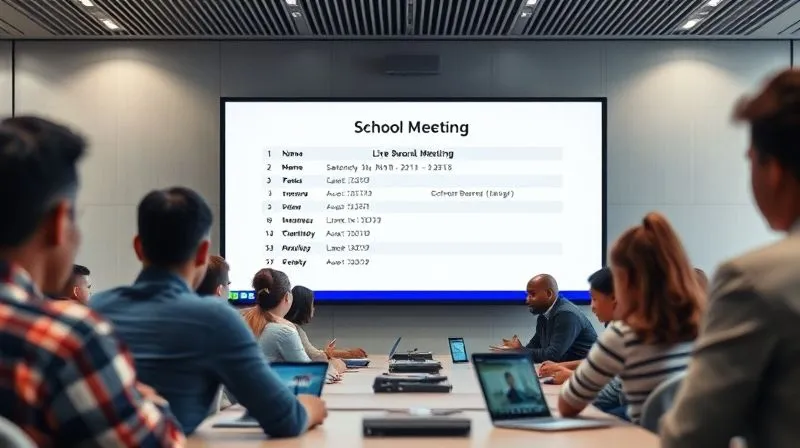
Step 6: Cultivate a Culture of Openness and Accountability
Legal compliance, while paramount, is only one side of the coin. The true strength of school governance lies in cultivating a deep-seated culture of openness and accountability that permeates every action and decision. As an expert who has advised countless boards, I've seen that the most compliant districts are those where transparency is not just a rule, but a guiding principle embraced by every member.
New open meeting laws often reflect a societal desire for greater trust in public institutions. A proactive culture of openness goes beyond the minimum legal requirements; it anticipates community needs and builds goodwill proactively.
Leading by Example
The tone for transparency is set at the top. The Board Chair and Superintendent play pivotal roles in modeling compliant and open behavior:
- Verbal Affirmation: Regularly remind board members and staff of the importance of open governance and the district's commitment to transparency.
- Encourage Public Participation: Create an environment where public comment is genuinely welcomed and respected, even when opinions differ. Clearly communicate the rules for public input and adhere to them consistently.
- Debate in Public: Encourage robust discussion and debate on policy matters during open sessions. While executive sessions have their place, the default should always be public discourse.
- Transparency in Challenges: When the district faces difficult decisions or controversies, be upfront and transparent about the process. Explain the legal parameters and the board's rationale in public.
A board that visibly champions openness inspires confidence, making the community feel valued and heard. This, in turn, reduces the likelihood of legal challenges born from mistrust or perceived secrecy.
Proactive Communication with the Community
Beyond formal meeting notices, proactive communication builds bridges and reinforces trust. Consider:
- Regular Updates: Beyond meeting schedules, use district newsletters, social media, and community forums to explain complex issues before they come to a vote.
- 'Why' Behind Decisions: Don't just announce decisions; explain the reasoning, the data, and the legal frameworks that informed them. This demonstrates accountability.
- Feedback Mechanisms: Provide multiple channels for community feedback, showing that the board is genuinely listening.
As leadership experts often emphasize, proactive communication is key to building strong relationships and managing expectations. In school governance, this translates directly into stronger community ties and reduced friction regarding board decisions. This cultural shift ensures that how to ensure school board compliance with new open meeting laws becomes an integrated part of daily operations, rather than an onerous checklist.
Step 7: Regular Review and Legal Counsel Engagement
The final, and arguably most critical, step in ensuring sustained school board compliance with new open meeting laws is establishing a cycle of continuous review and maintaining an ongoing relationship with expert legal counsel. The legal landscape is dynamic; what is compliant today may not be tomorrow. Relying on outdated practices is a recipe for future non-compliance.
Scheduled Policy Reviews
I advise districts to treat their open meeting law policies as living documents, not static texts. Implement a formal schedule for review:
- Annual Review: At a minimum, conduct an annual review of all policies and procedures related to open meetings. This should involve board members, the superintendent, and the board secretary.
- Event-Triggered Reviews: Immediately review policies whenever new state or federal legislation impacting open meetings is passed, or following any significant legal challenge or incident of alleged non-compliance within the district or a peer district.
- Lessons Learned: After each review, update policies and procedures to reflect best practices and address any identified weaknesses. Communicate these updates clearly to all stakeholders.
This systematic approach ensures that your district's operational framework remains current and resilient against legal shifts.
The Indispensable Role of Legal Counsel
No matter how diligent a board is, the complexities of education law and open meeting statutes necessitate the regular involvement of expert legal counsel. I've seen boards try to navigate these waters alone, often with disastrous results. Legal counsel is not just for when you're in trouble; it's a proactive partnership.
- Proactive Advice: Your district's attorney can provide ongoing advice on interpreting new laws, drafting compliant policies, and advising on specific meeting scenarios before issues arise.
- Training Delivery: Legal counsel is often best positioned to deliver the specialized training discussed in Step 2, ensuring accuracy and legal authority.
- Crisis Management: If an alleged violation occurs, experienced counsel can guide the board through the investigation, response, and remediation process, minimizing legal exposure and reputational damage.
- Legislative Monitoring: A good education law attorney stays abreast of legislative changes, alerting your district to impending new open meeting laws or amendments that will require action.
Establishing and maintaining a strong relationship with legal counsel is an investment that safeguards the district, protects board members, and ultimately supports the integrity of public education. As a trusted resource, your legal team helps answer the critical question of how to ensure school board compliance with new open meeting laws with confidence.
For further insights on legal best practices in education governance, consider resources from organizations like the National School Boards Association (NSBA) or reputable legal publications focusing on administrative law and public entities.
Frequently Asked Questions (FAQ)
Question: Can school board members discuss district business via email or text message outside of a public meeting? No, this is a common pitfall. If a quorum of the board engages in a discussion of public business through any electronic means (email, text, chat, social media private groups), it can constitute a "serial meeting" and be a direct violation of open meeting laws. All substantive discussions and deliberations on public business by a quorum must occur in a properly noticed public meeting. I always advise board members to assume any communication involving a quorum about district business is subject to open meeting rules.
Question: Are remote or virtual school board meetings subject to the same open meeting laws as in-person meetings? Generally, yes, and sometimes with additional requirements. While many states have enacted provisions allowing for remote meetings, especially post-pandemic, these typically come with strict conditions. These often include requiring public notice of the remote access method, ensuring public access to the meeting (e.g., via live stream), providing a mechanism for public comment, and ensuring board members are audible and identifiable. It's crucial to check your specific state's current statutes regarding virtual meetings.
Question: How should a school board handle disruptive public comments during a meeting? This requires a delicate balance. Boards have the right to maintain order and decorum. I recommend having a clearly published policy on public comment that outlines time limits, appropriate conduct, and the procedure for addressing disruptions. When a disruption occurs, the Board Chair should first issue a warning, citing the policy. If the disruption continues, the Chair may then ask the individual to leave or call for a recess. It's critical that the rules are applied consistently to avoid claims of viewpoint discrimination. Legal counsel can help draft a robust and legally defensible public comment policy.
Question: What are the potential penalties for non-compliance with open meeting laws? The penalties vary significantly by state but can be severe. They range from civil penalties (fines for individual board members or the district), to injunctions ordering future compliance, to the invalidation of actions taken during an unlawfully closed meeting. In some jurisdictions, repeated or willful violations can even lead to misdemeanor charges or removal from office for individual board members. The reputational damage and erosion of public trust, though not a legal penalty, are often the most significant long-term consequences.
Question: What constitutes 'adequate notice' for a school board meeting under new laws? 'Adequate notice' is defined by state statute and can vary for regular, special, and emergency meetings. New laws often increase the required notice period (e.g., 48 or 72 hours for regular meetings, 24 hours for special meetings, with emergency exceptions). Beyond timing, adequacy also refers to the method of notice (e.g., physical posting, district website, email lists) and the specificity of the agenda items. It means providing enough information, in enough time, and through accessible channels, for a reasonable member of the public to understand what will be discussed and attend if they wish.
Key Takeaways and Final Thoughts
Navigating the evolving landscape of open meeting laws can feel daunting, but it is an essential responsibility for every school board dedicated to effective and ethical governance. My experience has shown me that compliance is not a burden; it is an opportunity to strengthen public trust, foster community engagement, and ensure that the vital work of educating our children is conducted with integrity.
- Proactive Audits are Non-Negotiable: Don't wait for a legal challenge. Regularly assess your policies against current laws.
- Invest in Continuous Training: Equip all stakeholders, from board members to administrative staff, with the knowledge to comply.
- Embrace Technology Thoughtfully: Leverage digital tools to enhance transparency and streamline record-keeping, making information accessible to all.
- Cultivate a Culture of Openness: Lead by example, communicate proactively, and foster an environment where transparency is the default, not the exception.
- Partner with Legal Counsel: Your district's attorney is an invaluable resource for proactive advice, training, and navigating complex legal nuances.
The question of how to ensure school board compliance with new open meeting laws is ultimately about more than just avoiding penalties. It's about upholding the democratic principles upon which our public education system is built. By embracing these actionable steps and committing to a culture of transparency, your board can not only meet legal mandates but also build a stronger, more trusted relationship with the community it proudly serves. The future of our schools depends on it.

Recommended Reading
- 5 Legal Pillars: Expelling Students Without Due Process Violations
- Navigating a Fraud Adversary Proceeding: 7 Crucial Steps to Respond
- Petty Theft Penalties: What You Need to Know Now
- Wildcat Strikes: Your 5-Step Legal Response for Unionized Teams
- Expired Pre-Bankruptcy Credit Counseling Certificate? 5 Steps to Fix It





Comments
Leave a comment below. Your email will not be published. Required fields marked with *