


How to Legally Challenge Foreign Vessel Incursions into an EEZ?
For over two decades, I’ve navigated the intricate currents of international maritime law, witnessing firsthand the profound challenges coastal states face in safeguarding their Exclusive Economic Zones (EEZs). It’s a delicate balance: asserting sovereign rights while upholding the freedoms of navigation and overflight. I've seen situations escalate unnecessarily due to a lack of clear protocols, and conversely, I've observed nations successfully protect their maritime interests through meticulous legal strategy and diplomatic acumen.
The problem is stark: foreign vessels, driven by economic gain or strategic objectives, often test the boundaries of international law, engaging in illegal fishing, unauthorized research, or even military activities within another state's EEZ. These incursions aren't just minor infringements; they threaten national security, environmental integrity, economic stability, and the very fabric of maritime order. For a coastal state, the question isn't if an incursion will occur, but how to respond effectively, legally, and without inadvertently escalating tensions.
In this definitive guide, I will share my insights and provide a comprehensive framework for how to legally challenge foreign vessel incursions into an EEZ. We'll explore everything from initial detection and diplomatic protests to legal recourse and, when absolutely necessary, proportionate enforcement actions. My aim is to equip you with actionable strategies, grounded in international law and practical experience, to protect your nation's maritime domain with confidence and authority.
Understanding the Exclusive Economic Zone (EEZ) and Coastal State Rights
Before any challenge can be mounted, a clear understanding of the legal basis for the EEZ is paramount. The Exclusive Economic Zone, as codified in Part V of the United Nations Convention on the Law of the Sea (UNCLOS), extends 200 nautical miles from the baseline from which the breadth of the territorial sea is measured. Within this zone, a coastal state exercises specific sovereign rights and jurisdiction.
Critically, UNCLOS grants the coastal state:
- Sovereign rights for the purpose of exploring and exploiting, conserving and managing the natural resources, whether living or non-living, of the waters superjacent to the seabed and of the seabed and its subsoil, and with regard to other activities for the economic exploitation and exploration of the zone, such as the production of energy from the water, currents and winds.
- Jurisdiction with regard to: (i) the establishment and use of artificial islands, installations and structures; (ii) marine scientific research; (iii) the protection and preservation of the marine environment.
It's crucial to distinguish these rights from full sovereignty. While a coastal state has extensive rights over resources and specific activities, other states retain certain freedoms in the EEZ, such as freedom of navigation and overflight, and the freedom to lay submarine cables and pipelines. The challenge lies in determining when these freedoms are abused to infringe upon the coastal state's sovereign rights or jurisdiction.
In my experience, many incursions begin with a deliberate blurring of these lines. A research vessel might claim 'innocent passage' while conducting unauthorized surveys, or a fishing vessel might drift into the EEZ claiming equipment malfunction. Understanding the precise legal entitlements and limitations is the bedrock of any effective response.
The Initial Response: Detection, Verification, and Non-Forceful Measures
The first line of defense against EEZ incursions is robust surveillance and a swift, professional initial response. Early detection is not just about technology; it's about having well-trained personnel and clear protocols. I’ve seen countless instances where delays in verification or inappropriate initial communication turned a minor incident into a diplomatic headache.
Establishing a Clear Chain of Command and Reporting Protocols
Every coastal state needs a centralized command and control center for maritime domain awareness. This isn't merely a technological hub; it's a strategic nerve center where information is processed, assessed, and acted upon. The initial steps typically involve:
- Detection: Utilizing radar, satellite imagery, AIS (Automatic Identification System), VMS (Vessel Monitoring System), and aerial patrols to identify an anomalous vessel.
- Verification: Cross-referencing detected vessels against known shipping manifests, authorized activity lists, and international databases. Is its AIS transponder on? Is it behaving erratically?
- Initial Hailing: Attempting to establish radio contact (VHF Channel 16 is standard) to identify the vessel, its purpose, and its intentions. This should be done professionally and clearly, in English and potentially other relevant languages.
- Issuing Warnings: If the vessel's activity is deemed unauthorized, clearly communicate that it is operating within the coastal state's EEZ and is in violation of specific national laws or international norms. Request immediate cessation of activity and departure.
- Documentation: Meticulously record all communications, observations (photos, videos), vessel details (name, flag state, IMO number), and GPS coordinates. This evidence is vital for any subsequent legal or diplomatic action.
It is imperative that these initial communications are non-confrontational but firm. The goal at this stage is de-escalation and obtaining compliance without resorting to force.

“The most effective initial response to an EEZ incursion is not always the most aggressive, but the most informed, documented, and legally sound. Precision in communication and evidence gathering lays the groundwork for all subsequent actions.”
Escalating the Challenge: Diplomatic Channels and Bilateral Engagements
When initial non-forceful measures fail to secure compliance, the next crucial step is to engage through diplomatic channels. This phase is about leveraging international relations and the weight of sovereign states to resolve the issue without direct confrontation.
Crafting Effective Diplomatic Notes and Protests
A formal diplomatic protest, often in the form of a Note Verbale, is a powerful tool. It serves as an official record of the coastal state's objection and preserves its rights. In my career, I’ve advised governments on drafting hundreds of these, and the key is always clarity, precision, and a firm basis in international law. A diplomatic note should include:
- Identification of the offending vessel (name, flag, IMO number).
- Specific details of the incursion (date, time, location, nature of activity).
- Reference to relevant national laws and international conventions (e.g., UNCLOS articles violated).
- A clear statement of protest and demand for cessation of activity and non-repetition.
- A request for investigation by the flag state and, if appropriate, compensation for damages.
- Offer to engage in bilateral consultations to resolve the matter.
Simultaneously, direct bilateral engagements with the flag state of the infringing vessel are often necessary. This might involve meetings between foreign ministry officials, naval attachés, or even heads of state, depending on the severity and political sensitivity of the incident. These discussions can explore various avenues, from joint investigations to agreements on future conduct, and are often the most pragmatic path to resolution.
According to a study by the Chatham House Centre for International Law, diplomatic channels resolve over 70% of maritime disputes before they escalate to international tribunals, underscoring their critical importance.
Legal Recourse: Arbitration, Adjudication, and International Courts
If diplomatic efforts prove insufficient, or if the nature of the incursion demands a formal legal determination, international dispute resolution mechanisms become available. UNCLOS itself provides a comprehensive framework for the peaceful settlement of disputes concerning its interpretation or application.
Choosing the Right Forum for Dispute Resolution
The choice of forum is a strategic decision, influenced by the specifics of the case, the flag state's acceptance of jurisdiction, and the desired outcome. The primary options include:
- International Tribunal for the Law of the Sea (ITLOS): Established by UNCLOS, ITLOS has jurisdiction over disputes concerning the interpretation or application of the Convention. It can hear contentious cases and issue advisory opinions.
- International Court of Justice (ICJ): While a broader court dealing with general international law, the ICJ can also hear maritime disputes if both states have accepted its compulsory jurisdiction or agree to submit the case.
- Arbitral Tribunals: Annex VII of UNCLOS provides for compulsory arbitration. This is often a default mechanism if states have not chosen another means or if their chosen means fails to produce a settlement.
- Special Arbitral Tribunals: Annex VIII of UNCLOS allows for specialized tribunals for disputes concerning fisheries, marine scientific research, protection and preservation of the marine environment, or navigation.
Each forum has its own procedures, timelines, and enforcement mechanisms. For instance, ITLOS is known for its expedited procedures for prompt release of vessels and crews. Understanding these nuances is vital for building a strong legal case.
I recall a complex case involving a research vessel conducting seismic surveys without prior consent. The coastal state, after exhausting diplomatic channels, initiated arbitration under Annex VII. The meticulous documentation from the initial detection phase proved invaluable in demonstrating the unauthorized nature of the research and securing a favorable ruling. As ITLOS itself emphasizes, the legal framework is only as strong as the evidence presented.
| Dispute Resolution Body | Primary Jurisdiction | Key Feature | Decision Type |
|---|---|---|---|
| ITLOS | UNCLOS interpretation/application | Expedited procedures, prompt release | Binding judgements |
| ICJ | General international law, including maritime disputes | Broader scope, state consent often required | Binding judgements |
| Annex VII Arbitration | UNCLOS disputes (default) | Compulsory, flexible procedures | Binding awards |
| Annex VIII Special Arbitration | Specific UNCLOS disputes (fisheries, environment) | Expert panels for technical issues | Binding awards |
Enforcement Actions: When and How to Exercise Sovereign Rights
While legal challenges and diplomatic efforts are preferred, there are circumstances where a coastal state may need to exercise its sovereign rights through direct enforcement actions. This is a highly sensitive area, fraught with potential for escalation, and must always be conducted in strict adherence to international law, particularly UNCLOS and customary international law principles.
Adhering to International Law Principles for Enforcement
The use of force in the EEZ is severely restricted. UNCLOS Article 73 explicitly states that coastal states may take such measures, including boarding, inspection, arrest and judicial proceedings, as may be necessary to ensure compliance with laws and regulations adopted in conformity with the Convention. However, these measures must not endanger the safety of navigation or otherwise create a hazard to a vessel, nor bring a vessel to a port or anchor it in unsafe conditions.
Key principles governing enforcement actions:
- Necessity: Is the enforcement action truly necessary to prevent ongoing infringement or to bring the vessel to justice?
- Proportionality: The force used must be proportionate to the objective. Firing on an unarmed fishing vessel for minor infractions is almost certainly disproportionate.
- Non-discrimination: Enforcement actions should not discriminate in form or in fact against vessels of any State.
- Due Process: Arrested vessels and crews must be afforded due process under the law, including prompt notification to the flag state and prompt release upon posting reasonable bond or other security.
- Warning Shots: If warning shots are deemed necessary, they must be fired clear of the vessel, with due regard to safety.
I’ve advised on numerous enforcement operations, and the most successful ones are those planned with meticulous attention to legal detail and operational safety. A clear protocol for engagement, from hailing to boarding, must be in place and rigorously trained.
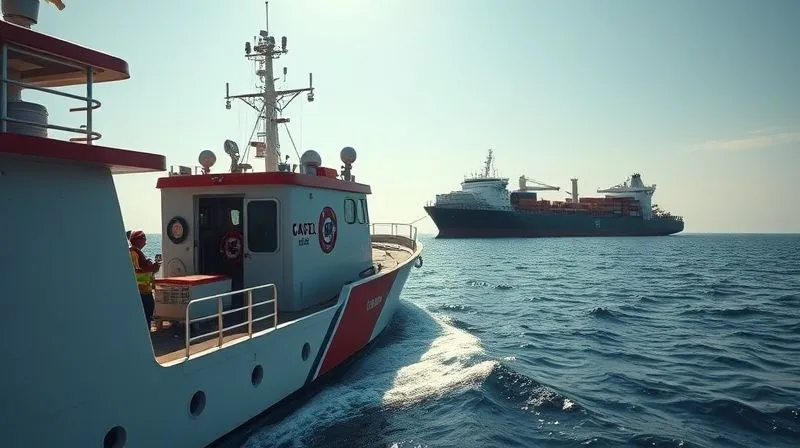
The consequences of unlawful or disproportionate enforcement can be severe, leading to international condemnation, claims for damages, and a significant blow to a nation's reputation. Therefore, any decision to initiate an enforcement action must pass stringent legal review and be authorized at the highest levels of government.
Building a Robust EEZ Monitoring and Response Framework
Effective EEZ protection is not a reactive measure; it requires a proactive, integrated framework that combines legal, operational, and technological elements. This framework is what truly empowers a coastal state to legally challenge foreign vessel incursions into an EEZ consistently and effectively.
Developing Standard Operating Procedures (SOPs) and Inter-Agency Coordination
A comprehensive framework involves:
- Inter-Agency Coordination: Establishing seamless communication and operational protocols between naval forces, coast guard, fisheries authorities, environmental agencies, and foreign ministries. Silos lead to inefficiencies and missed opportunities.
- Legal Capacity Building: Regularly training legal advisors, maritime law enforcement officers, and diplomatic personnel on the latest developments in international maritime law and national legislation.
- Resource Allocation: Ensuring adequate patrol vessels, aerial surveillance assets, and personnel are available and strategically deployed.
- Data Management: Implementing robust systems for collecting, storing, and analyzing all maritime domain awareness data, from AIS tracks to patrol reports. This data forms the bedrock of any legal case.
- Public Awareness: Informing the national and international community about the coastal state's EEZ laws and enforcement policies, which can act as a deterrent.
As highlighted in reports by the UNODC Global Maritime Crime Programme, sustained capacity building and regional cooperation are far more effective than sporadic, isolated enforcement efforts. A truly robust framework fosters a culture of vigilance and adherence to the rule of law.
Navigating Complexities: Overlapping Claims and Disputed Areas
The 'law of the sea' is rarely black and white, especially when dealing with overlapping maritime claims or disputed areas. In these scenarios, the challenge of legally responding to incursions becomes even more intricate, demanding heightened diplomatic sensitivity and a deep understanding of international jurisprudence.
When an incursion occurs in an area where maritime boundaries are not yet delimited, or where there are competing claims to an EEZ, unilateral enforcement actions can be highly provocative. In such cases, I always advise prioritizing diplomatic dialogue and provisional arrangements. UNCLOS Article 74 (3) and Article 83 (3) explicitly call upon states with overlapping claims to 'make every effort to enter into provisional arrangements of a practical nature' during boundary delimitation negotiations. These arrangements can include joint patrols, joint resource management, or agreed zones of non-action.
“In disputed maritime areas, cooperation, not confrontation, is the highest form of asserting sovereign interest. Provisional arrangements, while not prejudicing future delimitation, demonstrate good faith and prevent dangerous escalations.”
History is replete with examples where minor incidents in disputed zones spiraled into major international crises. Therefore, for incursions in such sensitive areas, the legal challenge must be carefully weighed against geopolitical realities, and responses should be meticulously coordinated through foreign affairs channels, often involving third-party mediation or international arbitration for boundary delimitation itself.
Case Study: The 'MV Athena' Incident and Its Resolution
Let me share a fictional yet realistic scenario to illustrate the principles we’ve discussed. In 2018, the coastal state of 'Atlantia' detected the 'MV Athena,' a vessel flagged to 'Poseidonia,' conducting extensive seismic surveys within Atlantia's declared EEZ, approximately 150 nautical miles offshore. Atlantia had not granted any permits for such research.
Initial Detection and Diplomatic Engagement
Atlantia's newly established Maritime Operations Center (MOC) detected the MV Athena's unusual survey patterns via satellite imagery and VMS data. A patrol vessel was dispatched. Upon hailing, the MV Athena claimed it was in international waters, despite clear evidence to the contrary. Atlantia's patrol vessel issued a formal warning, documented all communications, and gathered photographic evidence of the survey equipment deployed.
Atlantia's Foreign Ministry immediately issued a Note Verbale to Poseidonia, protesting the unauthorized research, citing UNCLOS Article 246 (3) which requires coastal state consent for marine scientific research in its EEZ. Poseidonia initially denied knowledge and suggested a misunderstanding.
Escalation to Legal and Bilateral Channels
Given Poseidonia's initial reluctance to acknowledge the violation, Atlantia’s legal team prepared a comprehensive dossier of evidence. They highlighted that seismic surveys, even if non-extractive, fall under 'marine scientific research' requiring consent. Simultaneously, Atlantia initiated high-level bilateral discussions, presenting the irrefutable evidence. Faced with the detailed legal case and the potential for international embarrassment, Poseidonia agreed to withdraw the MV Athena.
However, Atlantia sought further assurance. They proposed a joint investigation into the data collected by MV Athena and a commitment from Poseidonia to adhere strictly to UNCLOS in the future. After several rounds of negotiations, Poseidonia agreed to an independent audit of the data collected by MV Athena, the destruction of any data deemed proprietary to Atlantia's EEZ resources, and a formal agreement on protocols for future research requests.
Lessons Learned from the MV Athena Incident
The MV Athena incident underscored several critical points:
- Evidence is King: Meticulous documentation from the outset was crucial for building an undeniable legal case.
- Diplomacy First: Exhausting diplomatic channels, backed by strong legal arguments, prevented the need for potentially risky enforcement actions.
- Clear Legal Framework: Atlantia's clear national legislation mirroring UNCLOS provided a solid legal foundation for its claims.
- Proactive Measures: The MOC's ability to detect and verify quickly was instrumental in preventing prolonged unauthorized activity.
This case demonstrates that a multi-pronged approach – combining robust surveillance, precise legal claims, and persistent diplomacy – is the most effective way to legally challenge foreign vessel incursions into an EEZ.
Leveraging Technology for Enhanced EEZ Surveillance and Data Collection
In the modern era, technology has become an indispensable ally in the fight against EEZ incursions. The sheer size of most EEZs makes constant physical patrolling impractical and economically unfeasible. This is where smart application of technology can dramatically improve a coastal state's ability to legally challenge foreign vessel incursions into an EEZ.
Integrating Advanced Surveillance and Data Analytics
I’ve witnessed a revolution in maritime domain awareness over the past decade. The integration of various technologies provides a comprehensive, real-time picture:
- Satellite Imagery and Synthetic Aperture Radar (SAR): Provides wide-area surveillance, day or night, regardless of weather, detecting vessels even if their AIS is off.
- Automatic Identification System (AIS) and Vessel Monitoring System (VMS): AIS transponders on most commercial vessels broadcast their position, speed, and course. VMS is used for tracking fishing vessels. Anomalies (e.g., AIS off in busy shipping lanes, erratic movements) are key indicators of potential illegal activity.
- Unmanned Aerial Vehicles (UAVs)/Drones: Offer flexible, cost-effective aerial surveillance for closer inspection of suspicious vessels, especially in remote areas.
- Coastal Radar Systems: Provide localized, high-resolution tracking of vessels approaching the coastline.
- Artificial Intelligence (AI) and Machine Learning (ML): These technologies are increasingly used to analyze vast amounts of sensor data, identify patterns of illegal activity, predict potential incursions, and flag anomalies for human review.
The true power comes from integrating these disparate data streams into a single, cohesive maritime domain awareness platform. This allows for rapid analysis, informed decision-making, and the creation of irrefutable evidence packages for legal action.

| Technology | Benefit for EEZ Enforcement | Limitation |
|---|---|---|
| Satellite SAR | All-weather, wide-area detection of vessels regardless of AIS status | Lower resolution for small vessels, revisit time |
| AIS/VMS | Real-time tracking of compliant vessels, anomaly detection | Can be switched off, not all vessels required to carry |
| UAVs/Drones | Flexible, close-range inspection, cost-effective aerial surveillance | Limited endurance, weather dependent, line-of-sight issues |
| AI/ML Analytics | Automated anomaly detection, predictive analysis, pattern recognition | Requires high-quality data, initial training and calibration |
As maritime security expert Dr. Jane Peterson often states, “The future of EEZ enforcement isn't about more patrol boats, but smarter patrol boats, guided by an intelligent network of sensors and data analytics.” Investing in and integrating these technologies is not just an operational necessity; it's a strategic imperative for any coastal state serious about protecting its EEZ.
Frequently Asked Questions (FAQ)
What if the foreign vessel claims innocent passage through the EEZ? The right of innocent passage only applies to the territorial sea, not the EEZ. While freedom of navigation exists in the EEZ, it does not permit activities like marine scientific research, fishing, or resource exploration without coastal state consent. If a vessel is genuinely exercising navigation rights, it must not engage in activities that infringe upon the coastal state's sovereign rights or jurisdiction. The nature of the activity, not just the passage, is key.
Can a coastal state use force against a research vessel conducting unauthorized surveys? The use of force must always be necessary and proportionate. While a coastal state has jurisdiction over marine scientific research in its EEZ, enforcement measures typically involve ordering the cessation of activity, seizure of equipment, or arrest, rather than the use of direct force against the vessel itself, unless there's an immediate threat to life or property, or the vessel is resisting lawful authority with force. Diplomatic and legal channels are strongly preferred.
What role do regional organizations play in EEZ enforcement? Regional organizations, such as Regional Fisheries Management Organizations (RFMOs) or regional maritime security bodies, play a crucial role. They facilitate information sharing, coordinate joint patrols, develop regional enforcement strategies, and can provide a platform for diplomatic resolution of disputes. Their collective strength often enhances individual states' capacity to legally challenge foreign vessel incursions into an EEZ.
What are the typical penalties for EEZ incursions, especially for illegal fishing? Penalties vary by national legislation but typically include substantial fines, confiscation of catch and fishing gear, forfeiture of the vessel, and imprisonment of the captain and crew. International law requires that penalties for violations of fisheries laws in the EEZ should not include imprisonment, in the absence of agreements to the contrary, or any other form of corporal punishment. Prompt release of the vessel and crew upon posting of a reasonable bond or other security is also a requirement.
How does climate change impact EEZ enforcement challenges? Climate change introduces new complexities. Melting Arctic ice opens new shipping routes and resource exploitation opportunities, leading to increased incursions and potential disputes in previously inaccessible areas. Rising sea levels can affect baseline definitions, impacting EEZ boundaries. Furthermore, climate-induced migration and resource scarcity might drive more illegal fishing activities, putting additional strain on enforcement capabilities.
Key Takeaways and Final Thoughts
Protecting a nation's Exclusive Economic Zone is a complex, continuous, and critical task that demands a multi-faceted approach. As I've outlined, successfully challenging foreign vessel incursions into an EEZ requires more than just patrol boats; it necessitates a sophisticated blend of legal expertise, diplomatic skill, technological prowess, and unwavering political will.
- Master the Legal Framework: A deep understanding of UNCLOS and national legislation is the foundation.
- Prioritize Early Detection and Documentation: Robust surveillance and meticulous record-keeping are your strongest assets.
- Exhaust Diplomatic Avenues: Engagement with flag states often yields the most peaceful and effective resolutions.
- Know Your Legal Recourse: Be prepared to utilize international tribunals and arbitration when necessary.
- Ensure Proportional Enforcement: Any direct action must be legally justifiable, necessary, and proportionate.
- Invest in Technology and Capacity Building: Modern tools and well-trained personnel are non-negotiable for effective long-term protection.
The challenges to maritime sovereignty are ever-evolving, but with a strategic, informed, and principled approach, coastal states can effectively safeguard their EEZs, protect their national interests, and contribute to the stability of the global maritime order. The sea, a source of immense bounty and opportunity, demands our constant vigilance and unwavering commitment to the rule of law.
Recommended Reading
- 5 Grand Jury Motions: Preventing Client Indictment with Expert Strategy
- Ex-Employee Joins Rival? 7 Steps to Enforce Your Trade Secrets
- License Revoked? 7 Steps to Win Your Judicial Review Appeal
- The Secret Edge: How to Identify Strong Evidence for Trade Secret Litigation?
- 7 Steps to Slash Business Liability for Juvenile Offenses On-Premises




Comments
Leave a comment below. Your email will not be published. Required fields marked with *