



How to prove causation for cargo damage under COGSA regulations?
For over two decades in maritime law, I've witnessed countless cargo damage claims, and the single most common stumbling block isn't the damage itself, but the intricate dance of proving causation under the Carriage of Goods by Sea Act (COGSA). It's a complex legal arena where the slightest misstep in evidence or argument can sink an otherwise legitimate claim.
Shippers and consignees often face immense frustration when their valuable cargo arrives damaged, only to be met with a formidable wall of carrier defenses. The core pain point? Disentangling the 'what' from the 'why' – demonstrating definitively that the carrier's actions, or inactions, directly led to the loss, rather than an inherent vice of the goods or an act of God. This isn't just about showing damage; it’s about meticulously connecting the dots from loading to discharge.
In this definitive guide, I'll walk you through the labyrinthine requirements of COGSA, offering not just a theoretical overview, but a practical, actionable framework honed from years of courtroom experience. We will dissect the burden of proof, explore critical evidentiary strategies, and arm you with the expert insights needed to successfully prove causation for cargo damage under COGSA regulations, turning potential losses into recoverable claims.
Understanding the COGSA Framework: Burden of Proof Basics
Before we delve into proving causation, it's crucial to grasp the fundamental legal landscape of COGSA. Enacted in 1936, COGSA governs the rights and liabilities between carriers and shippers in the international carriage of goods by sea to or from U.S. ports, specifically from the time the goods are loaded onto the ship until they are discharged. It establishes a delicate balance, providing certain protections for both parties.
The burden of proof in a COGSA claim is a two-stage process, often described as a 'ping-pong' match. Initially, the burden rests squarely on the claimant (shipper or consignee) to establish a prima facie case of loss or damage. If successful, the burden then shifts to the carrier to prove that the damage falls within one of COGSA's enumerated exceptions. Should the carrier succeed, the burden may then shift back to the claimant to prove that the carrier's negligence contributed to the loss.
This shifting burden is central to proving causation. You can't just assert damage; you must demonstrate it occurred while the goods were in the carrier's custody and that they were received in good condition. The carrier, in turn, must prove their actions didn't cause it, or that an external factor did. This intricate dance means meticulous documentation and a clear understanding of each party's responsibilities are paramount.
"In maritime law, proving causation isn't about guesswork; it's about building an unassailable narrative supported by irrefutable evidence, tracing the lineage of damage back to its root cause within the carrier's care."
The Shipper's Prima Facie Case: Establishing Initial Causation
Your journey to proving causation begins with establishing a robust prima facie case. This initial hurdle requires you to demonstrate three key elements, setting the stage for subsequent arguments. Failure here means your claim likely won't proceed.
1. Delivery of Goods to Carrier in Good Condition
This is often the most critical and contentious point. You must prove that the cargo was in good order and condition when it was delivered to the carrier. The primary evidence for this is typically the bill of lading. A 'clean' bill of lading, one without notations of damage or defect, serves as prima facie evidence that the goods were received by the carrier in apparent good order and condition. However, a clean bill only attests to the *apparent* condition. For latent defects, you might need pre-shipment survey reports or manufacturing quality control records.
Actionable Step: Documenting Pre-Shipment Condition
- Thorough Pre-Loading Surveys: Engage independent surveyors to inspect and photograph cargo before loading, especially for high-value or sensitive goods.
- Detailed Loading Reports: Create comprehensive reports detailing packaging, stowage, and any observed issues during loading.
- Quality Control Certificates: Retain all manufacturer quality control documents, ensuring they align with the cargo shipped.
2. Discharge of Goods from Carrier in Damaged Condition
Next, you must prove that the goods were discharged from the vessel at the port of destination in a damaged state, or that a loss occurred. This requires documentation from the discharge port. The key here is timeliness and accuracy.
Actionable Step: Documenting Post-Discharge Condition
- Immediate Post-Discharge Survey: Arrange for a joint survey with the carrier's representative (if possible) immediately upon discharge to document any visible damage or shortage.
- Notice of Claim: Issue a written notice of claim to the carrier within three days of delivery if the damage is not apparent, as stipulated by COGSA. Failure to do so creates a presumption of good delivery.
- Detailed Damage Reports: Compile comprehensive reports, including photographs, videos, and descriptions of the nature and extent of the damage.
3. Ascertainment of Damages
Finally, you need to quantify the monetary extent of the damage. This isn't directly causation, but it's an essential component of the prima facie case, establishing that a compensable loss occurred due to the damage. This usually involves comparing the market value of the goods in sound condition with their damaged value, or the cost of repair.
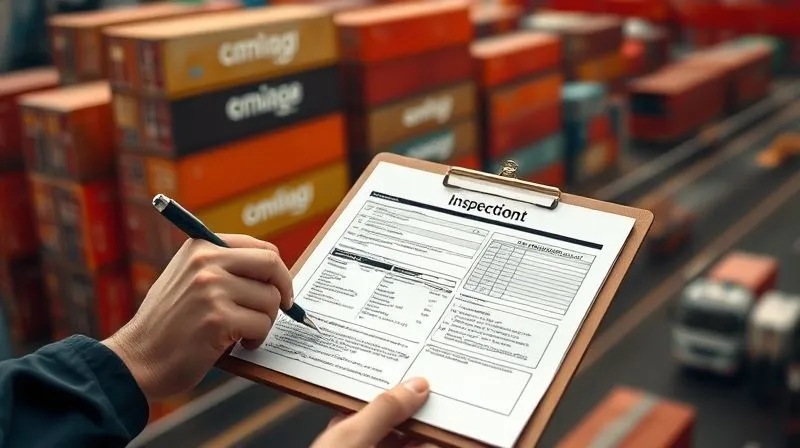
Navigating Carrier Defenses: Shifting the Burden Back
Once you've established your prima facie case, the burden shifts to the carrier. They will attempt to prove that the damage falls under one of the 17 enumerated exceptions to liability listed in COGSA Section 4(2). Successfully refuting these defenses is crucial for upholding your causation argument.
Common Carrier Defenses and Counter-Arguments:
- Act, neglect, or default of the master, mariner, pilot, or the servants of the carrier in the navigation or in the management of the ship (Navigational Fault): This is a broad defense. You might argue the fault was not in navigation but in cargo care (e.g., improper stowage leading to shifting).
- Fire, unless caused by the actual fault or privity of the carrier: Proving the carrier's fault or privity requires showing their direct involvement or knowledge of the conditions leading to the fire.
- Perils, dangers, and accidents of the sea or other navigable waters: This refers to extraordinary events that could not be foreseen or guarded against. High seas alone are often insufficient; you must show the weather was unusually severe for the voyage and season.
- Act of God: Similar to perils of the sea, this means an irresistible act of nature, without human intervention.
- Act of war or public enemies: Self-explanatory.
- Arrest or restraint of princes, rulers, or people, or seizure under legal process: Government actions preventing delivery.
- Quarantine restrictions: Delays or actions due to public health measures.
- Act or omission of the shipper or owner of the goods, his agent or representative: This is where the carrier argues the damage was *your* fault (e.g., improper packaging, misdeclaration of goods). This directly attacks your causation argument.
- Strikes or lockouts or stoppage or restraint of labor: Labor disputes.
- Riots and civil commotions: Unrest causing damage or delay.
- Saving or attempting to save life or property at sea: Actions taken for safety.
- Wastage in bulk or weight or any other loss or damage arising from inherent defect, quality, or vice of the goods: A very common defense. The carrier argues the goods were inherently prone to damage (e.g., perishable goods spoiling due to their nature, not poor refrigeration). This is a direct attack on your prima facie proof of good condition.
- Insufficiency of packing: Another direct attack on the shipper's responsibility.
- Insufficiency or inadequacy of marks: Poor labeling.
- Latent defects not discoverable by due diligence: Defects in the vessel itself, not discoverable by the carrier.
- Any other cause arising without the actual fault and privity of the carrier and without the fault or neglect of the agents or servants of the carrier: The 'catch-all' defense, requiring the carrier to prove due diligence.
To counter these, your strategy is to either discredit the carrier's evidence or prove that, even if an exception applies, the carrier's negligence contributed to the loss. This is the 'ping' back in the ping-pong match, where you reassert carrier negligence as the true cause. For instance, if the carrier claims 'perils of the sea,' you might argue that while the storm was severe, the damage was exacerbated by improper stowage that could have been prevented.
Gathering & Presenting Evidence: The Pillars of Your Case
The success of proving causation for cargo damage under COGSA regulations hinges entirely on the quality and comprehensiveness of your evidence. This isn't a game of 'he said, she said'; it's about objective, verifiable facts. As a seasoned practitioner, I've seen claims crumble simply because critical evidence was overlooked or poorly presented.
Key Types of Evidence:
- Bills of Lading: The cornerstone. Ensure it's clean or any notations are carefully considered.
- Loading/Discharge Reports: Detailed records from port operations, including tally sheets, gate passes, and equipment inspection reports.
- Survey Reports: Independent surveys conducted at loading, discharge, and during transit (if possible). These are invaluable for establishing condition and extent of damage.
- Photographs & Videos: High-resolution images and clear videos of the cargo's condition before, during, and after transit. Timestamped and geotagged media are ideal.
- Vessel Logs & Records: Request the vessel's logbooks, refrigeration logs (for reefer cargo), engine room logs, and stowage plans. These can reveal critical information about weather, vessel movements, and operating conditions.
- Communications: All correspondence between shipper, carrier, freight forwarder, and consignee regarding the shipment, including booking confirmations, instructions, and notices of claim.
- Sales Contracts & Invoices: To establish the value of the goods and the extent of financial loss.
- Expert Witness Reports: Opinions from marine surveyors, engineers, or scientists on the cause and extent of damage.
Presenting this evidence coherently is as important as gathering it. Organize your documents chronologically and thematically, creating a clear narrative that directly links the carrier's actions (or lack thereof) to the damage. Visual aids, such as timelines or comparative charts, can be incredibly persuasive.

Expert Witnesses & Surveys: Strengthening Your Causation Argument
In complex COGSA cases, particularly those involving nuanced technical or scientific aspects, the testimony and reports of expert witnesses become indispensable. Their specialized knowledge can bridge the gap between raw data and a compelling causation argument, often swaying the outcome of a claim.
The Role of Marine Surveyors:
Marine surveyors are often the first line of defense and offense. They physically inspect the cargo and vessel, document damage, and provide initial opinions on the likely cause. Their impartial reports carry significant weight. I always advise engaging a reputable, independent surveyor as early as possible – ideally, at both loading and discharge ports.
Beyond the Surveyor:
Depending on the nature of the cargo and damage, other experts may be needed:
- Naval Architects/Engineers: For structural damage to cargo or issues related to vessel design/seaworthiness.
- Metallurgists: If cargo damage involves material fatigue or corrosion.
- Horticulturists/Food Scientists: For perishable goods where spoilage or contamination is at issue, to determine if the cause was inherent vice or improper temperature/handling.
- Packaging Engineers: If the carrier argues insufficient packaging, an expert can assess if the packaging was adequate for the intended voyage.
These experts can provide detailed analysis, conduct tests, and offer opinions on the mechanism of damage, directly supporting your claim that the damage was due to a carrier's breach of duty rather than an exception. Their reports become crucial exhibits, and their testimony can clarify complex technical points for a court or arbitrator. For example, an expert might analyze temperature logs to show that a reefer container failed to maintain the required temperature, directly linking carrier negligence to spoilage, even if the carrier claims inherent vice.
Common Pitfalls & Strategic Considerations in COGSA Litigation
Even with strong evidence, COGSA litigation is fraught with potential missteps. Understanding these common pitfalls and adopting strategic considerations can significantly enhance your chances of success in proving causation.
Pitfalls to Avoid:
- Late Notice of Claim: Failing to provide written notice of claim within three days for non-apparent damage can create a strong presumption against you.
- Inadequate Documentation: Missing bills of lading, incomplete survey reports, or a lack of photographic evidence severely weakens your prima facie case.
- Focusing Only on Damage: Forgetting that showing damage is only half the battle; the other half is meticulously proving *why* it occurred under the carrier's responsibility.
- Underestimating Carrier Defenses: Assuming the carrier won't have a strong counter-argument. Always anticipate and prepare to rebut their likely defenses.
- Failure to Mitigate Damages: If you don't take reasonable steps to minimize further loss after the damage is discovered, your recoverable amount may be reduced.
Strategic Considerations:
- Early Engagement of Legal Counsel: A maritime lawyer experienced in COGSA can guide you from the moment damage is discovered, ensuring proper procedures are followed and evidence is preserved. This is not a DIY endeavor.
- Joint Surveys: Whenever possible, conduct surveys with the carrier's representative present. This minimizes disputes over the condition of goods.
- Preservation of Evidence: Ensure damaged cargo, packaging, and any related materials are preserved for inspection by all parties.
- Understanding Jurisdiction & Forum Selection: Your bill of lading might specify a particular jurisdiction or arbitration clause, which can impact your legal strategy.
- Settlement vs. Litigation: Evaluate the cost-benefit of pursuing litigation versus attempting an out-of-court settlement. Sometimes, a partial recovery is better than a protracted, expensive legal battle.
According to a study published in the NYU Journal of International Law and Politics, a significant percentage of maritime claims are settled pre-trial due to robust evidence gathering and strategic negotiation, underscoring the importance of preparation.
Case Study: A Victory in Proving Causation for Perishable Goods
Case Study: How 'Global Fresh' Proved Causation for Spoiled Avocados
Global Fresh, a major agricultural exporter, shipped a container of premium avocados from South America to the U.S. under a clean bill of lading. Upon discharge, a significant portion of the avocados showed signs of accelerated ripening and spoilage, far beyond normal transit deterioration. The carrier immediately invoked the 'inherent vice' defense, claiming the avocados were simply past their prime or inadequately packed.
Global Fresh, however, had followed my advice diligently. They had:
- Pre-shipment Survey: An independent surveyor had inspected and certified the avocados were within optimal ripeness and quality for export, with appropriate packaging.
- Continuous Temperature Monitoring: Temperature loggers placed within the container showed intermittent temperature spikes during transit, exceeding the agreed-upon refrigeration parameters.
- Post-discharge Expert Analysis: A food scientist examined samples, confirming that the spoilage pattern was consistent with temperature abuse, not inherent vice.
- Vessel Engine Room Logs: Discovery of the vessel's logs revealed a brief but significant period where the reefer unit's power supply was interrupted due to an engine issue, coinciding with the temperature spikes.
By meticulously linking the temperature spikes (carrier's operational issue) to the spoilage (damage), Global Fresh successfully rebutted the inherent vice defense. The court found that while avocados are perishable (inherent vice), the carrier's failure to maintain consistent refrigeration was the direct cause of the accelerated and abnormal spoilage. Global Fresh recovered the full value of the damaged cargo, demonstrating the power of comprehensive evidence in proving causation.
The Role of Documentation: Bills of Lading and Beyond
In maritime law, paperwork isn't just bureaucracy; it's the bedrock of your claim. The bill of lading is certainly king, but a wealth of other documents plays a crucial role in constructing your causation narrative. Neglecting any piece of this paper trail can leave critical gaps in your evidence.
Beyond the Clean Bill of Lading:
- Mate's Receipts: These are issued by the ship's officer upon receipt of cargo at the quay and often contain more detailed remarks about the cargo's condition than the final bill of lading.
- Booking Notes & Shipping Instructions: These documents outline the specific requirements for the cargo, such as temperature settings for reefer containers, special handling instructions, or stowage preferences. Deviations from these instructions can be powerful evidence of carrier negligence.
- Loading/Discharge Port Reports: Independent reports from port authorities or stevedores can corroborate or contradict the carrier's own records regarding handling and condition during transfer.
- Customs Declarations & Import/Export Licenses: While not directly about damage, these demonstrate the legitimate nature of the cargo and its intended journey.
- Insurance Certificates: Your marine cargo insurance policy documents the coverage and can be vital for understanding subrogation rights.
Every piece of documentation serves as a puzzle piece. For instance, if a bill of lading is 'claused' (i.e., contains notations of damage), this shifts the initial burden back to the shipper to prove the damage existed *before* loading, or that the carrier exacerbated it. Conversely, a clean bill is a strong start, but it's not a silver bullet for proving causation if the carrier can point to an inherent vice or shipper's fault.
I cannot stress enough the importance of maintaining an organized, complete archive of all documents related to a shipment. In a dispute, the party with the most thorough and consistent documentation often holds the upper hand. As BIMCO, the world's largest direct-membership organization for shipowners, highlights, standardized documentation is key to minimizing disputes and clarifying liabilities in shipping.
| Document Type | Primary Role in Causation | Key Information |
|---|---|---|
| Bill of Lading | Prima facie evidence of good condition at loading. | Cargo description, quantity, apparent condition, parties involved. |
| Survey Report | Objective assessment of damage, likely cause, and extent. | Photographs, expert opinion, damage description, timestamps. |
| Vessel Logbooks | Operational conditions, weather, incidents during transit. | Navigation records, engine status, refrigeration temperatures, incident reports. |
| Shipping Instructions | Carrier's duties, special handling requirements. | Temperature settings, stowage instructions, declared value. |
Frequently Asked Questions (FAQ)
Q: What if the bill of lading is 'claused' with notations of damage? Does this automatically defeat my claim? A: Not necessarily. A claused bill of lading means the carrier has noted existing damage or defects upon receipt. This rebuts the presumption that the goods were received in apparent good condition. However, you can still prove causation if you can demonstrate that the carrier's negligence exacerbated the existing damage, or that the damage noted was different from the damage claimed, or that the damage was 'latent' and not discoverable upon reasonable inspection at loading. It significantly increases your burden, requiring stronger pre-shipment evidence.
Q: How does COGSA interact with marine cargo insurance? A: Marine cargo insurance provides coverage for loss or damage to goods during transit. Typically, your insurer will pay out on a valid claim, and then they will 'subrogate' your rights against the carrier. This means the insurer steps into your shoes to pursue the carrier for recovery. Proving causation under COGSA is still critical, as the insurer will need to establish the carrier's liability to recover their payout. It's a two-stage process: claim against insurer, then insurer pursues carrier.
Q: Can a contractual clause in the bill of lading override COGSA regulations regarding causation? A: Generally, no. COGSA is U.S. federal law and contains a 'paramount clause' (Section 3(8)) which voids any clause in a bill of lading that purports to lessen the carrier's liability as set forth in COGSA. This means clauses attempting to shift the burden of proof for causation unfairly or to reduce the carrier's duties below COGSA standards are usually unenforceable. However, clauses that increase carrier liability are generally permissible. It's a complex area, and specific wording matters.
Q: What is the 'package limitation' under COGSA, and how does it affect my claim if I prove causation? A: COGSA Section 4(5) limits a carrier's liability to $500 per package or customary freight unit, unless the shipper declares a higher value and pays extra freight. If you successfully prove causation, your recovery might still be capped at this $500 limit per package, even if the actual damage is much higher. This is a critical factor in assessing the economic viability of pursuing a claim and is why declaring a higher value or having adequate marine cargo insurance is essential.
Q: What if the damage occurred during inland transit before or after the sea leg? A: COGSA only applies 'tackle to tackle,' meaning from loading onto the vessel until discharge. Damage occurring during inland pre-carriage or post-carriage is generally governed by different laws (e.g., the Carmack Amendment for U.S. domestic road/rail carriage) or specific contractual terms with the inland carrier. Proving causation in such 'intermodal' claims requires careful identification of where and when the damage occurred, and which carrier (sea or inland) was responsible at that specific point.
Key Takeaways and Final Thoughts
Proving causation for cargo damage under COGSA regulations is undeniably one of the most challenging aspects of maritime claims, demanding meticulous attention to detail, a deep understanding of legal principles, and strategic execution. It is not enough to simply demonstrate that damage occurred; you must convincingly establish that the carrier's actions or omissions, rather than an external factor or inherent vice, were the direct cause.
- Documentation is Paramount: Every piece of paper, every photograph, and every report forms a critical link in your chain of evidence.
- Understand the Shifting Burden: Be prepared to establish your prima facie case and then diligently rebut the carrier's defenses.
- Leverage Experts: Independent surveyors and specialized experts provide the objective evidence and technical insights often necessary to win complex cases.
- Act Swiftly and Strategically: Timely notice of claim, preservation of evidence, and early legal consultation are non-negotiable for success.
As an industry veteran, I've seen that the claims that succeed are those built on a foundation of proactive preparation and an unyielding commitment to gathering irrefutable facts. Don't let the complexity deter you. By following these steps and understanding the nuances of COGSA, you can significantly enhance your ability to prove causation and secure the rightful recovery for your damaged cargo. Remember, in maritime law, diligence is your strongest ally.
Recommended Reading
- 7 Critical Clauses: Preventing Shareholder Disputes Before They Start
- Unlock the Power: How Constitutional Amendments Shape Our Democracy Forever
- 5 Grand Jury Motions: Preventing Client Indictment with Expert Strategy
- 7 Proven Strategies: How to Navigate Legal Complexities in Cross-Border M&A
- 5 Legal Strategies: Navigating Cross-Border Digital Evidence Collection

Comments
Leave a comment below. Your email will not be published. Required fields marked with *