


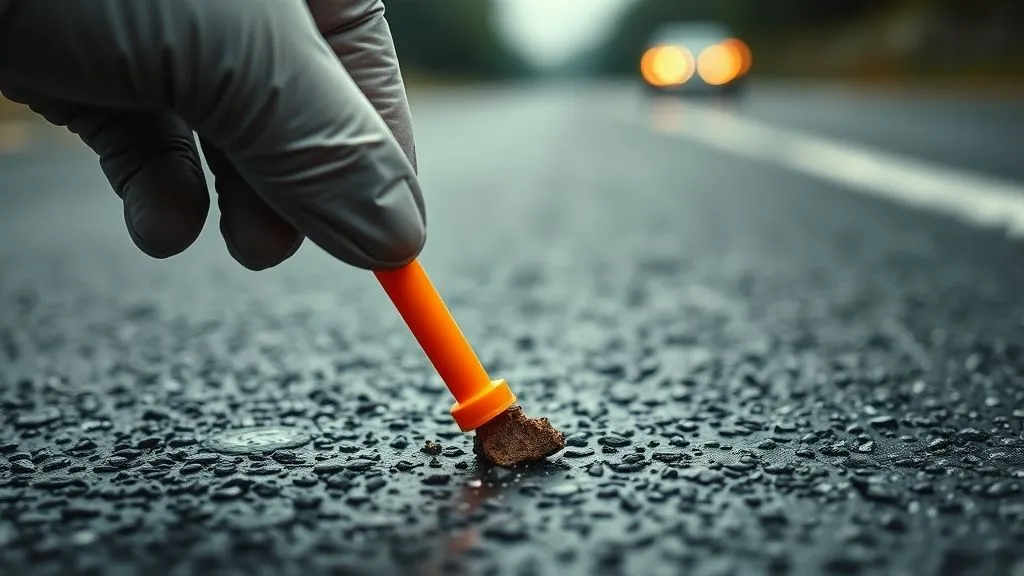
How to Secure Critical Accident Scene Evidence Before It's Lost?
For over two decades in the demanding field of personal injury law, I've witnessed firsthand the profound impact that meticulously collected evidence can have on a case. Conversely, I've seen countless meritorious claims falter, not due to lack of injury or fault, but because critical evidence, once abundant at the scene, simply vanished or degraded over time. This isn't just about winning a lawsuit; it's about justice for those who've suffered.
The immediate aftermath of an accident is a chaotic, emotionally charged period. It’s natural to feel overwhelmed, confused, or even in shock. However, it is precisely in these fleeting moments that the foundation of your personal injury claim is either solidified or irrevocably compromised. The stakes are incredibly high, and the window of opportunity to gather crucial information is often alarmingly brief.
This comprehensive guide isn't just a list of tips; it's a battle-tested framework born from years in the trenches, designed to empower you with the knowledge and actionable steps required to secure critical accident scene evidence before it's lost. We'll delve into practical strategies, expert insights, and real-world considerations, ensuring you're equipped to protect your rights and build the strongest possible case.
Initial Steps at the Scene: Safety First, Then Preserve
Before any evidence collection can begin, your safety and the safety of others must be the absolute priority. I cannot stress this enough. A personal injury claim loses all meaning if you sustain further harm while attempting to secure evidence. Once that immediate danger is addressed, your focus must shift rapidly to preservation.
Prioritizing Safety
Immediately after an accident, assess the situation for immediate dangers. Are you in the path of oncoming traffic? Is there a risk of fire or explosion? If possible and safe, move yourself and any injured parties to a secure location. Turn on your hazard lights, and if available, set up warning triangles or flares. Call 911 immediately to report the accident and request emergency services if needed. This step not only protects you but also creates an official record of the accident's occurrence and initial severity. Remember, your health is paramount.
The "Golden Hour" of Evidence
In accident investigation, we often talk about the "Golden Hour." Much like in medicine, this refers to the critical period immediately following the incident when evidence is most pristine and plentiful. Tire marks haven't faded, debris hasn't been cleared, witnesses are still present, and memories are fresh. Delaying evidence collection, even by a few hours, can lead to irreversible loss. My experience shows that the first 60-90 minutes are absolutely crucial for capturing the most authentic representation of the scene.
"The most compelling evidence is often the most ephemeral. Act swiftly, but always safely, to capture the scene as it is in the immediate aftermath." - Industry Specialist Insight
Documenting the Scene: Your Visual Story
A picture is worth a thousand words, and in a personal injury case, it can be worth thousands of dollars. Comprehensive visual documentation is the bedrock of any strong claim. It tells an unbiased story of the scene, the damage, and the context.
Photography and Videography Best Practices
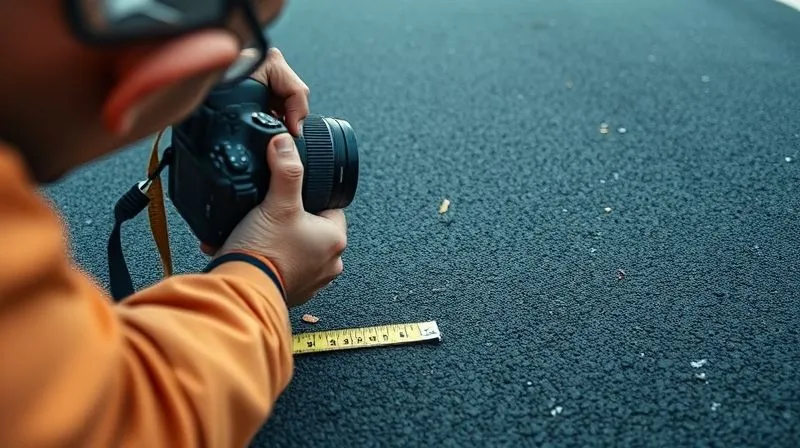
When I advise clients on how to secure critical accident scene evidence before it's lost, photography is always at the top of the list. Don't just snap a few quick photos; be methodical. Use your smartphone camera – modern phones are more than adequate. Start with wide-angle shots to show the overall scene, including road conditions, traffic signals, and surrounding landmarks. Then, progressively move closer, capturing medium-range shots of vehicle positions, damage, and any visible injuries. Finally, take detailed close-ups of specific damage points, debris, fluid spills, tire marks, and any other relevant small details. Take photos from multiple angles for each item. Videos can also be incredibly powerful, offering a dynamic view of the scene and allowing you to narrate key observations.
Sketching the Scene
While photos provide visual proof, a hand-drawn sketch, even a rudimentary one, can help orient the viewer and clarify the spatial relationships between vehicles, objects, and landmarks. Include the cardinal directions (North, South, East, West), street names, approximate measurements, and the positions of involved vehicles and any witnesses. This doesn't need to be a professional diagram; its purpose is to aid your memory and provide context.
Capturing Environmental Factors
Don't forget the environment. Weather conditions (rain, fog, bright sun), road conditions (wet, icy, potholes, construction zones), visibility, and lighting all play a crucial role in accident reconstruction. Take photos that show these elements. For instance, a photo of a glaring sun in the driver's eyes or a large pothole directly before the point of impact can be highly significant.
- Step 1: Panoramic Overview. Start with wide shots from all four directions, capturing the entire intersection or stretch of road, showing traffic flow and any relevant signage.
- Step 2: Vehicle Positions. Photograph each vehicle from all sides, showing its final resting position relative to other vehicles and landmarks. Capture license plates clearly.
- Step 3: Damage Assessment. Take multiple close-up photos of all vehicle damage, both obvious and subtle. Don't forget undercarriages if visible, and interiors.
- Step 4: Ground Evidence. Document skid marks, debris fields, broken glass, fluid spills, and any other items on the road surface. Use a ruler or a familiar object (like a coin) for scale in close-ups.
- Step 5: Injuries. If you or passengers have visible injuries, photograph them as soon as possible, and continue to do so as bruising or swelling develops.
- Step 6: Traffic Controls & Hazards. Photograph traffic lights, stop signs, yield signs, construction cones, or any road hazards that may have contributed to the accident.
It is paramount to capture these details before emergency responders or tow trucks alter the scene. According to a study by the National Highway Traffic Safety Administration (NHTSA), timely and detailed scene photography significantly improves the accuracy of accident reconstruction reports, directly impacting liability assessments. Learn more about NHTSA's research on accident investigation.
Gathering Witness Information: The Human Element
While physical evidence provides objective facts, witness testimonies offer crucial perspectives that can fill in gaps and corroborate details. Their observations can be invaluable, especially when determining fault or understanding the sequence of events.
Identifying and Engaging Witnesses
After ensuring safety and beginning photographic documentation, actively look for witnesses. These are typically individuals who were in other vehicles, pedestrians, or occupants of nearby buildings. Approach them calmly and politely. Explain that you're involved in an accident and are simply trying to gather information for insurance and legal purposes. Ask if they saw what happened and if they'd be willing to provide their contact information. Many people are hesitant to get involved, so emphasize that you only need their account of what they observed.
What to Ask: Key Questions
If a witness is willing to speak, focus on open-ended questions that encourage them to describe what they saw, rather than leading them. My go-to questions include:
- "Did you see how the accident occurred?"
- "Which vehicles were involved, and what direction were they traveling?"
- "Did you notice anything unusual about the drivers or vehicles involved?"
- "Did you hear anything, like screeching tires or horns, before the impact?"
- "Can you describe the weather or road conditions at the time?"
Always get their full name, phone number, and email address. If they're comfortable, ask them to write down what they saw and sign it, noting the date and time. This can be incredibly powerful later on. Remember, their fresh memory is a finite resource.
Case Study: The Unseen Turn
I recall a case involving a client who was T-boned at an intersection. The other driver claimed our client ran a red light. The police report, based on initial statements, was inconclusive. However, my client had the foresight to speak with a pedestrian who witnessed the entire event. This witness, a retired schoolteacher, had noted that the other driver was clearly distracted by their phone and had veered into the intersection, making an illegal U-turn against a green light. Her detailed, written statement, secured at the scene, became the cornerstone of our argument. It directly contradicted the other driver's claim and led to a favorable settlement for our client, demonstrating how crucial the human element can be in establishing liability.
Securing Physical Evidence: Small Details, Big Impact
Beyond the broad visual documentation, there are often specific, tangible pieces of evidence at an accident scene that are easily overlooked but can be absolutely critical to understanding causation and impact severity.
Identifying Tangible Clues
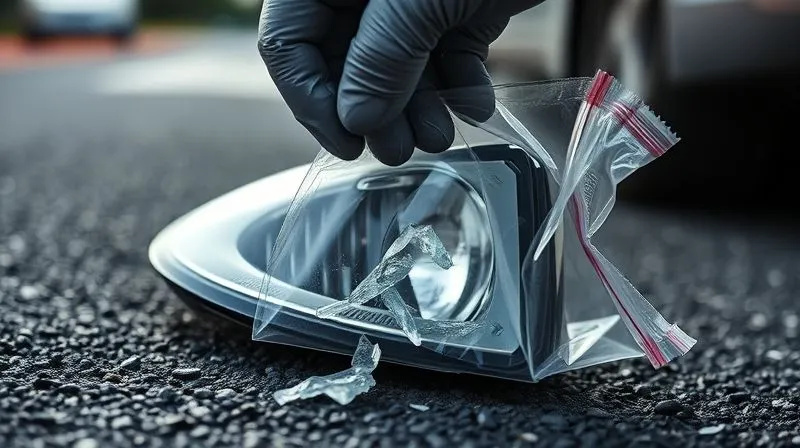
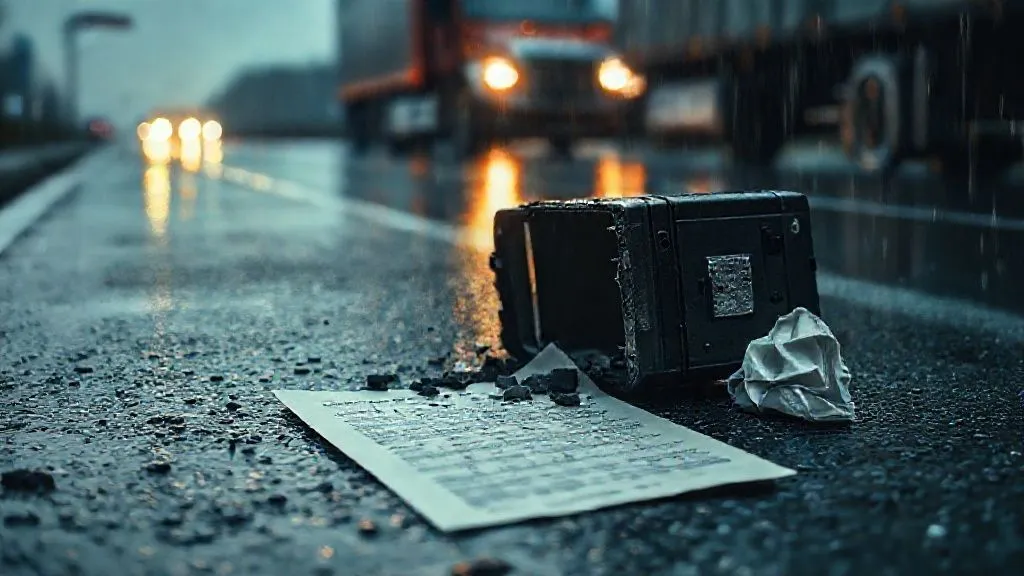
Physical evidence can range from vehicle parts, broken glass, and plastic fragments to personal belongings ejected from vehicles. Look for paint transfers between vehicles, tire marks (skid, scuff, yaw), and gouges or scrapes on the road surface. Even small items like a dropped cell phone or a piece of clothing can provide clues about impact forces or occupant movement. The location and distribution of debris can reveal the point of impact and the direction of force.
Proper Handling and Storage
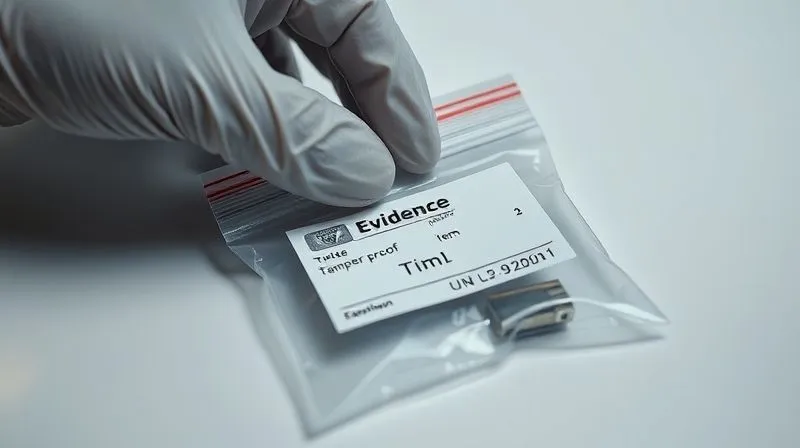
Once identified, the proper handling and storage of physical evidence are paramount to maintaining its integrity and admissibility in court. If it's safe and legal to do so (and not a major crime scene), you might collect smaller, movable items. Always wear gloves if possible to avoid contaminating the evidence with your fingerprints or DNA. Place each item in a separate, labeled bag or container, noting the date, time, exact location where it was found, and a brief description. Document who collected it. This meticulous process ensures a clear chain of custody, which is vital for legal proceedings. Never clean or alter the evidence in any way.
- Step 1: Assess Safety. Ensure the area is safe to approach and that collecting the item won't put you or others at risk.
- Step 2: Photograph In Situ. Before touching, take multiple photos of the evidence exactly where it lies, with reference points and scale if possible.
- Step 3: Wear Gloves. If available, use gloves to prevent contamination. If not, handle items by edges or non-critical areas.
- Step 4: Secure in Container. Place the item in a clean, sealable bag or container. Avoid placing multiple items together.
- Step 5: Label Thoroughly. On the container, write the date, time, exact location (e.g., "5 feet north of rear bumper of Vehicle A"), a description of the item, and your name.
- Step 6: Store Securely. Keep collected evidence in a safe, dry place, ideally locked, until it can be handed over to legal counsel or authorities.
Official Reports and Digital Footprints: Beyond the Immediate Scene
While your immediate actions at the scene are critical, the investigation doesn't end there. Official reports and the increasingly prevalent digital footprints provide layers of additional evidence that can either strengthen or contradict your initial findings.
Police Reports and Incident Logs
The police report is often the first official document generated after an accident. While not always conclusive on fault, it contains vital information: vehicle details, driver information, witness contacts, a diagram of the scene, and often an officer's initial observations. Obtain a copy as soon as it's available. Remember, police reports are public records, but access procedures vary by jurisdiction. Don't rely solely on the officer's initial assessment; it's a starting point, not the final word. Explore resources on accident reporting and legal procedures from the Department of Justice.
Dashcam, Surveillance, and Mobile Data
In our modern world, digital evidence is becoming increasingly prevalent and often irrefutable. Dashcam footage from your vehicle or others, nearby surveillance cameras (from businesses, traffic cameras, or even doorbell cameras), and data from vehicle black boxes (Event Data Recorders, EDRs) can provide objective, time-stamped accounts of the accident. Even your own mobile phone data, like GPS location or call logs, can be relevant. Act quickly to secure this evidence, as surveillance footage is often overwritten within days or weeks. Reach out to local businesses or residents who might have cameras facing the accident scene.
| Evidence Type | Source | Benefit | Preservation Tip |
|---|---|---|---|
| Dashcam Footage | Involved/Witness Vehicles | Objective, real-time visual of impact and lead-up. | Download/save immediately; footage often overwritten. |
| Surveillance Video | Nearby Businesses/Traffic Cams | External view, confirms vehicle paths/traffic signals. | Contact owners ASAP; footage deleted quickly. |
| Event Data Recorder (EDR) | Vehicle's 'Black Box' | Records pre-crash data: speed, braking, seatbelt use. | Requires professional extraction; contact legal counsel. |
| Mobile Phone Data | Your/Other Drivers' Phones | GPS location, call/text logs (distraction evidence). | Legal counsel can subpoena; avoid deleting data. |
The Role of Professionals: When to Call for Backup
While self-help is crucial in the immediate aftermath, there comes a point where professional assistance becomes indispensable. Navigating the legal and investigative complexities of a personal injury claim requires specialized expertise.
Legal Counsel: Your First Call
After securing your immediate safety and gathering initial evidence, contacting a personal injury attorney should be your next priority. I cannot emphasize this enough. An experienced attorney will guide you through the entire process, protect your rights, and ensure that all available evidence is properly secured and utilized. They can issue preservation letters, subpoena records, and coordinate with experts. Early legal intervention significantly increases the likelihood of a successful outcome. Waiting too long can jeopardize your ability to recover damages, as deadlines for filing claims vary by state. Find resources on how to find legal help from the American Bar Association.
Accident Reconstructionists and Forensic Experts
For complex accidents, an attorney will often engage accident reconstructionists or forensic experts. These specialists can analyze physical evidence (skid marks, vehicle damage, debris patterns), EDR data, and witness statements to create a detailed, scientific reconstruction of how the accident occurred. Their expert testimony can be pivotal in establishing fault, especially when conflicting accounts exist. They can determine speeds, angles of impact, and even driver actions leading up to the crash. This level of professional analysis goes far beyond what any layperson can achieve.
"In the labyrinth of an accident claim, an experienced attorney is not just a guide, but a strategic partner who knows precisely how to leverage every piece of evidence to your advantage." - Industry Specialist Insight
Maintaining the Chain of Custody: Ensuring Admissibility
Collecting evidence is only half the battle; ensuring its legal integrity is the other. The "chain of custody" refers to the chronological documentation or paper trail showing the seizure, custody, control, transfer, analysis, and disposition of evidence. It's critical for proving that the evidence presented in court is indeed the same evidence collected at the scene and has not been tampered with or contaminated.
Why Chain of Custody Matters
Without a clear chain of custody, opposing counsel can argue that the evidence is unreliable, compromised, or even fabricated, leading to its exclusion from your case. This can severely weaken your position, regardless of how compelling the evidence itself might be. Imagine having a crucial piece of physical evidence, only for the court to deem it inadmissible because you can't prove who handled it and when. It's a devastating blow to a personal injury claim that I've seen too often.
Documentation Protocols
Every step of evidence handling must be meticulously documented. This includes: the date and time of collection, the exact location, a detailed description of the item, who collected it, and how it was packaged. Any transfer of evidence to another person (e.g., from you to your attorney, or from your attorney to an expert) must also be recorded, including the names of all parties involved, the date, and the reason for the transfer. Your legal team will establish formal protocols for this, but your initial notes and careful handling lay the groundwork. Even for photographs, noting the date, time, and location when you took them is part of this chain.
Common Pitfalls and How to Avoid Them
Even with the best intentions, mistakes can happen. Recognizing common errors in evidence collection and preservation is key to avoiding them and protecting your personal injury claim.
Waiting Too Long
This is, by far, the most common and damaging pitfall. As I mentioned with the "Golden Hour," evidence degrades, disappears, or is altered rapidly. Skid marks fade, debris is cleared, witnesses leave, and memories become less reliable. Delaying the collection of photos, witness statements, or even medical attention can severely harm your case. The clock starts ticking the moment the accident occurs.
Improper Handling
Contaminating physical evidence (e.g., by touching it with bare hands), cleaning it, or storing it improperly (e.g., in a place where it can be damaged or lost) can render it useless. Always prioritize preserving the evidence in its original state as much as possible. If you must move something for safety, document it thoroughly before and after.
Overlooking Minor Details
Sometimes, the most crucial piece of evidence is the smallest or seemingly most insignificant. A small crack in a windshield, a specific type of tire mark, or a subtle fluid leak can hold immense value for an accident reconstructionist. Don't dismiss anything as too trivial. When in doubt, photograph it and document its location. My advice: err on the side of over-documenting rather than missing a crucial detail.
| Pitfall | Impact | Solution |
|---|---|---|
| Delaying Evidence Collection | Lost physical evidence, fading witness memories, overwritten digital data. | Act immediately and safely; prioritize documentation within the 'Golden Hour'. |
| Improper Evidence Handling | Contamination, damage, or loss of evidence; renders it inadmissible. | Wear gloves, use separate labeled containers, avoid altering items, maintain clear chain of custody. |
| Incomplete Documentation | Gaps in the narrative, inability to prove key facts, weakened credibility. | Take comprehensive photos/videos, sketch the scene, capture environmental factors, get detailed witness info. |
| Ignoring Digital Evidence | Missing irrefutable objective data (speed, location, distraction). | Seek dashcam/surveillance footage, consider EDR data, review mobile device records with legal counsel. |
| Failure to Seek Legal Counsel Early | Missed deadlines, improper legal strategy, undervalued settlement. | Contact a personal injury attorney as soon as safe; they guide the entire process and preserve your rights. |

Frequently Asked Questions (FAQ)
What if I'm too injured to collect evidence myself? Your health is paramount. If you are seriously injured, focus on getting medical attention. If you have a passenger or a trustworthy bystander, you can verbally instruct them on what to photograph or note down. However, the most critical step is to contact a personal injury attorney as soon as you are medically stable. They can dispatch investigators to the scene, issue preservation letters, and begin gathering evidence on your behalf before it's too late.
Can digital evidence like social media posts be used? Yes, absolutely. Social media posts, text messages, emails, and even online search histories can be discoverable evidence in a personal injury case. They can be used to establish a timeline, corroborate or contradict statements, or even show a party's state of mind or activities leading up to the accident. Be mindful of what you post online after an accident, as it can be used against you. Your attorney will advise on the proper collection and use of such digital footprints.
How long do I have to collect evidence? The "Golden Hour" for immediate scene evidence is critical, meaning you should act within minutes or hours. For broader evidence like surveillance footage, you might have days or weeks before it's overwritten. Official reports typically take a few days to process. However, the legal "statute of limitations" for filing a personal injury lawsuit varies by state, typically from one to three years. While this gives you time to file, it does not mean you have that long to collect fresh evidence. The sooner, the better, for all types of evidence.
Is it ever okay to move evidence? Generally, no. Unless the evidence poses an immediate safety hazard (e.g., a large piece of debris in the middle of a live lane of traffic), it should remain undisturbed until it can be photographed and documented thoroughly. If you absolutely must move something for safety, take photos of it in its original position first, then after it's moved, and document precisely why it was moved and where. The less the scene is altered, the more reliable the evidence.
What's the most overlooked piece of evidence? In my experience, the most commonly overlooked yet crucial piece of evidence is often the **condition of the other driver's tires**. Worn tread, improper inflation, or even mismatched tires can be significant contributing factors to an accident, indicating negligence. This is something easily photographed at the scene but often forgotten amidst the chaos. Another is the **presence of nearby surveillance cameras**; people often don't think to look for them immediately after an accident.
Key Takeaways and Final Thoughts
Securing critical accident scene evidence before it's lost isn't merely a recommendation; it's a fundamental necessity for anyone involved in a personal injury accident. The difference between a strong, successful claim and a challenging, potentially unsuccessful one often hinges on the diligence and foresight exercised in the immediate aftermath.
- Act Swiftly and Safely: The "Golden Hour" is real. Prioritize safety, then move quickly to document everything.
- Document Meticulously: Comprehensive photos, videos, and even sketches tell an unbiased story. Leave no detail uncaptured.
- Gather Witness Accounts: Human perspectives corroborate facts and can be incredibly persuasive.
- Preserve Physical Evidence: Handle tangible items carefully, maintaining their integrity and a clear chain of custody.
- Leverage Digital Footprints: Dashcams, surveillance, and EDRs provide objective data; act fast to secure them.
- Engage Professionals Early: An experienced personal injury attorney is your most valuable asset, guiding the investigation and protecting your rights.
Remember, the moments following an accident are challenging, but your proactive steps in preserving evidence can significantly impact your future. By empowering yourself with this knowledge and acting decisively, you're not just collecting data; you're building a foundation for justice and ensuring your voice is heard. Don't let valuable evidence slip away; take control of your narrative from the very beginning.
Recommended Reading
- IRS Audit Aftermath: 7 Steps to Validate Non-Profit Tax Exemption
- 7 Proven Strategies: How to Navigate Legal Complexities in Cross-Border M&A
- Mastering the Maze: Constitutional Procedures for Federal Lawmaking Unveiled
- Client SSN Stolen? 7 Immediate Legal Steps to Protect Your Business
- 5 Steps: Legally Challenging a State Law Violating an Amendment

Comments
Leave a comment below. Your email will not be published. Required fields marked with *