


How to legally challenge excessive marine pollution port fines?
For over two decades in maritime law, I’ve witnessed firsthand the profound impact that marine pollution incidents and their subsequent penalties can have on shipping companies. It's not just about the immediate financial hit; it’s about reputational damage, operational disruption, and the sheer frustration of facing what often feel like disproportionate or even unjust sanctions. Many operators, feeling overwhelmed, simply pay these fines, unaware that a robust legal challenge is often a viable, and indeed necessary, course of action.
The problem is pervasive: port authorities worldwide are under increasing pressure to enforce environmental regulations, and while this is crucial for our oceans, it sometimes leads to overly zealous interpretations or procedural missteps resulting in excessive fines. These penalties can range from tens of thousands to millions of dollars, crippling smaller operators and significantly impacting the bottom line of larger ones. The complexity of international maritime law, coupled with varying national and local regulations, creates a minefield for even the most compliant vessel owners and operators.
In this definitive guide, I will walk you through the intricate process of how to legally challenge excessive marine pollution port fines. Drawing from my extensive experience, I’ll provide you with actionable frameworks, delve into real-world scenarios, and share expert insights to empower you to navigate this challenging legal landscape. We'll explore everything from understanding the initial allegations to building an ironclad defense, ensuring you have the knowledge and tools to protect your interests and uphold environmental stewardship responsibly.
Understanding the Regulatory Landscape: MARPOL & Port State Control
Before you can effectively challenge a fine, you must understand the regulatory bedrock upon which it stands. The primary international instrument governing marine pollution from ships is the International Convention for the Prevention of Pollution from Ships (MARPOL). Adopted by the IMO, MARPOL has six technical Annexes, each addressing a specific source of pollution:
- Annex I: Prevention of pollution by oil.
- Annex II: Control of pollution by noxious liquid substances in bulk.
- Annex III: Prevention of pollution by harmful substances carried by sea in packaged form.
- Annex IV: Prevention of pollution by sewage from ships.
- Annex V: Prevention of pollution by garbage from ships.
- Annex VI: Prevention of air pollution from ships.
Each Annex outlines specific requirements for equipment, operational procedures, and record-keeping designed to minimize pollution. Violations of these provisions are the most common basis for fines.
Complementing MARPOL is the system of Port State Control (PSC). PSC officers, acting on behalf of coastal states, have the authority to inspect foreign-flagged vessels calling at their ports to ensure compliance with international conventions. If a vessel is found to be non-compliant, PSC can issue deficiencies, detain the vessel, and, critically, impose fines. The severity of these fines often depends on the nature and extent of the pollution, the potential environmental damage, and the flag state's history of compliance. Understanding the specific Annex and PSC guidelines (e.g., from the Paris MoU or Tokyo MoU) cited in your fine notice is your first step in building a defense.
Initial Assessment: Is the Fine Justified?
My first piece of advice to clients is always: don't panic, investigate. The immediate aftermath of a pollution incident or a PSC inspection that leads to a fine is crucial for gathering evidence. A fine, by its nature, is an allegation, and it is incumbent upon the port authority to prove its case. Your task is to scrutinize their claims rigorously.
Gathering Evidence Immediately After Incident
The moment an incident occurs, or a PSC inspection identifies a potential issue, your crew must switch into evidence-gathering mode. This is non-negotiable. Key pieces of evidence include:
- Logbooks: Official logbook, oil record book, garbage record book, engine room log – all must be meticulously maintained and reflect actual operations.
- Crew Statements: Detailed, signed statements from all relevant crew members (e.g., Chief Engineer, Master, OOW) describing their actions, observations, and any mitigating circumstances.
- Sensor Data & Monitoring Systems: Data from Oily Water Separators (OWS), Exhaust Gas Cleaning Systems (EGCS), bilge alarms, tank level sensors, and voyage data recorders (VDR) can provide irrefutable evidence of compliance or operational status.
- Photographs & Video: Visual documentation of the alleged pollution, the vessel's condition, equipment status, and any clean-up efforts. Timestamps are vital.
- Maintenance Records: Proof that equipment was regularly serviced and in good working order.
- Training Records: Documentation demonstrating crew competency in pollution prevention procedures.
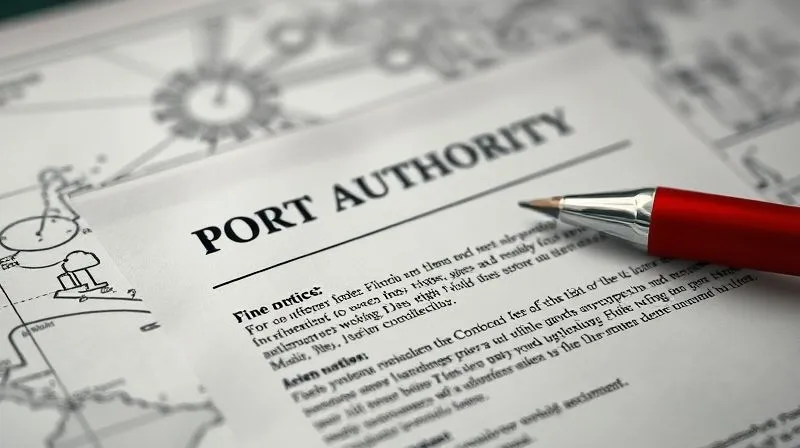
Reviewing the Fine Notice and Port Authority's Allegations
Once you receive the official fine notice, dissect it. Does it clearly state:
- The specific regulation allegedly violated (e.g., MARPOL Annex I, Regulation 15)?
- The date, time, and location of the alleged incident?
- The evidence the port authority is relying on?
- The methodology used to calculate the fine?
- The appeal process and deadlines?
Often, I find that port authorities rely on circumstantial evidence or incomplete information. Your job is to identify these gaps and prepare to counter them with concrete facts and data. Remember, the burden of proof is usually on the accuser.
Step-by-Step Guide to Formulating Your Legal Challenge
Challenging a marine pollution port fine is a structured process that requires precision, expertise, and timely action. Here are the steps I advise my clients to follow:
- Engage Specialist Maritime Legal Counsel: This is perhaps the most critical first step. Maritime law is incredibly complex and jurisdiction-specific. A local maritime lawyer with experience in pollution defense will understand the nuances of local regulations, court procedures, and the specific port authority's enforcement tendencies. They can guide you through the process, interpret legal jargon, and represent your interests effectively. Don't try to navigate this alone; the stakes are too high.
- Conduct a Thorough Internal Investigation: Even before involving external counsel, initiate your own deep dive. Review all relevant logbooks, data, crew statements, and maintenance records. Identify any discrepancies, potential weaknesses in your case, or, conversely, strong evidence of compliance. This internal audit will form the backbone of your legal strategy and allow your counsel to hit the ground running.
- Prepare a Detailed Rebuttal Letter: Under the guidance of your legal counsel, draft a comprehensive letter formally disputing the fine. This letter should:
- Clearly state your intention to challenge the fine.
- Reference the specific fine notice and incident details.
- Present your factual account of events, supported by all gathered evidence (logbook entries, sensor data, crew statements, photos).
- Cite relevant international conventions (MARPOL) and local laws that support your position.
- Highlight any procedural errors made by the port authority during inspection or fine issuance.
- Propose a resolution, which could be a complete withdrawal of the fine, a reduction, or a re-evaluation based on new evidence.
This letter is your formal opening argument.
- Explore Alternative Dispute Resolution (ADR): Depending on the jurisdiction and the nature of the dispute, ADR mechanisms like mediation or conciliation might be available. These can be less adversarial, quicker, and more cost-effective than full-blown litigation. Your legal counsel will advise if ADR is a viable option and represent you in such proceedings.
- Be Prepared for Formal Appeals or Litigation: If the initial rebuttal is unsuccessful, you may need to escalate to a formal appeal process within the port authority's administrative framework or even proceed to court. This stage involves formal legal submissions, potentially expert witness testimony, and courtroom arguments. This is where your chosen legal team's expertise truly shines.
The Nuances of Evidence: What Truly Holds Up in Court?
In my experience, the strength of your challenge hinges entirely on the quality and robustness of your evidence. It's not just about having documents; it's about having documents that are irrefutable, verifiable, and directly address the allegations. Vague statements or incomplete records are easily dismissed.
Case Study: The 'MV Neptune's Spill' and Evidentiary Success
I recall a case involving the ‘MV Neptune,’ a bulk carrier accused of discharging oil into a sensitive harbor area. The port authority issued a hefty fine, citing visual observations from shore and a sheen on the water. The initial outlook was grim. However, my client, having meticulously followed my advice, had an extensive dossier. We had:
- Detailed Oil Record Book entries: Showing no discharge operations, proper sludge handling, and OWS operation within parameters.
- OWS sensor data logs: Proving the OWS was functioning correctly and effluent was below 15 ppm.
- Bridge VDR data: Confirming vessel movements and weather conditions, which showed strong currents that could have carried a pre-existing sheen from another source.
- Crew statements: From the Chief Engineer and OOW, corroborated by the Master, attesting to strict adherence to pollution prevention protocols and their immediate investigation upon being notified, finding no internal source.
- Photographic evidence: Taken by the crew immediately, showing no visible discharge from the vessel’s side, contrasting with the port authority’s later photos of a generalized sheen.
By presenting this comprehensive, timestamped, and cross-referenced evidence, we were able to demonstrate that while a sheen was present, it could not be conclusively linked to the MV Neptune. The court ultimately agreed, and the fine was significantly reduced, acknowledging the vessel’s robust compliance system and the lack of direct causation. This case vividly illustrates the power of proactive record-keeping and a strong evidentiary defense.
Key Insight: "In maritime pollution cases, the absence of evidence is often interpreted as evidence of absence. Meticulous, verifiable record-keeping isn't just a regulatory requirement; it's your frontline defense against unjust fines."
The table below illustrates the typical strength and common pitfalls of various types of evidence:
| Evidence Type | Strength | Pitfalls |
|---|---|---|
| Electronic Data (OWS, VDR, Sensors) | Very High - Objective, timestamped, hard to dispute. | Requires proper calibration, maintenance, and data integrity. |
| Official Logbooks (Oil Record Book, etc.) | High - Legal requirement, provides chronological record. | Any discrepancies, erasures, or lack of detail can weaken credibility. |
| Crew Statements | Medium - Provides eyewitness account, human element. | Can be subjective, requires consistency, potential for coercion claims. |
| Photographs/Video | Medium to High - Visual proof, contextual evidence. | Requires clear timestamps, proper framing, and authentication to avoid manipulation claims. |
| Maintenance Records | High - Proves equipment functionality and preventative measures. | Incomplete records or overdue maintenance can be detrimental. |
Mitigation Strategies: Reducing Liability Even When at Fault
Sometimes, despite your best efforts, an incident occurs, and your vessel may indeed be found at fault. Even in such scenarios, a skilled legal approach can significantly mitigate the penalties. I always emphasize that accountability, coupled with proactive measures, can demonstrate good faith and lead to a reduction in fines.
Key mitigation strategies include:
- Prompt Reporting: Immediately reporting an incident to the relevant authorities, even if it's minor, often demonstrates transparency and can reduce the severity of penalties compared to an incident discovered later.
- Immediate Clean-up & Remediation: Taking swift action to contain and clean up any pollution shows responsibility and minimizes environmental damage, which regulators view favorably. Document all clean-up efforts meticulously.
- Full Cooperation: Cooperating fully with port authority investigations, providing requested documents promptly, and facilitating access can build trust and potentially lead to a more lenient outcome.
- Implementing Robust ISM/SMS Procedures: Demonstrating that your vessel operates under a comprehensive International Safety Management (ISM) Code or Safety Management System (SMS) that includes robust pollution prevention protocols can argue against gross negligence. If the incident was an isolated failure within an otherwise compliant system, it can be a strong mitigating factor.
- Crew Training & Retraining: Showing evidence of ongoing crew training in pollution prevention and emergency response demonstrates a commitment to preventing future incidents. If a crew error was involved, immediate retraining can be presented as a corrective action.
Navigating International Jurisdictions and Local Regulations
One of the trickiest aspects of marine pollution fines is the interplay between international conventions and diverse national and local laws. A violation under MARPOL might be interpreted differently or carry varying penalties depending on the port state's domestic legislation. For instance, some jurisdictions have highly punitive environmental protection acts that can impose fines far exceeding typical MARPOL breaches, sometimes even including criminal charges for gross negligence.
This is precisely why local legal expertise is non-negotiable. A maritime lawyer in, say, Singapore, will have an intimate understanding of the Maritime and Port Authority of Singapore’s (MPA) specific enforcement policies, local court precedents, and the nuances of the country's environmental protection laws. This local insight can be the difference between a successful challenge and a costly defeat. Furthermore, understanding the specific appeal routes – whether it’s an administrative review, an appeal to a specialized maritime tribunal, or a higher court – is critical for timely and effective action.
Preventative Measures: Beyond Challenging Fines
While this guide focuses on how to legally challenge excessive marine pollution port fines, my ultimate goal for any client is to avoid them altogether. Prevention is always better than cure, and in the realm of marine pollution, it’s significantly cheaper too. Investing in robust preventative measures is the most effective long-term strategy.
These include:
- Proactive Compliance Audits: Regularly conduct internal and external audits to identify potential compliance gaps before PSC does.
- Enhanced Crew Training: Go beyond minimum requirements. Invest in advanced simulation training, regular drills, and continuous education on the latest MARPOL amendments and best practices.
- Advanced Monitoring & Sensor Systems: Upgrade to state-of-the-art OWS, bilge monitoring, and exhaust gas cleaning systems. Ensure these are regularly calibrated and maintained.
- Clear Communication Protocols: Establish clear internal procedures for incident reporting, evidence gathering, and communication with authorities.
- Legal & Regulatory Intelligence: Stay updated on evolving international and local environmental regulations. Subscribing to maritime legal alerts or engaging a firm for regular updates can be invaluable.
- Emergency Preparedness: Develop and regularly test comprehensive Shipboard Oil Pollution Emergency Plans (SOPEP) and Shipboard Marine Pollution Emergency Plans (SMPEP) to ensure swift and effective response to any incident.
As marketing guru Seth Godin often says, "The cost of being wrong is less than the cost of doing nothing." In our industry, the cost of an environmental incident, whether in fines or reputational damage, far outweighs the investment in robust prevention.
Frequently Asked Questions (FAQ)
Q: What is the typical timeframe for challenging a marine pollution fine? A: The timeframe varies significantly by jurisdiction, but generally, you have a very limited window, often 14-30 days, to initiate an appeal or formally dispute a fine. Missing these deadlines can severely prejudice your case, which is why immediate action and legal consultation are paramount.
Q: Can a vessel be detained solely based on a pollution fine? A: Yes, in many jurisdictions, port authorities have the power to detain a vessel if a significant fine for a pollution violation is unpaid or unsecured. This leverage is often used to ensure compliance and payment, making prompt legal action to challenge the fine even more critical to avoid costly delays.
Q: What if the pollution incident occurred outside of port limits but was discovered in port? A: This is a common scenario. If the pollution is discovered in port, the port state may still have jurisdiction, especially if the discharge violates international conventions like MARPOL. The challenge then often focuses on proving the incident's actual location, the vessel's operational status at that time, and whether the discharge was accidental, unavoidable, or outside the vessel's control.
Q: Are there criminal penalties for marine pollution? A: Absolutely. While many fines are civil or administrative, severe cases of marine pollution, particularly those involving gross negligence, willful misconduct, or falsification of records, can lead to criminal charges against the vessel owner, operator, Master, or even individual crew members, potentially resulting in imprisonment and massive corporate fines.
Q: How important is the Oil Record Book (ORB) in a pollution defense? A: The ORB is arguably one of the most critical pieces of evidence in any oil pollution case. It's a legally mandated document that provides a chronological record of all oil-related operations (transfers, discharges, sludge disposal). Any inconsistencies, missing entries, or signs of tampering can severely undermine your defense and lead to more severe penalties. A well-maintained, accurate ORB is your first line of defense.
Key Takeaways and Final Thoughts
Navigating the complex waters of marine pollution regulations and port fines requires vigilance, expertise, and a proactive stance. As an industry specialist, I've seen how a well-prepared defense can save companies millions and protect their hard-earned reputation. Here are the most critical takeaways:
- Act Immediately: Time is of the essence. Engage legal counsel and begin evidence gathering the moment a fine is issued or an incident occurs.
- Document Everything: Meticulous record-keeping – from logbooks to sensor data, crew statements, and photographs – forms the bedrock of any successful challenge.
- Seek Specialist Counsel: Maritime law is a niche. Retain experienced local maritime lawyers who understand the specific jurisdiction and its legal nuances.
- Understand the Regulations: Familiarize yourself with MARPOL Annexes and Port State Control procedures to identify potential weaknesses in the port authority's allegations.
- Prioritize Prevention: Ultimately, the best defense against excessive fines is a robust, proactive pollution prevention strategy embedded in your vessel operations and company culture.
The maritime industry is the backbone of global trade, and with that comes immense responsibility for environmental stewardship. While compliance is paramount, it is equally important to understand your rights and the legal avenues available when faced with what you believe to be an unjust or excessive fine. By following these expert-backed steps, you empower yourself to protect your assets, uphold your commitment to a cleaner ocean, and ensure fair treatment under the law. Stay vigilant, stay compliant, and never hesitate to challenge when a challenge is warranted.
Recommended Reading
- Unmasking Negligence: How to Prove Your Product Liability Claim & Win Justice
- IRS Tax Court Loss? 7 Steps to Successfully Appeal & Win Your Case
- Unmasking the Culprits: Who is Legally Responsible for Contaminated Land Cleanup?
- 8 Proven Strategies to Slash Corporate Litigation Costs by 30-50%
- 7 Key Documents: Preventing IRS Audit Red Flags for Energy Tax Credits



Comments
Leave a comment below. Your email will not be published. Required fields marked with *